


Vintage Tall Metal Lamp
These vintage tall metal lamp examples bring serious presence to a room, cast in brass, iron, and bronze across Victorian and early-twentieth-century periods.
Vintage Tall Metal Lamp
A vintage tall metal lamp stands ready to anchor a corner, taking forms from standard floor lamps and torcheres to lantern stands and altar lamps. When searching this phrase, buyers encounter vertical lighting and display pieces designed to elevate a room physically and stylistically.
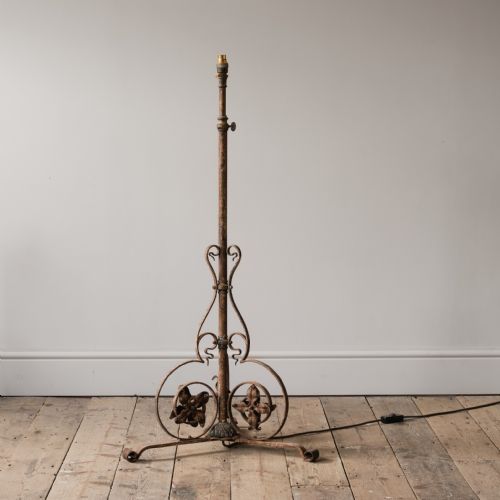
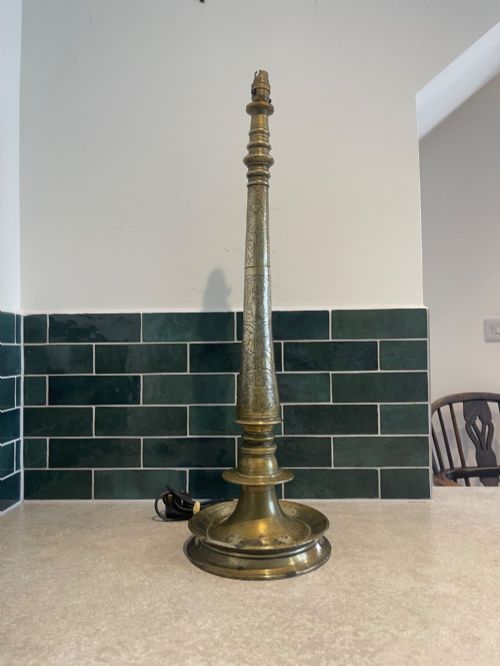
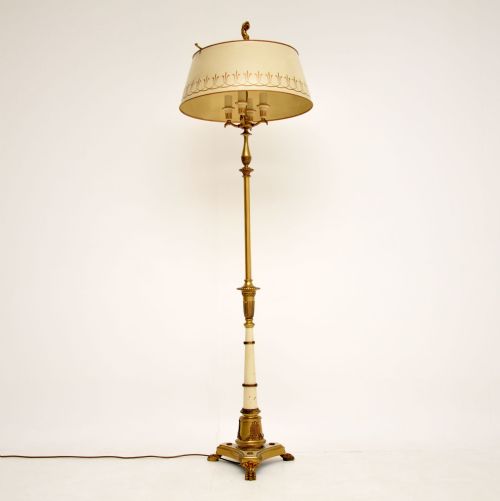
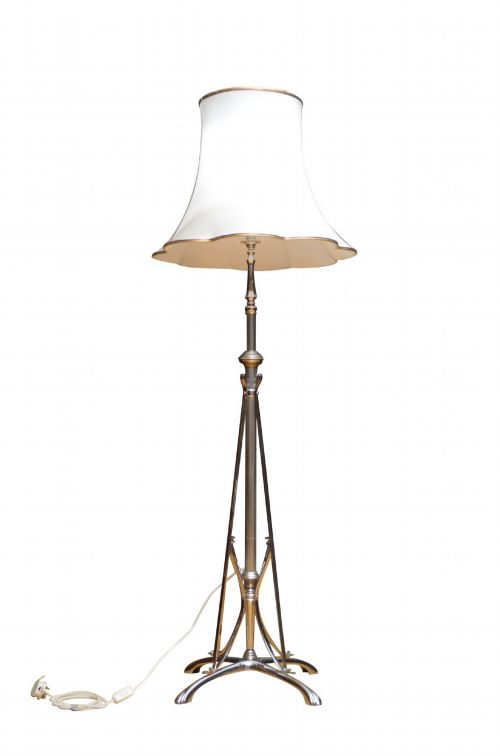
The most common versions met here span the nineteenth century and the early decades of the twentieth century, drawing on Victorian, Edwardian, Art Nouveau, and Art Deco design vocabularies. These pieces range from adjustable blacksmith-wrought iron to French neoclassical tole and brass standard lamps.
Makers and artisans utilised varied vertical formats, incorporating plant stands, coffee tables, and adjustable stems alongside traditional lighting functions. The selection leans heavily toward floor-standing lighting solutions that combine height with substantial metal construction.
Materials and construction
Construction relies on durable metals like brass, wrought iron, cast iron, bronze, and silver plate, frequently paired with secondary elements such as marble, onyx, glass, and fabric shades. Blacksmiths hammered iron by hand, while foundries cast bronze, brass, and spelter into ornate or architectural shapes.
Workmanship involves adjustable mechanisms, riveted joints, and weighted bases to support tall vertical shafts safely. Surface treatments include silver plating, silvering, and patinated finishes that age characteristically over decades.
Several pieces double as plant stands or coffee tables, proving nineteenth-century domestic engineering loved multi-tasking furniture.
Distinguishing quality
Quality rests in the weight and integrity of the metalwork, the sophistication of period stylistic details, and the survival of original adjustable mechanisms. Heavy cast brass or hand-forged wrought iron commands greater presence than lighter sheet metal constructions.
The sophistication of decorative details - such as crisp Art Nouveau organic motifs, precise French neoclassical casting, or clever blacksmith engineering - separates standard utility pieces from masterworks of interior metalwork.
The Vintage Tall Metal Lamp Glossary
- Torchere
- A tall ornamental floor lamp or candle holder, usually designed to direct light upward toward the ceiling.
- Standard lamp
- A British term for a tall floor-standing lamp base designed to carry a shade and bulb.
- Spelter
- An alloy of zinc and lead or tin, used widely in the nineteenth and early twentieth centuries as a cheaper substitute for bronze.
- Tole
- Painted or lacquered metalware, often associated with decorative French lighting and home accessories.
- Amsterdam School
- An architectural and design movement from the early twentieth century characterised by expressive brickwork, organic forms, and rich metal detailing.
Vintage Tall Metal Lamp: Frequently Asked Questions
How do I choose the right height?
Consider the ceiling clearance and the intended function of the piece, whether it illuminates a dark corner or serves as an architectural focal point.
Floor-standing lighting in this category typically reaches well over eye level, making proportion to your surrounding furniture the primary guide.
Are these lamps safe to use today?
Many vintage electrical items require professional rewiring or safety checks by a qualified electrician before daily domestic use.
Some pieces arrive already rewired, but inspecting the internal wiring ensures compatibility with modern safety standards.
How do I clean brass and iron safely?
Dust regularly with a soft cloth and avoid abrasive chemical cleaners that strip historical patina from the metal.
Preserving the aged surface maintains the character and visual depth accrued over a century or more.
How can I tell Victorian from Art Deco pieces?
Victorian lighting leans toward heavy cast ornamentation, Gothic revival influences, or ornate floral brasswork, reflecting nineteenth-century eclecticism.
Art Deco examples, emerging around the nineteen-twenties and thirties, favour streamlined geometries, geometric stepped bases, and sleek metallic finishes.