
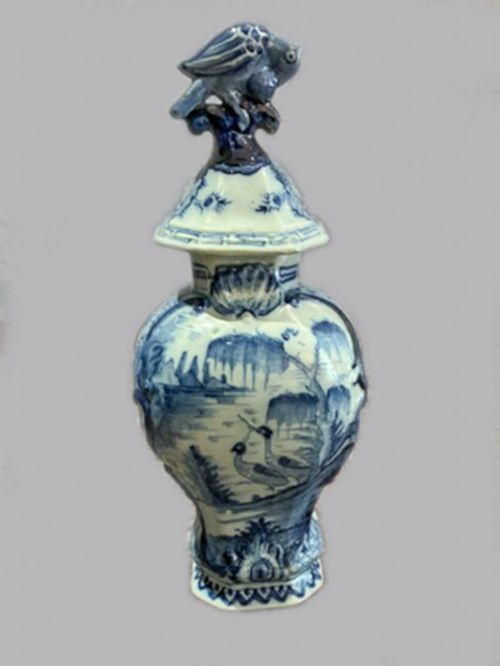
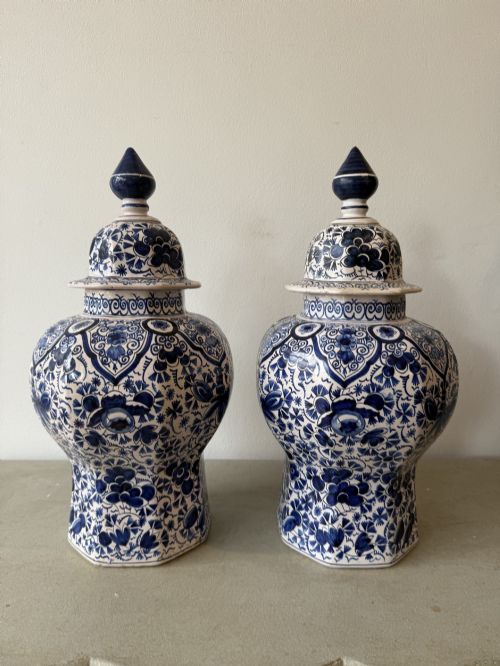


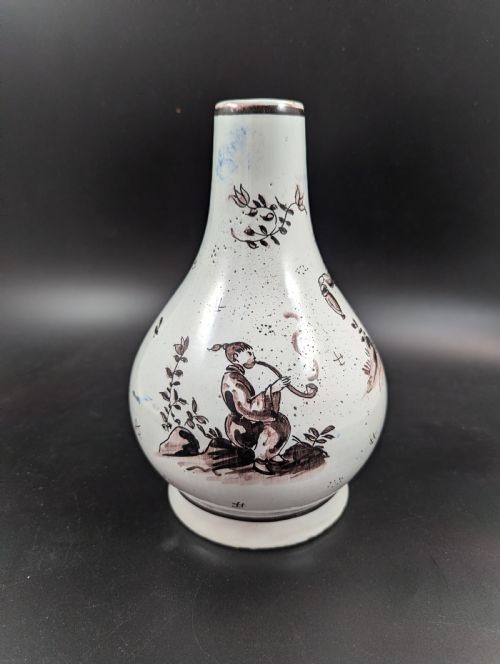

Chinoiserie Delftware Vase
A chinoiserie delftware vase brings European tin-glazed earthenware together with painted scenes of Eastern figures and landscapes, offering a striking display of blue and white ceramic history.
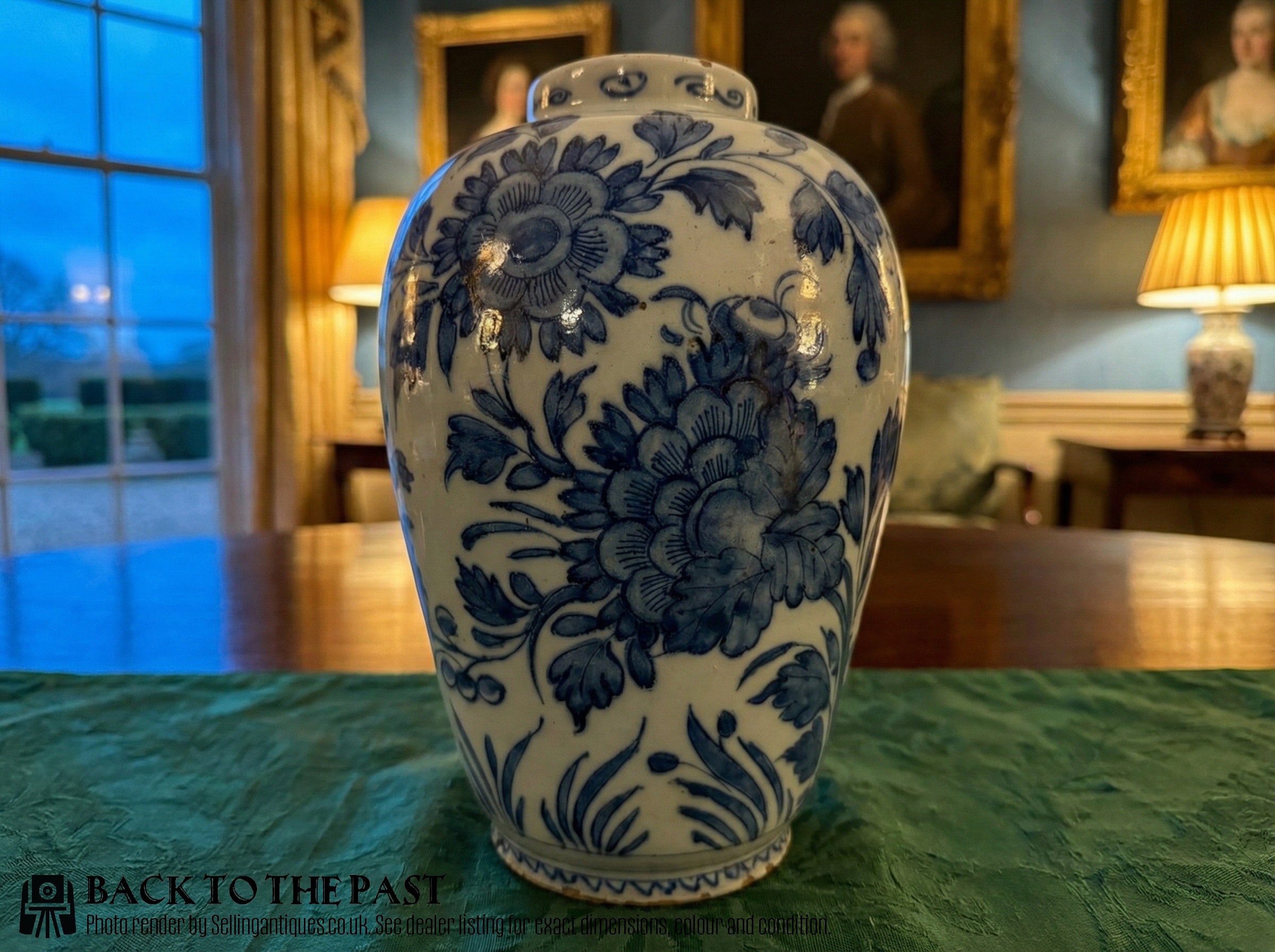
Chinoiserie Delftware Vase
When you search for a chinoiserie delftware vase, you encounter tin-glazed earthenware vessels adorned with Eastern-inspired motifs. These pieces span several centuries, with 17th-century and 18th-century examples forming a major part of the selection alongside later interpretations.
The assortment includes baluster shapes, ribbed beaker vases, lidded jars, and decorative bottles. Many examples function as table lamps, having been converted for modern interior use while retaining their historic ceramic bodies.
Dutch workshops and English potteries both produced these items, employing cobalt pigment to paint landscapes, birds, and floral designs upon a pale tin glaze. You are equally likely to meet single vessels or matched pairs on this page.
Materials and construction methods
Potters shaped earthenware bodies from local clay before coating them in an opaque tin glaze that dried to a smooth, milky white finish. This white surface provided the ideal canvas for subsequent hand-painting.
Painters applied cobalt pigment directly onto the unfired or slightly fired glaze, creating rich blue imagery that merged into the surface during the kiln firing. Converted lamp examples often integrate brass fittings and wooden bases added during later centuries.
Listings feature tin-glazed earthenware and ceramic pieces alongside brass and wood components found on converted table lamps.
Evaluating quality and execution
The clarity and fluidity of the cobalt brushwork distinguish finer examples from simpler production. Master painters achieved depth and fine detail in the depiction of birds, foliage, and figures.
The condition of the tin glaze matters significantly, as the surface is prone to chipping along the rims over centuries of handling. Retaining the original matching lid on a lidded vase elevates the integrity of the piece.
The Chinoiserie Delftware Vase Glossary
- Tin-glazed earthenware
- Pottery coated with a glaze containing tin oxide to produce an opaque white surface. This technique forms the foundation of all traditional delftware.
- Cobalt pigment
- A metallic oxide used by ceramic painters to achieve deep blue tones on pottery. It withstands high kiln temperatures without losing its colour.
- Baluster vase
- A vessel featuring a rounded body that tapers toward the top and rests on a spreading foot. This form appears frequently in Dutch delft production.
- Beaker vase
- An open-topped vessel with straight sides flaring outward toward the rim. These pieces were often made in matching sets for display on mantelpieces.
Chinoiserie Delftware Vase: Frequently Asked Questions
How do I date an old delft vase?
Dating relies upon stylistic markers, potting techniques, and the appearance of the tin glaze. Earlier pieces from the seventeenth century often display distinctive pigment tones and potting weights compared to eighteenth-century equivalents.
Examining the base and any glaze imperfections helps determine the age of the earthenware body.
Can I use a delft lamp safely?
Many antique vases were converted into table lamps during the twentieth century to suit domestic interiors. These pieces typically feature wired fittings attached through the original ceramic body.
Buyers should have older electrical wiring inspected by a professional before daily use.
Why is the blue painting sometimes blurry?
Cobalt pigment absorbs into the porous tin glaze before firing, which can cause the painted lines to soften slightly at the edges. Skilled painters controlled this absorption to keep floral and figural details sharp.
Diffusion of the pigment is a natural characteristic of traditional tin-glazed ceramic production.
Are lidded vases rare to find complete?
Original lids on antique jars and vases often suffered breakage over centuries of domestic handling. Finding a vessel with its matching contemporary lid adds considerable historical completeness.
many surviving examples lost their covers long ago and now serve purely as open flower vases or decorative bottles.