
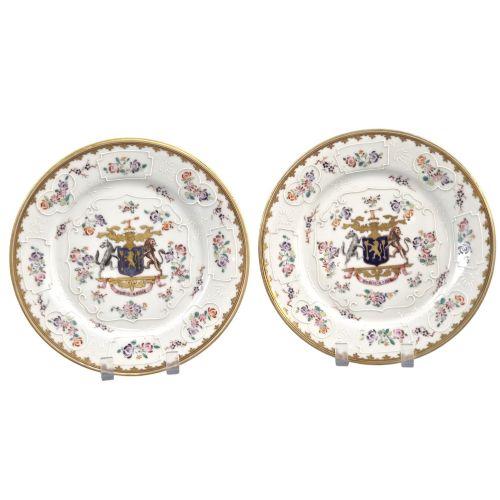


Chinese Export Porcelain Pair
These chinese export porcelain pair selections bring symmetry and historic craftsmanship to interiors through matched pairs of decorative vessels and figures.
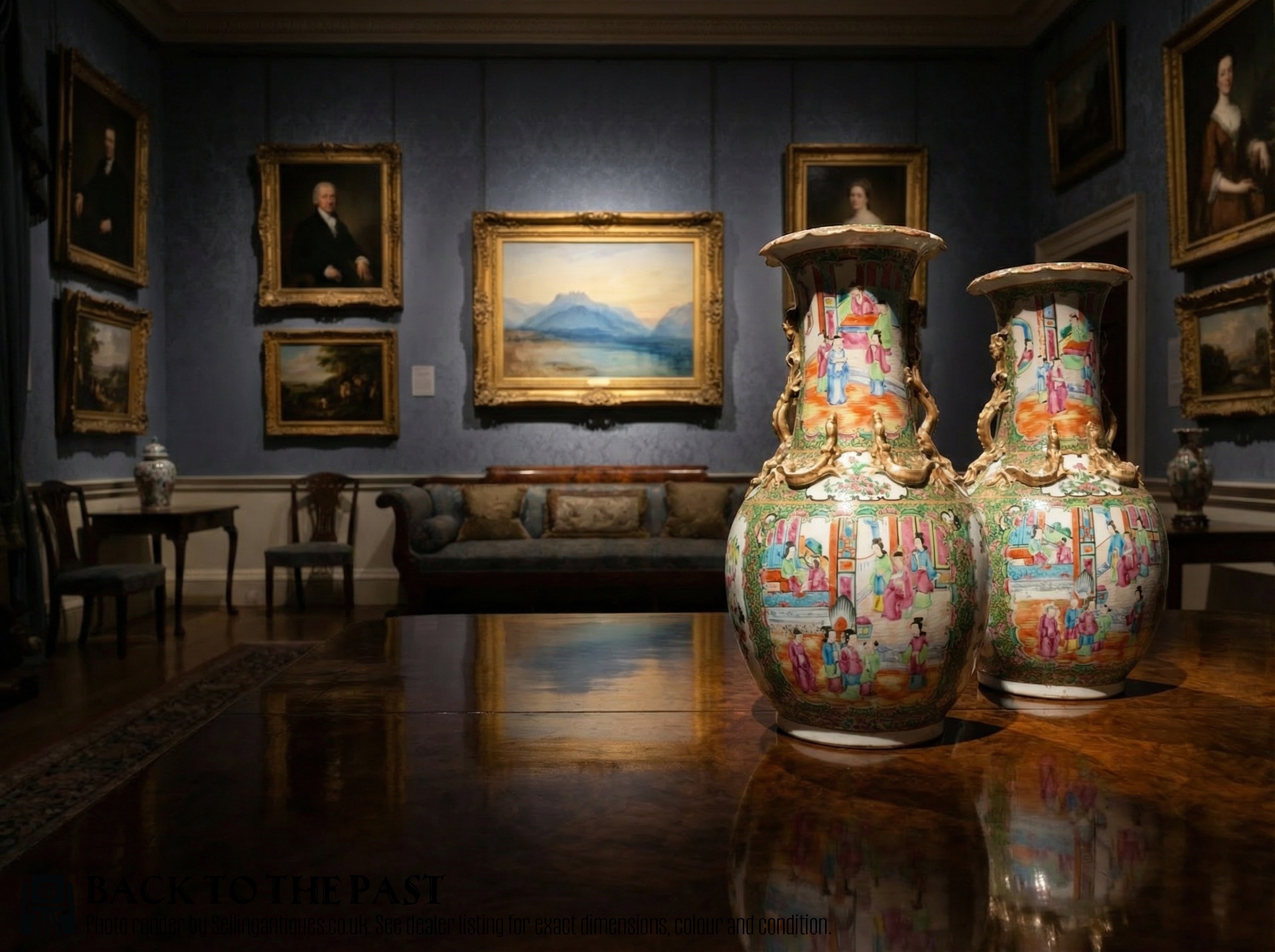
Chinese Export Porcelain Pair
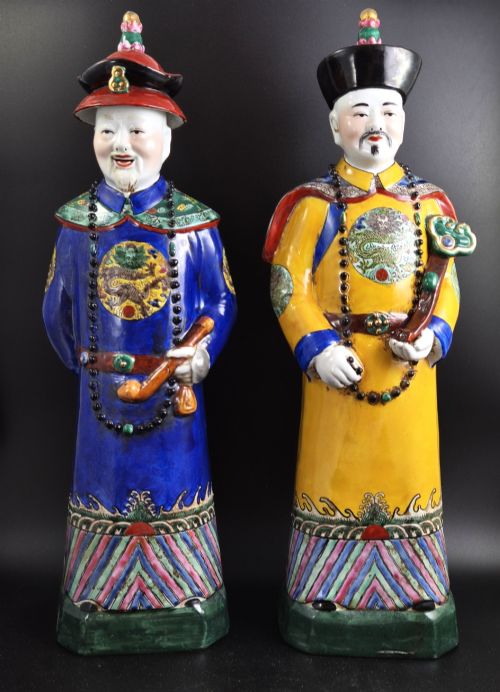
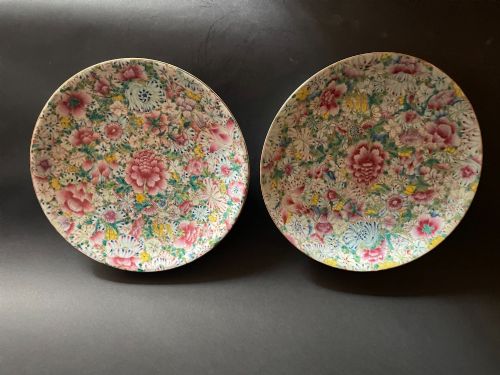
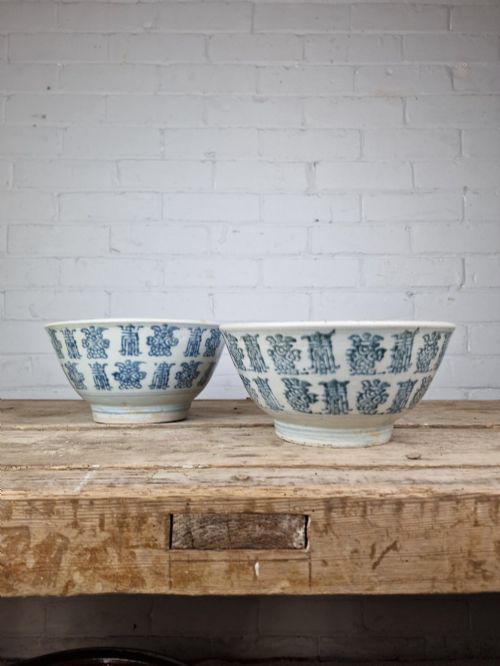
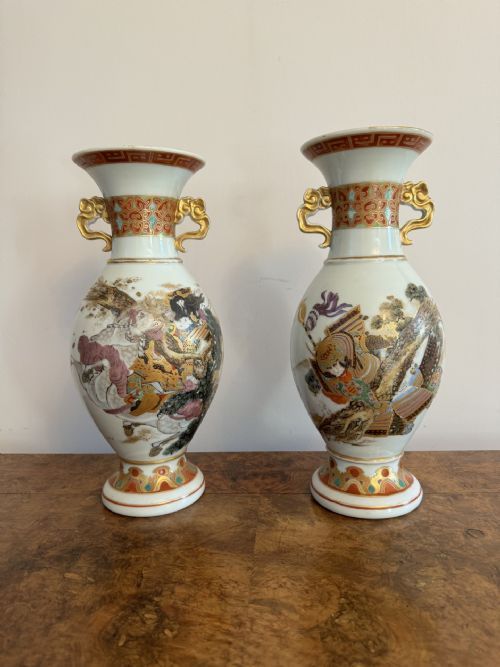
A chinese export porcelain pair unites two matching items created in China for Western markets, spanning centuries of kiln production. The examples found here range from practical tableware dishes and plates to large floor-standing vases, garden seats, and figural sculptures.
Most items appearing on this page belong to the nineteenth century, featuring characteristic Canton, Rose Medallion, and Famille Rose palettes. Earlier eighteenth-century vessels, including Kangxi and Qianlong period pieces, also appear alongside later nineteenth and twentieth-century interpretations.
Buyers frequently encounter these paired items adapted as table lamps fitted with fabric shades or mounted in ormolu bronze. Alongside standard vases and jars, the inventory includes specific forms such as moon flasks, ginger jars, cockerels, and wall dishes.
Materials and production techniques
The foundation of every piece is hard-paste porcelain fired at high temperatures in Chinese kilns, finished with translucent glazes. Artisans applied vibrant polychrome enamels by hand, frequently incorporating gold leaf and iron-red highlights over the glaze.
Many nineteenth-century items received secondary mounts of gilt bronze or ormolu in European workshops to suit contemporary interior tastes. Wood stands, fabric shades, and brass fittings often accompany these vessels, particularly when converted into functional lighting.
Listings feature porcelain forms spanning the 18th, 19th, and 20th centuries, including ormolu bronze mounts, wood stands, and enamel finishes.
Distinguishing quality across the range
The refinement of the hand-painted brushwork dictates the visual impact of each vessel, separating standard export wares from imperial-grade commissions. Crisp detail in figural expressions, botanical motifs, and armorial crests indicates superior artisanal execution.
The condition and completeness of the enamel and gilding determine the grade of a matching set. Even wear across both objects of a matched grouping ensures the visual harmony expected from historic pairs.
Edmé Samson & Cie·Fujian Huiguan Mark
The Chinese Export Porcelain Pair Glossary
- Canton
- A style of Chinese export porcelain decorated in vibrant polychrome enamels, often featuring panels of figures alternating with birds and flowers. This palette dominated nineteenth-century production.
- Famille Rose
- A palette characterised by opaque pink or purple enamel derived from colloidal gold, introduced during the Qing dynasty. It allowed artists to achieve delicate tonal gradations in floral and figural scenes.
- Famille Verte
- A porcelain decoration style dominated by green enamel, belonging to the broader wucai or five-colour tradition. It flourished particularly during the Kangxi period.
- Ormolu
- Gilt bronze mounts applied to ceramics, popular in French and English decorative schemes. These metal fittings elevated decorative vases into grand interior ornaments.
- Celadon
- A pale green jade-like glaze achieved through iron oxide reacting in a reduction kiln atmosphere. This ancient technique produces subtle translucent surfaces.
Chinese Export Porcelain Pair: Frequently Asked Questions
How do I care for antique porcelain lamps?
Dust porcelain surfaces gently with a soft dry cloth and avoid harsh chemical cleaners that might damage delicate overglaze enamels or gold leaf.
Check electrical wiring periodically if the pieces have been converted into lamps, ensuring professional maintenance for vintage fittings.
Can I separate a matched pair?
Splitting a matched set diminishes the historical and decorative value of the objects, as they were conceived and fired together for symmetrical display.
Keeping both items united preserves their provenance and visual balance within a room.
What is the difference between Canton and Rose Medallion?
Rose Medallion is a specific subset of Canton porcelain defined by four distinct panels radiating around a central medallion, typically filled with figures, birds, and butterflies.
Broader Canton wares include various panel layouts and overall pictorial designs without the strict medallion geometry.
How do I distinguish eighteenth from nineteenth-century pieces?
Eighteenth-century examples often exhibit finer, thinner potting and subtler enamel palettes associated with the Kangxi and Qianlong reigns. Nineteenth-century production tends toward heavier bodies, denser crowding of motifs, and brighter export colours.
Examining base characteristics and foot rims provides additional clues regarding the period of manufacture.