

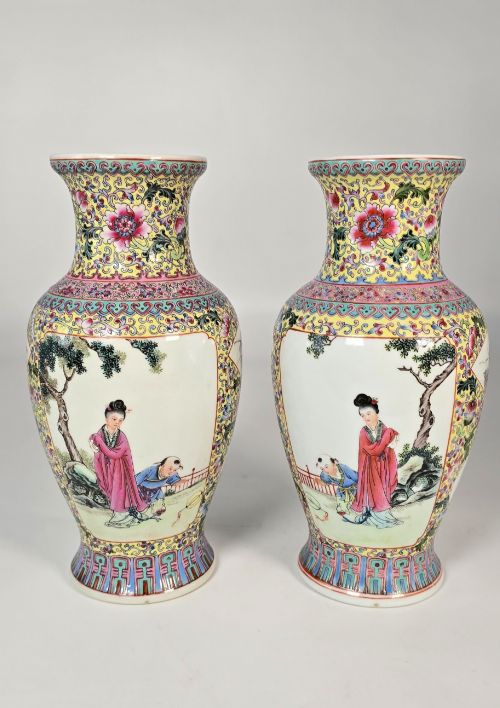

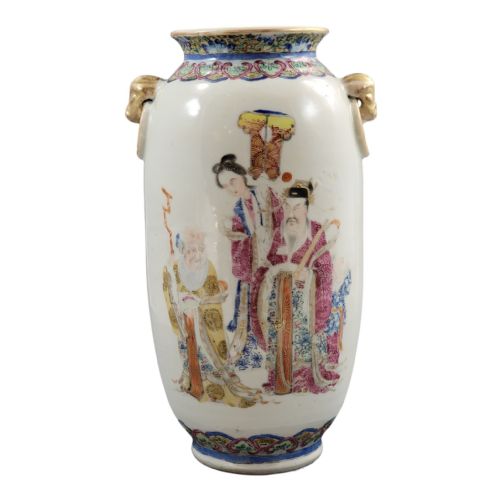


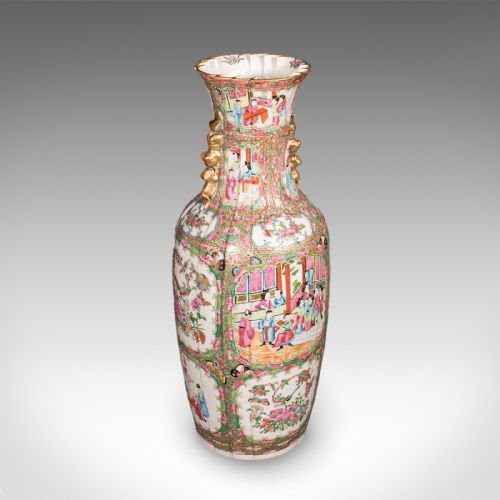


Pink Enamel Vase
These pink enamel vase examples combine porcelain and glass with vibrant floral and figural decoration, offering striking colour and historic charm for your interior.
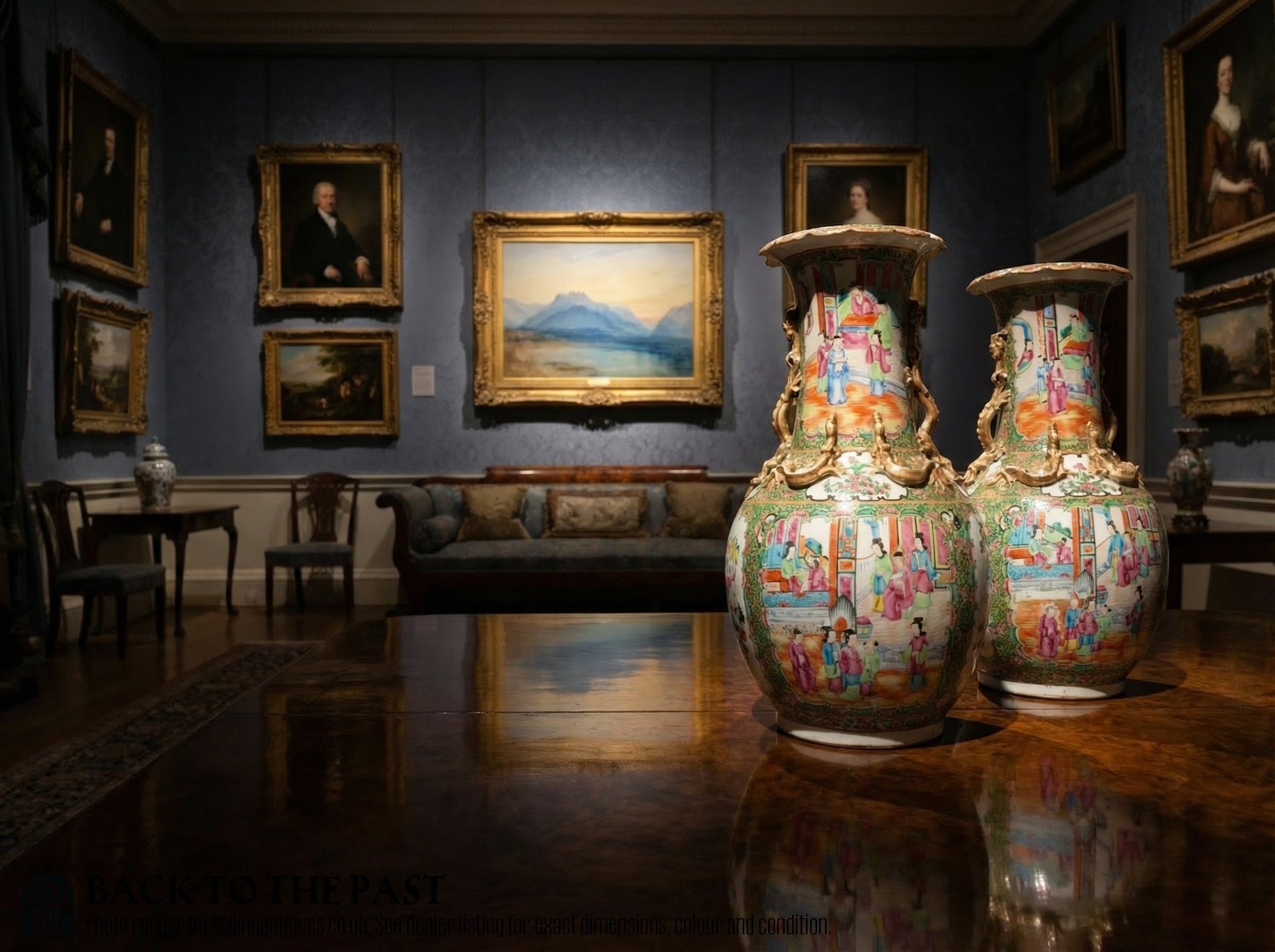
Pink Enamel Vase
When searching for a pink enamel vase, you encounter a selection spanning the eighteenth, nineteenth, and twentieth centuries, originating primarily from Chinese export kilns as well as European glasshouses.
The nineteenth century dominates the selection, particularly through Cantonese Rose Medallion and Famille Rose porcelain alongside Victorian and Bohemian opaline glass.
Forms range from compact cabinet vessels to monumental floor vases and table lamps, often featuring hand-painted floral panels, figures, and gilt accents.
How they were made
Potters and glassmakers utilised ceramic, porcelain, and glass as foundations, applying opaque enamel colours and overglaze pigments directly to the surface.
Gilt and gold leaf details frequently highlight the enamel motifs, requiring careful second firings to bond the metallic elements to the glaze or glass.
Makers shaped vessels into baluster forms, urns, and jars, sometimes mounting them later as table lamps or pairing them with carved wooden bases.
Pink Enamel Vase Retail Price Guide 2026
Typical asking prices for pink enamel vase among the pieces listed under this phrase on Sellingantiques today, from the lower quarter to the upper quarter. They describe what is for sale here now, not the wider market.
Listings feature porcelain, glass, and ceramic materials across the eighteenth, nineteenth, and twentieth centuries, including Bohemian glass and Chinese export porcelain.
What varies in quality
The precision and density of the hand-painted enamels separate standard production pieces from finer works, where figures possess expressive faces and floral borders show intricate brushwork.
The weight and clarity of the underlying porcelain or glass set the baseline for the vessel, with heavier baluster forms and unblemished crystal or opaline layers commanding attention.
Completeness alters desirability, particularly when lids, covers, or matched pairs survive intact across centuries without major restoration.
Tamura Yukio·Harrach
The Pink Enamel Vase Glossary
- Famille rose
- A palette of opaque rose-pink enamel introduced to Chinese ceramics in the eighteenth century. It allowed artists to render soft gradients of pink alongside turquoise, yellow, and green.
- Baluster vase
- A tall vessel form featuring a rounded body, a narrow neck, and a wider flared base. This silhouette provides a stable canvas for expansive enamel decoration.
- Opaline glass
- An opaque or translucent glass developed in nineteenth-century Europe, often tinted in pastel shades such as pink. It imitates porcelain and accepts enamel and gilt painting readily.
- Rose medallion
- A distinct style of Chinese export porcelain decorated with alternating panels of figures and birds surrounded by flowers and butterflies. The palette relies heavily on pink enamel and gold.
- Overglaze enamel
- Pigments applied on top of a fired and glazed ceramic body before undergoing a lower-temperature second firing. This technique permits brilliant surface colours that sit slightly raised from the glaze.
Pink Enamel Vase: Frequently Asked Questions
How are these vases cleaned safely?
Dust surfaces gently with a soft, dry brush to protect delicate overglaze enamels and gold leaf details from abrasion. Avoid submerging antique ceramic or glass pieces in water, especially if they feature painted decoration or metal mounts.
Moisture can seep into unglazed foot rims or weaken historic adhesives used in past repairs. Wipe glass and porcelain surfaces sparingly with a slightly damp cloth only when necessary.
Can I use these as table lamps?
Many large nineteenth-century pieces have been converted into table lamps over time to suit modern domestic lighting needs. This adaptation utilises the height and decorative presence of the original vessel.
Check whether the wiring passes safely through a drilled base or an internal brass fitting. Preserving the structural integrity of the ceramic or glass remains central when evaluating converted lamps.
How do I date a Chinese export vase?
Examine the base for reign marks, though appreciation requires caution as earlier marks often appear on later Qing dynasty pieces. The tone of the pink enamel, the style of the hand-painted figures, and the weight of the porcelain provide reliable clues.
Late nineteenth-century examples often display denser, brighter enamel palettes compared to softer eighteenth-century hues. Comparing the potting style with documented archive pieces helps narrow the decade of production.
What does a pair signify?
Matched pairs were created symmetrically to adorn mantelpieces, sideboards, or central tables in grand nineteenth-century interiors. Surviving together as a pair increases their decorative impact and historical integrity.
Inspect both vessels closely to ensure the enamel colours and hand-painted scenes match in hand and palette. Minor variations often confirm authentic hand painting by different studio artists.