


Qing Dynasty Canton Vase
A qing dynasty canton vase brings vibrant hand-painted enamel and distinct export craftsmanship into a room.
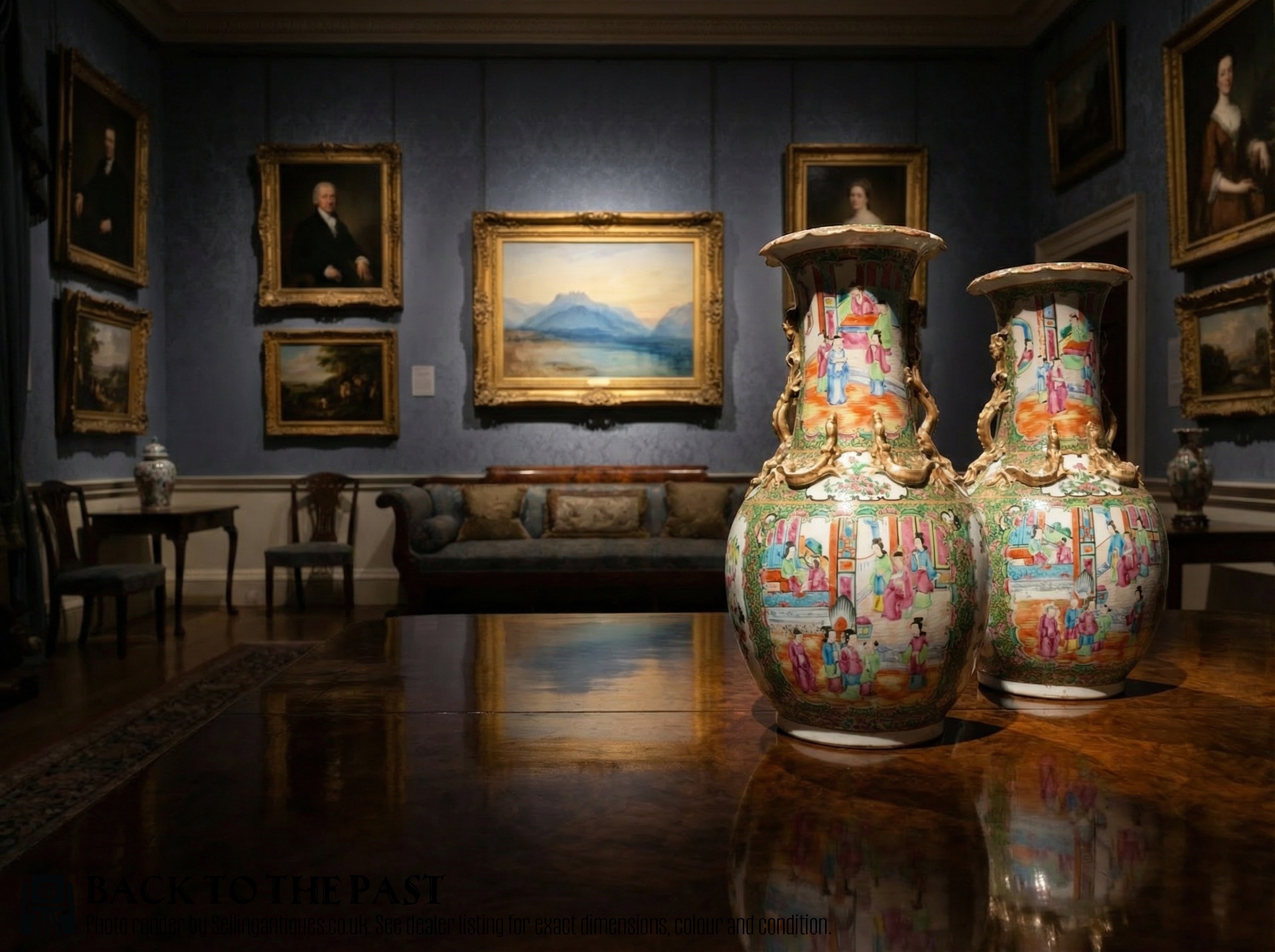
Qing Dynasty Canton Vase
A qing dynasty canton vase represents the rich tradition of Chinese export ceramics, frequently taking the form of large baluster vessels, lidded jars, moon flasks, and umbrella stands. The pieces seen here largely date from the nineteenth century, including specific periods such as the Daoguang era, alongside late eighteenth-century examples.
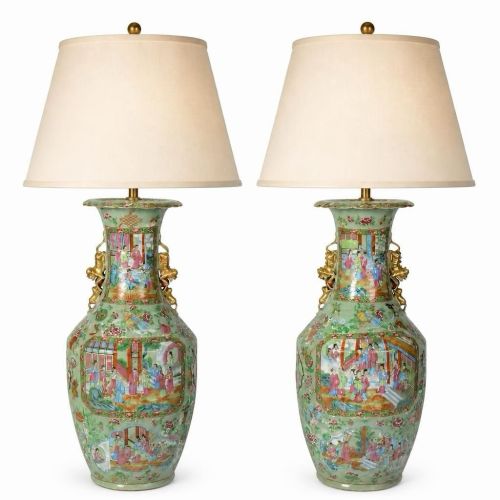
Buyers encounter numerous pairs configured as lamps, alongside monumental floor vases and centrepieces. The dominant aesthetic encompasses Rose Medallion and Rose Mandarin patterns executed in bright polychrome enamels.
How they were made
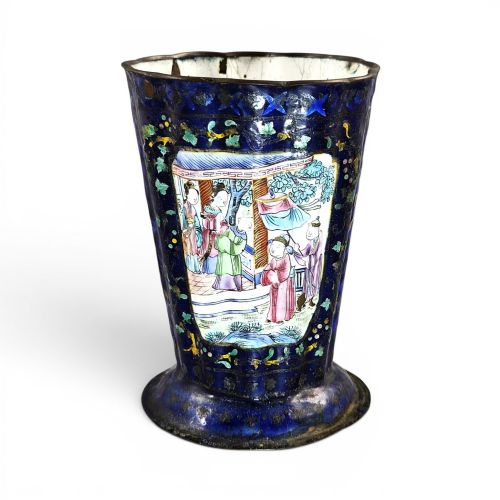
The foundation of a qing dynasty canton vase is white ceramic porcelain or occasionally copper, shaped into vessels before receiving detailed hand-painted enamel decoration. Artisans applied vibrant colour palettes, often incorporating gilded highlights and intricate floral or figural panels.
Many large floor vases and baluster vessels were constructed in sections and paired with bespoke wooden stands, whilst smaller examples utilise traditional potting techniques common to Chinese export workshops.
Several heavy floor vases now double as wiring channels for nineteenth-century lamp conversions, shedding new light on traditional Chinese export pottery.
What varies in quality
The standard of a qing dynasty canton vase depends heavily on the precision of the hand-painted enamelwork and the crispness of the gilt detailing across the surface. Monumental scale, balanced proportions, and the inclusion of original covers or matching pairs elevate specific examples within the range.
Depth of colour and complexity in the figural or botanical scenes distinguish superior workmanship from standard production pieces intended for the export market.
The Qing Dynasty Canton Vase Glossary
- Famille rose
- A major palette of Chinese ceramic enamels featuring opaque pink or rose colours introduced during the Qing dynasty. This palette defines the visual style of numerous nineteenth-century export pieces.
- Rose medallion
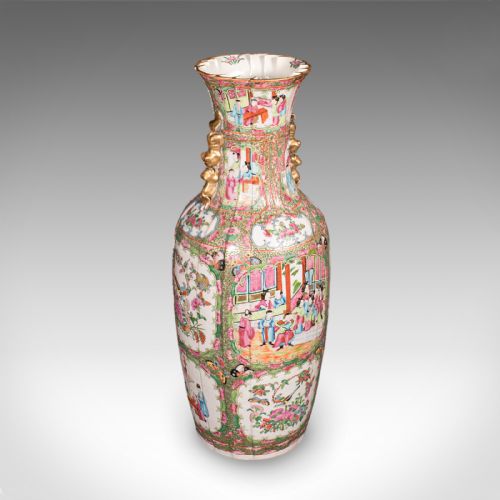
- A specific decorative style of Canton porcelain featuring distinct panels filled with figures, birds, and flowers arranged symmetrically. These panels sit against a densely patterned background of gold and green foliage.
- Baluster vase
- A tall vessel form characterised by a rounded body that tapers toward the base and flares at the neck. This shape provides a stable and expansive canvas for intricate enamel painting.
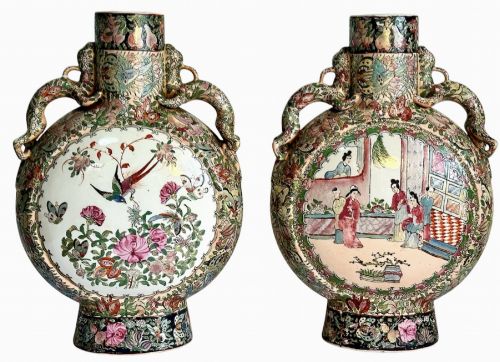
- Moon flask
- A flattened circular ceramic vessel supported on a small foot and fitted with two small handles. These flasks display detailed pictorial scenes on both flat faces.
- Enamel
- A glassy substance fused to ceramic or copper surfaces through firing to impart permanent colour. In export wares, these enamels were applied by hand over the initial glaze.
Qing Dynasty Canton Vase: Frequently Asked Questions
How are canton vases dated?
Dating relies on stylistic markers, potting characteristics, and specific reign periods recorded in historical export patterns.
Nineteenth-century examples frequently show distinct enamel thickness and specific rose medallion motifs that separate them from earlier eighteenth-century copper or porcelain vessels.
Were these vases made for export?
Yes, these items were specifically produced in Guangdong for Western markets during the Qing dynasty.
The decorative schemes often blended traditional Chinese motifs with European tastes, leading to the creation of large floor vases, umbrella stands, and table lamps.
How do I care for a porcelain vase?
Maintenance requires gentle dusting with a soft, dry cloth to protect the delicate hand-painted enamel and gilt surfaces.
Harsh chemical cleaners and abrasive materials must be avoided entirely to preserve the nineteenth-century glaze and colours.