





Caucasian Flatweave Bag
These caucasian flatweave bag examples are nomadic storage pieces and saddle components woven by tribal hands, offering authentic folk art utility for modern interiors.
Caucasian Flatweave Bag
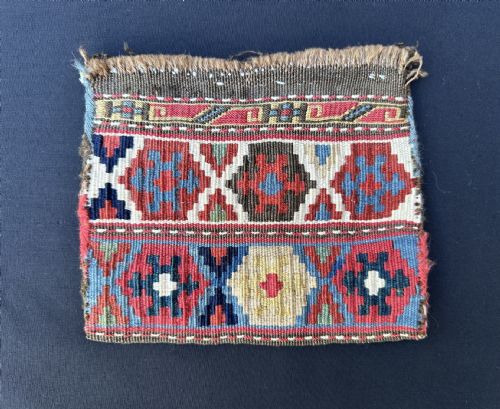
A caucasian flatweave bag represents the domestic and nomadic output of tribal groups from the Caucasus and neighbouring regions, created during the late nineteenth and early twentieth centuries. These textiles include complete storage containers, vanity bags, saddle bags, and individual bag faces or panels.
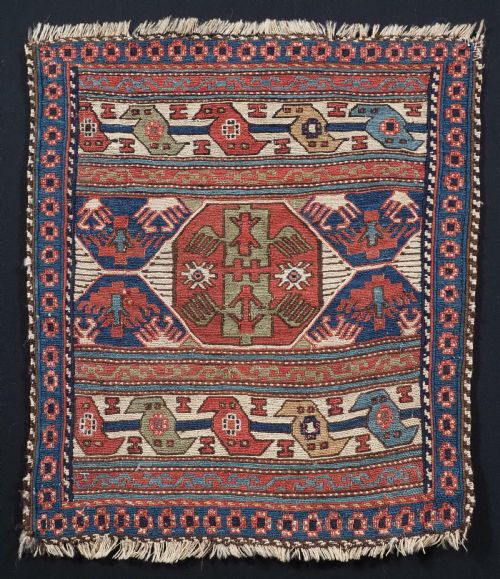
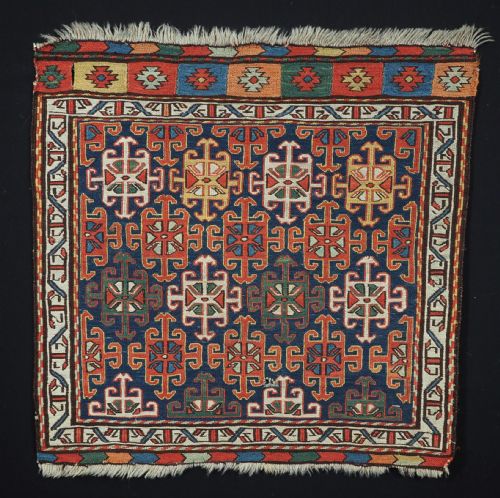
The most common forms encountered on this page are Shahsavan and Kurdish pieces utilising flatweave and soumak techniques. They originate from nomadic or semi-nomadic communities who wove them for practical transport and storage in encampments.
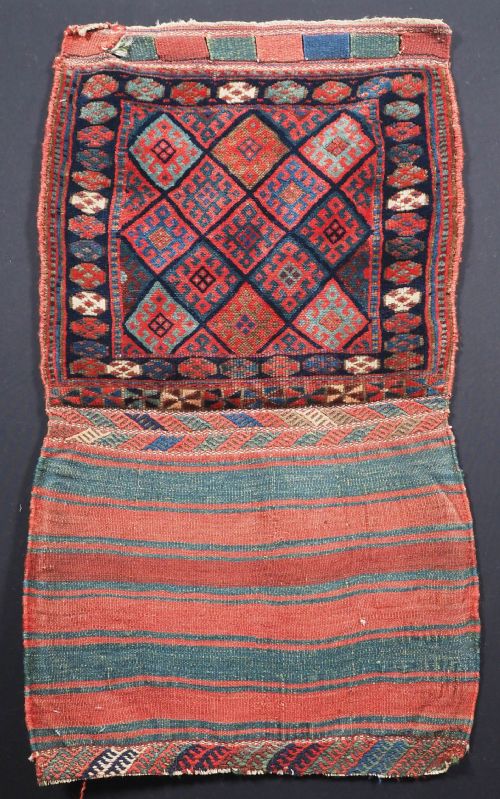
Makers often fashioned these items as functional objects like mafrash storage bins or khorjin saddle bags. Survival in complete pairs or as sound individual panels marks their transition from daily camp utility to decorative textile art.
How they were made
Weavers constructed each caucasian flatweave bag using hand-spun wool and cotton foundations, manipulated through flatweaving, kilim, or soumak wrapping techniques. The reliance on vegetable and natural dyes provides the characteristic palette found across these tribal textile art pieces.
The soumak technique allows for intricate geometric designs, bird motifs, and dragon patterns to stand out on the bag face while maintaining structural integrity. Plain weave backs and sturdy construction ensured the bags could endure the rigorous demands of nomadic transport.
Many old saddle bags still retain traces of mountain dust caught inside their woolly chambers from their travels across Azerbaijan.
What varies in quality
The distinction between standard examples and superior ones rests on the crispness of the tribal motifs, such as birds, dragons, and geometric panels. Fineness of the soumak weave and the depth of natural dyes dictate visual impact.
Completeness alters the character of the piece, with intact pairs or full mafrash storage bags offering greater historical context than single panels. The integrity of the plain weave backing and wool condition further separate average textiles from exceptional specimens.
The Caucasian Flatweave Bag Glossary
- Soumak
- A brocade-like weaving technique that wraps supplementary weft threads over the warp to create a textured, durable surface. It defines many detailed bag faces.
- Mafrash
- A large rectangular storage bag or chest panel used by nomads for bedding and household goods. These are often encountered complete or as individual sides.
- Khorjin
- The traditional Persian and Caucasian term for a double saddlebag. They were designed to be slung over animals for transport.
- Kilim
- A flatweave textile produced without pile by tightly interweaving warp and weft strands. It forms the lightweight structure of many nomadic bags.
- Natural Dyes
- Colourants derived from plants, insects, and minerals rather than synthetic compounds. They yield the harmonious tones seen in nineteenth-century pieces.
Caucasian Flatweave Bag: Frequently Asked Questions
What were these bags used for?
Nomadic tribes utilised these textiles for transporting belongings, storing household items inside tents, and carrying goods across regions.
Saddle bags rode on horses or camels, while larger storage containers held blankets and clothing during seasonal migrations.
How do I care for a flatweave bag?
Protect the textile from direct sunlight to prevent natural dye fading, and vacuum gently using low suction without a rotating brush.
Keep the wool clean and dry, mounting panels securely if displayed on walls to avoid stretching the weave.
How are periods told apart?
Dating relies on wool preparation, dye analysis, and structural characteristics typical of late nineteenth and early twentieth-century tribal weaving.
Earlier pieces from the 1870s often display more saturated natural dyes and finer soumak work compared to later examples.
Can I use them as floor rugs?
Most bag faces and delicate panels function better as wall art or decorative display pieces due to their historic construction.
Sturdier flatweave backs and complete saddle bags can handle gentle placement in low-traffic areas of a room.