

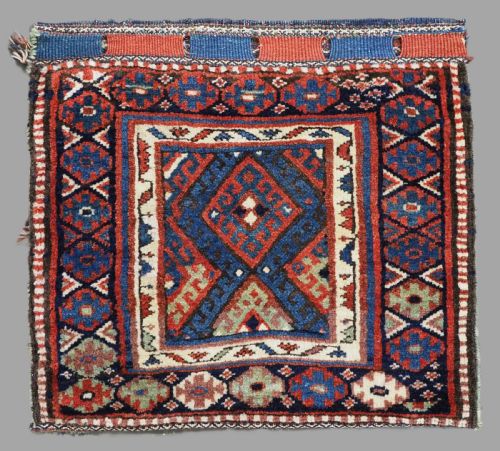


Red Woven Khorjin Bag
When you search for a red woven khorjin bag, you are looking for nomadic saddle bags and storage containers crafted by tribal weavers across Persia and the Caucasus during the nineteenth and early twentieth centuries.
Red Woven Khorjin Bag
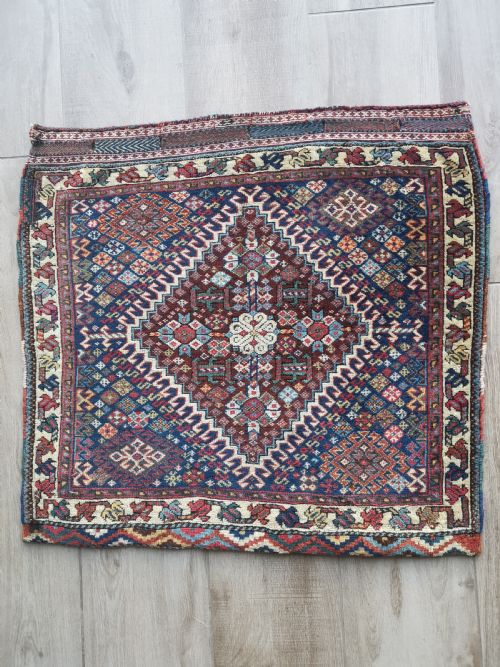
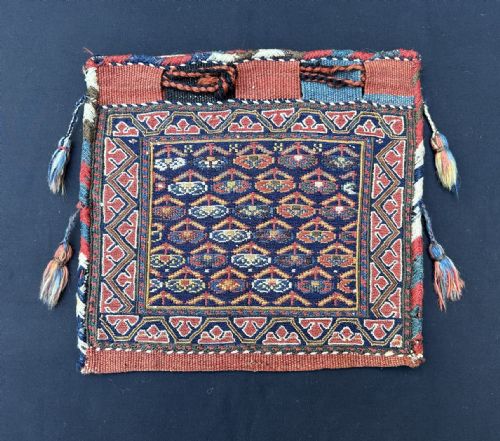
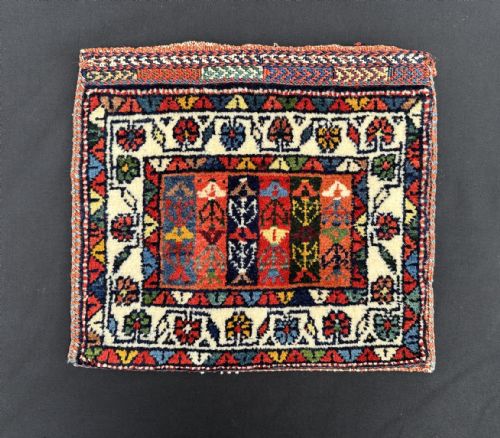
A red woven khorjin bag encompasses both complete double saddlebags and single bag faces, originating from tribal confederations such as the Qashqai, Shahsevan, Afshar, and Luri tribes. These utilitarian objects were designed for transport on animals, utilising durable construction to withstand nomadic life.
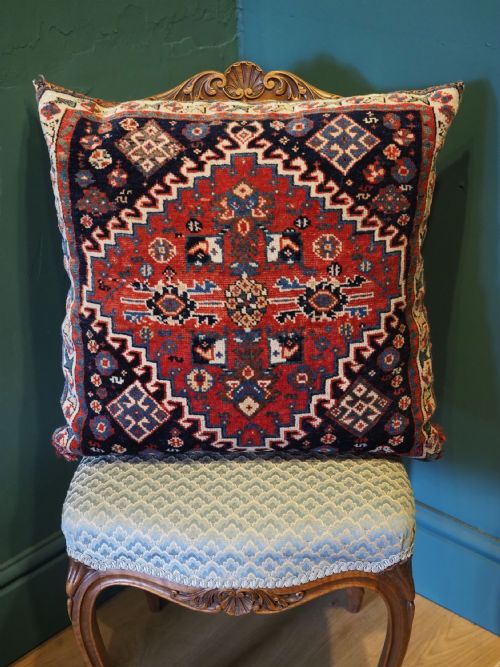
Many examples survive as single bag faces or cushion conversions after the original reverse sides deteriorated or were separated from the main compartment. Collectors often encounter these pieces in various formats, ranging from small personal vanity bags to large storage containers.
Materials and construction methods
Weavers constructed these textiles using hand-spun wool for the pile and foundation, frequently incorporating goat hair along the edges and bases for added structural strength. Leather and metal details occasionally appear on specific nomadic utilitarian pieces.
Natural dyes provided the rich chromatic range characteristic of these textiles, anchoring the dominant red tones alongside secondary hues. Artisans employed pile weaving and flatweave techniques such as sumac to create intricate geometric and pictorial motifs.
Object forms range from complete double saddlebags and storage containers down to small personal chantehs, vanity bags, and square cushion conversions.
Quality variations in tribal weaving
The distinction between standard examples and superior pieces rests upon the quality of the wool and the depth of the natural dyes used in production. Lustrous, tightly packed wool yields a tactile resilience that lesser materials simply lack.
Design clarity and structural integrity further define the upper tier of these textiles, where precise knotting and well-preserved borders elevate the piece. The survival of complete backs and original fastenings adds substantial merit to individual examples.
The Red Woven Khorjin Bag Glossary
- Khorjin
- A traditional tribal double saddlebag used by nomads for carrying personal belongings and household goods during migration. These items feature two pouches connected by a central web.
- Bag face
- The decorative front panel of a saddlebag or storage container that remains visible while the bag hangs or rests in use. Many surviving antique examples are trimmed single faces.
- Sumac
- A warp-wrapping flatweave technique that produces a textured surface resembling embroidery, frequently utilised by Shahsevan weavers. This method allows for crisp diagonal pattern lines without vertical slit gaps.
- Chanteh
- A small personal vanity bag or container woven by tribal women for carrying small items. These compact pieces often display remarkably fine knotting and dense decorative programmes.
- Boteh
- A stylised almond or paisley motif representing a floral spray or cypress tree, commonly found in Afshar and Persian tribal designs. It appears both as a repeated field pattern and as a central emblem.
Red Woven Khorjin Bag: Frequently Asked Questions
What is a khorjin bag?
A khorjin is a traditional double-sided saddlebag utilised by nomadic tribes for transport and storage during seasonal migrations. These containers were woven in two halves connected by a plain weave bridge.
Over time, many of these utilitarian objects were separated into individual bag faces or adapted into decorative cushions for domestic interiors.
How were tribal bags used?
Nomadic families loaded these bags onto horses, donkeys, or camels to transport personal possessions, grain, and bedding across difficult terrain. The sturdy construction protected contents from weather and constant movement.
When stationary inside tents, the bags served as domestic storage containers and contributed to the colourful textile furnishings of the encampment.
How do I identify tribal origins?
Tribal attribution relies on specific structural characteristics, colour palettes, and repertoire of motifs unique to particular weaving groups. For instance, Shahsevan pieces often feature sumac technique and animal icons, while Afshar examples frequently display boteh designs.
Examining the selvedges, end finishes, and wool quality provides further clues regarding whether a piece originated in the Caucasus or South-West Persia.
How should I display a bag face?
Single bag faces and cushion conversions suit various interior settings, functioning well as small wall-hanging panels or low-profile floor cushions. Their durable wool construction handles gentle placement in living spaces.
Protecting antique textiles from direct, prolonged sunlight preserves the natural dyes and prevents the wool fibres from becoming brittle over time.