




Persian Wool Khorjin
When you handle a persian wool khorjin, you hold the nomadic weaving heritage of tribal weavers across nineteenth and early twentieth century Persia.
Persian Wool Khorjin
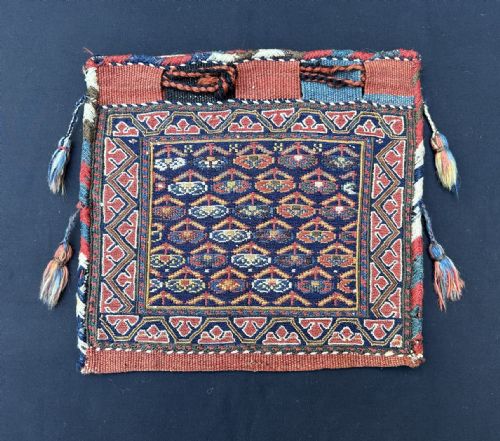
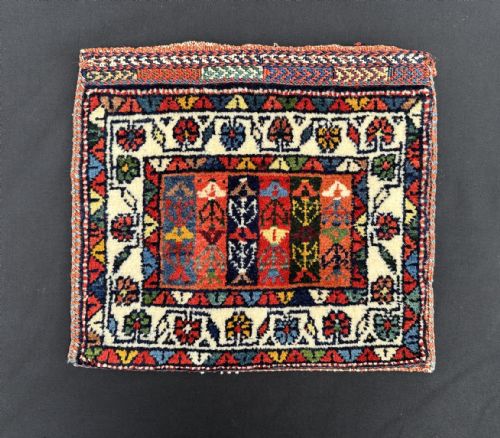
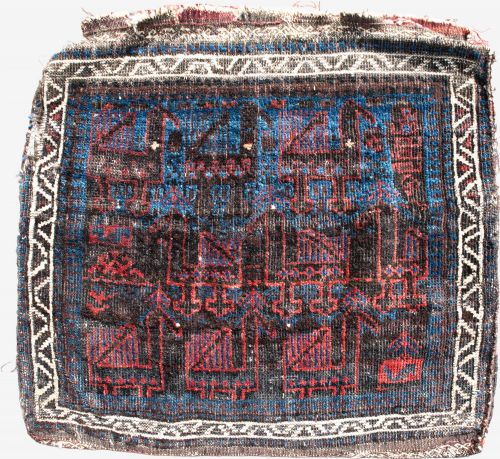
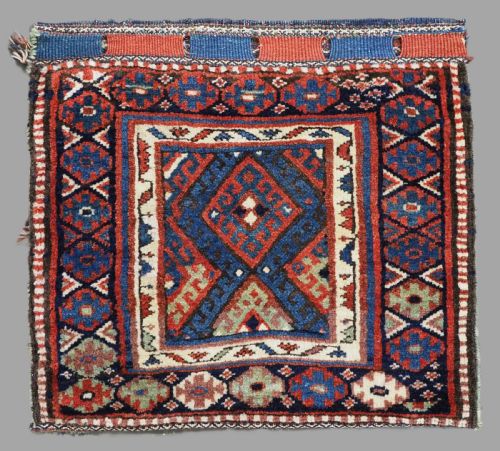
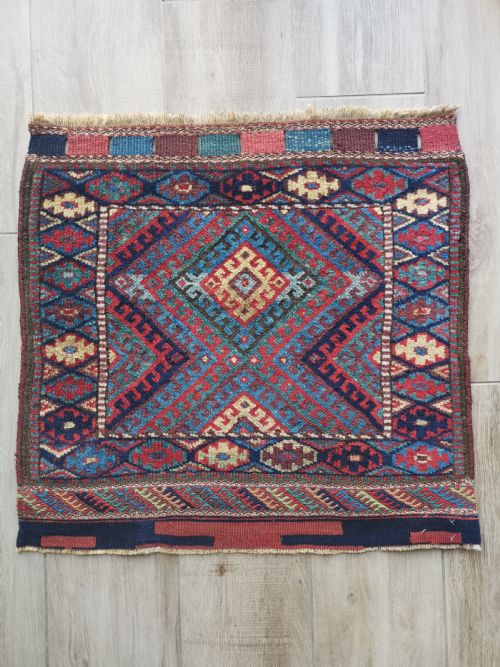
A persian wool khorjin is a traditional double-sided saddle bag or bag face created by nomadic tribes for transport and storage on animals. The pieces on this page span the nineteenth and early twentieth centuries, originating from tribal groups such as the Qashqai, Afshar, Shahsavan, Jaf Kurd, Luri, and Baluch.
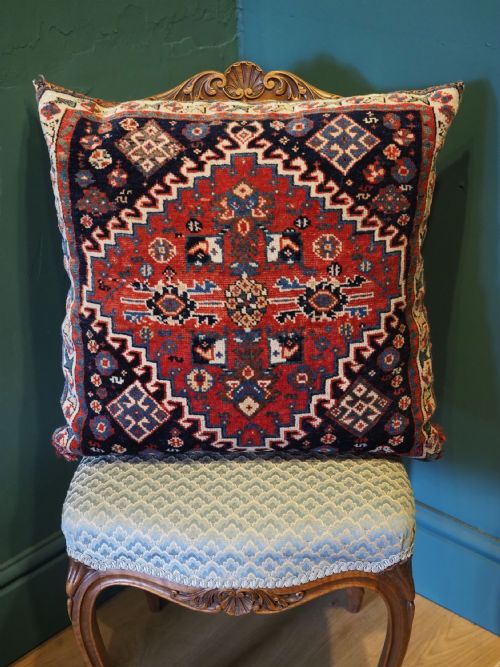
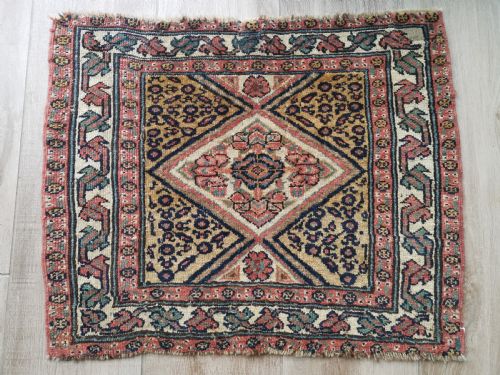
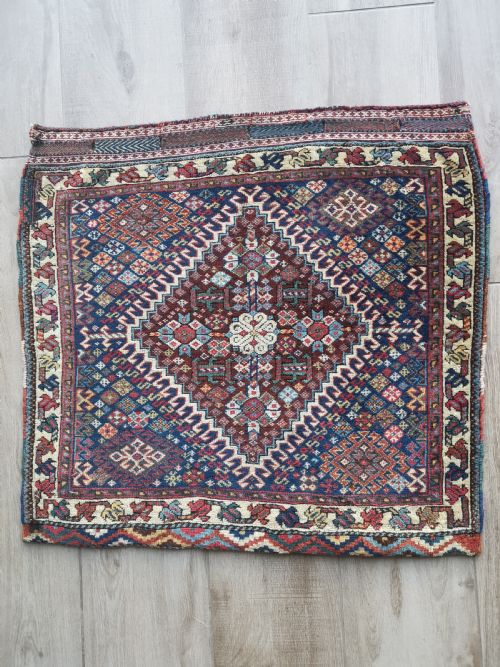
You will encounter complete double bags with their original plain weave backs alongside single bag faces that have been preserved or converted into cushions. These textiles served practical purposes in camp life, carrying personal items, vanity goods, or household provisions across the mountains and plains of Persia.
The regional styles vary distinctly according to the weaving group, yielding characteristic motifs like boteh patterns, tile designs, central medallions, and bird motifs. Each piece reflects the specific tribal identity and geographic territory of its maker, from the Fars province to Azerbaijan and Luristan.
Structural integrity and handle
The standard of a persian wool khorjin rests in the handle of the wool and the crispness of the tribal drawing. Superior examples maintain dense knotting, intact side cords, and minimal structural loss across the flatweave backs or pile surfaces.
Depth of colour and the clarity of natural dye lots separate more compelling pieces from simpler utilitarian examples. The survival of original backs, leather reinforcement, and supplementary elements like cowrie shells adds significantly to the integrity of a textile.
Nomads occasionally stitched cowrie shells directly onto bag faces to ward off the evil eye during long desert journeys.
The Persian Wool Khorjin Glossary
- Khorjin
- A traditional Persian saddle bag used by nomadic tribes for transport and storage. These transport pieces were constructed as a pair of pouches joined by a central web.
- Bagface
- The decorative front of a saddle bag, which was often separated from the plain back over time and preserved as an independent textile or converted into a cushion.
- Soumac
- A wrapping technique used in tribal weaving that creates a durable, ribbed surface without pile. This method allows for precise geometric patterning.
- Boteh
- A stylised floral motif resembling a almond or bent pine cone, frequently found in Persian tribal weaving. It remains one of the most enduring symbols in oriental textiles.
- Chanteh
- A small personal bag or vanity bag carried or used by nomads for small possessions. These smaller formats often display exceptionally fine detail.
Persian Wool Khorjin: Frequently Asked Questions
What is a khorjin used for?
Nomadic tribes utilised these double pouches as pack bags loaded onto horses, donkeys, or camels during seasonal migrations. They served to transport personal belongings, household goods, and provisions across difficult terrain.
Over time, many of these utilitarian items were separated into individual bag faces or preserved intact as valued examples of tribal textile art for domestic display.
How do I care for a tribal wool bag?
Keep these textiles out of direct, strong sunlight to protect the natural dyes from fading over the years. Gentle vacuuming without a rotating brush helps remove dust from the wool pile.
Professional cleaning should be undertaken sparingly and only by specialists experienced in antique oriental rugs and flatweaves.
Are complete saddle bags rare?
Complete examples featuring both original pouches and the connecting web or plain weave back are less common than single bag faces. Many bags were divided during their working life or when worn sections required cutting.
Surviving complete pieces offer a complete picture of the original nomadic object and its functional design.