


Wool Tribal Saddle Bag
A wool tribal saddle bag brings dense, nomadic storytelling into a modern room through geometric motifs and rich vegetable dyes.
Wool Tribal Saddle Bag
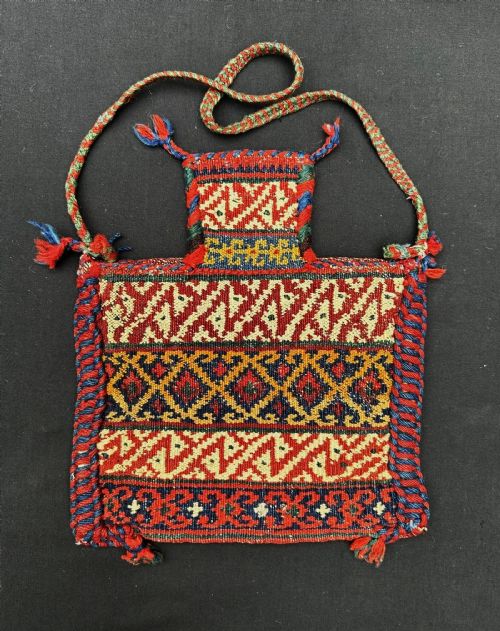
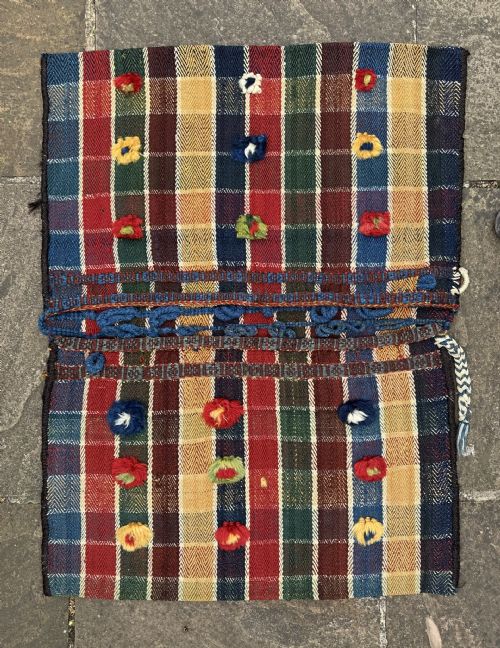
A wool tribal saddle bag originates from nomadic and village weavers across Persia, Anatolia, the Caucasus, and Central Asia. When you search for a wool tribal saddle bag, you encounter functional items originally designed to carry belongings on pack animals, created by tribal groups such as the Qashqa'i, Afshar, Shahsavan, and Luri.
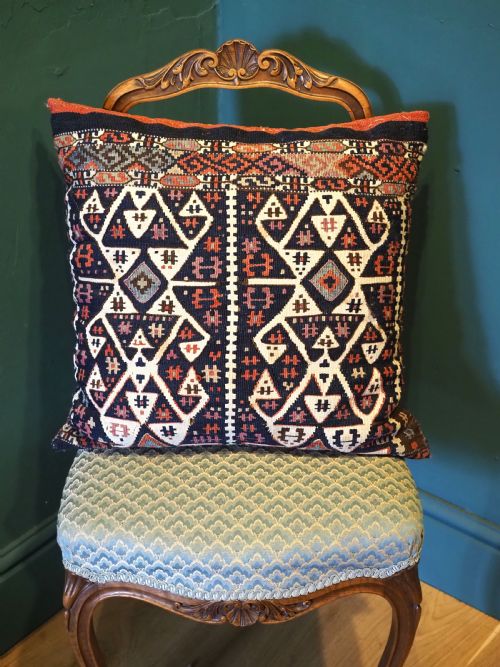
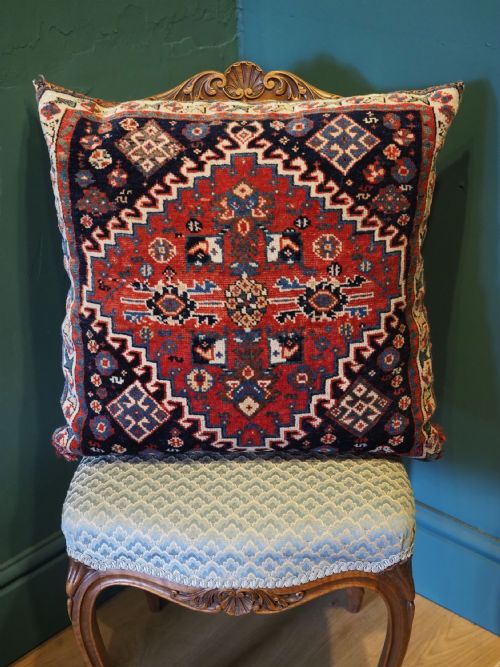
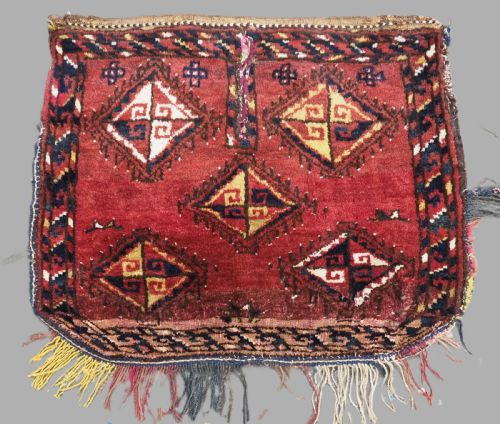
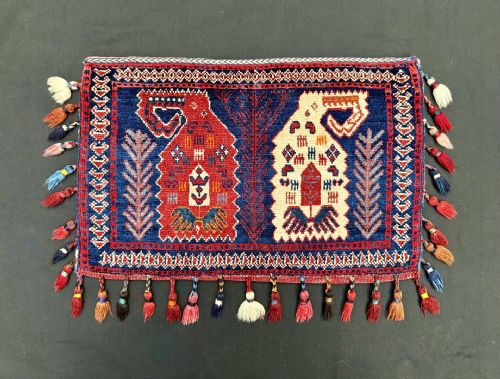
Most examples found on this page survive as single bag faces, complete pairs, or pillow conversions spanning the mid-nineteenth century to the early twentieth century. These textiles display distinct regional patterns, ranging from the boteh and tile motifs of Persian tribes to the bold gul designs of Turkmen weavers and the flatweave structure of Caucasian soumak pieces.
Materials and construction
Weavers relied on hand-spun wool for the primary pile and foundation, often combining it with cotton warps and structural elements made of leather or metal fittings. Natural dyes extracted from local plants and minerals provided the foundational palette, yielding lustrous tones that developed deep patinas over generations of use.
Construction techniques varied between pile weaving, flatweave kilim, and intricate soumak wrapping. Many survivals retain their plain weave backs or survive as individual bag faces designed to be used as small rugs or cushions.
Listings span the nineteenth century up to the nineteen-twenties, showcasing wool, natural dyes, and cotton across Persian, Anatolian, and Caucasian traditions.
Assessing quality in nomadic textiles
Quality rests upon the handle of the wool and the saturation of the natural dyes. Denser knotting or tighter soumak wrapping elevates an example, reflecting the skill of the tribal weaver and the quality of the hand-spun wool utilised in the face.
Integrity of design and completeness also separate standard items from superior pieces. Survivals that retain original plain weave backs or complete pairs demonstrate higher preservation value than isolated or heavily repaired fragments.
The Wool Tribal Saddle Bag Glossary
- Khorjin
- The traditional Persian term for a double saddlebag used by nomadic groups for transport.
- Soumak
- A flatweave technique involving wrapping supplementary weft threads around the warp, creating a textured surface.
- Chuval
- A large storage bag produced by Turkmen tribes, frequently featuring prominent gul motifs.
- Heybe
- The Turkish term for a traditional nomadic saddlebag or carrier.
- Gul
- A repeating medallion or floral-like stamp associated with Central Asian and Turkmen carpet design.
- Boteh
- An ancient Persian motif resembling a almond or pear shape, often interpreted as a stylised cypress tree.
Wool Tribal Saddle Bag: Frequently Asked Questions
How were wool tribal saddle bags originally used?
Nomadic tribes slung these double pouches across horses, camels, or donkeys to transport personal possessions during seasonal migrations.
Once pitched in camp, the bags served as domestic storage containers for household goods, grain, and bedding.
How can I display a saddle bag at home?
Many collectors mount complete bags or individual faces on walls as textile art to protect them from floor traffic.
Others convert single bag faces into small floor rugs or plump them into decorative cushions for seating.
What is the difference between a bag face and a complete bag?
A complete saddle bag retains both pouches and the central connecting web, sometimes including the original plain weave back.
A bag face is simply the decorative front panel that has been separated from the back over decades of use.
How do I identify the tribe that made a bag?
Specific colour combinations, border arrangements, and structural weaves point directly to regional groups like the Shahsavan or Afshar.
Motifs such as tile patterns, large botehs, or specific gul designs act as signatures for particular tribal workshops and geographic areas.