
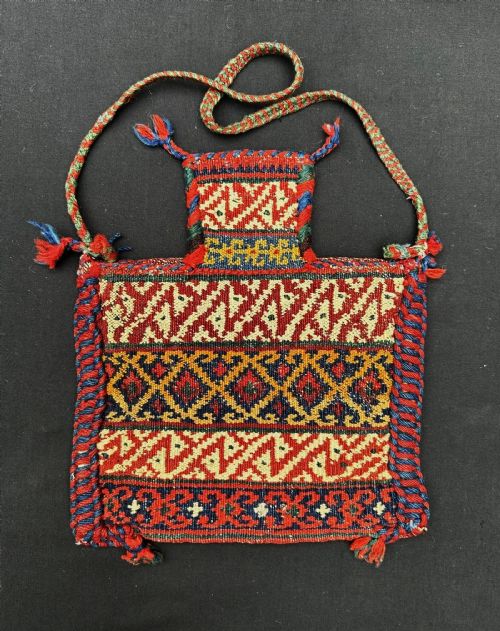
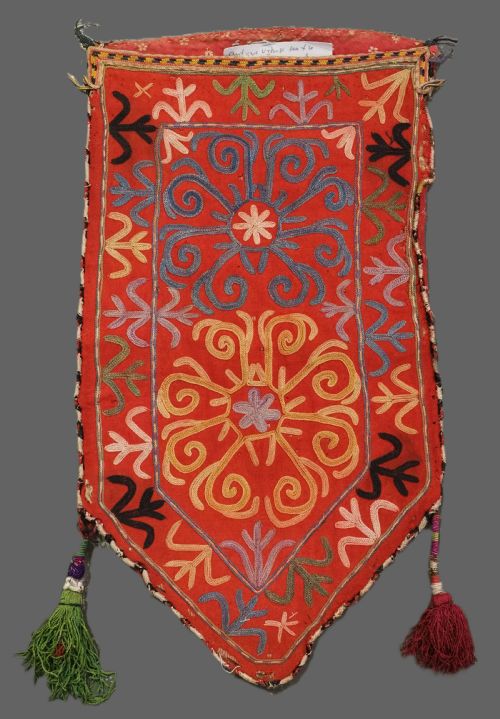
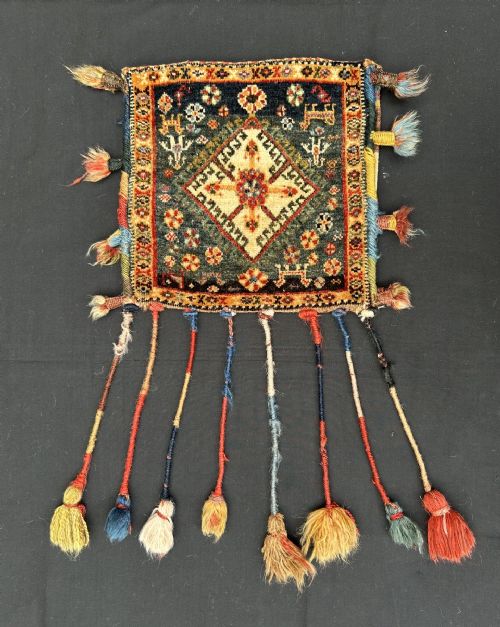
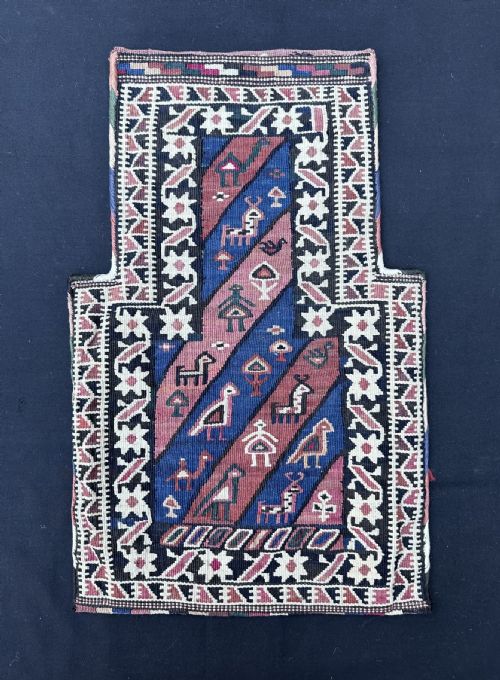




Antique Tribal Pouch
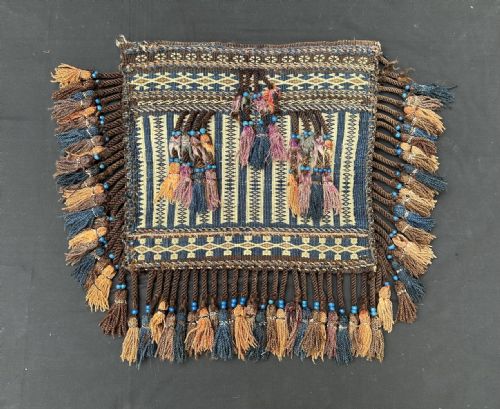
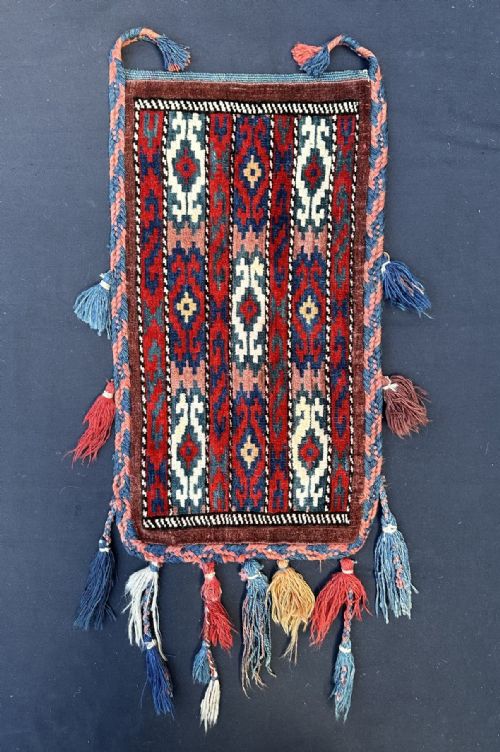
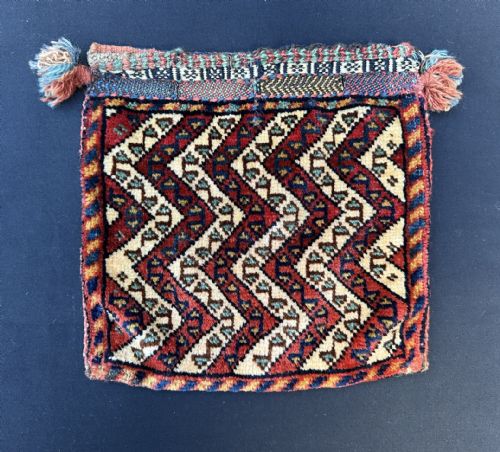
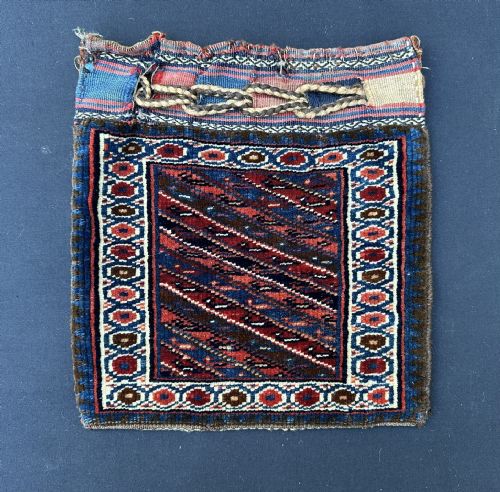
When you search for an antique tribal pouch, you are looking at functional woven containers made by nomadic and village weavers across Persia and Central Asia.
Antique Tribal Pouch
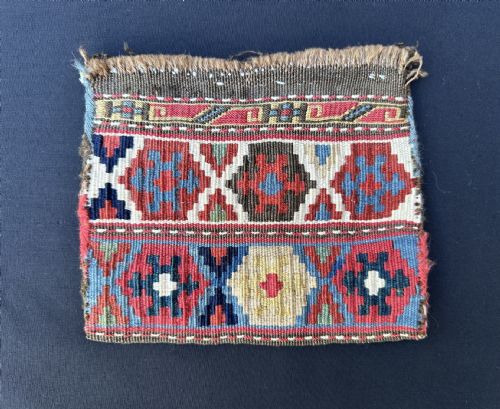
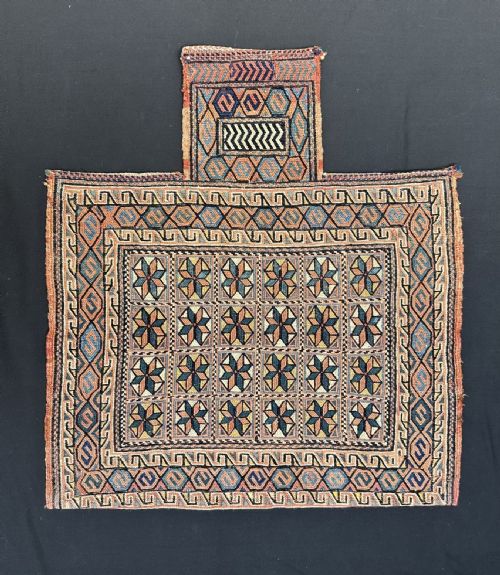
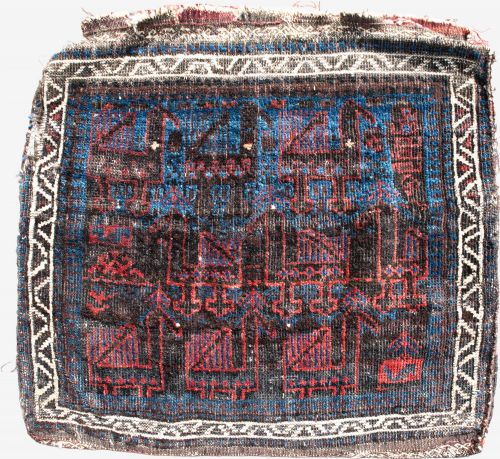
An antique tribal pouch encompasses utilitarian containers created for daily nomadic life, ranging from salt-bags and vanity-bags to spindle-bags and tobacco pouches. These textiles were woven by specific confederacies and tribes, including the Qashqa'i, Afshar, Baluch, Shahsevan, and various Turkmen and Uzbek groups.
The pieces on this page originate predominantly from regions such as Persia, Afghanistan, and Central Asia, dating from the mid-nineteenth century through the early twentieth century. Formats include single-faced and double-faced bags, chantehs, torbas, and miniature saddle-bags designed for practical storage or personal use.
How they were made
The construction relies heavily on wool and hand-spun wool, often paired with cotton foundations and embellished using natural dyes and dyed yarn. Certain pieces incorporate supplementary materials such as silk, glass beads, and cowrie shells to enrich the surface texture.
Weaving techniques vary by regional tradition, featuring flatweave structures, soumak work, and pile-woven faces often completed with original plain-weave backs. Artisans utilised intricate banded weft work and specialised structures suited to the specific utility of the bag.
Some salt-bags retain traces of actual rock salt embedded deep within their narrow necks after more than a century.
What varies in quality
Quality rests upon the fineness of the weave, the clarity and saturation of the natural dyes, and the integrity of the tribal design structure. Examples displaying complete original backs and intact hanging systems command greater appreciation from collectors.
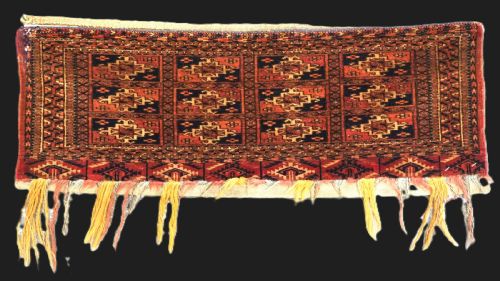
The execution of specific regional motifs - such as the gul patterns on Turkmen torbas or the precise geometry of Afshar and Qashqa'i work - distinguishes standard utility pieces from exceptional tribal textiles.
The Antique Tribal Pouch Glossary
- Chanteh
- A small Persian vanity or personal bag used by nomads to carry small personal items. These pieces often display the distinctive weaving characteristics of tribes like the Kurdish and Bakhtiari.
- Torba
- A small storage bag or hanging bag produced by Turkmen tribes. They are typically wider than they are tall and feature repeated gul motifs.
- Soumak
- A supplementary weft-wrapping technique that produces a durable, textured surface without knotting. It is frequently identified on salt-bags and storage textiles from the nineteenth century.
- Namakdan
- The traditional Persian term for a salt-bag. These narrow-necked vessels were designed to hold rock salt for livestock or domestic use.
- Igsalyk
- A specialised Turkmen spindle-bag intended to hold spinning tools and raw fibres. These items often feature plain-weave backs for practical daily wear.
Antique Tribal Pouch: Frequently Asked Questions
What were antique tribal pouches used for?
These pouches served practical roles in nomadic households, carrying items such as salt, tobacco, pipes, vanity articles, and spinning spindles. Different forms were tailored to specific domestic tasks.
Containers were often hung inside tents or transported on pack animals, combining utility with distinct tribal identity.
How do you identify different tribal origins?
Attribution relies on the specific wool quality, colour palette, structural weave, and recurring motifs characteristic of groups like the Afshar, Baluch, or Yomut. Regional weaving centres and confederacies left clear technical signatures.
Comparing structural details such as selvedges and end finishes helps separate pieces produced across Persia and Central Asia.
How should I display an antique pouch?
Many collectors mount smaller bags and chantehs on neutral backing fabrics or display them as wall hangings to protect the antique textiles. Flat storage bags and torbas can also be displayed flat or lightly supported.
Keep textiles away from direct sunlight and fluctuating humidity to preserve the wool and natural dyes over time.
What dates are common for these bags?
The pieces available span from the mid-nineteenth century up to the early twentieth century, specifically covering decades from the 1850s to the 1920s. This era represents the active period of traditional nomadic weaving before commercial synthetic dyes became widespread.
Datings are estimated from technical markers, wool preparation methods, and historical tribal migrations.