




Geometric Wool Pouch
A geometric wool pouch brings nomadic Persian craftsmanship directly into your home through portable storage vessels decorated with ancient tribal patterns.
Geometric Wool Pouch
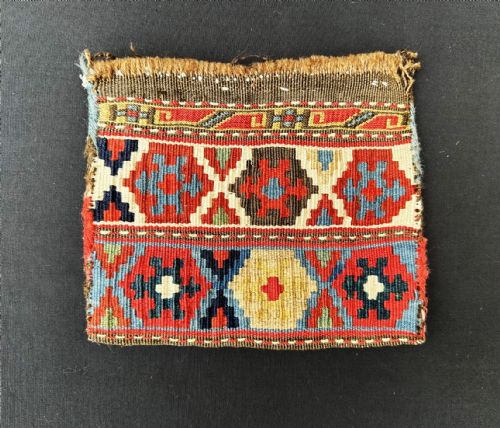
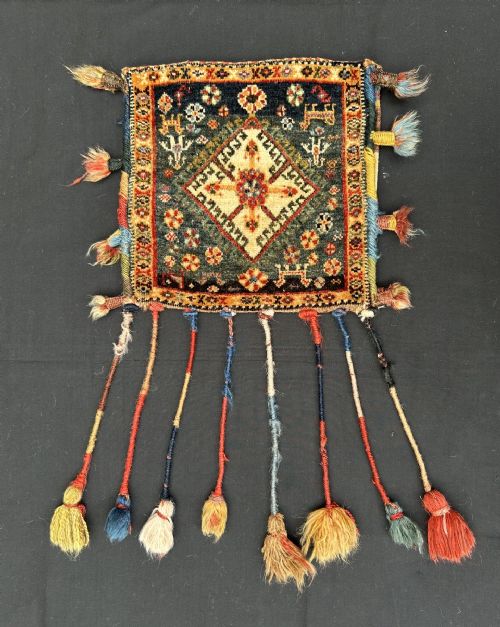
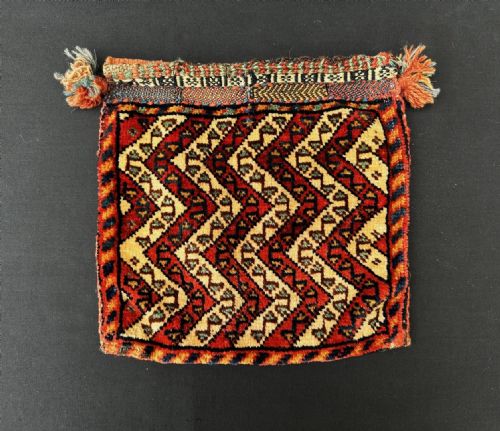
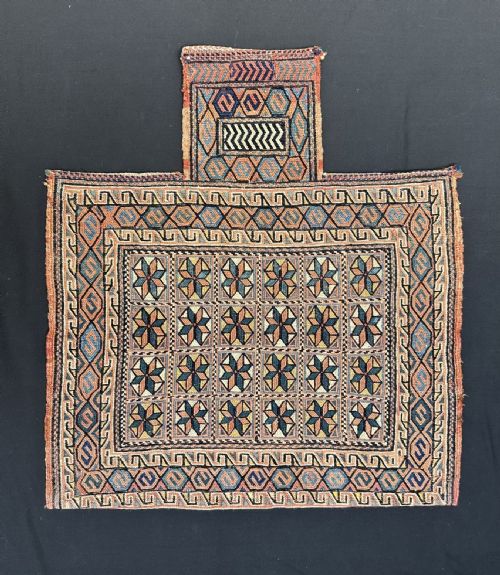
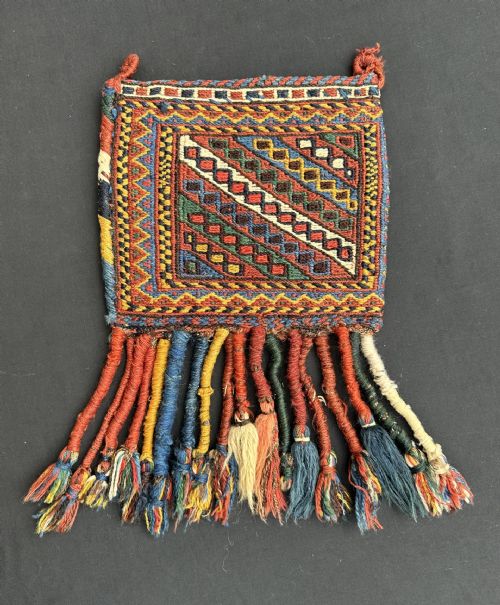
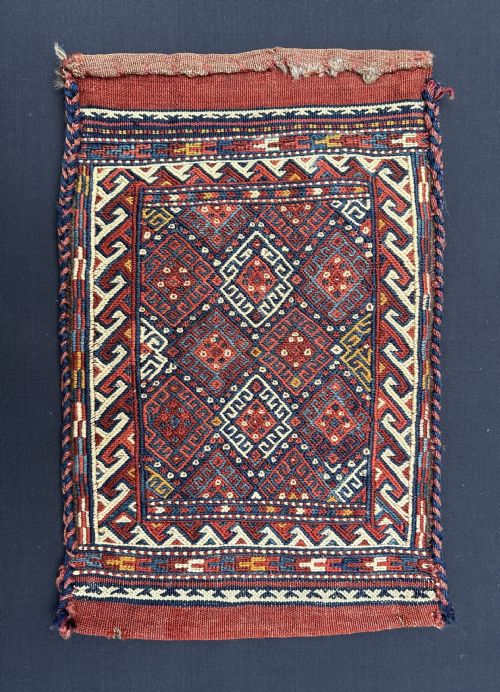
A geometric wool pouch encompasses small tribal storage vessels such as vanity bags, salt bags, tobacco and pipe bags, and mini saddle-bags. These utilitarian pieces originate from nomadic groups including the Afshar, Qashqa'i, Shahsevan, Baluch, and Kordi tribes across various Persian provinces.
The most common examples on this page are vanity bags and salt bags dating from the late nineteenth century to the early twentieth century. Each textile serves a specific daily function within pastoral life, constructed to hold personal items or provisions while travelling.
Tribal styles dominate these listings, specifically Persian tribal, Caucasian tribal, and Baluch tribal aesthetics. The visual language relies heavily on repeating rectilinear motifs and symbolic designs passed down through generations of weavers.
Materials and construction methods
Every geometric wool pouch relies on hand-spun wool combined with cotton for structural support and foundation cords. Natural dyes provide the rich colour palettes observed across the pieces, anchoring the textiles in traditional village and nomadic craft methods.
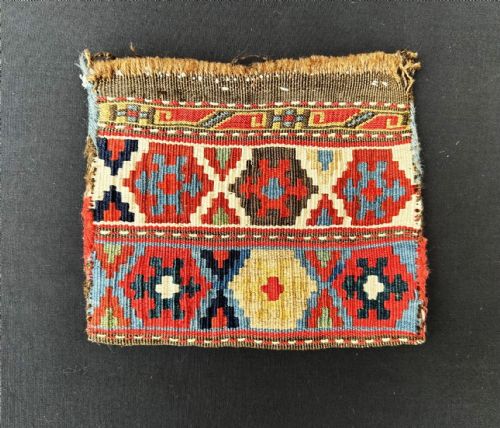
Weaving techniques vary from standard pile or flatweave structures to specialised soumak work and banded weft work designs. These durable methods ensure the storage pouches withstand the rigours of nomadic migration and daily handling.
Nomads wove tiny vanity bags to hold kohl and mirrors, ensuring personal grooming standards remained exceptionally high while crossing dusty mountain passes.
Quality factors in tribal bags
The sophistication of the natural dye palette and the tightness of the weave determine the refinement of a geometric wool pouch. Higher quality examples display exceptional clarity in their tribal motifs and superior handling of hand-spun wool.
The presence of original elements, such as backing materials and hanging loops, separates well-preserved survivors from heavily altered pieces. Integrity of structure and crispness of design define the upper tier of these nomadic textiles.
The Geometric Wool Pouch Glossary
- Soumak
- A flatweaving technique that wraps supplementary weft threads over the warp to create a textured, durable surface. This method produces crisp geometric lines without cutting pile.
- Salt-bag
- A utilitarian container woven by nomadic tribes to store and transport rock salt for animals or household use. These narrow-necked pouches often feature secure flap closures.
- Vanity-bag
- A small personal pouch utilised by nomadic women to carry cosmetics, mirrors, or small valuables. They frequently display the most intricate weaving of all portable storage forms.
- Tubreh
- A Persian term designating a general utility bag or feed bag used across various tribal regions. These rectangular pouches often exhibit bold banded designs.
- Banded weft work
- A decorative weaving structure where horizontal bands of pattern alternate across the face of the textile. This technique creates rhythmic visual stripes.
Geometric Wool Pouch: Frequently Asked Questions
What were geometric wool pouches used for?
Nomadic tribes utilised these portable containers for storing salt, tobacco, pipes, and personal vanity items during seasonal migrations. Each specific shape corresponded to a practical function within daily camp life.
Beyond simple storage, these pouches served as portable expressions of tribal identity and artistic skill. They hung inside tents or fastened to pack animals as functional household property.
How do I care for an antique pouch?
Keep your textile away from direct sunlight to protect the natural dyes from fading over time. Gentle vacuuming through a mesh screen removes surface dust without damaging the fragile hand-spun wool.
Avoid hanging heavy pouches by single suspension points to prevent distortion of the original structure. Professional textile conservation cleaning is recommended if deep washing becomes necessary.
How are different tribes identified?
Distinctive design repertoires, specific colour combinations, and structural habits point researchers toward particular tribal confederacies and sub-tribes. Regional weaving centres like Khorassan, Fars, and Kerman possess characteristic palettes.
Motifs pass down through family lines within groups such as the Shahsevan or Qashqa'i. Comparing knotting styles and edge finishes further clarifies geographic origins.
What is soumak work?
Soumak is a complex flatweave technique where coloured wool weft threads wrap over and under warp threads in specific sequences. This creates a durable structure with a braided appearance on the face.
Unlike pile carpets, soumak surfaces lack cut tufts, resulting in a flat, crisp definition for geometric patterns. It provides extra strength required for utilitarian storage bags.