


Woven Wool Bag
When you handle a woven wool bag from nineteenth-century Persia or Central Asia, you hold centuries of nomadic tribal heritage.
Woven Wool Bag
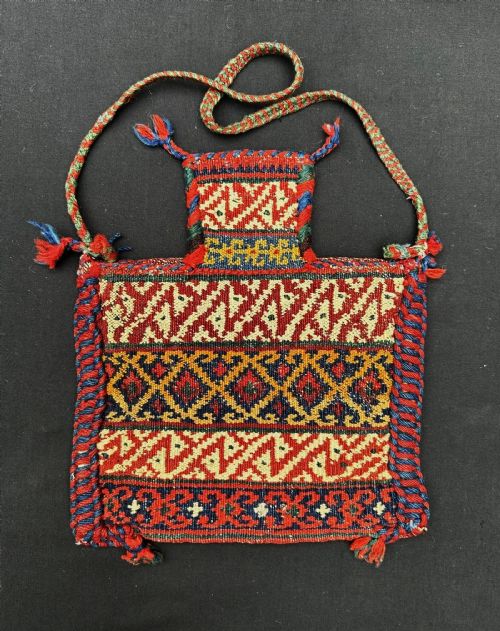
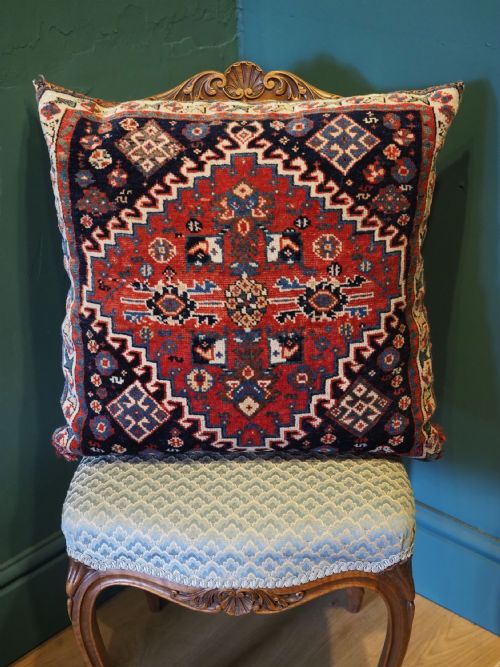
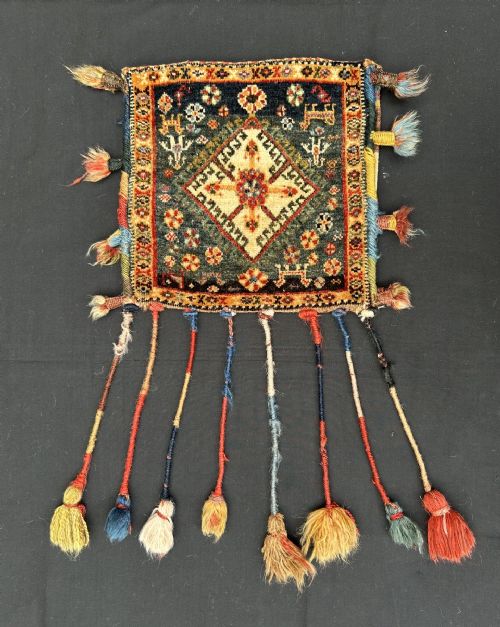
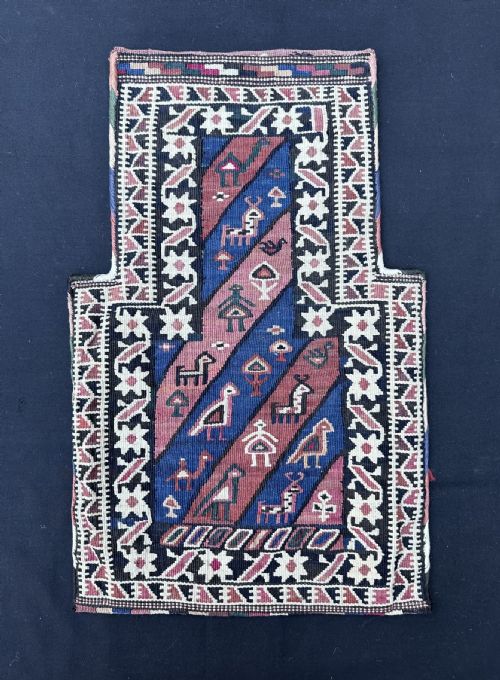
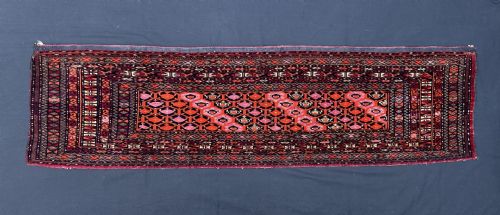
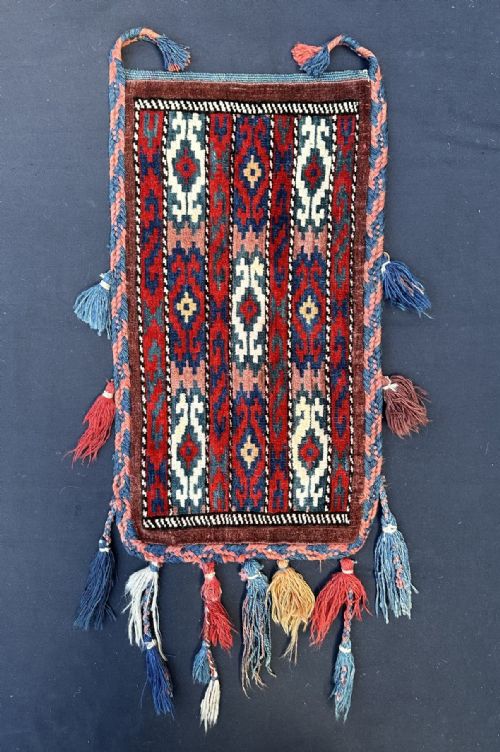
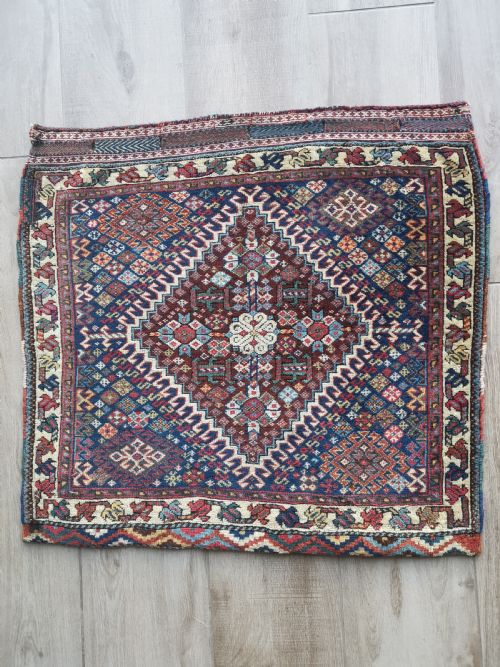
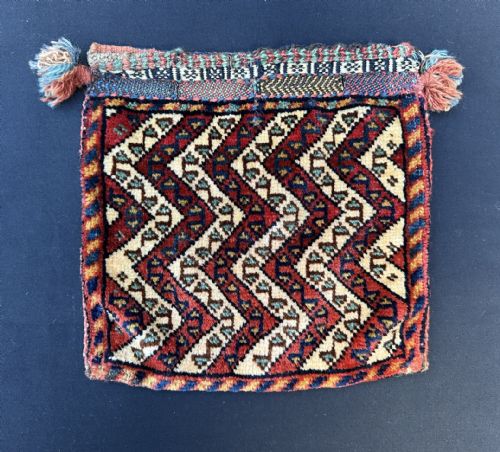
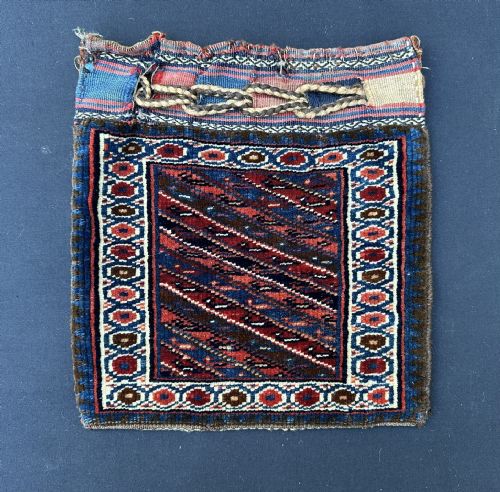
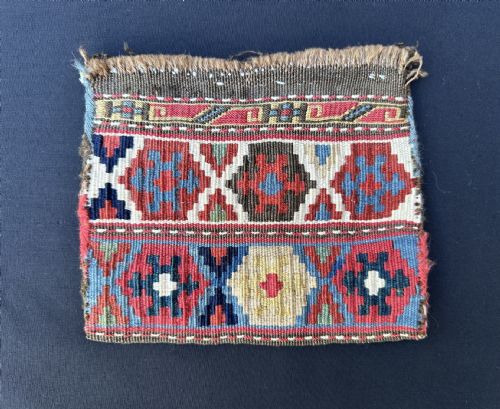
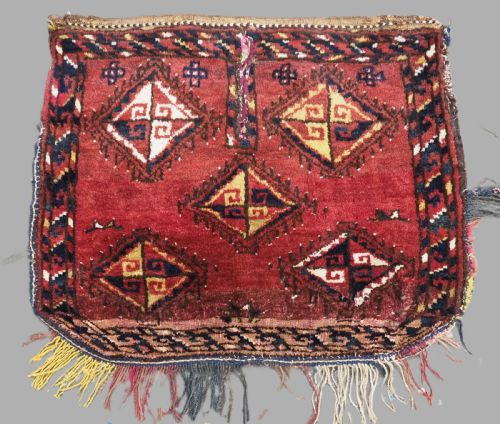
A woven wool bag represents the utilitarian artistry of nomadic and tribal groups across Persia, Afghanistan, and Central Asia. Collectors encounter functional household containers created for specific daily tasks, including salt bags, vanity bags, tobacco pouches, and larger storage containers like chuvals and torbas.
The pieces available on this page span the late nineteenth and early twentieth centuries, reflecting diverse regional groups such as the Qashqa'i, Afshar, Baluch, and various Turkmen tribes. These items served practical roles within tribal camps before transitioning into sought-after textile art for modern interiors.
Makers utilised traditional formats ranging from small chantehs and saddle bags to complete storage faces. Each item carries the distinct structural geometry and cultural motifs peculiar to its specific confederacy or oasis.
How they were made
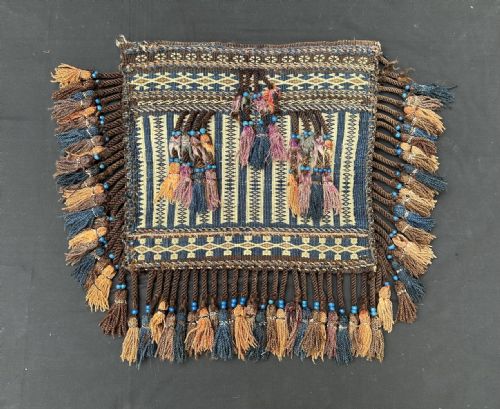
The construction relies heavily on hand-spun wool combined with cotton foundations and occasional additions of silk, glass beads, or cowrie shells for ornamentation. Artisans depended upon natural dyes to colour the fleece, yielding rich, saturated tones that mature gracefully over decades.
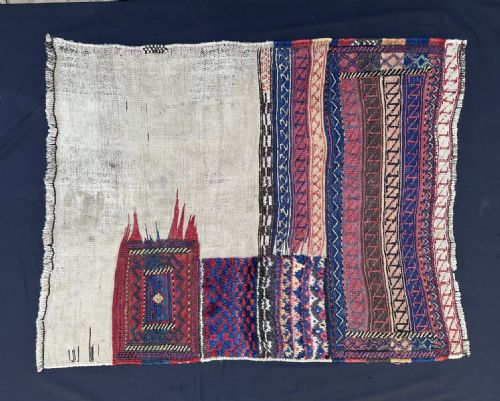
Weavers employed various techniques, including pile knotting and flatweave structures, to produce durable containers capable of enduring rigorous nomadic travel. The integration of structural plain-weave backs alongside intricately patterned faces demonstrates a mastery of balanced tension and textile engineering.
Listings span the period from 1860 through the early twentieth century, focusing primarily on Persian and Central Asian tribal textile traditions.
What varies in quality
Quality in these textiles rests upon the density of the weave, the clarity of the tribal motifs, and the preservation of the original natural dye palette. Superior examples display precise knotting, balanced proportions, and a crisp execution of traditional guls or geometric symbols.
The structural integrity of the piece, including the survival of original plain-weave backs, side cords, and closing mechanisms, separates standard fragments from exceptional complete specimens. Finer items retain their original vibrancy and structural completeness without extensive modern restoration.
The Woven Wool Bag Glossary
- Chuval
- A large storage bag traditionally used by Turkmen nomads for household belongings and bedding. These pieces frequently feature multiple guls arranged in orderly rows.
- Torba
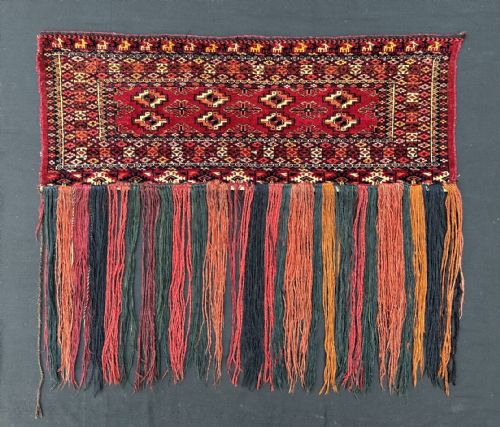
- A smaller tent-bag utilised for general storage, often hung against the lattice walls of a yurt. They display intricate border designs and medallion repeats.
- Chanteh
- A small tribal vanity bag or personal pouch carried by nomads. These miniature containers demonstrate high concentrations of detailed weaving.
- Gul
- A primary medallion or repeating floral-octagon motif found across Central Asian and Turkmen tribal carpets and bags. Each tribal group utilised distinct gul variations.
- Kap
- A generic Turkmen term designating a bag or container used in nomadic daily life. Collectors prize these for their dense pile and saturated colour schemes.
Woven Wool Bag: Frequently Asked Questions
What were tribal bags used for?
Nomadic groups utilised these woven wool containers for transporting and storing household provisions, salt, tobacco, and personal vanity items during seasonal migrations.
Larger variations functioned as bedding sacks inside tents, while smaller pouches hung from tent poles or served as saddle attachments.
How do I identify a Turkmen bag?
Turkmen pieces typically feature deep madder-red grounds punctuated by precise octagonal guls and structured geometric borders. Examining the weave density and specific tribal motifs helps distinguish between Tekke, Yomut, and Sariq origins.
Many retain characteristic structural elements like plain-weave extensions and hooked subsidiary ornaments unique to Central Asian steppes.
How should I display a bag?
Smaller salt bags and chantehs work well mounted on neutral linen backings within shadow boxes to protect the fragile wool from dust and direct sunlight. Larger chuvals and torbas can be hung using specialised non-invasive textile clips or displayed flat as small floor rugs depending on pile wear.
Are these bags made with natural dyes?
Nineteenth-century nomadic textiles rely predominantly on natural dye sources derived from plants, roots, and insects to achieve deep reds, blues, and yellows. These organic colourants produce subtleabrash variations across the wool pile as batches shifted during the dyeing process.