
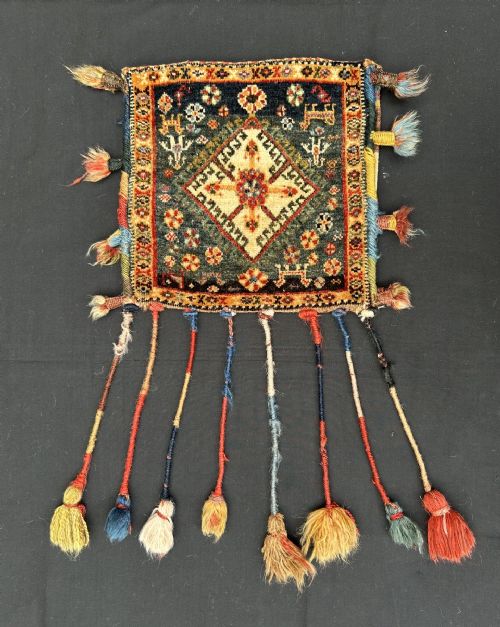
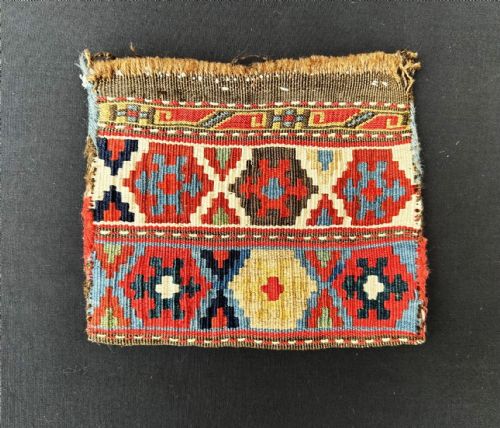

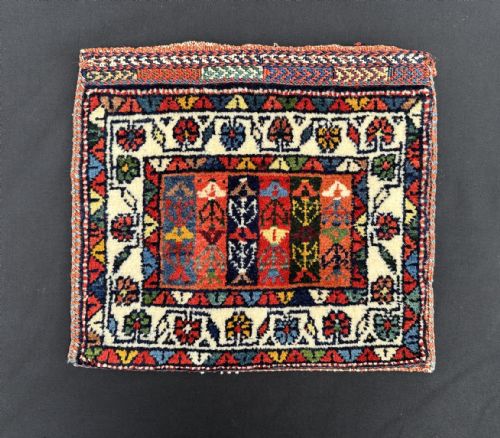

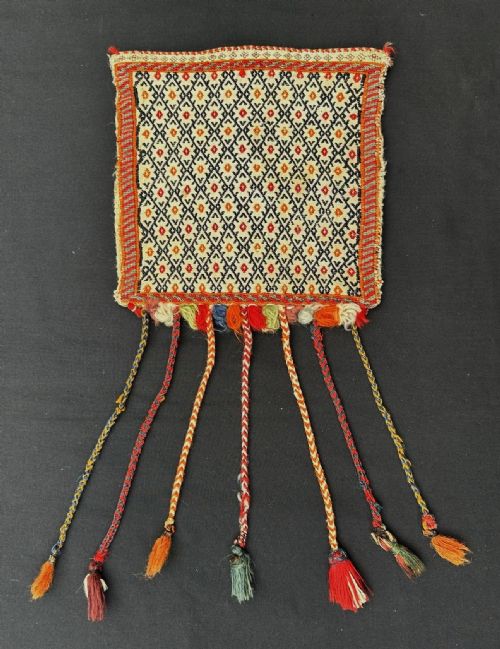


Multicolour Tribal Woven Bag
A multicolour tribal woven bag brings nomadic artistry into a modern room through rich geometric patterns and hardy village construction.
Multicolour Tribal Woven Bag
A multicolour tribal woven bag represents the functional weaving of pastoral confederacies and nomadic groups across Persia, the Caucasus, and Central Asia. These textile items served practical purposes for transport and storage within tent households before entering the antique market.
The pieces on this page span several decades from the late nineteenth century into the early twentieth century. Formats include vanity bags, tobacco and pipe pouches, spindle containers, and complete saddlebag faces produced by weavers from tribes such as the Qashqa'i, Afshar, Shahsevan, and Jaf Kurd.
Nomadic makers structured these small textiles around portable looms using traditional geometric motifs that identified specific tribal lineages and regional aesthetics. Each surviving bag carries the dense handle and saturated palette characteristic of village production from its respective geographic origin.
Materials and construction methods
Makers relied on hand-spun wool for the primary structure, utilising its natural lanolin to provide resilience and weight to the pile or flatwoven face. Cotton frequently appears in the foundational warps and wefts, offering dimensional stability to the finished textile.
Natural dyes sourced from local plants and minerals delivered the saturated reds, blues, yellows, and browns that define the palette. These organic colorants mellow gracefully over time, maintaining depth and nuance across the geometric fields.
Some spindle bags still carry faint traces of lanolin and sheep pasture dust tucked deep within their historic corners.
Assessing quality in nomadic bags
Quality rests upon the tightness of the weave and the precision of the geometric layout. Tighter packing of the wefts creates a stiffer, more durable fabric that retains its structural integrity.
The handling of the natural dye palette dictates visual success. Superior examples exhibit harmonious colour saturation and skilled abrash where dye batches shift subtly across the field.
The Multicolour Tribal Woven Bag Glossary
- Chanteh
- A small woven bag or pouch made by nomadic weavers for personal storage. These pieces typically display the signature design vocabulary of the tribe that produced them.
- Abrash
- A visible variation in shade caused by differences in dye batches or wool lots. This tonal shift adds depth to the surface of the textile.
- Warp
- The vertical foundation threads stretched tightly on the loom before weaving begins. Wefts are then passed across these structural elements.
- Weft
- The horizontal threads passed back and forth over and under the warps to create the cloth. In flatweaves, these threads carry the visible pattern.
- Flatweave
- A textile constructed without pile by interlacing warp and weft threads directly. Examples include kilims and certain utilitarian pouches.
Multicolour Tribal Woven Bag: Frequently Asked Questions
What were tribal bags used for?
Nomadic weavers created these bags to transport personal possessions, tobacco, pipes, spindles, and small household goods during seasonal migrations. Their sturdy construction protected contents from dust and moisture inside tent camps.
Over time, these utilitarian pouches transitioned into decorative domestic objects valued for their portable scale and intricate tribal iconography.
How do I display a woven bag at home?
Collectors often mount these textiles flat on linen-backed frames or display them gently hung from small wooden rods. Placing them away from direct sunlight preserves the natural dye colours.
Smaller pouches fit well on bookshelves or tables where their dense geometric patterns can be appreciated at close range.
How can I tell different tribal designs apart?
Tribal designs rely on specific structural motifs, border arrangements, and regional colour palettes associated with particular confederacies. Qashqa'i pieces often feature hooked medallions, while Shahsevan work frequently displays narrow horizontal striping or sharp geometric repeats.
Familiarity with the wool handling and typical formats from regions like Fars or Azerbaijan helps clarify attribution.
Are these bags made with natural dyes?
The pieces from this period utilise natural dyes derived from local botanical and mineral sources. These colourants produce rich hues that age with subtle tonal variations.
Examinations under proper lighting reveal the characteristic soft fading and depth typical of nineteenth-century organic dye usage.