





Carved Wood Tray
A carved wood tray offers a functional surface adorned with intricate hand-chiselled detail, bringing tactile warmth and historic craftsmanship to daily use.
Carved Wood Tray
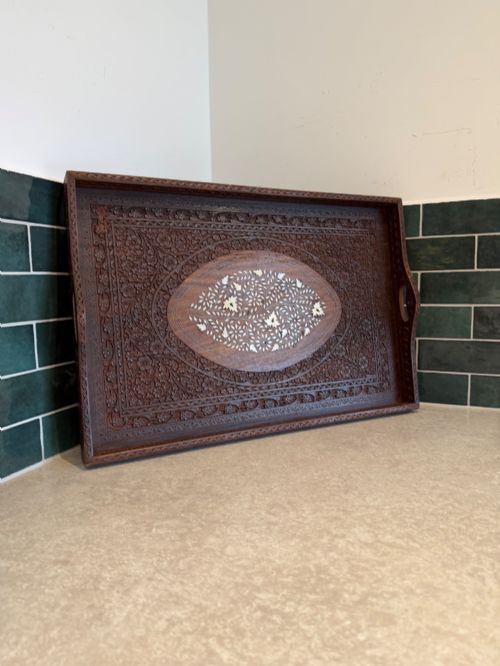
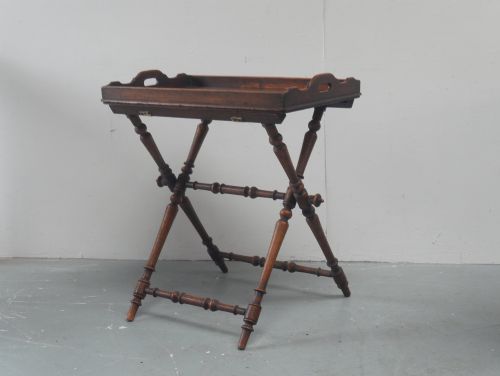
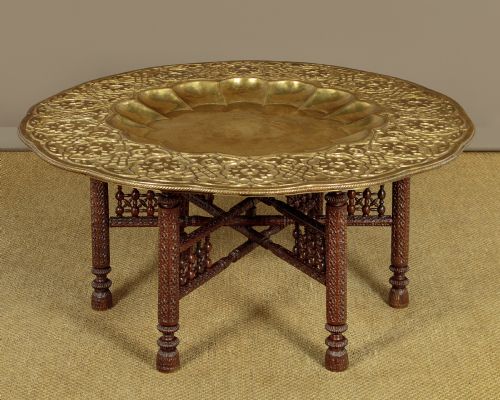
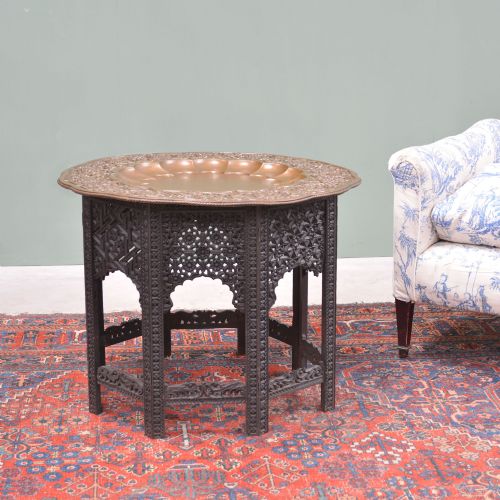
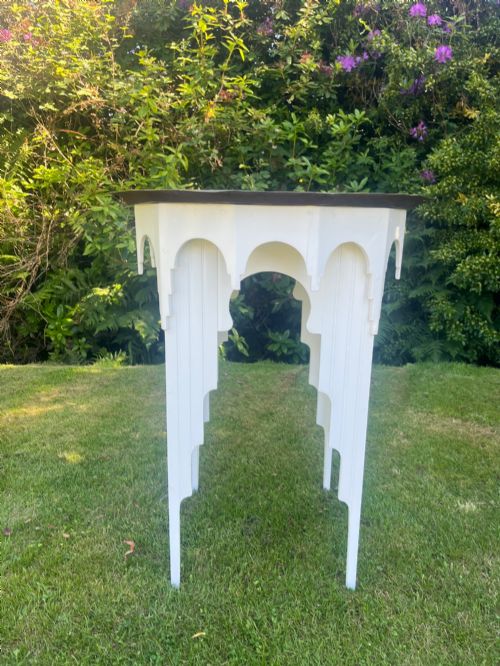
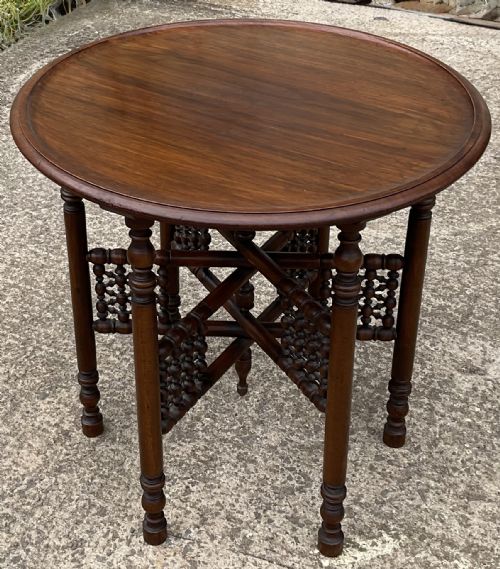
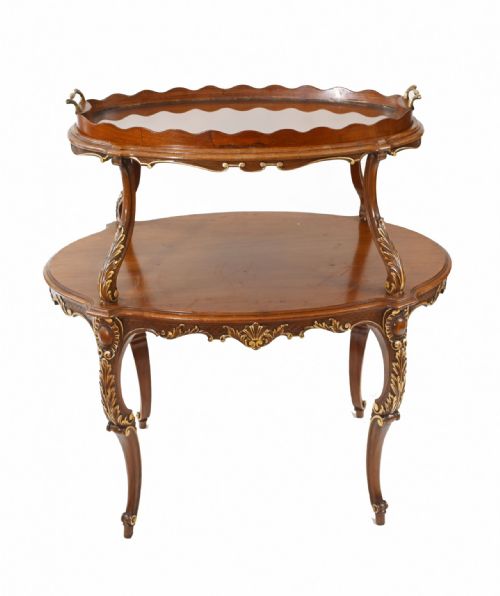
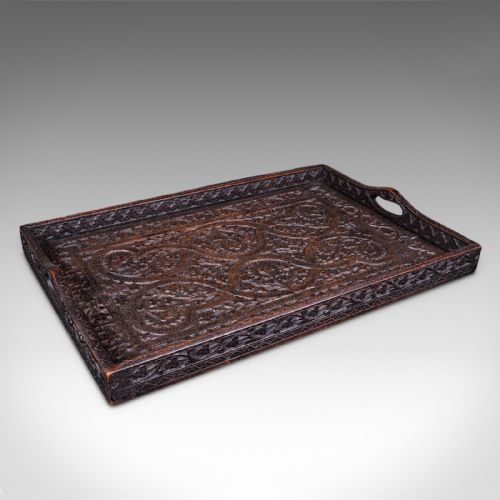
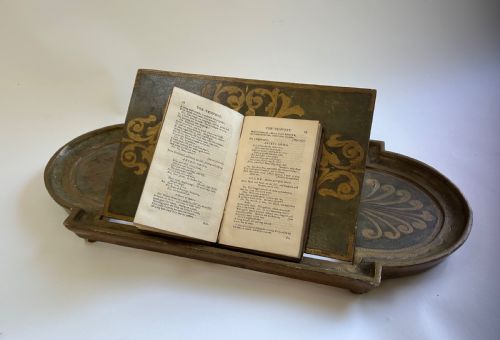
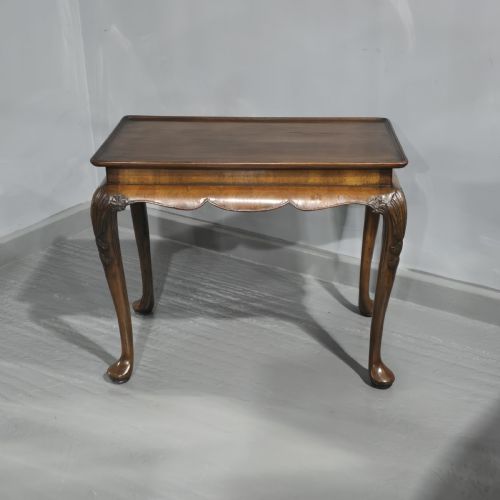
A carved wood tray is a portable serving surface or a stationary display top fashioned from timber and worked with hand-carved ornamentation. These pieces emerge in various forms, including dedicated afternoon tea platters, serving trays, and tray-top tables supported by folding or fixed stands.
You are most likely to encounter Victorian and early twentieth-century examples on this page, alongside specific regional interpretations such as Anglo-Indian and Kashmiri pieces. The materials span native hardwoods like oak and mahogany, as well as exotic timbers including teak, walnut, and rosewood.
Makers utilised these surfaces for domestic service, hospitality, and display, adapting traditional carving motifs to suit British and colonial homes. Whether freestanding on a stand or held in the hands, each item combines structural utility with decorative relief.
How they were made
Craftsmen shaped these trays using dense timbers such as mahogany, oak, teak, walnut, and rosewood, selecting woods capable of holding crisp chisel lines without splintering. Carpenters joined raised edges, galleries, and handles using traditional joinery methods to ensure the tray could bear the weight of glassware and tableware.
Carvers employed gouges, chisels, and knives to incise foliage, geometric patterns, and figural scenes directly into the solid wood surface or applied borders. Finished pieces received wax, polish, or oil to protect the timber grain and accentuate the depth of the carved relief.
Certain Victorian carvers hid tiny carved animal faces within dense floral foliage, rewarding close inspection with a sudden, silent grin.
What varies in quality
The distinction between ordinary and superior pieces rests on the crispness and depth of the hand-carved detail. Skilled carvers executed motifs with clean undercutting and balanced symmetry, whereas lesser examples show hurried tool marks and shallow, indistinct patterns.
Selection of timber significantly impacts the integrity of the piece, with dense, well-seasoned hardwoods holding finer detail and resisting warp over decades of use. Furthermore, the integration of handles, raised gallery edges, and supporting stands demonstrates the maker's structural competence.
James Mein of Kelso
The Carved Wood Tray Glossary
- Gallery
- A raised wooden border surrounding the perimeter of a tray to prevent items from sliding off. This feature is often pierced or carved with openwork fret-cutting.
- Anglo-Indian
- A descriptive term for items produced in India during the British colonial period, combining traditional Indian carving techniques with European furniture forms.
- Galleried
- Describes a tray or table fitted with an elevated rim or miniature balustrade around the edge. It adds both a decorative silhouette and practical security to the surface.
- Kashmiri
- Pertaining to the northern Indian region renowned for intricate woodwork, particularly trays carved from walnut featuring dense floral and leaf motifs.
- Hardwood
- Timber derived from broad-leaved deciduous trees, offering the density and fine grain required for intricate carving work.
Carved Wood Tray: Frequently Asked Questions
How were carved wood trays used originally?
These trays served primarily for carrying tea sets, glassware, and silver across the home during formal hosting. They also functioned as stationary display surfaces on side tables and occasional stands.
In many instances, the tray lifted entirely off its folding wooden base to allow flexible service between rooms. Over time, smaller examples transitioned into decorative items for holding correspondence or small personal belongings.
What is the difference between a tray and a tray-top table?
A tray is a portable serving dish featuring handles or raised edges designed to be lifted and carried by hand. A tray-top table combines this surface with a dedicated base, creating a stable piece of occasional furniture.
Many tray-top tables feature removable tops that lift off folding wooden stands, offering the versatility of both furniture and portable service. The construction of the stand usually mirrors the decorative carving style found on the tray itself.
How can I distinguish regional styles of carving?
Regional carving styles reflect the specific heritage and available timbers of their place of origin. Anglo-Indian and Kashmiri pieces often display dense, all-over floral and foliate relief work carved into walnut or teak.
European examples, such as those from the Victorian or Georgian periods, typically adhere to classical furniture motifs like mahogany piecrust edges or Chippendale-inspired fretwork. Examining the density and grain of the wood often provides a strong clue to its geographical source.