
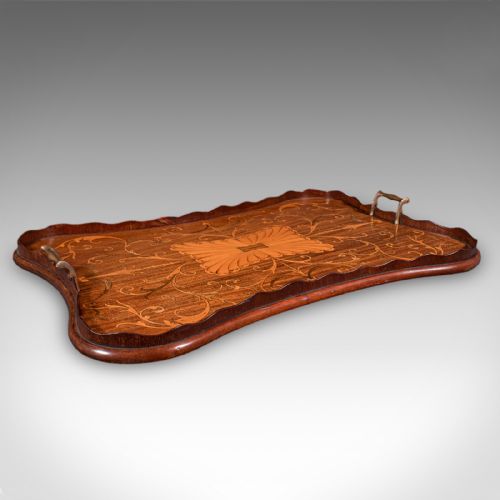
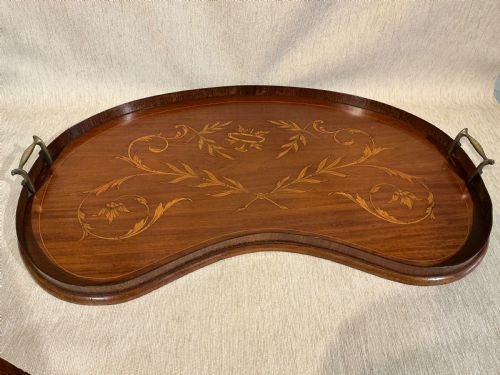


Inlaid Wooden Platter
An inlaid wooden platter brings tactile warmth to a room, offering a functional surface shaped by centuries of marquetry and turning traditions.
Inlaid Wooden Platter
An inlaid wooden platter encompasses serving trays, afternoon tea slides, decorative bowls and wine trays designed for both display and use. When exploring an inlaid wooden platter, buyers encounter pieces spanning from the Georgian period through the Victorian and Edwardian eras.
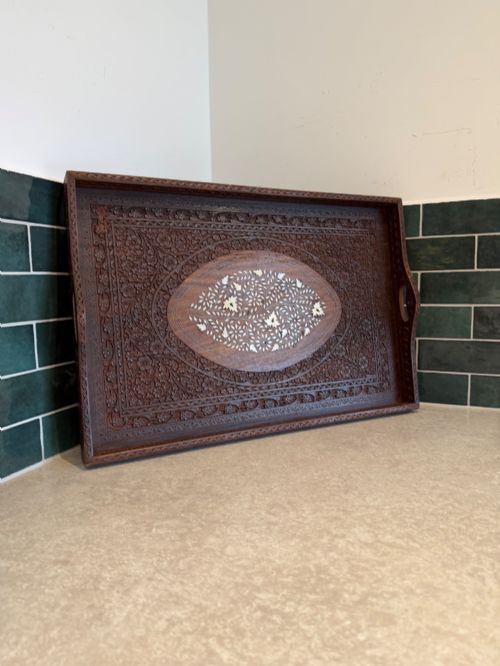
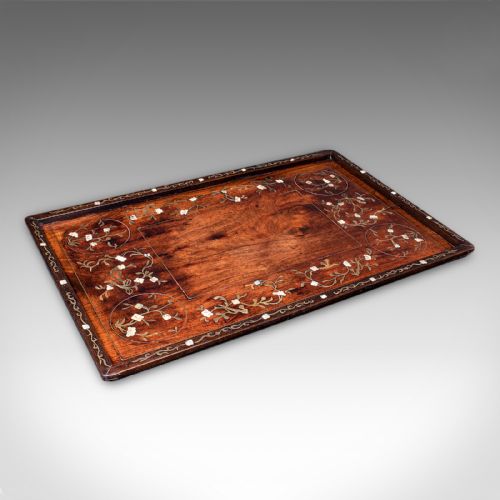
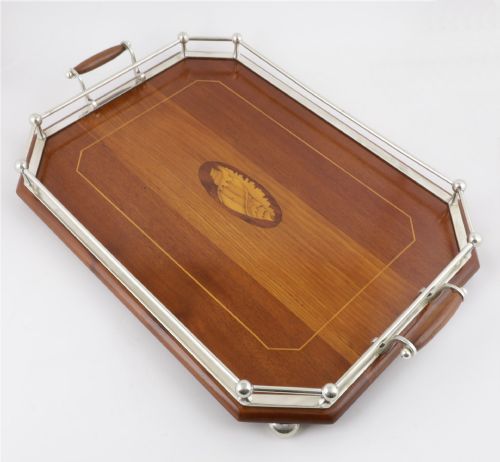
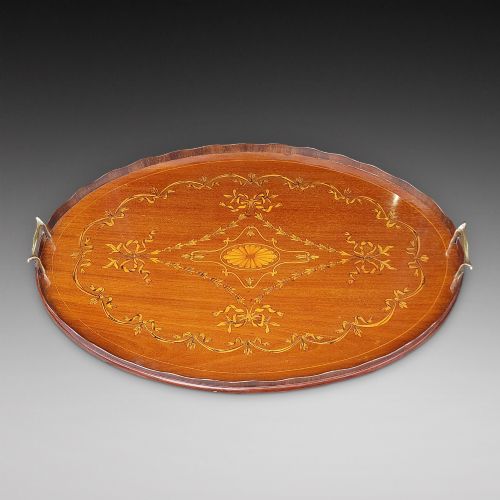
The selections available here range from English mahogany butler's trays and satinwood pieces with brass galleries to Anglo-Indian teak trays and Italian Sorrento ware olivewood bowls. Most examples lean towards traditional serving formats featuring contrasting wood marquetry and shell or bone details.
Origin details reveal English workshops alongside Kashmiri and Italian production centres. The physical forms vary from circular wine trays and octagonal gallery designs to kidney-shaped serving platters.
Materials and construction methods
Makers utilised dense timbers such as mahogany, teak, walnut, satinwood and olivewood as the structural base for these items. These woods provided a stable canvas capable of holding intricate geometric or floral marquetry.
Inlay work incorporated contrasting light and dark timbers, alongside organic materials like bone inlay and shell. Metal elements such as brass galleries and silver plate mounts were integrated to secure rims and provide handles.
Assessing craftsmanship and execution
The standard of an inlaid wooden platter depends on the precision of the marquetry fit and the stability of the timber grain. Finer examples display tight joints between contrasting wood sections without visible gaps or excessive adhesive fillers.
The integration of secondary materials like brass galleries and bone elements separates standard utility items from finer decorative pieces. Superior items maintain structural rigidity across wide serving surfaces despite centuries of atmospheric changes.
The Inlaid Wooden Platter Glossary
- Marquetry
- The art of applying pieces of veneer to a structure to form decorative patterns. This technique allows for complex pictorial or geometric designs across the surface of a tray.
- Gallery
- A raised ornamental border around the edge of a tray, often fashioned from pierced brass or shaped wood. It prevents items from sliding off during service.
- Satinwood
- A durable hardwood known for its golden sheen and smooth texture, frequently utilised in fine English cabinetry and tray decoration. It provides a bright contrast against darker timbers like mahogany.
- Butler's tray
- A portable serving tray designed to sit upon a folding stand or to be carried by handles. These pieces often feature raised rims or hinged sides for practicality.
- Sorrento ware
- Decorative woodwork originating from the town of Sorrento in Italy, characterised by intricate micro-mosaic inlay and olivewood construction. Pieces often depict architectural scenes or botanical motifs.
Inlaid Wooden Platter: Frequently Asked Questions
How do I clean an inlaid wooden platter?
Wipe surfaces gently with a slightly damp cloth and dry immediately to protect the wood and veneer. Avoid soaking the piece or using harsh chemical cleaners that might loosen delicate bone or wood inlay.
Apply occasional suitable furniture wax to nourish the timber and maintain the sheen of the satinwood or mahogany. Keep the platter away from direct heat sources and strong sunlight to prevent warping.
Were these trays used for food service?
Many examples served historical roles during afternoon tea, carrying porcelain cups, teapots and silver accessories. Others functioned as wine trays or general serving platters in domestic settings.
Today, collectors utilise them both for light serving duties and as decorative display objects on sideboards or coffee tables.
How do I distinguish Georgian trays from Edwardian pieces?
Georgian and George III pieces typically exhibit restrained classical proportions, often relying on neat mahogany construction with subtle string inlay. Edwardian revivals and later pieces frequently incorporate lighter satinwood panels and more exuberant marquetry motifs.
Examining the underlying timber shrinkage and the composition of the base boards helps confirm the age of the structure.