


Anglo Indian Tray
An anglo indian tray combines British colonial utility with intricate Eastern craftsmanship, offering a functional surface steeped in history.
Anglo Indian Tray
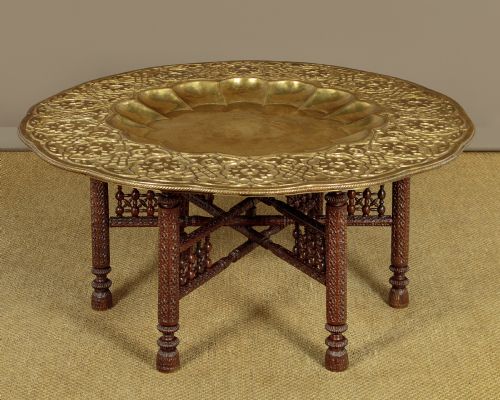
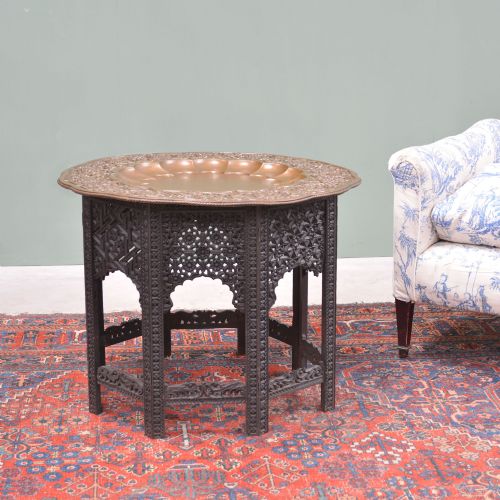
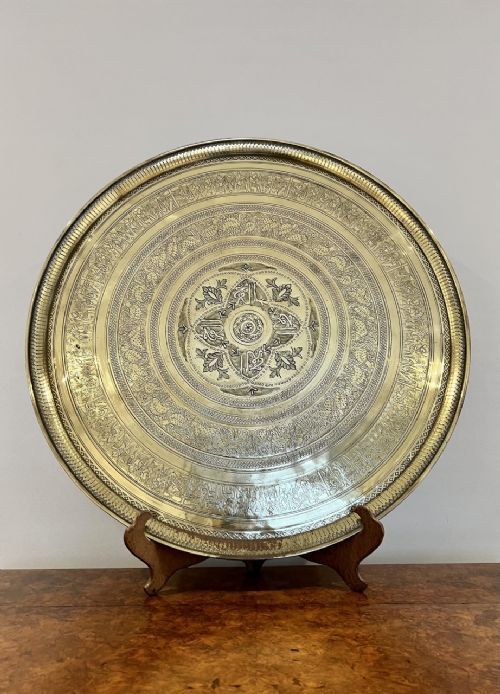
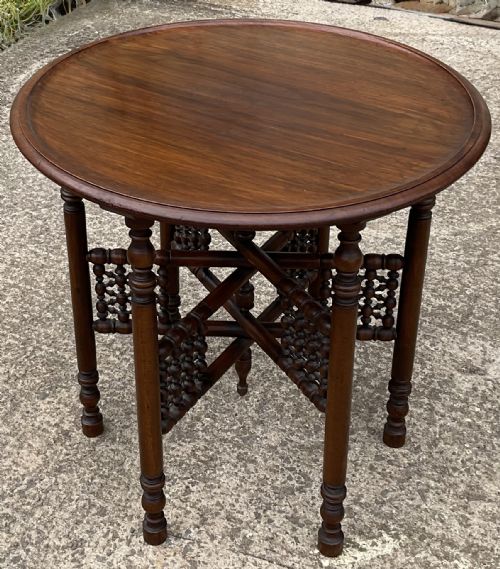
The selection ranges from circular brass chargers and mixed metal dishes to intricately carved wooden folding tables. Many pieces integrate traditional motifs with British domestic forms like afternoon tea platters and coffee tables.
Origins span regional workshops across the subcontinent, reflecting distinct stylistic influences including Kashmiri, Persian, and Indo-Persian traditions. These items served colonial households as portable servers and decorative furnishings.
How they were made
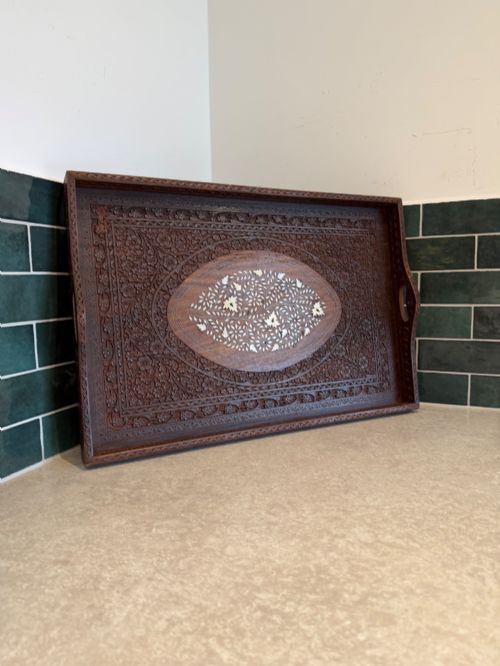
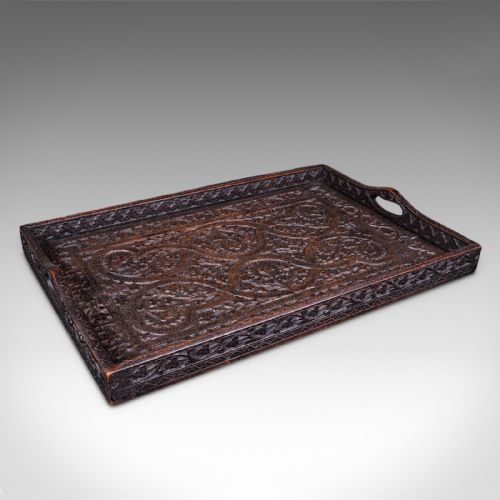
Artisans utilised dense timbers such as teak, walnut, mahogany, and rosewood for the structural frames and wooden trays, often employing deep relief carving. Metal components typically consist of brass, copper, or mixed metal sheets shaped by hand.
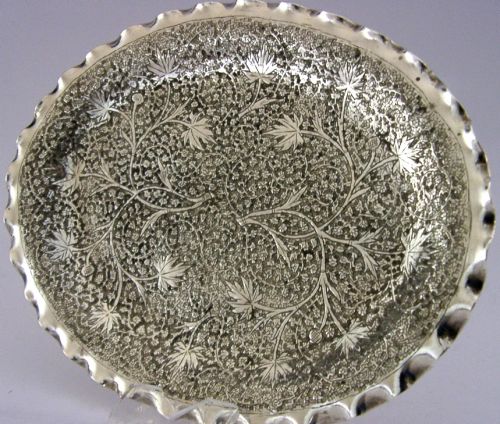
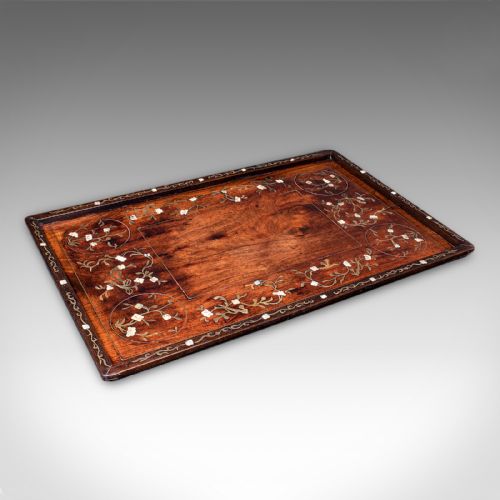
Decoration relies on specialist techniques including piercing, hand repoussé work, and engraving to create complex surface patterns. Workshops also incorporated bone inlay and lacquer finishes to embellish the wooden surfaces.
Folding tables utilise collapsable fret-carved bases designed to support heavy metal trays or inset metallic tops securely. Construction methods combined indigenous joinery with formats suited to British colonial requirements.
Several trays feature curious zodiac iconography alongside traditional elephants, proving that even colonial metalworkers catered to astrology enthusiasts.
What varies in quality
The depth and crispness of the hand carving on the wooden frames distinguish standard production from superior examples. Sharp, well-defined chisel work indicates skilled artisan labour rather than hurried commercial output.
Metal quality depends on the weight and thickness of the brass or copper sheet used for the tops and chargers, alongside the precision of the piercing and repoussé detail. Solid silver elements represent the apex of the maker's craft.
The integrity of the construction, particularly in folding tables and inlaid sections, dictates the overall standard. Tightly fitted bone or metal inlay and stable timber joints separate premier pieces from ordinary items.
The Anglo Indian Tray Glossary
- Repoussé
- A metalworking technique where the metal is hammered from the reverse side to form a raised design on the front. This method creates the tactile surface relief seen on brass and copper chargers.
- Pierced
- Workmanship involving metal or wood cut through entirely to create openwork patterns and fretwork designs. It appears frequently on Kashmiri copper trays and folding table bases.
- Charger
- A large ornamental dish or plate used primarily for display rather than serving food. These heavy metal pieces often feature intricate zodiac or floral motifs.
- Inlay
- A technique where contrasting materials like bone, brass, or different woods are set into recesses flush with the surface. It decorates the borders of rosewood and teak trays.
- Tray top table
- A folding or fixed occasional table designed with a removable tray as its surface. This form allowed for easy storage and serving in colonial homes.
Anglo Indian Tray: Frequently Asked Questions
What is an anglo indian tray?
An anglo indian tray is a decorative or serving piece made during the British colonial period, combining traditional Eastern metalwork or wood carving with Western furniture forms. They range from handheld silver dishes to large brass-topped tables.
These items reflect the cultural exchange between British residents and local artisans in the nineteenth and early twentieth centuries. They were produced in various regional styles, including Kashmiri and Persian-influenced designs.
How were tray top tables used?
Tray top tables served as versatile furniture for entertaining, functioning as portable surfaces for afternoon tea or coffee service. The removable top allowed servants to carry provisions directly from kitchen to parlour.
The folding stands enabled easy storage when not in use, suiting the transient lifestyles of colonial officials. Later, many remained static as permanent coffee or occasional tables in British homes.
How do I date an anglo indian tray?
Dating relies on stylistic markers, material combinations, and construction methods associated with Victorian and Edwardian production periods. Pieces stamped with specific metal weights or marked by late nineteenth-century registry designs offer clearer chronological clues.
Items from the nineteenth century often feature heavier hand-beaten copper and dense teak carving, while 1920s examples may incorporate lighter mixed metals or specific silver hallmarks. Comparing the motifs against documented archive pieces helps narrow the decade.
What materials are common in these pieces?
The primary materials include hardwoods such as teak, walnut, mahogany, and rosewood, paired with metals like brass, copper, and occasionally solid silver. Artisans also utilised bone for intricate inlay work and papier-mâché for desk accessories.
Mixed metal compositions and silver plating appear frequently on later Victorian and twentieth-century chargers. The combination of dense timber and reflective metal defines the aesthetic of the category.