
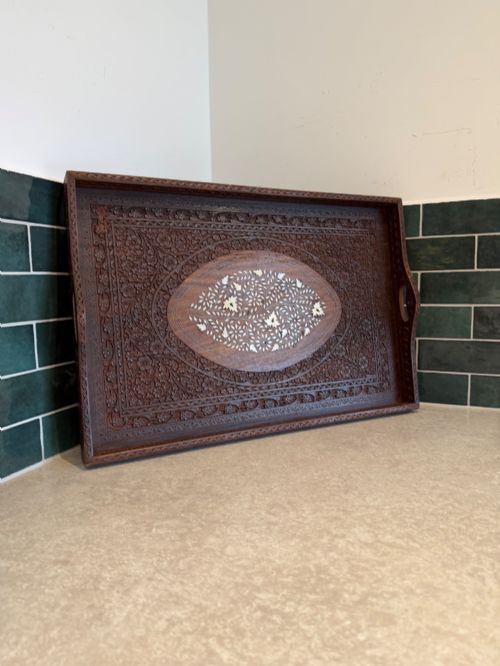
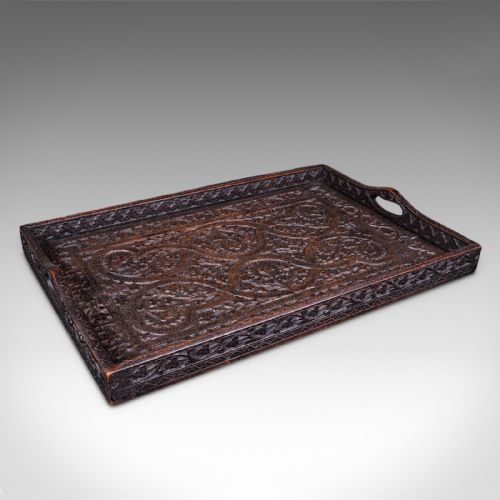


Hand Carved Tray
A hand carved tray brings tactile craft and rich grain into daily use, offering a sturdy surface shaped by chisels and hand tools.
Hand Carved Tray
When you search for a hand carved tray, you encounter serving trays, platters, and occasional tables with removable tray tops dating from the nineteenth and early twentieth centuries. These objects span various regional traditions, including Anglo-Indian, Kashmiri, and Black Forest work, reflecting global artisan networks of the past.
The aesthetic ranges from deeply chased animal figures in European alpine pine to intricate foliage native to Indian and Persian workshops. Every piece balances functional utility with decorative relief, designed to hold afternoon tea or sit atop folding bases.
How they were made
Artisans utilised native hardwoods such as teak, walnut, and shisham, shaping the timber with hand chisels and gouges to produce deep, textured relief. Bone inlay often provides stark contrast against the dark wood grain in pieces originating from Anglo-Indian or Kashmiri workshops.
Metalwork items incorporate beaten brass and copper, sometimes hand pierced and decorated with intricate geometric motifs. Black Forest pieces employ softwoods carved into naturalist scenes featuring bears and dogs.
Construction techniques rely on solid wood rather than veneers, ensuring the carved borders withstand the weight of contents carried upon them.
Several pieces feature carved bears and dogs keeping eternal guard over inkwells and desktop trays.
What varies in quality
Quality rests upon the depth and clarity of the chisel work, distinguishing crisp, confident relief from shallow, hurried incisions. The choice of timber also dictates standard, with dense walnut or teak holding sharper details than softer woods.
Integration of secondary materials like bone inlay or inset brass dictates the refinement of the piece. Well-executed examples display precise fitting and harmonious composition across the entire surface.
The Hand Carved Tray Glossary
- Anglo-Indian
- Describes furniture and decorative objects made in India during the British colonial period, often combining British furniture forms with local carving traditions.
- Kashmiri
- Pertaining to items originating from the Kashmir region, frequently characterised by detailed walnut carving depicting dense foliage and floral motifs.
- Black Forest
- A style of wood carving originating from the European mountain region, known for highly naturalistic animal figures and deep relief work.
- Shisham
- An Indian hardwood, also known as Indian rosewood, valued for its durability and rich grain used in traditional platters and tables.
- Chamberstick
- A portable candlestick fitted with a wide tray base to catch dripping wax, often carried through rooms before the widespread adoption of electric lighting.
Hand Carved Tray: Frequently Asked Questions
How do I clean a carved wooden tray?
Dust the carved recesses gently with a soft, dry brush to prevent dirt accumulation in the grain. Avoid soaking the wood in water or using harsh chemical cleaning agents.
Apply a neutral beeswax periodically to nourish the timber and maintain a soft sheen without building up a heavy residue.
Can I use these trays for serving food?
Many historical trays served afternoon tea or carried platters, but older finishes require care with moisture and grease. Use a protective liner or plate if serving direct items.
Check the surface coating before placing wet items directly onto the antique timber or brass surface.
How do I date a carved wooden tray?
Examine the tool marks and the type of timber used, as nineteenth-century pieces often display hand-chiseled undersides and dense native hardwoods. Screws, fixings, and overall wear patterns offer further clues to the period.
Compare the stylistic motifs, such as Victorian floral carvings or regional Anglo-Indian patterns, with documented examples from similar workshops.