




Vintage Wood Platter
These vintage wood platter examples span centuries of craft, offering both practical utility and distinct decorative presence for the home.
Vintage Wood Platter
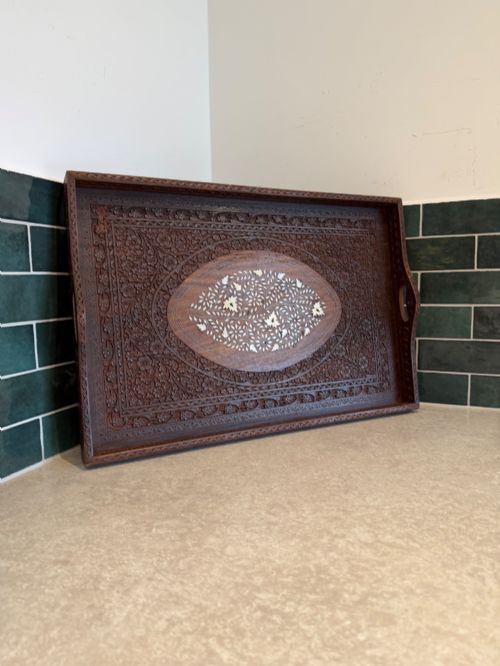
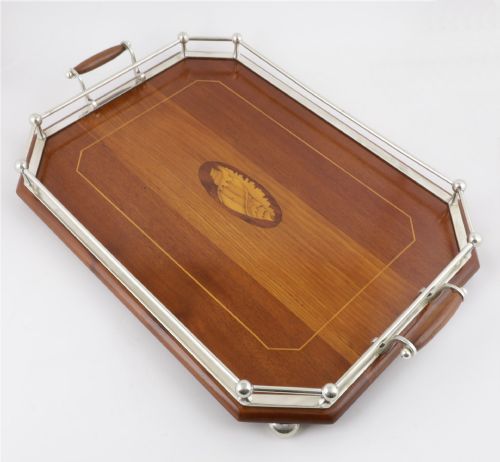
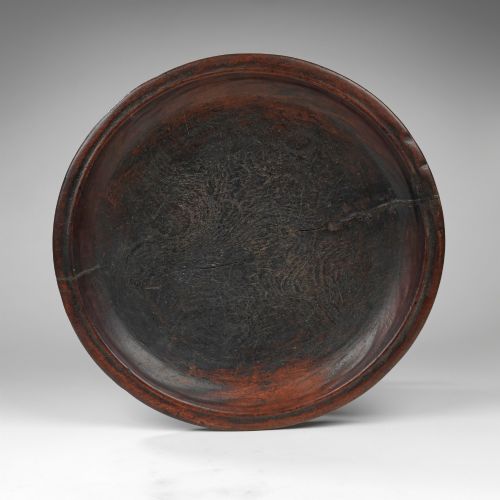
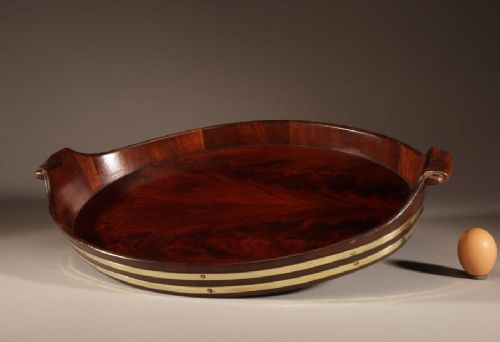
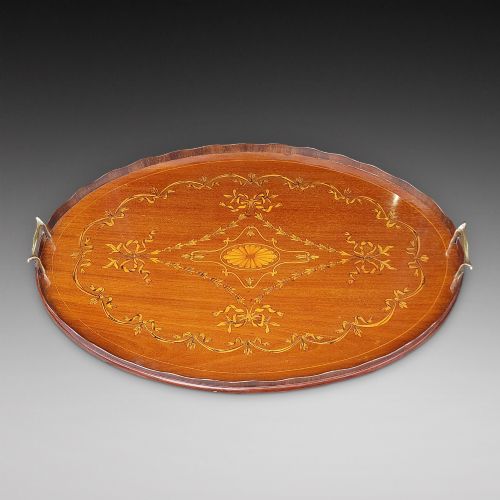
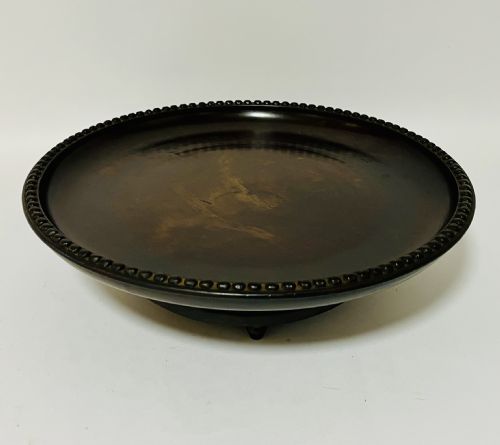
The pieces you are most likely to meet on this page include mahogany, walnut, and ash serving trays, alongside turned wooden bowls and regional specialities like Kashmiri and Anglo-Indian designs. They range from simple utilitarian dairy bowls to finely inlaid marquetry and brass-galleried pieces.
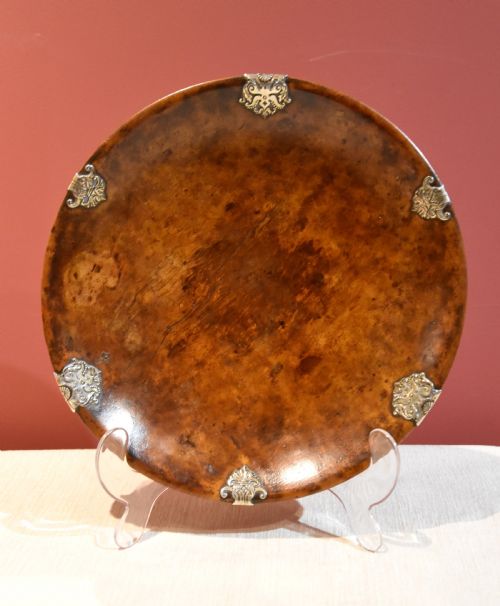
Makers utilised woods such as sycamore, olivewood, elm, and satinwood, often incorporating bone inlay, silver mounts, or cartographic decoration. Each item reflects the domestic habits and decorative tastes of its specific decade of production.
Materials and construction
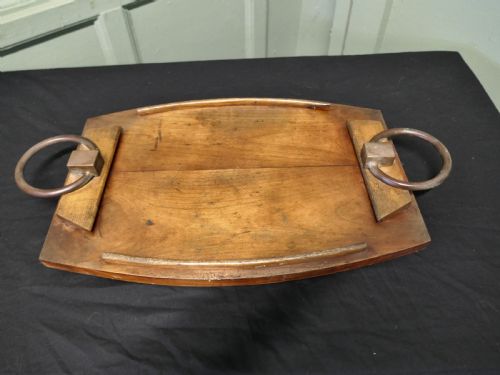
Carpenters and turners employed native and exotic timbers including mahogany, walnut, teak, and golden elm, shaping them through turning, coopering, and carving. Many items incorporate structural or decorative metal elements such as brass galleries, silver mounts, and handles.
Surface ornamentation involved intricate techniques like oyster veneering, marquetry, bone inlay, and hand-painting as seen in Kashmiri pieces. These methods required patient hand-crafting by skilled artisans working within regional craft traditions.
Listings feature items spanning the Georgian, Victorian, and Edwardian periods up to the 1930s, constructed in woods like mahogany, walnut, and sycamore.
Factors of quality
The grade of a piece rests primarily on the selection of timber, such as figured mahogany, burr walnut, or finely grained satinwood, and the precision of its joinery. Coopered items, turned bowls, and gallery trays demand exact alignment and sturdy construction to endure.
Execution of decorative details separates standard production from superior examples. Crisp carving, tight marquetry, secure inlay work, and well-fitted brass or silver mounts indicate a higher tier of craftsmanship.
The Vintage Wood Platter Glossary
- Coopered
- A method of construction where tapered wooden staves are joined side by side with wooden or metal hoops, typical of watertight vessels and certain trays.
- Gallery tray
- A tray featuring an elevated rim or pierced metal gallery around its perimeter to prevent items from sliding off during service.
- Marquetry
- The art of applying pieces of veneer to a structure to form decorative patterns, frequently utilised on late 19th-century trays.
- Treen
- Small handmade wooden domestic objects, encompassing turned bowls, platters, and kitchen items valued for their age and utility.
- Oyster veneering
- A technique of slicing small branches diagonally to produce circular or oval patterns of wood grain, prominent on Edwardian examples.
Vintage Wood Platter: Frequently Asked Questions
How were wooden platters used historically?
These items served a variety of domestic functions, from carrying tea services and displaying fruit to holding cheese or managing dairy production. Larger trays facilitated service across formal rooms, while bowls held provisions in the kitchen.
Over time, many of these pieces transitioned from purely utilitarian kitchenware into decorative objects displayed on tables or mounted on walls for their visual appeal.
What woods are commonly found?
The selection includes traditional English timbers such as mahogany, walnut, ash, sycamore, and elm. Artisans also worked with exotic species like teak, macassar, and olivewood depending on the regional origin of the piece.
Inlays and secondary elements often introduce contrasting materials like satinwood, bone, brass, and silver plating to enhance the visual depth of the timber.
How do I care for antique wooden items?
Maintain wooden surfaces by keeping them away from direct heat sources and extreme humidity fluctuations, which can cause timber to split or warp. Regular dusting with a soft cloth preserves the finish.
Occasional application of appropriate wax feeds the wood and protects the grain without sealing it beneath modern chemical coatings.
How do I identify the period?
Dating relies on observing construction methods, timber choice, and decorative styles characteristic of periods like the Georgian era, Victorian times, or the Arts and Crafts movement. Machine marks suggest later 19th-century or 20th-century manufacture, while hand-tooling points earlier.
Comparing the specific inlay motifs, gallery designs, and overall form against documented examples from the same decade helps narrow down the origin.