
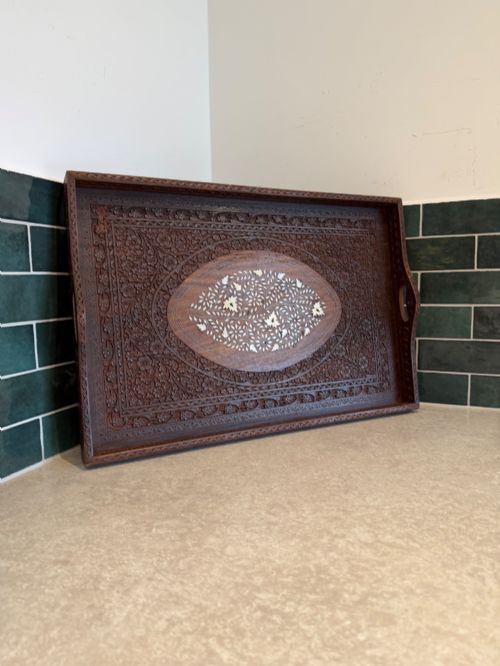

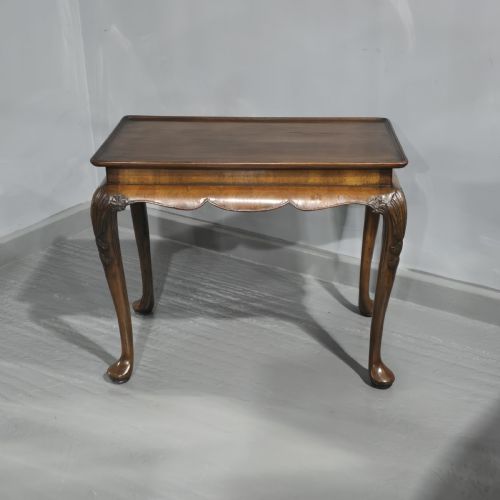


Dark Walnut Tray
A dark walnut tray brings deep timber tones and rich grain to a room, serving equally as practical tableware or a display surface.
Dark Walnut Tray
A dark walnut tray is a functional piece of wooden tableware or furniture, appearing in forms ranging from traditional serving items to tray-topped coffee tables and folding stands. When you search for a dark walnut tray, you find examples shaped from rich timber, sometimes enhanced with brass or bone inlay.
The pieces on this page span the Victorian and Edwardian eras through to the early twentieth century, incorporating Kashmiri and Anglo-Indian regional variants alongside British furniture styles. You are most likely to meet serving trays, tray tables, and coffee tables that utilise walnut and burr walnut veneer.
Makers produced these items in various regional traditions, including Colonial and Georgian Revival interpretations of earlier aesthetics. Each piece demonstrates the enduring appeal of dark timber in domestic interiors.
How they were made
Craftsmen shaped these items using solid walnut and burr walnut veneer, selecting timber for its deep colour and distinct grain patterns. Cabinetmakers applied decorative techniques such as bone inlay and fitted brass handles or mounts to enhance the functional surfaces.
Regional workshops employed traditional woodworking joints alongside specialised carving methods, particularly visible in Kashmiri and Anglo-Indian production. Structural elements often incorporated auxiliary metals like zinc and glass to protect the wood or create display surfaces.
Listings feature items spanning the Victorian period through to the 1920s, utilising walnut, brass, bone inlay, and glass.
What varies in quality
Quality in a dark walnut tray rests upon the selection of the timber veneer and the precision of any decorative inlay. Richness of grain figure and the crispness of carved or fitted details separate standard items from superior examples.
The integrity of the construction, whether a simple serving tray or a complex coffee table base, determines the lasting value of the piece. Well-preserved surfaces with deep, original patination indicate careful historical maintenance.
The Dark Walnut Tray Glossary
- Burr walnut
- A veneer sliced from the knotty growths of a walnut tree, prized for its swirling, highly figured grain patterns. Cabinetmakers utilised this material on the primary display surfaces of finer trays and tables.
- Bone inlay
- A decorative technique where small pieces of animal bone are set into recesses carved into the wood surface. This method creates contrasting geometric or floral patterns, frequently seen in Kashmiri and Anglo-Indian pieces.
- Georgian Revival
- A style popular in the late nineteenth and early twentieth centuries that reinterprets eighteenth-century furniture designs. Pieces from this movement adapt earlier proportions for contemporary domestic use.
- Tray table
- A piece of furniture comprising a removable serving tray set upon a folding or fixed wooden stand. This form combines portable utility with a stable surface for drinks or display.
- Anglo-Indian
- Descriptive of furniture and decorative objects made in India during the British colonial period, often combining local carving traditions with European forms.
Dark Walnut Tray: Frequently Asked Questions
What is a dark walnut tray used for?
These pieces function primarily as serving items for drinks or food, though many examples serve as permanent display surfaces on stands or tables. Their rich timber tones make them suitable for both practical utility and interior decoration.
Larger versions integrated into stands or coffee tables provide a stable surface for daily living spaces while retaining the portability of the traditional tray top.
How do I date a dark walnut tray?
Dating relies upon examining construction methods, timber preparation, and stylistic markers associated with periods like the Victorian era or the early twentieth century. Regional characteristics, such as specific carving styles in Kashmiri pieces, also offer clues to age.
Hardware elements like brass handles and the application of burr walnut veneer help narrow down the manufacturing window when compared against dated comparative examples.
What is burr walnut veneer?
Burr walnut veneer is a thin slice of wood cut from the abnormal growths on walnut trees, known as burls. This wood yields complex, swirling grain patterns that cabinetmakers valued for decorative surfaces.
Master craftsmen applied these veneers to the most visible parts of trays and tables to create striking visual contrast against plainer solid timbers.
How do I care for a walnut tray?
Preserving walnut surfaces involves keeping them away from direct heat sources and excessive moisture to prevent the wood or veneer from warping. Regular dusting with a soft cloth maintains the natural lustre of the timber.
Avoiding harsh chemical cleaners ensures the historic polish and patination remain undisturbed over time.
Are these trays purely decorative?
While many items function as display tables or stands today, their original purpose was practical service within the home. The inclusion of sturdy handles and protective edgings on serving trays demonstrates their utilitarian design.
Even pieces adapted into coffee tables or folding stands retain their structural capacity for holding objects.