





Antique Carved Platter
An antique carved platter brings hand-wrought texture and deep timber grain to a dining table or sideboard.
Antique Carved Platter
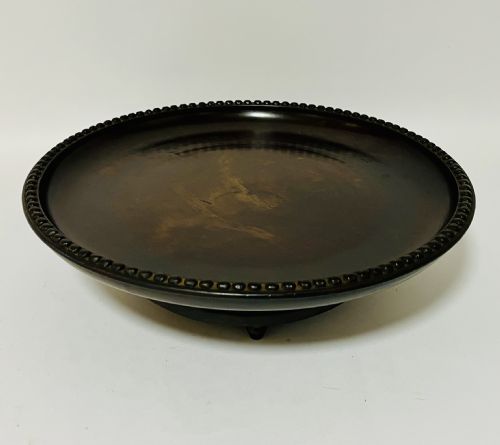
When you search for an antique carved platter, you encounter a varied assortment of serving trays, shallow dishes, and decorative wall chargers. These items span domestic British kitchenware, Anglo-Indian teak pieces, and Swiss folk art items from the nineteenth century onward.
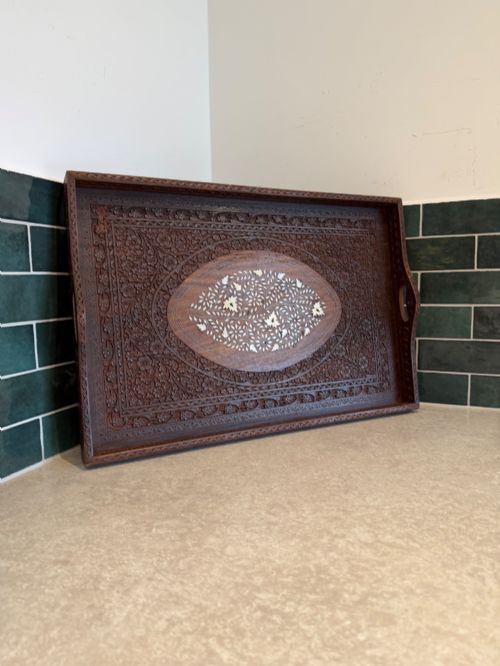
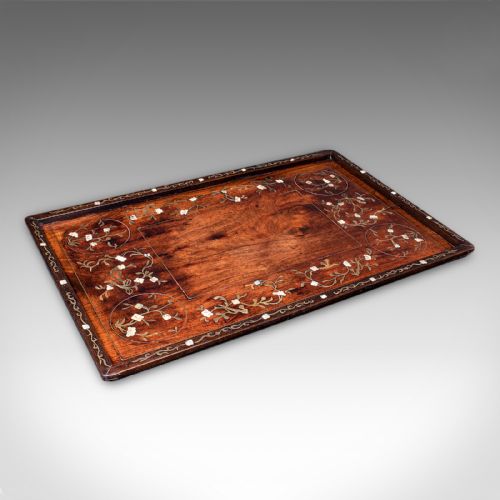
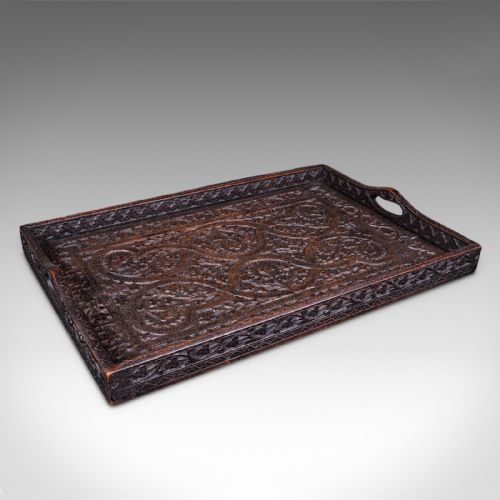
The version you most frequently meet on this page is the Victorian or nineteenth-century wooden tray, often fashioned from mahogany, teak, or oak. Many show regional carving styles, from intricate Kashmiri foliage to robust English country interpretations.
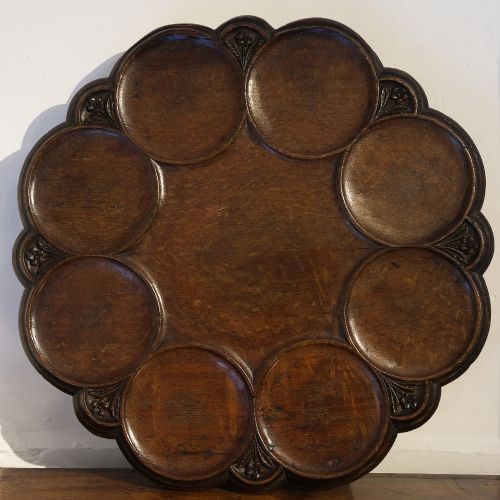
Beyond standard serving pieces, the category extends to rotating lazy susans, large chargers, and specialised meat platters. Each object serves a distinct domestic or decorative function within period households.
Materials and construction methods
Craftsmen utilised dense hardwoods such as mahogany, teak, walnut, and oak, selecting timber for its natural grain and durability. Artisans shaped these materials using hand tools, carving deep borders, scalloped edges, and recessed wells for serving.
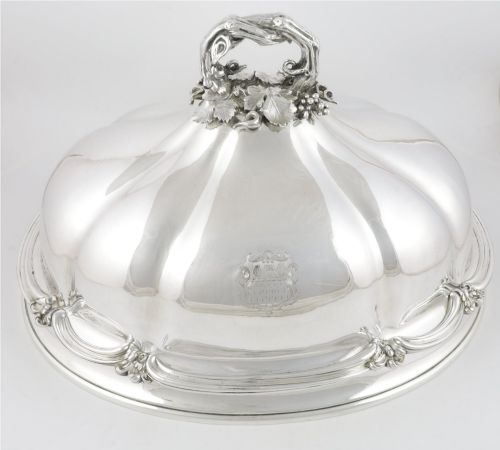
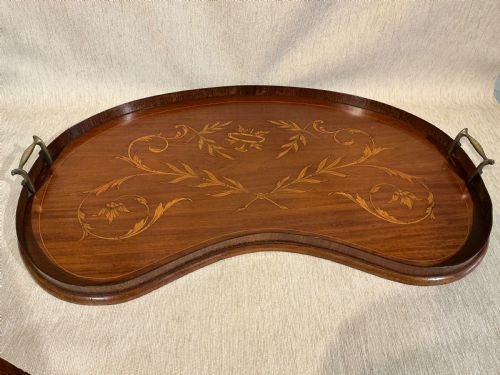
In addition to timber, makers incorporated metals like brass, copper, and silver plate, frequently employing piercing and repoussé techniques on wall chargers and meat domes. Continental and Asian workshops applied specialised surface finishes, including lacquer, cloisonné enamel, and Sorrento marquetry inlay.
Assessing quality in carved platters
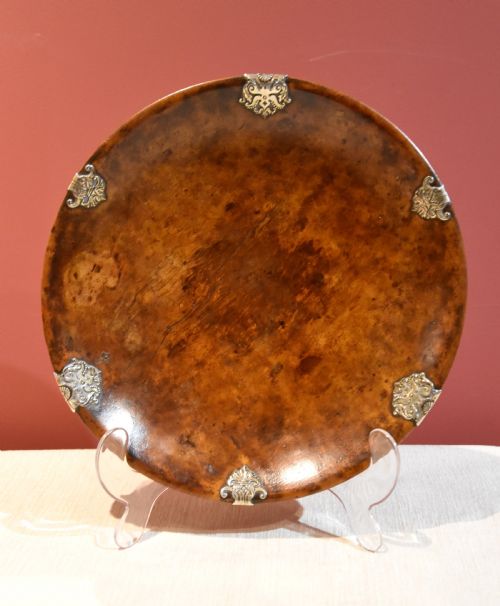
Quality rests primarily on the crispness and depth of the carving, distinguishing confident hand-tool work from shallow or mechanical execution. The choice of timber also dictates value, with well-figured burr walnut, dense teak, and seasoned mahogany holding superior presence.
Structural integrity matters significantly, particularly in items designed for rotation or heavy serving, such as lazy susans and galleried trays. Superior pieces retain original mounts, uncompromised joints, and harmonious patination across the entire surface.
The Antique Carved Platter Glossary
- Charger
- A large decorative plate or platter, typically displayed on a wall or used as a base for other vessels.
- Lazy Susan
- A rotating tray placed on a table to allow easy sharing of dishes during a meal.
- Treen
- Small handmade wooden domestic objects and utensils produced before the widespread adoption of modern plastics.
- Galleried
- Featuring a raised border or pierced railing around the edge of a tray to prevent items from sliding off.
- Sorrento ware
- Intricately inlaid olivewood decorative items originating from the Italian town of Sorrento during the nineteenth century.
Antique Carved Platter: Frequently Asked Questions
How do I clean an antique wooden platter?
Dust the surface regularly with a soft, dry cloth to prevent dirt accumulation in the carved recesses. Avoid soaking wooden items in water or exposing them to harsh detergents.
Apply a microcrystalline wax occasionally to nourish the timber and maintain its natural lustre without leaving a sticky residue.
Were these platters used for daily dining?
Many items functioned as practical serving vessels for afternoon tea, roasts, or cheese courses in Victorian households. Larger chargers and wall plates served primarily decorative roles in formal rooms.
Heavier wooden platters often included reservoirs or wells to catch juices during meat carving at the table.
How can I tell a Victorian platter from an Edwardian one?
Victorian pieces tend to display heavier, more robust carvings and darker timber tones, reflecting mid-nineteenth-century taste. Edwardian items frequently introduce lighter woods and more restrained inlay work.
Examining the construction methods and tool marks on the underside helps clarify the manufacturing period.
Can I hang a heavy charger on the wall?
Wall mounting is suitable for sturdy brass, copper, and wooden chargers equipped with secure hanging hardware. Ensure the support bracket takes the full weight of the piece without stressing the rim.
Keep wall-mounted items away from direct heat sources and strong sunlight to prevent warping or fading.