


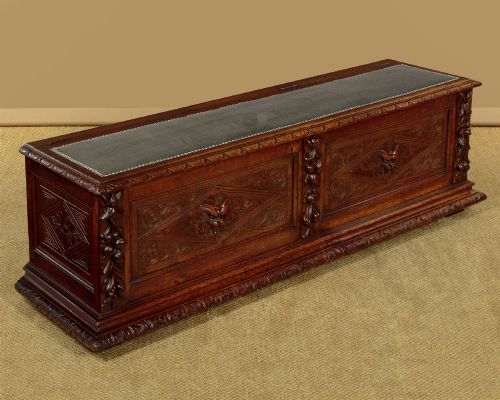
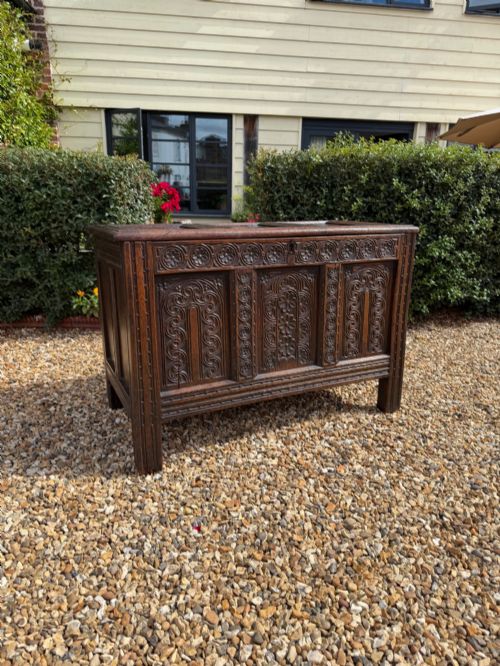
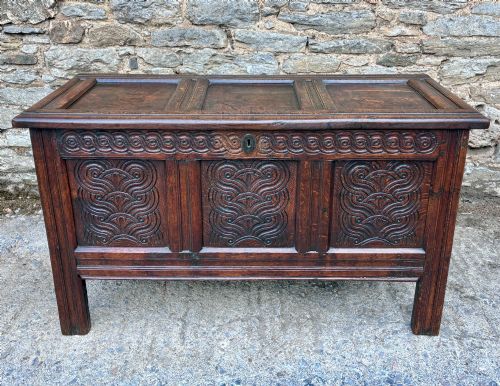
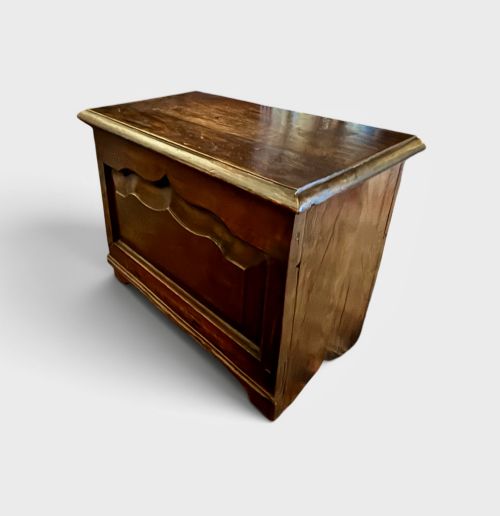
Carved Oak Coffer Chest
When evaluating a carved oak coffer chest, buyers encounter utilitarian storage pieces shaped by centuries of domestic use.

Carved Oak Coffer Chest
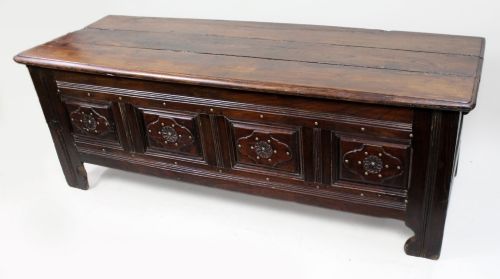
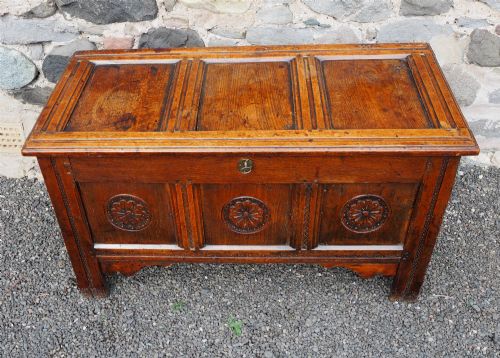
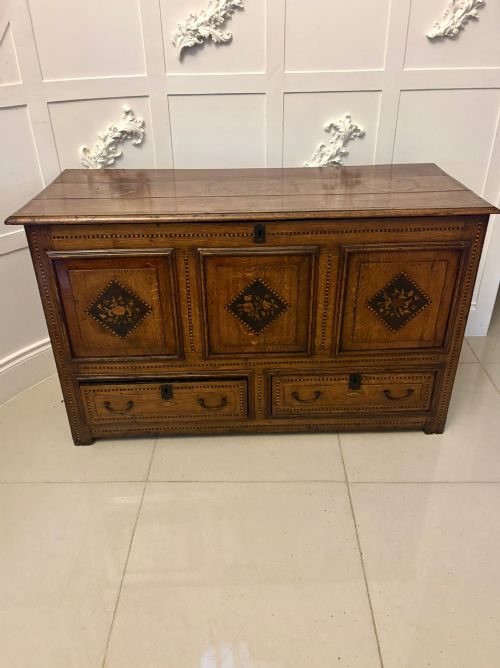
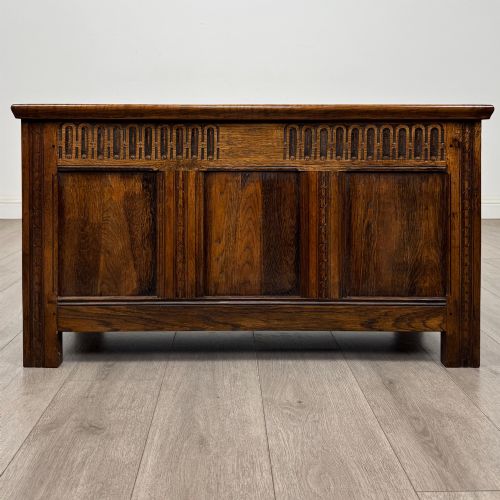
A carved oak coffer chest functions primarily as a sturdy domestic receptacle designed for linen, documents, or valuables, originating mainly from the sixteenth, seventeenth, and eighteenth centuries. These items appear in various scales, from small document boxes and miniature examples to large mule chests fitted with lower drawers.
Examples from the seventeenth century often display rigid panel construction and geometric or figurative carving associated with the Jacobean and Charles II periods. Later eighteenth-century pieces tend to incorporate Georgian design principles alongside simpler panel layouts or occasional marquetry inlay.
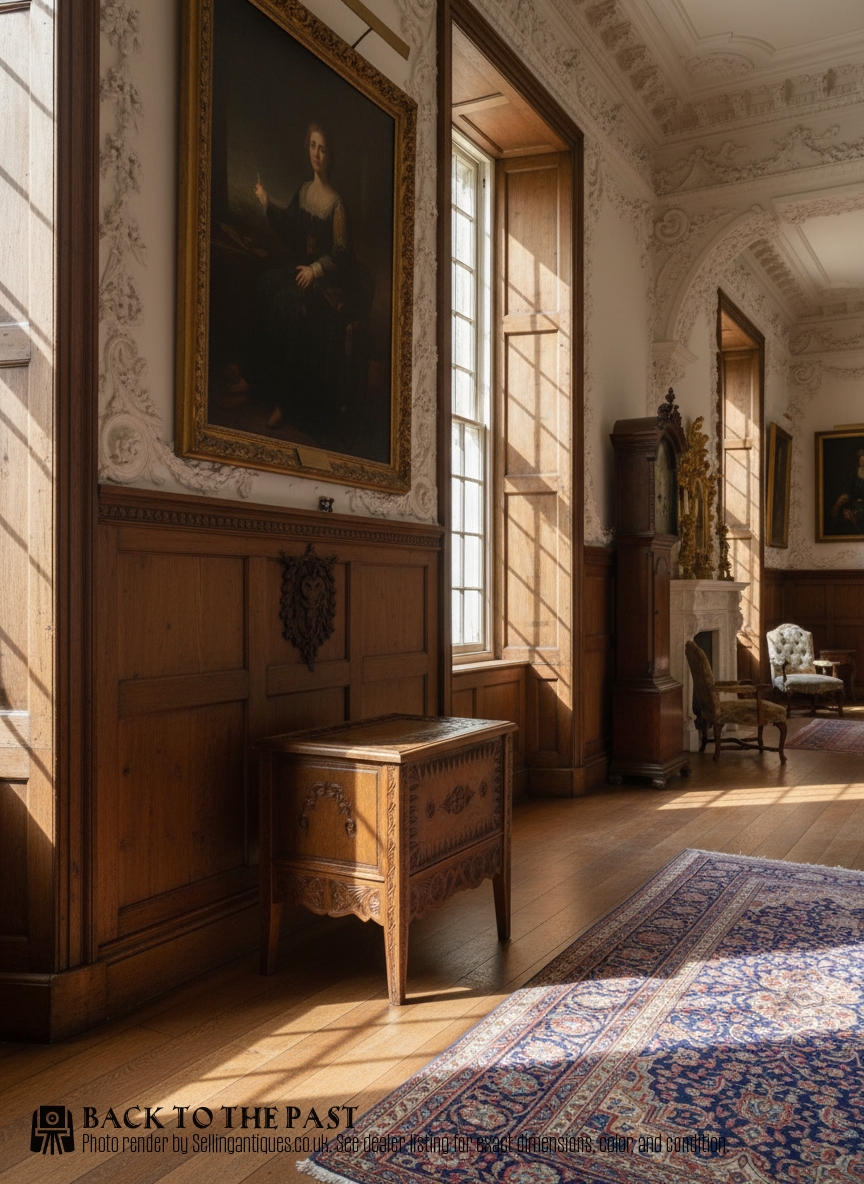
How they were made
Cabinet makers utilised solid oak timbers, joining boards through traditional frame and panel construction to accommodate the natural expansion and contraction of the wood. Iron and brass hardware, including strap hinges and lock plates, were hand-wrought to secure the heavy lids.
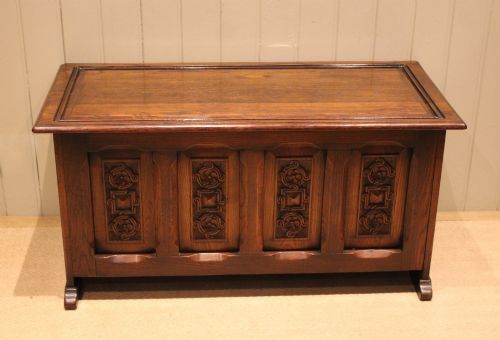
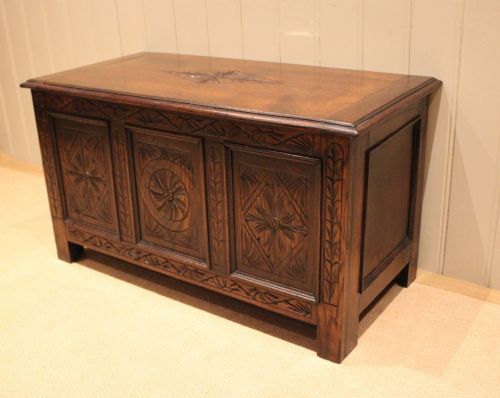
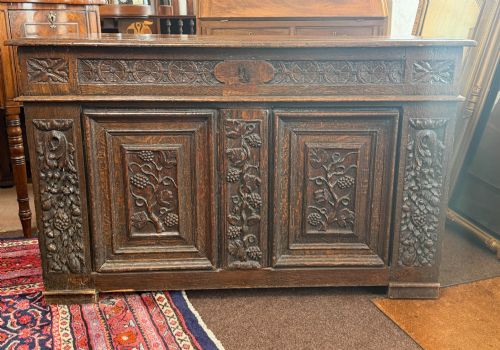
Decoration relied on chisel work executed directly into the timber, employing chip carving, gouge cuts, and relief panels. Certain items integrate wood inlay and marquetry inlay to introduce contrasting colour and geometric patterns across the front boards.
Carved Oak Coffer Chest Retail Price Guide 2026
Typical asking prices for carved oak coffer chest among the pieces listed under this phrase on Sellingantiques today, from the lower quarter to the upper quarter. They describe what is for sale here now, not the wider market.
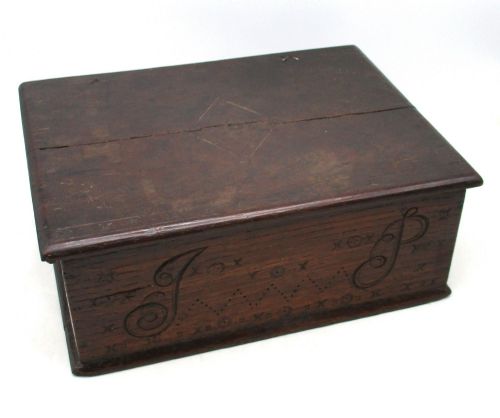
Several seventeenth-century marriage chests bear carved initials of newlyweds, immortalising domestic partnerships in sturdy oak for centuries.
What varies in quality
The depth and precision of the carved ornamentation distinguish superior examples from plain utility pieces, with crisp relief work indicating skilled joinery. Timber selection also determines grade, where quarter-sawn oak displaying prominent medullary rays commands greater interest.
Structural integrity depends on the survival of original components, such as the baseboards, hinges, and lid fixings, as extensive timber replacement diminishes historical character. Proportions dictate value as well, with smaller, untouched provincial formats holding particular appeal for collectors.
The Carved Oak Coffer Chest Glossary
- Coffer
- A heavy wooden chest utilised for storage, typically fitted with a hinged lid and raised on stile feet or a plinth.
- Mule chest
- A storage chest featuring one or more drawers built into the base beneath the main compartment.
- Marquetry inlay
- Decorative patterns formed by fitting contrasting veneers into prepared recesses within the timber surface.
- Frame and panel
- A method of construction where a central floating panel is fitted into a grooved outer frame to prevent splitting.
- Stile
- The vertical upright member forming the outer edge of a panelled frame.
Carved Oak Coffer Chest: Frequently Asked Questions
What were carved oak coffer chests used for?
These receptacles served primarily to store heavy textiles, household linens, church vestments, and important family documents away from damp floors. Their robust construction allowed them to double as benches or tables inside domestic dwellings.
Over subsequent generations, many adapted into general blanket boxes or specialised mule chests with lower drawer space for smaller garments.
How do you date an oak coffer?
Dating relies on observing construction methods, tool marks, and stylistic motifs carved into the timber panels. Sixteenth and seventeenth-century variants usually employ pegged frame and panel joints with heavy mouldings.
Later eighteenth-century and revival pieces introduce standardised fixings, machine-sawn elements, or simplified proportions that contrast with early provincial work.
Are all carved coffers from the seventeenth century?
While seventeenth-century production forms a large portion of surviving inventory, examples span from the sixteenth century through the Georgian era and into later nineteenth and twentieth-century revivals. Maker traditions persisted across centuries, reproducing earlier styles during the Arts and Crafts movement.
Detailed examination of the oak patination and interior boards helps distinguish original period pieces from later interpretations.
How do I care for an antique oak chest?
Antique oak benefits from stable indoor humidity away from direct heat sources and sunlight to prevent the timber from splitting. Regular dusting with a dry or slightly damp cloth preserves the aged wax finish without sealing the pores.
Applying traditional beeswax polish occasionally helps nourish the dry grain and maintain the natural lustre of the surface.