
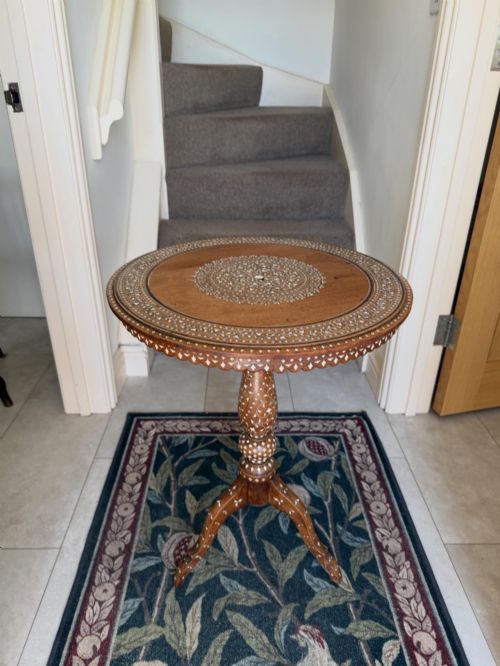
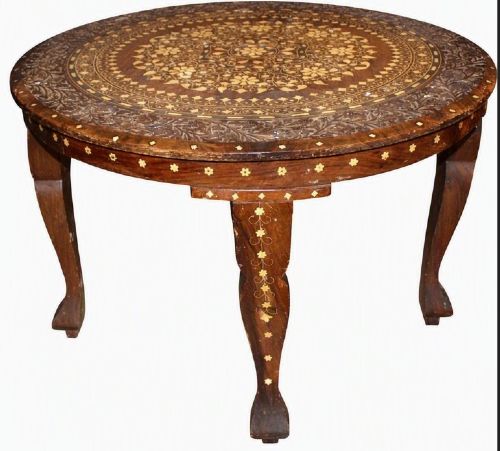
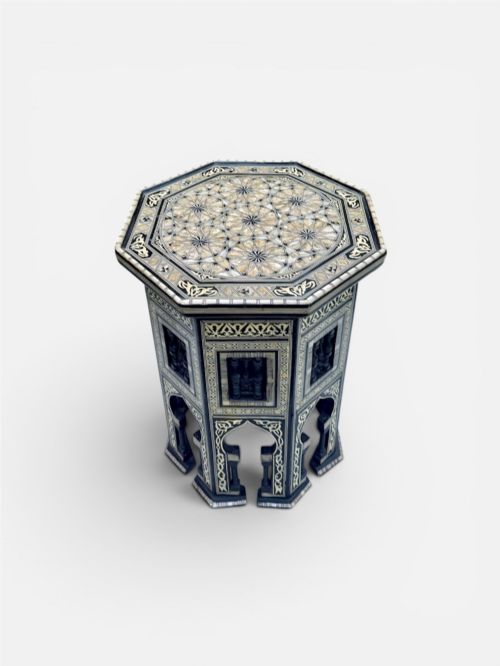
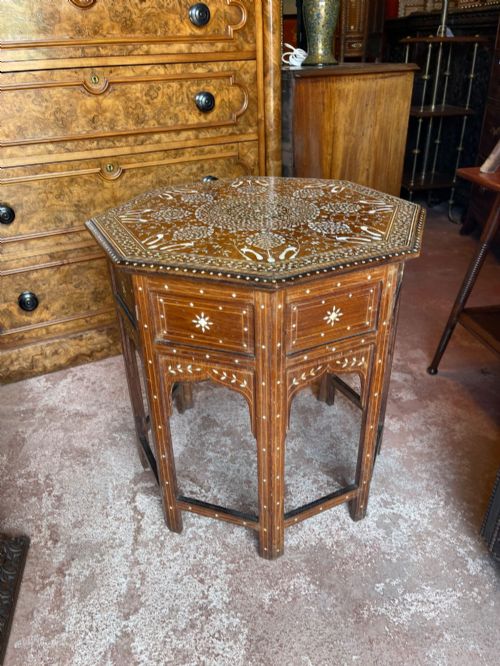



Carved Bone Inlaid Table
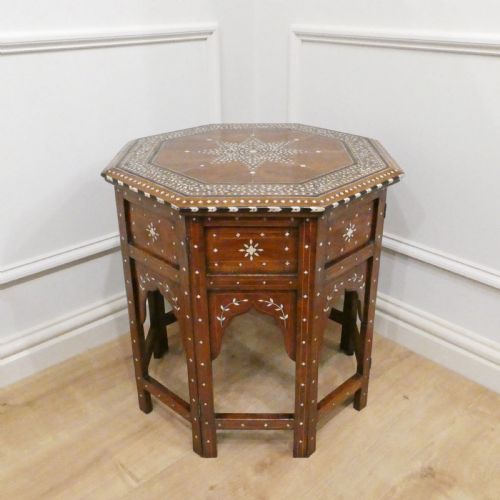
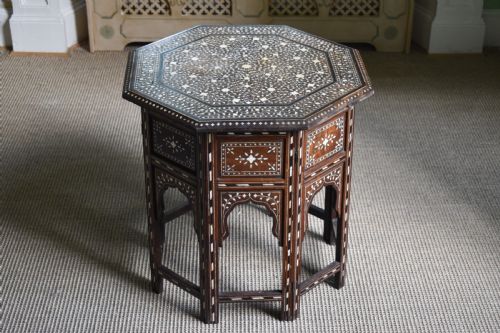
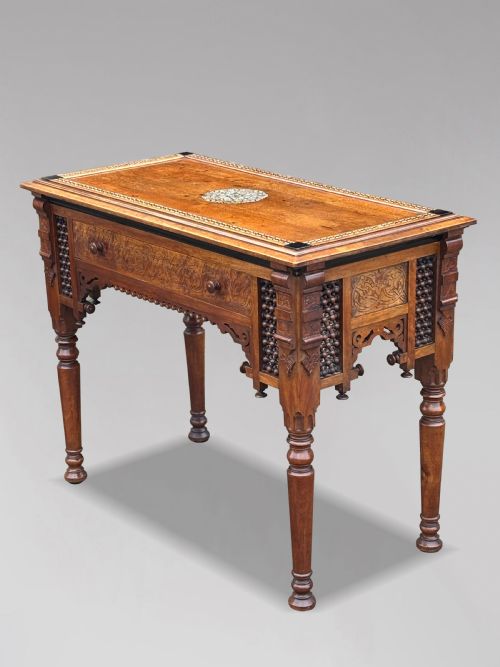
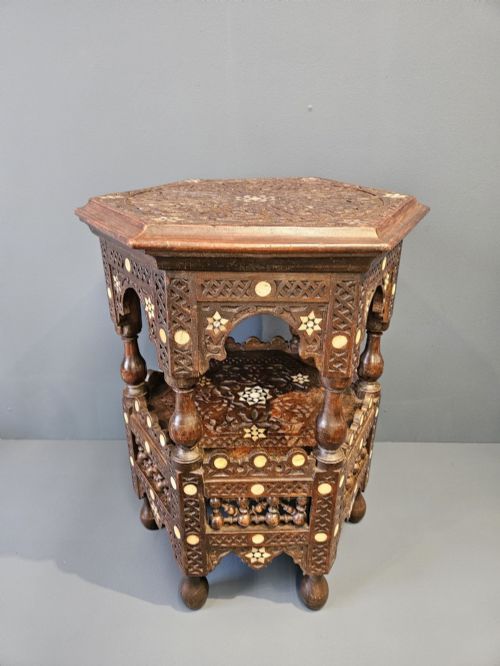
These carved bone inlaid table examples bring intricate floral motifs and geometric patterns into a room, prized for their dense craftsmanship and striking contrasts.
Carved Bone Inlaid Table
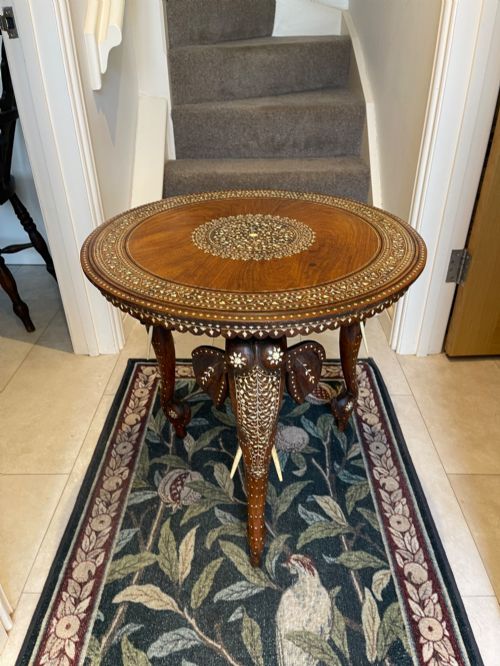
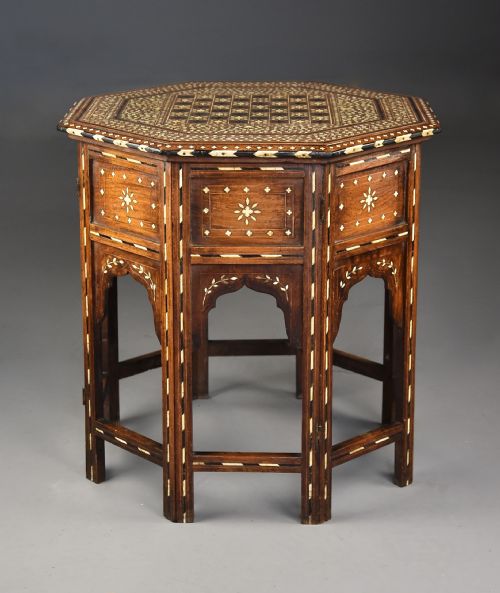
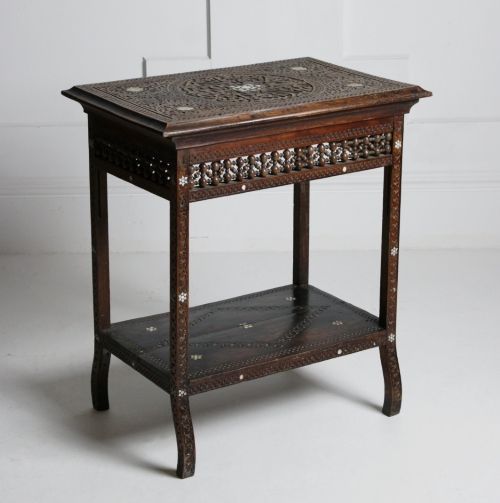
When you search for a carved bone inlaid table, you encounter intricate occasional tables, folding tables, and octagonal pedestal forms originating from various regional traditions. The examples appearing here span the nineteenth century through the early twentieth century, showing influences from Anglo-Indian, Moorish Revival, Syrian, and Ottoman styles.
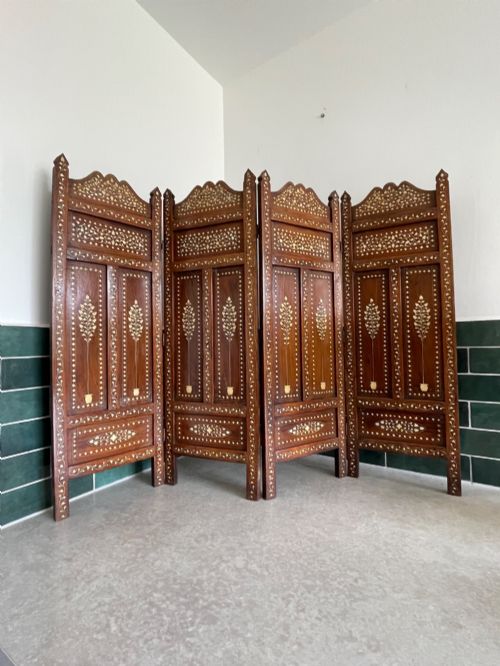
The octagonal occasional table and the folding table dominate the selection, often featuring elaborate carved bases or figural supports such as elephants. Alongside traditional tables, related forms like table screens and coffee tables appear, constructed from hardwoods ornamented with detailed bone and mother-of-pearl work.
Materials and construction methods
These pieces rely on a foundation of dense timbers including rosewood, teak, walnut, sandalwood, padauk, and ebonised hardwood. Artisans carved these woods deeply before recessing pieces of bone and mother-of-pearl to create complex surface patterns.
The decorative schemes combine intricate carving with meticulous inlay techniques, often featuring folding or collapsible bases designed for versatility. The contrast between the dark timber and the pale bone defines the visual impact of each piece.
Recorded periods span from the Victorian era and the nineteenth century through the Edwardian period up to nineteen thirty.
Distinctions in execution
Quality rests upon the crispness of the wood carving and the precision of the bone inlay work. Finer examples display tightly fitted inlay elements with minimal filler, maintaining sharp geometric and floral lines across the entire surface.
The depth of the carving and the complexity of the timber structure also separate standard productions from superior works. Tables featuring solid construction, well-preserved mother-of-pearl accents, and stable folding mechanisms represent the higher end of the range.
Liberty & Co
The Carved Bone Inlaid Table Glossary
- Hoshiarpur
- A style of woodwork originating from Punjab, known for dense vegetal carving and extensive bone inlay. Tables from this tradition often feature octagonal tops and folding bases.
- Octagonal
- Having eight sides. This geometric shape is particularly common for the top surface and base structure of Middle Eastern and Anglo-Indian occasional tables.
- Mother-of-Pearl
- The iridescent inner layer of mollusc shells. Artisans inset these shimmering plates alongside bone to add luminous highlights to table surfaces.
- Moorish Revival
- An architectural and decorative style popular in the nineteenth century. It incorporates Islamic design elements such as horseshoe arches and geometric lattice patterns into furniture.
Carved Bone Inlaid Table: Frequently Asked Questions
How do I date a carved bone inlaid table?
Dating relies on examining the timber species, construction joints, and stylistic influences recorded in the piece. Nineteenth-century examples often display hand-cut joinery and specific regional carving characteristics.
Later pieces from the early twentieth century may incorporate different hardware or altered timber treatments while maintaining traditional decorative motifs.
Were these tables made for export?
Many pieces were produced in workshops in India and the Middle East specifically for the European market during the Victorian and Edwardian eras. British retailers imported these items to satisfy a strong domestic demand for exotic and revivalist interior furnishings.
As a result, forms like the octagonal occasional table were adapted to suit Western domestic habits while retaining traditional craftsmanship.
How should I care for the bone inlay?
Maintenance requires keeping the timber and bone away from direct heat sources and excessive moisture. Dusting gently with a dry, soft cloth preserves the carved details without disturbing the inlaid sections.
Occasional light conditioning of the wood helps maintain the contrast between the dark timber and the pale bone.