

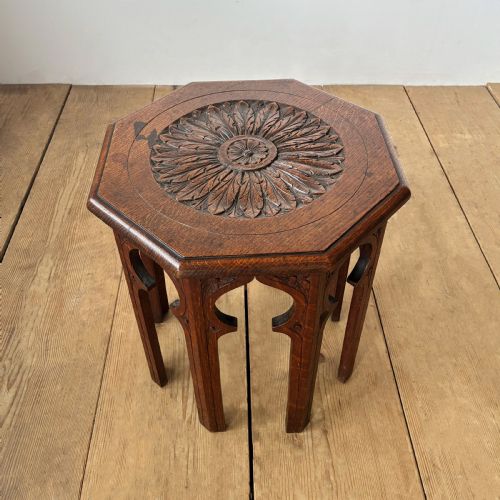


Victorian Moorish Table
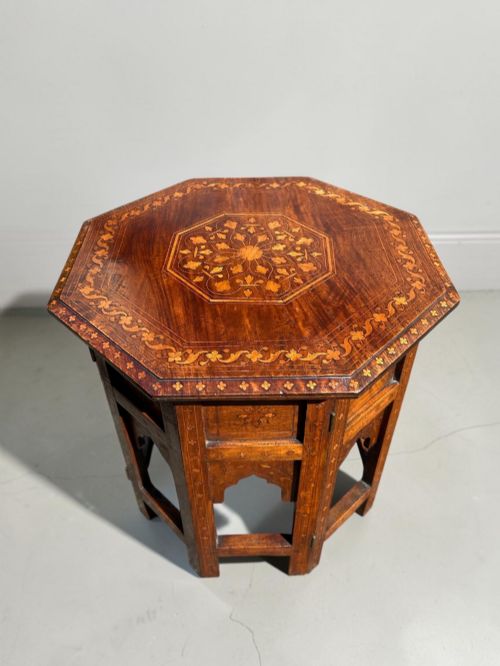
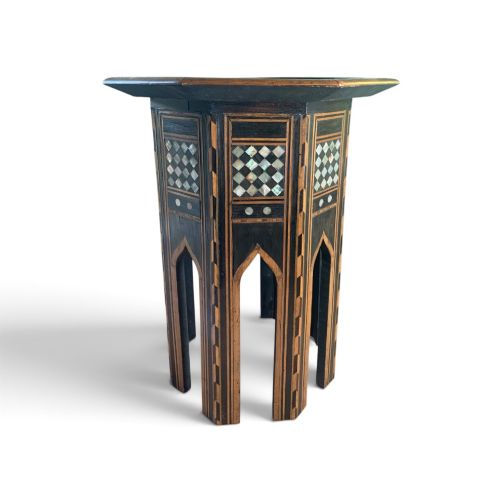
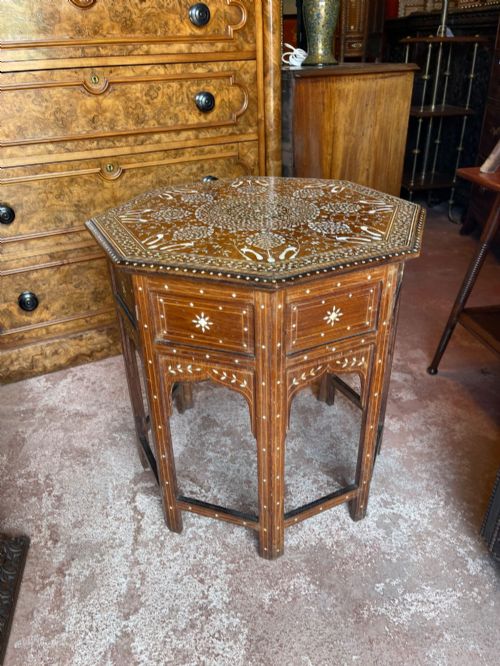
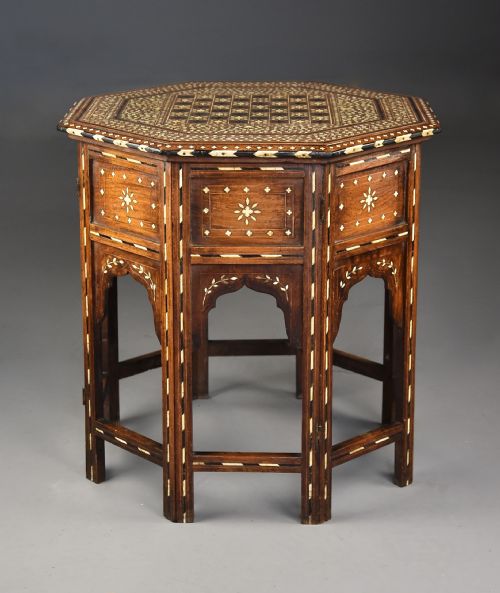
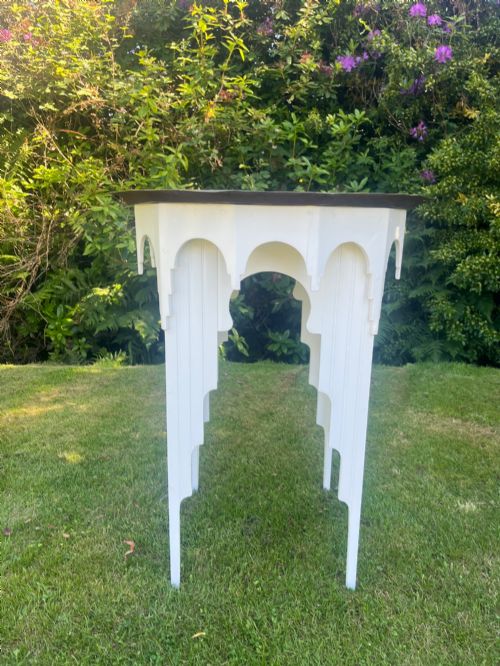
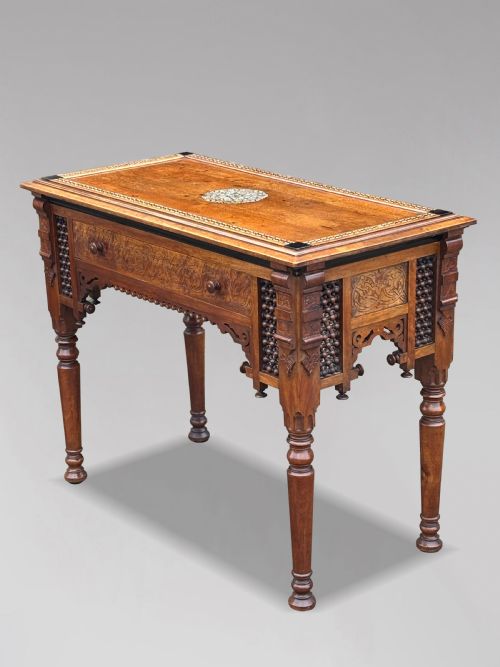
A victorian moorish table brings intricate geometric inlay and dense carving into a room, offering an exotic focal point.
Victorian Moorish Table
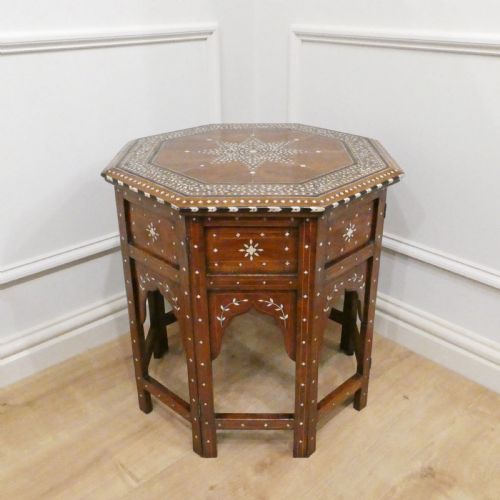
A victorian moorish table represents the nineteenth-century taste for exoticism and intricate craftsmanship in domestic furniture. These occasional and side tables frequently appear in octagonal forms designed to fit into eclectic Victorian interiors.
Makers drew inspiration from North African, Syrian, and Indian traditions to produce pieces that functioned as lamp tables, centre tables, or small tea tables. The surviving examples span the late nineteenth century into the early twentieth century.
The aesthetic bridges several related movements, encompassing Anglo-Indian, Anglo-Moorish, and Aesthetic styles. Buyers encounter pieces ranging from simple carved frames to heavily inlaid surfaces.
Materials and construction
Hardwoods form the foundational structure of these tables, with walnut, rosewood, teak, mahogany, and ebonised wood appearing across the pieces. Artisans shaped these dense timbers into folding stands and rigid octagonal frames.
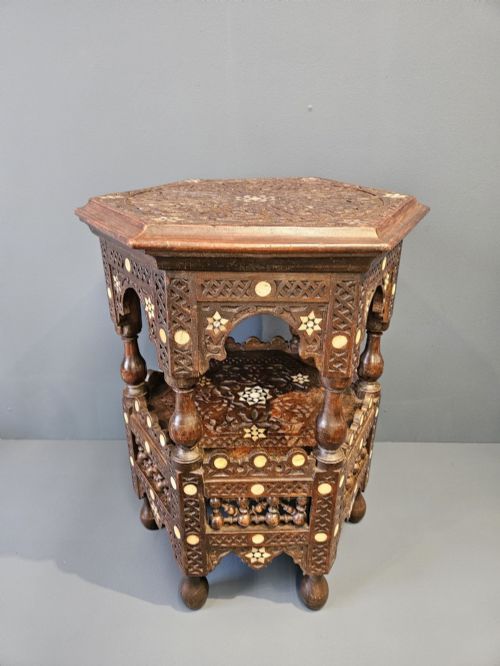
Surface decoration relies heavily on contrasting materials set directly into the wood. Mother-of-pearl, bone, and sometimes copper tops provide the reflective highlights and pale geometric patterns characteristic of the style.
One past archive entry featured an unusual oil painting of a young woman and dog combined with a Damascus table frame.
Assessing quality
Quality rests primarily on the density and precision of the carving and inlay work. Superior examples display tightly fitted geometric tesserae of mother-of-pearl and bone with minimal filler, whereas simpler pieces rely purely on surface carving.
The integrity of the timber framework and the retention of delicate inlaid elements separate standard production from finer workshop output. Maker attribution, particularly to firms like Liberty & Co., elevates the standing of a piece.
Liberty & Co.
The Victorian Moorish Table Glossary
- Moorish Revival
- A nineteenth-century architectural and decorative style drawing on Islamic design motifs from Spain, North Africa, and the Middle East. It heavily influenced domestic furniture during the Victorian era.
- Anglo-Indian
- A term describing furniture made in India, often by local craftsmen using traditional techniques for British expatriates or export markets. These pieces frequently feature dense overall carving and inlay.
- Occasional table
- A small, movable table intended for a specific, intermittent use such as holding a lamp or book. They were popular in Victorian drawing rooms.
- Octagonal
- Having eight sides and eight angles. Many tables in this category use an eight-sided top supported by a folding or rigid multi-panel base.
- Ebonised
- Wood treated with a finish to make it resemble ebony. This dark, formal surface treatment was favoured in Aesthetic Movement interiors.
Victorian Moorish Table: Frequently Asked Questions
Where should I place a victorian moorish table?
These tables suit reception rooms, studies, or hallways as accent pieces for holding lamps or small objects.
Their distinct profiles and decorated tops allow them to stand alone effectively rather than tucked against a wall.
How do I clean the inlaid surfaces?
Dust gently with a soft, dry brush to prevent dirt from lodging in the recesses of the carved wood and bone inlay.
Avoid liquid cleaners and excessive moisture, which can loosen delicate pieces of mother-of-pearl or cause the timber to warp.
Are these tables sturdy enough for daily use?
Most examples function well as occasional tables for supporting lamps, books, or decorative items.
Due to their intricate fretwork and delicate inlay, heavy weight or rigorous daily utility should be avoided.
How do I distinguish between Anglo-Indian and Moorish styles?
Anglo-Indian pieces typically feature deep, overall floral or vegetal wood carving originating from workshops in places like Hoshiarpur.
Moorish and Anglo-Moresque pieces lean more toward geometric lattice patterns and inlaid mother-of-pearl or bone.