



Aesthetic Movement Coffee Table
These aesthetic movement coffee table pieces capture late-nineteenth-century reform design, bringing dark woods, bamboo, and exotic ornamentation into everyday living spaces.
Aesthetic Movement Coffee Table
Makers and designers of the period adapted traditional domestic furniture to reflect new tastes in interior decoration, utilising octagonal tops and tiled surfaces. These lower tables serve modern living rooms effectively as coffee tables despite their original nineteenth-century designations as occasional or lamp tables.
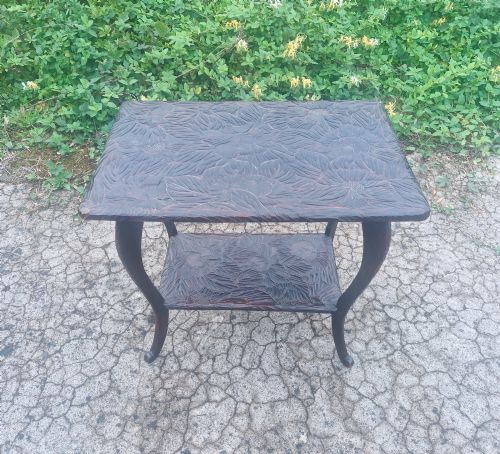
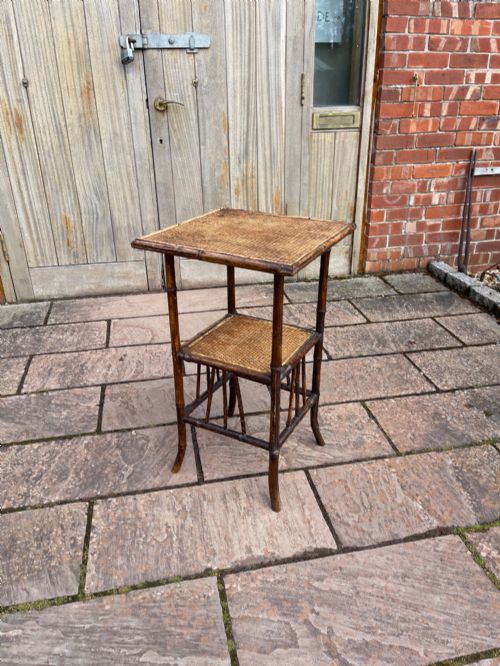
Victorian examples range from bamboo frames with woven reed to ebonised hardwood models decorated with mother of pearl and brass details. Buyers frequently find pieces reflecting Japonisme and Moorish Revival styles alongside standard Victorian aesthetic movement forms.
How they were made
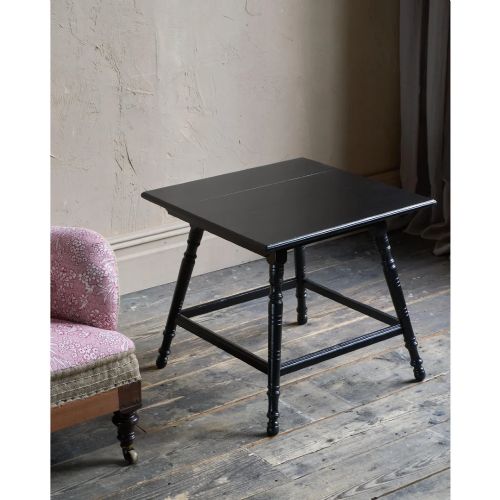
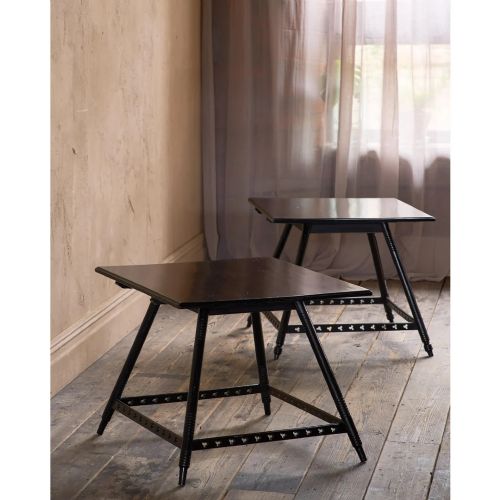
Cabinet makers utilised ebonised wood, dark stained wood, mahogany, walnut, and birch to achieve the characteristic sombre tones favoured by nineteenth-century designers. Construction often involved hand carving and turned elements, supported by cast solid brass sabots on finer centre tables.
Alternative materials such as bamboo and woven cane appeared frequently, reflecting global design influences during the late nineteenth century. Inlaid details incorporating bone and mother of pearl added decorative contrast to darker timber surfaces.
Victorian craftsmen occasionally experimented with tiled tops, ensuring your morning tea cup rests upon actual ceramic art.
What varies in quality
The distinction between standard production items and exceptional pieces rests in the complexity of the timber selection, such as fiddleback mahogany tops, and the refinement of hand carving. Workshops that produced documented items for major retailers generally applied superior joinery and more ambitious decorative schemes.
Hardware details like solid brass sabots and intricate bone or mother of pearl inlay separate simpler occasional tables from more substantial centre and games tables. The structural integrity of bamboo frames and woven cane surfaces also marks the difference in preservation and build.
Hindley and Sons·Liberty and Co·Liberty of London·Daniel Cottier·Cottier and Co·Gillows
The Aesthetic Movement Coffee Table Glossary
- Ebonised wood
- Timber treated to resemble ebony, providing a smooth, dark finish common in nineteenth-century reform furniture. This technique allowed makers to utilise cheaper hardwoods while achieving a uniform, formal appearance.
- Japonisme
- The influence of Japanese art and design on Western decorative arts during the late nineteenth century. This style emphasised asymmetry, natural motifs, and simplified forms.
- Moorish Revival
- An architectural and decorative style incorporating Islamic design elements such as intricate geometric patterns and octagonal forms. Tables in this style often utilised exotic wood finishes and low profiles.
- Sabot
- A metal sleeve or shoe fitted to the foot of a furniture leg for protection and decoration. These fittings were frequently cast in solid brass on mid-to-late nineteenth-century tables.
- Occasional table
- A small, versatile table designed for specific, intermittent use in a principal room. Nineteenth-century examples often featured octagonal tops or specialised surfaces for games and tea.
Aesthetic Movement Coffee Table: Frequently Asked Questions
Are aesthetic movement tables suitable for daily use?
These nineteenth-century pieces function well as coffee tables in modern interiors, offering convenient surfaces for books and daily items.
Care should be taken with delicate surfaces like woven cane, bamboo, and inlaid mother of pearl to preserve their historical condition.
How do I identify an aesthetic movement table?
Look for characteristic dark ebonised finishes, bamboo structures, or decorative influences drawn from Japanese and Moorish design.
Many examples feature octagonal tops, brass hardware, or inlaid bone details typical of late Victorian reform furniture.
What is the difference between occasional and centre tables?
Occasional tables were built for specific, light tasks around the home and often feature smaller octagonal or square tops.
Centre tables were designed to stand free in the middle of a room, possessing larger, heavier proportions and more substantial timber construction.
Did these pieces originate as coffee tables?
Nineteenth-century makers produced these forms as side, lamp, games, or occasional tables rather than designated coffee tables.
Their lower heights and compact dimensions make them well-suited for placement beside modern seating.