



Moorish Revival Occasional Table
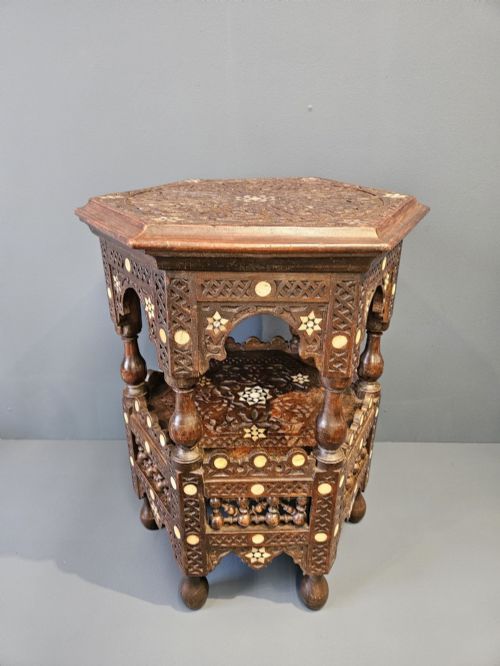
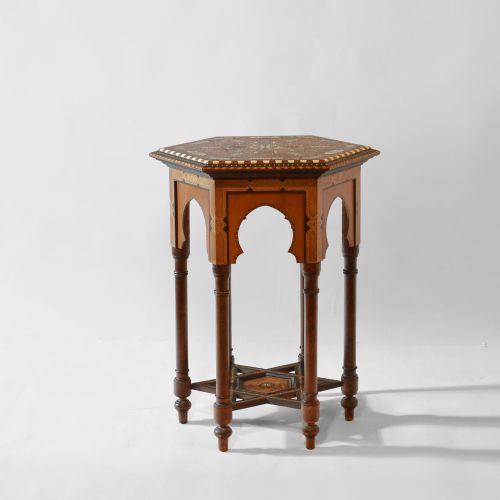
These moorish revival occasional table pieces combine intricate geometric inlay with striking octagonal forms, bringing a dramatic architectural presence to any interior.
Moorish Revival Occasional Table
A moorish revival occasional table is a decorative item designed for domestic use, typically taking an octagonal or hexagonal form. These pieces frequently appear in nineteenth century and early twentieth century contexts, often aligning with Victorian or Aesthetic Movement tastes. Makers utilised distinctive geometric silhouettes to create functional furniture that doubled as decorative focal points.
The surviving examples on this page span from the late nineteenth century into the 1930s, encompassing side tables, lamp tables, and centre tables. Buyers will encounter both Syrian and North African influenced designs, alongside pieces associated with Liberty and Company. Such tables range from two-tier constructions to variants featuring fitted cupboards or intricate openwork.
Construction relies heavily on traditional geometric joinery, resulting in stable surfaces despite complex surface patterns. The smaller side and lamp table formats dominate the selection, making them practical for placement beside seating. Each variant reflects the broader Victorian fascination with exoticism and intricate craftsmanship.
How they were made
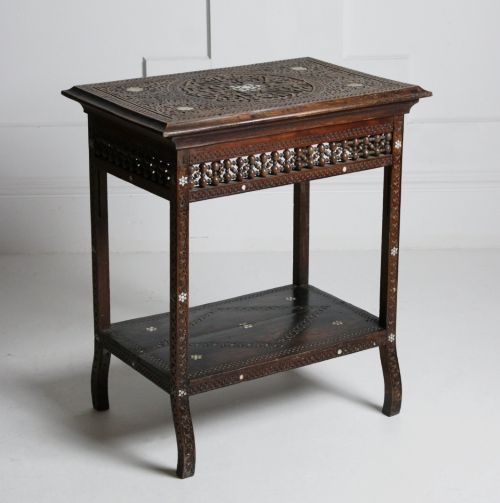
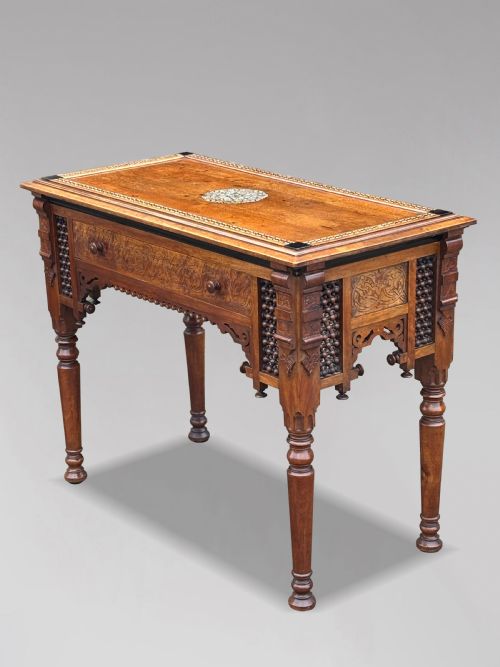
Craftsmen built the core structure using hardwoods such as walnut and ebonised wood, providing a stable foundation for intricate surface decoration. This framework was then extensively inlaid with contrasting materials including mother-of-pearl, bone, and copper-inlaid brass. The juxtaposition of dark timber with luminous inlay creates the characteristic visual depth seen across these tables.
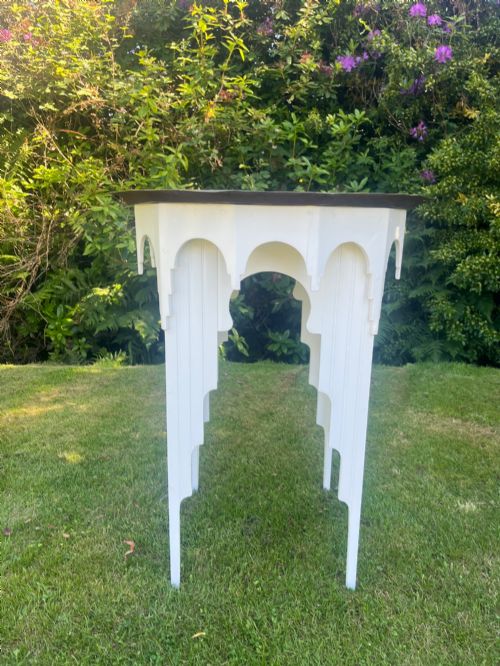
Surface embellishment frequently involved painstaking mosaic work, where tiny geometric pieces of bone and mother-of-pearl were fitted into carved recesses. Certain variations incorporate painted wood or openwork white-metal alongside traditional wood carving. This combination of joinery, inlay, and carved relief work defines the technical standard of the genre.
The selected forms span from standard side tables and lamp tables to two-tier constructions and variants with cupboards.
What varies in quality
The standard of a moorish revival occasional table rests primarily on the precision and density of its inlay work. Finer examples display tightly fitted geometric tessellations of mother-of-pearl and bone with minimal filler, whereas simpler versions rely more heavily on painted surface decoration. The integrity of the underlying hardwood structure and the complexity of the joinery also distinguish finer pieces from standard production.
Proportion and form dictate the visual impact, with balanced octagonal silhouettes and crisp carving indicating superior workshop output. Tables featuring secondary functional elements, such as internal cupboards or integrated two-tier structures, demonstrate a higher degree of joinery ambition. The overall crispness of the carved details and the retention of delicate inlay elements separate standard items from exceptional survivals.
Liberty and Co.
The Moorish Revival Occasional Table Glossary
- Moorish Revival
- An architectural and decorative style that draws inspiration from traditional Islamic art of Spain, North Africa, and the Middle East. It became particularly popular in British and European design during the nineteenth century.
- Octagonal
- A geometric shape possessing eight sides and eight angles, which forms the predominant footprint for tables in this category. This specific geometry allowed artisans to arrange intricate mosaic inlay patterns symmetrically across the top.
- Cairoware
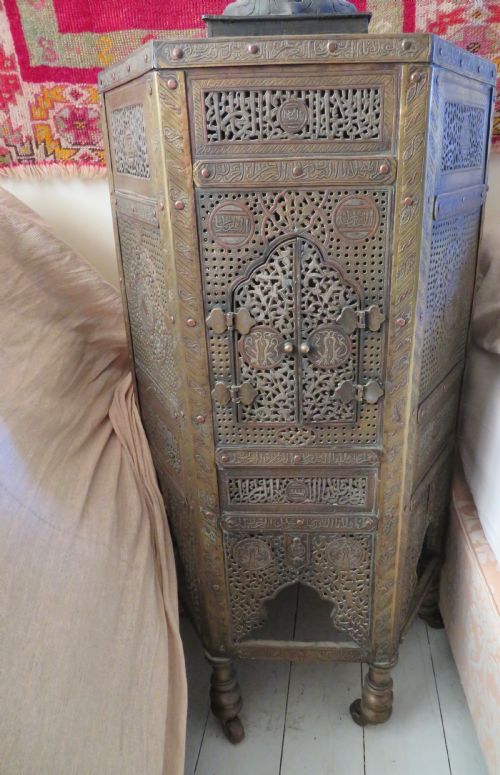
- A term used to describe metalwork items, often brass inlaid with copper and silver, originating from Cairo workshops during the late nineteenth and early twentieth centuries. These decorative techniques occasionally found their way onto table tops and decorative accents.
- Kursi
- A traditional low stool or table of Middle Eastern origin, often hexagonal or octagonal in plan. In western collections, the term frequently describes low decorative occasional tables.
- Aesthetic Movement
- A late nineteenth century art movement that emphasised visual and compositional beauty over narrative or moral themes. Furniture from this period often integrated exotic or historicist motifs into contemporary domestic interiors.
Moorish Revival Occasional Table: Frequently Asked Questions
Where were these tables used?
These pieces were typically placed in nineteenth century drawing rooms and reception spaces as decorative accents. Homeowners utilised them to display lamps, ornaments, or smoking accessories.
Their compact proportions allowed them to function easily as movable side or occasional furniture within eclectic domestic interiors.
How do I clean the inlay?
Maintenance requires dry dusting with a soft, natural bristle brush to prevent dust from settling within the intricate geometric recesses. Moisture and harsh cleaning agents must be avoided to protect fragile bone and mother-of-pearl components.
Applying a minimal amount of suitable paste wax to the timber frame helps preserve the wood without harming the surrounding inlay.
Are all octagonal tables Victorian?
While a significant portion of these items date from the Victorian era and the late nineteenth century, production extended well into the twentieth century. Examples bearing Liberty and Company stylistic traits or specific twentieth century construction methods often date from around 1900 to the 1930s.
Examining the underlying timber and assembly methods helps distinguish earlier nineteenth century pieces from later interpretations.
What is cairoware?
Cairoware refers to distinct metalwork featuring intricate copper and silver inlay upon a brass ground. On these tables, metal panels or tops were often incorporated alongside wood and mother-of-pearl elements.
This technique reflects the late nineteenth century European appetite for authentic Middle Eastern craftsmanship.