


Marquetry Corner Table
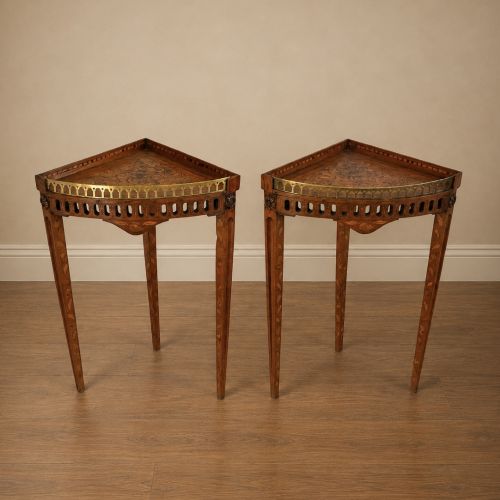
A marquetry corner table brings patterned wood veneers into an awkward room angle, offering a fitted surface that utilises otherwise dead space.
Marquetry Corner Table
A marquetry corner table is designed to fit snugly into the intersection of two walls, making practical use of room perimeters. The examples appearing on this page span several periods, from the eighteenth century to the early twentieth century.
Makers shaped these surfaces in various formats, including triangular designs and occasional tables that align with room corners. Stylistic influences across the selection include Sheraton revival, Georgian, and Dutch neoclassical traditions.
Buyers encountering this furniture will find pieces executed in woods such as mahogany, walnut, and rosewood, frequently enhanced by contrasting inlay work. These items serve primarily as decorative display surfaces or lamp tables within domestic interiors.
Materials and construction
Cabinetmakers utilised dense timbers such as mahogany, rosewood, and walnut as the foundational structures for these tables. These hardwoods provided stability for supporting delicate surface designs.
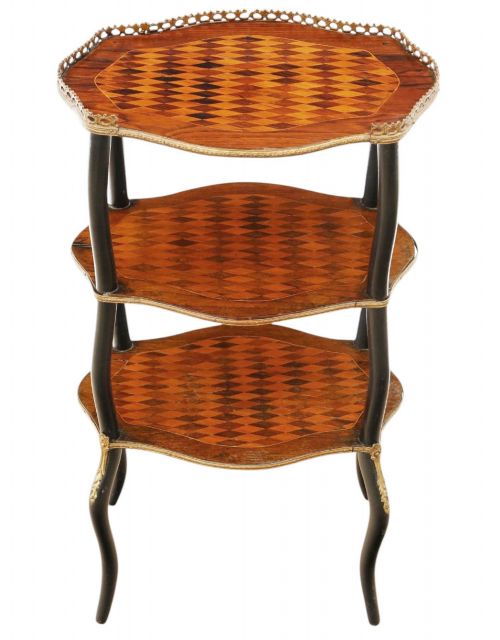
Surface decoration relies on marquetry and parquetry techniques, incorporating contrasting woods like boxwood and satinwood inlay. Brass galleries and mounts also appear on specific pieces, adding metalwork accents to the timber construction.
Materials documented across the pieces include mahogany, walnut, rosewood, satinwood, and ebonised wood alongside brass hardware.
Factors determining quality
The sophistication of the timber work and the precision of the veneer placement separate standard examples from finer ones. Crisp execution in floral or geometric wood patterns indicates higher standards of cabinetmaking.
The selection of primary and secondary timbers contributes significantly to the overall merit of the piece. Richly grained rosewood or figured mahogany combined with clean boxwood and satinwood stringing demonstrates superior material choice.
Liberty & Co.
The Marquetry Corner Table Glossary
- Marquetry
- Decorative veneer work arranged in pictorial or patterned designs on a wooden ground. This technique uses thin slices of various coloured woods to create detailed surface imagery.
- Parquetry
- Geometric wood inlay forming repeating patterns such as cubes or stripes. It provides a structured contrast to floral marquetry scenes.
- Satinwood
- A durable, yellowish timber prized for its lustrous sheen and pale colour. It is frequently utilised for contrasting inlay and stringing.
- Etagere
- A set of open shelves for displaying small objects. These tiered structures often incorporate inlaid surfaces.
Marquetry Corner Table: Frequently Asked Questions
Where should I place a corner table?
These tables are built specifically to occupy the junction where two walls meet. They turn unused angles into functional display areas for lamps or small decorative objects.
Placing one in a hallway or drawing room maximises floor space while adding visual interest to a neglected room corner.
How do I identify a Sheraton revival piece?
Sheraton revival furniture dates primarily from the late nineteenth and early twentieth centuries, mimicking the lighter forms of the late eighteenth century. Look for slender tapered legs and delicate satinwood or boxwood stringing.
These pieces often employ mahogany or satinwood as primary timbers, reflecting neoclassical taste adapted for Edwardian homes.
What is the difference between marquetry and parquetry?
Marquetry involves cutting and fitting wood veneers into pictorial or organic motifs, such as floral sprays. It allows for varied shading and complex visual compositions.
Parquetry sticks strictly to geometric arrangements like squares, lozenges, and cubes, creating orderly patterns across the surface.
Are these tables suitable for daily use?
Most antique examples function well as lamp stands, side tables, or display surfaces for lightweight items. Their veneered surfaces require sensible care, such as avoiding excessive moisture and direct heat.
Treating the timber with appropriate wax preserves the polished finish and protects the delicate inlay work over time.