


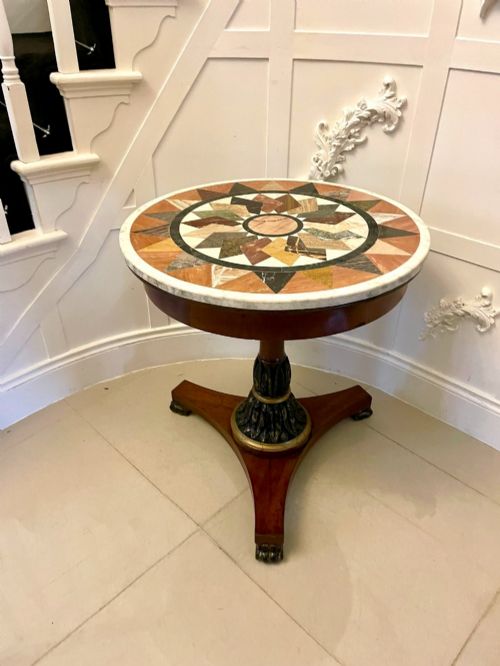
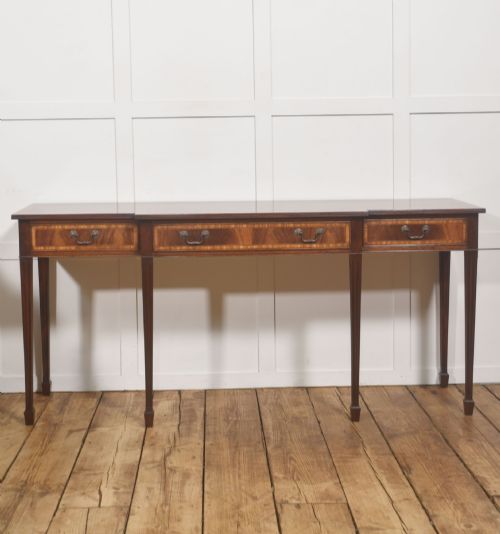
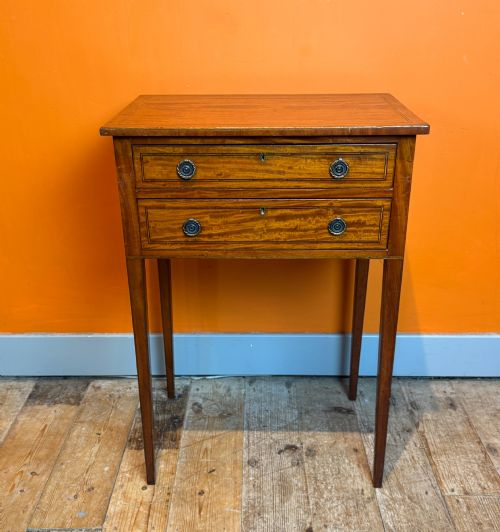
Inlaid Hall Table
An inlaid hall table offers a narrow, decorative surface for an entranceway, combining timber construction with contrasting wood, brass or parquetry decoration.
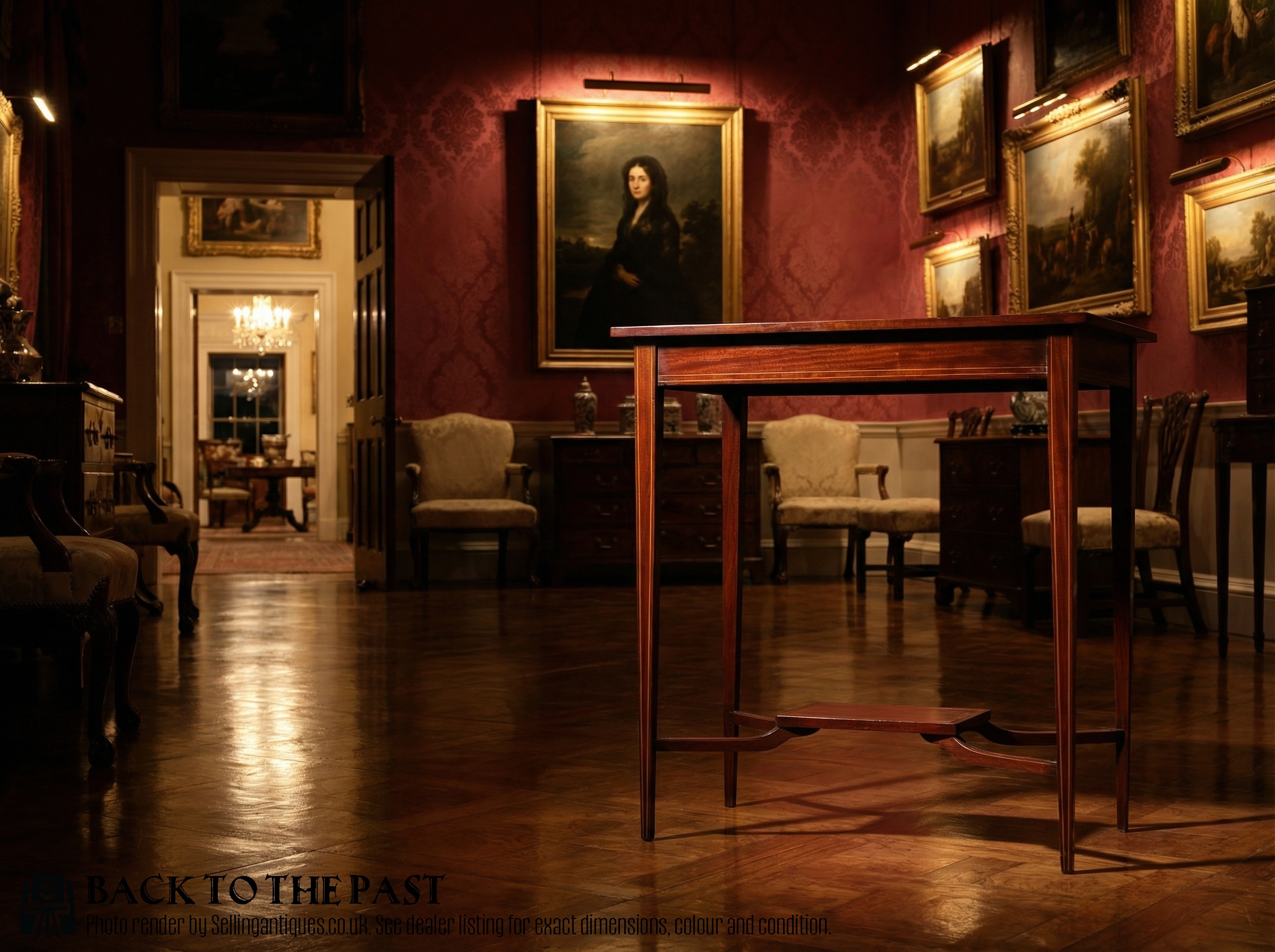
Inlaid Hall Table
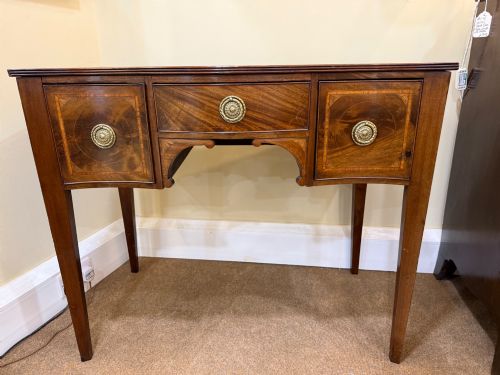
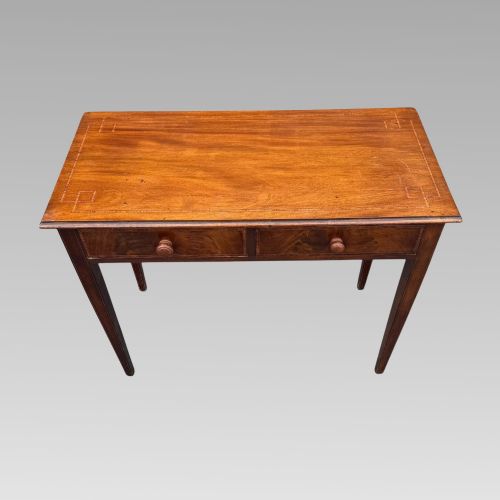
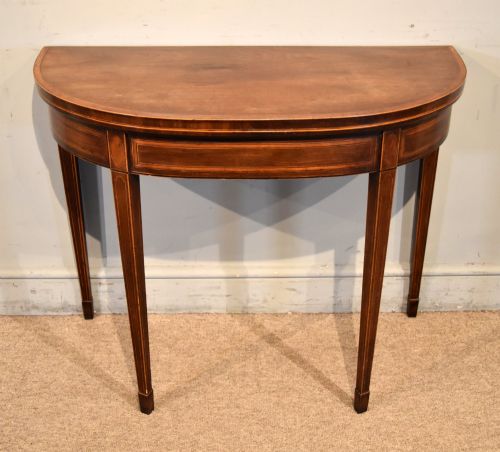
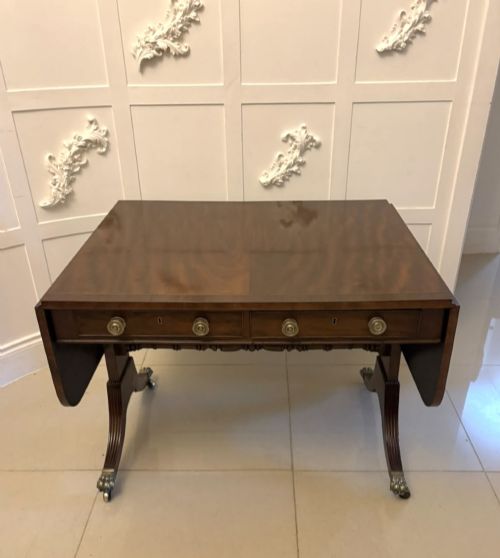
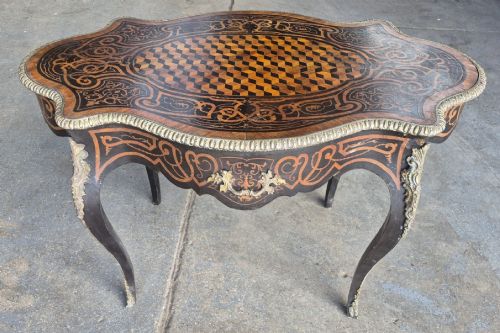
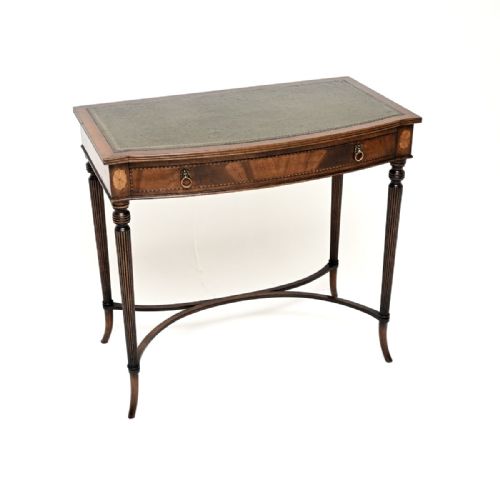
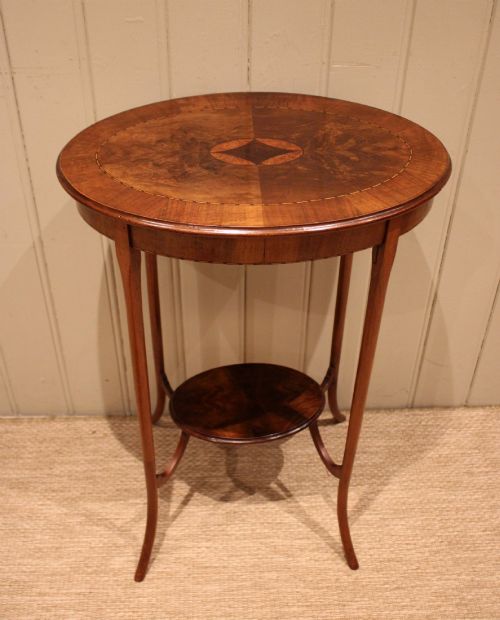
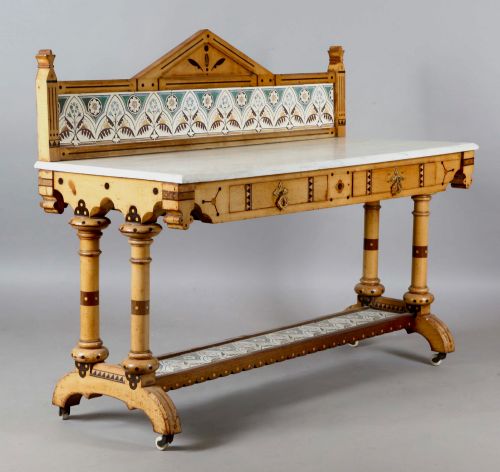
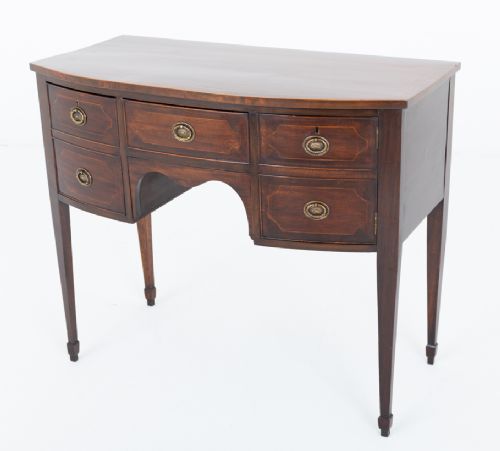
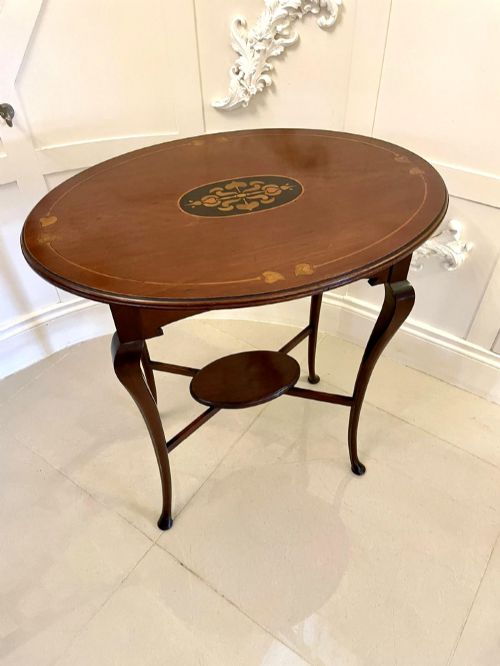
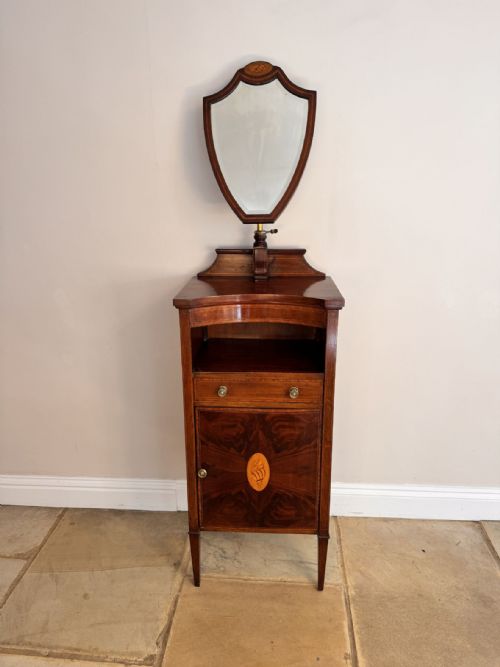
The inlaid hall table appears across several periods, including the Georgian era, the nineteenth century, and the Edwardian period, manifesting in forms such as occasional tables, side tables, console tables, and lowboys. These pieces serve narrow entranceways and landings where surface space is required without obstructing passage.
Makers adapted classic shapes like the demi-lune, rectangular top, and circular occasional table to suit hallways, incorporating drop leaves or drawers in specific designs. Examples range from simple mahogany boards with minimal boxwood lines to elaborate marquetry surfaces created in continental workshops.
Victorian and Edwardian versions frequently utilise mahogany or walnut as a carcase timber, decorated with satinwood crossbanding and delicate stringing. Simpler country iterations in oak or fruitwood demonstrate how domestic cabinetmakers applied regional interpretation to the prevailing fashion for surface enrichment.
Materials and Technique
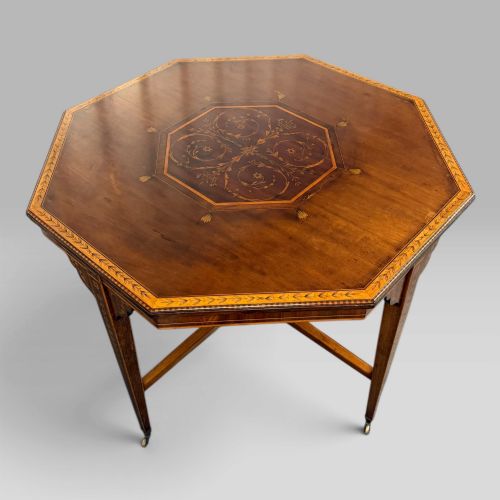
Cabinetmakers constructed these tables using solid primary timbers such as mahogany, walnut, oak, fruitwood, and rosewood, often applying veneers to secondary foundations for expansive tops. Satinwood, boxwood, and maple supplied contrasting tones for linear stringing, geometric parquetry, or pictorial marquetry motifs.
Inlay techniques required cutting recesses into the solid wood or veneered surface to fit contrasting pieces of veneer, held in place with hot animal glue and secured with weighted cauls. Brass stringing and mounts appeared on specific Regency and French-influenced pieces, requiring precise metal-cutting and pinning alongside traditional joinery.
Inlaid Hall Table Retail Price Guide 2026
Typical asking prices for inlaid hall table among the pieces listed under this phrase on Sellingantiques today, from the lower quarter to the upper quarter. They describe what is for sale here now, not the wider market.
Listings feature mahogany, walnut, satinwood, and oak tables decorated with boxwood inlay, brass stringing, and marquetry.
Evaluating Construction and Design
Quality rests in the crispness of the timber selection and the precision of the inlay work, where top-tier pieces display tight botanical or geometric joins without visible gaps or excessive filler. The choice of figured veneers, such as burr walnut or flame mahogany, distinguishes standard utility furniture from sophisticated commission work.
Structural integrity reveals itself in the alignment of drawer linings, the neatness of hand-cut dovetails, and the stability of leg joints beneath the top. Superior workshops employed matched timbers across the frieze and top, ensuring that secondary woods used internally matched the overall grade of the piece.
Shapland and Petter·Gillows
The Inlaid Hall Table Glossary
- Demi-lune
- A half-moon shape used for console and side tables designed to sit flush against an entrance wall. This curved format maximises floor clearance in compact hallways.
- Marquetry
- The art of forming decorative patterns from fitted pieces of coloured wood veneer. Craftsmen assemble floral or pictorial designs on paper before transferring them to the table top.
- Stringing
- Thin strips of contrasting light or dark wood inlaid into channels in the primary timber. This linear detail outlines drawers, edges, and tabletops.
- Crossbanding
- A border of veneer laid around the edge of a table top with the wood grain running perpendicular to the central panel. It frames the main timber field.
- Lowboy
- A small occasional table featuring one or more drawers beneath the frieze. These low tables served domestic writing or dressing functions before transitioning to hallway use.
Inlaid Hall Table: Frequently Asked Questions
What is an inlaid hall table?
An inlaid hall table is a narrow wooden surface designed for entranceways, featuring decorative woodwork applied to the top or frieze.
These pieces provide a place for correspondence or lighting without blocking narrow passages in a home.
How do I date an inlaid hall table?
Dating relies on identifying the primary timber, leg style, and construction methods characteristic of periods like the Georgian era or Edwardian times.
Secondary woods and the style of inlay work further narrow the decade of manufacture.
Where should I place a hall table?
These tables fit best against entrance walls, hallways, or narrow landings where floor space is limited.
Their shallow depth allows them to sit comfortably behind doors or along passageways.
What woods were used for these tables?
Common carcase woods include mahogany, walnut, and oak, paired with lighter veneers for contrast.
Satinwood, boxwood, and maple provide the pale tones required for fine stringing and floral marquetry.