
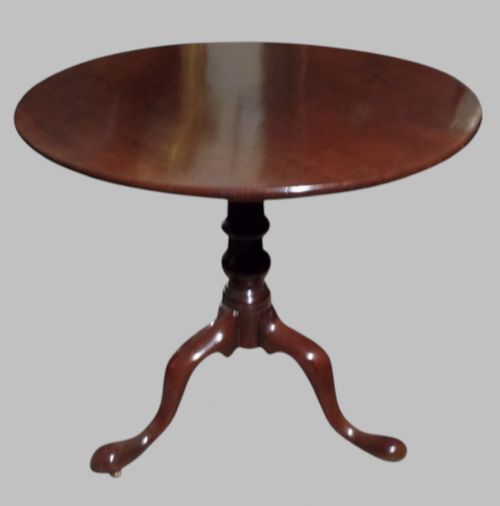
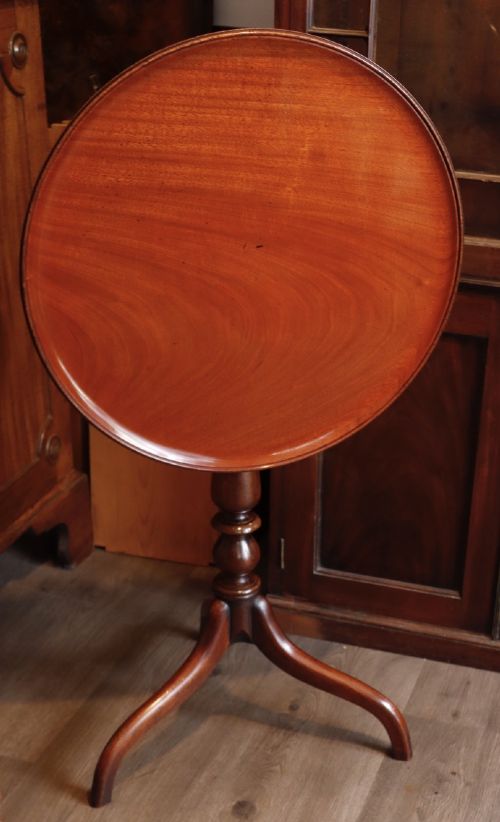
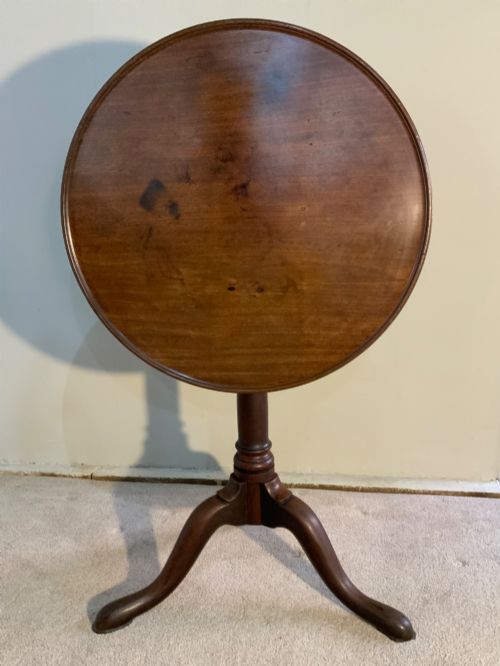
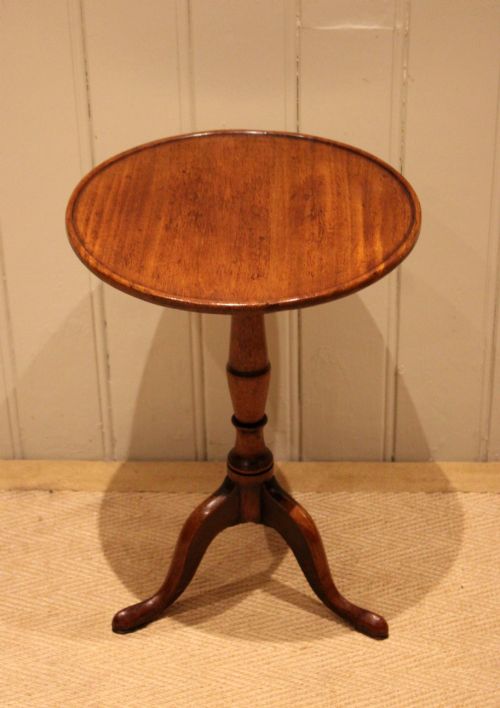
Cabriole Leg Tilt Table
A cabriole leg tilt table is a versatile surface with a pivoting top and curving legs, designed to save space when not in use.
Cabriole Leg Tilt Table
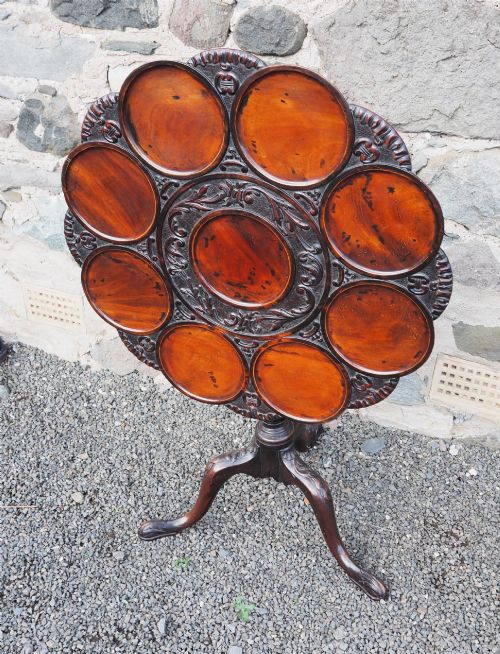
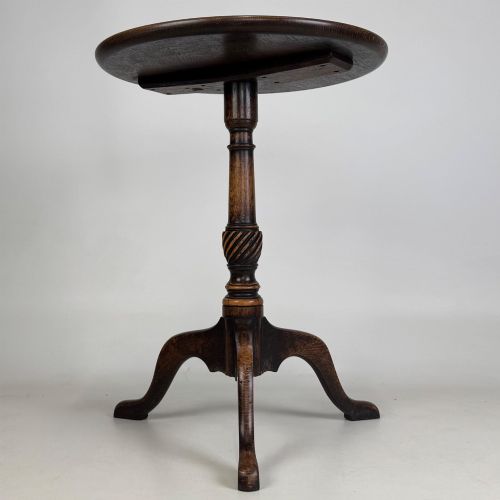
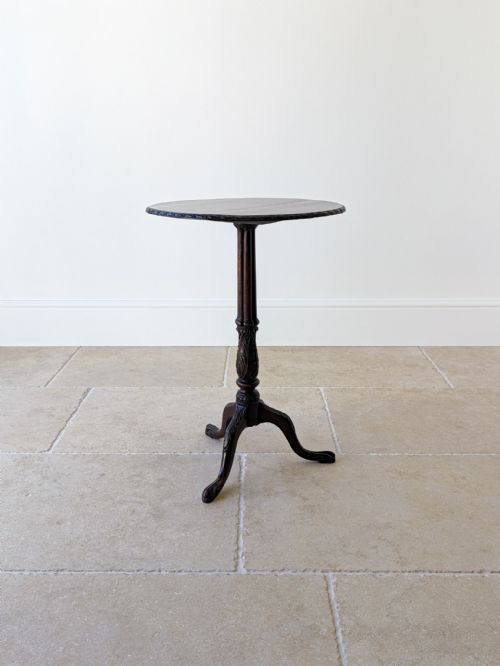
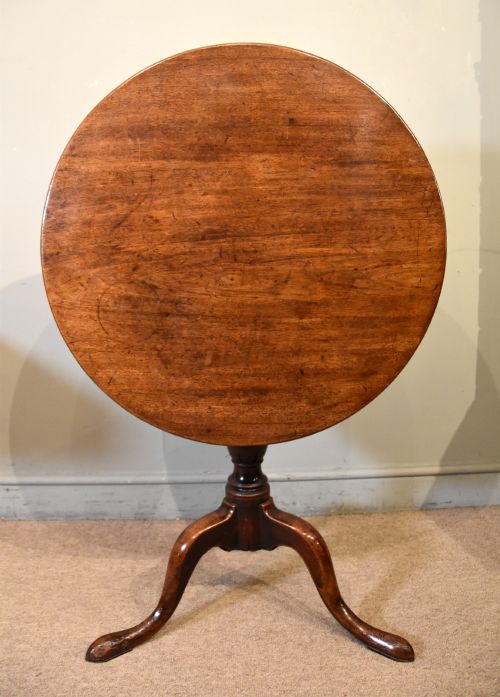
A cabriole leg tilt table combines a hinged top with slender curving supports, appearing across the Georgian, Victorian, and early twentieth-century periods. These pieces function primarily as occasional, wine, or dining tables depending on their scale and the shape of the top.
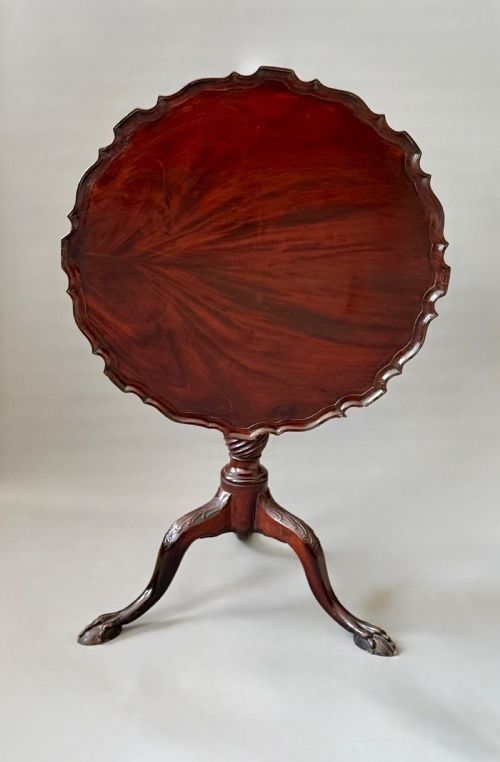
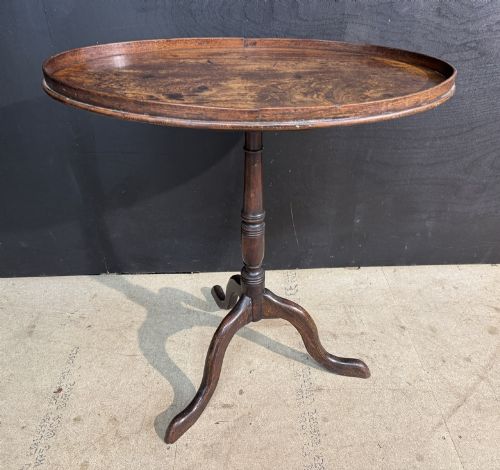
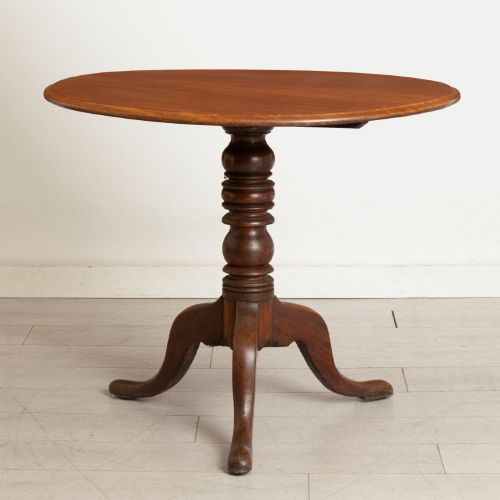
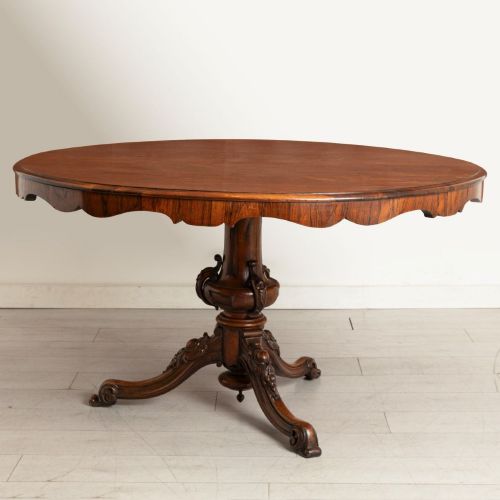
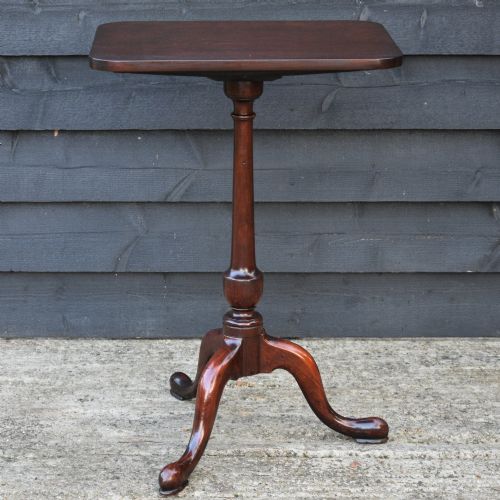
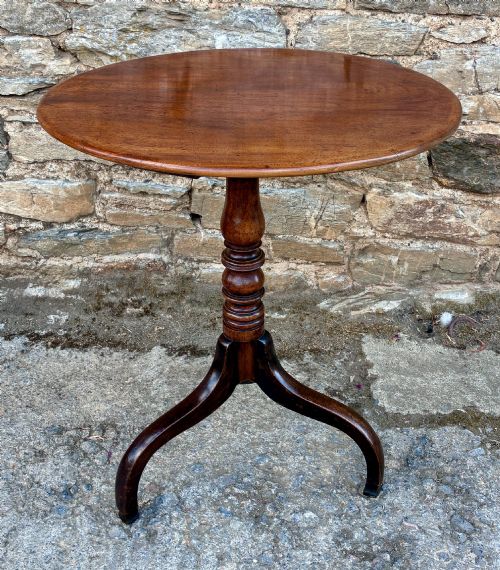
The most common examples on this page are mahogany tripod tables from the eighteenth and nineteenth centuries, often featuring rectangular or circular surfaces that tip vertically. Makers working in the Chippendale style and later revival periods also produced these versatile forms in oak, walnut, and rosewood.
How they were made
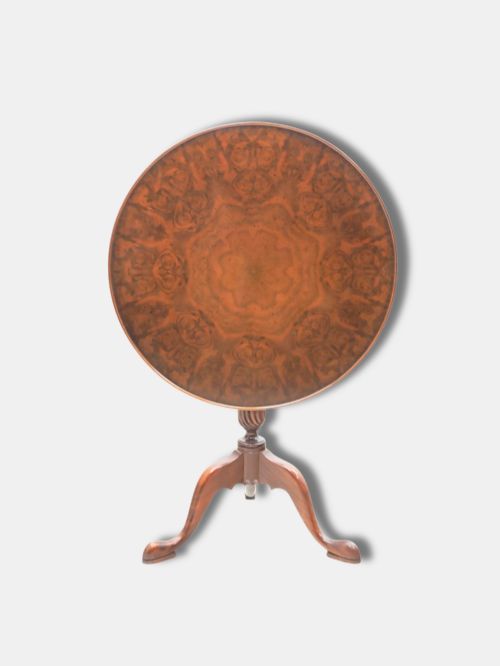
Cabinetmakers utilised dense timbers such as mahogany, oak, and walnut, frequently selecting Cuban mahogany or burr walnut veneer for the primary surfaces. The tops were turned or carved from solid timber and mounted onto a pivoting mechanism that locked flat for use.
Supports typically consist of a central column rising from a three-legged tripod base with distinct cabriole shaping. Certain pieces incorporate a birdcage mechanism beneath the surface, allowing the top to both rotate and tilt.
Cabriole Leg Tilt Table Retail Price Guide 2026
Typical asking prices for cabriole leg tilt table among the pieces listed under this phrase on Sellingantiques today, from the lower quarter to the upper quarter. They describe what is for sale here now, not the wider market.
Listings feature mahogany, oak, walnut, rosewood, and fruitwood across Georgian, Regency, Victorian, and early twentieth-century periods.
What varies in quality
The sophistication of the carving upon the knees and feet of the cabriole legs defines the upper tier of these tables. Crisp execution of ball and claw or pad feet separates workshop pieces from simpler regional production.
Engineering of the tilt mechanism and the birdcage pivot dictates the mechanical success of the piece. Superior examples exhibit tight joinery that prevents wobble when the top is locked in the horizontal position.
The Cabriole Leg Tilt Table Glossary
- Cabriole leg
- A furniture leg that curves outward at the knee and tapers inward toward the ankle, mimicking animal limbs.
- Tilt top
- A tabletop mounted on a hinged mechanism that allows the surface to pivot into a vertical position for storage.
- Tripod table
- A small freestanding table supported by a central pillar resting on three spreading feet.
- Birdcage
- A wooden framework beneath a tabletop that enables the surface to rotate as well as tilt.
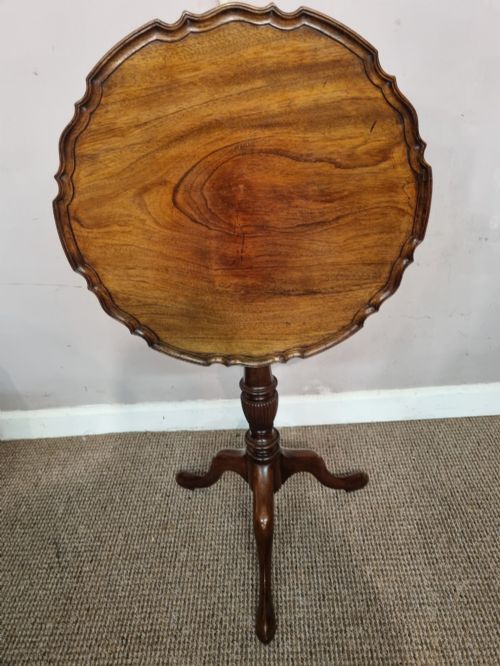
- Pie crust edge
- A raised, scalloped border carved along the rim of a circular tabletop.
Cabriole Leg Tilt Table: Frequently Asked Questions
How were these tables originally used?
These tables served various portable functions in domestic rooms, holding tea services, books, or wine bottles during evening gatherings.
Because the tops could tilt vertically, the furniture easily stood against a wall when not in use to maximise floor space.
How do I live with a tilt top table?
Position the table where the pivoting mechanism can be appreciated, either tilted flat for display or upright against a perimeter wall.
Keep the piece away from direct heat sources to prevent the solid timber tops from warping or splitting over time.
How can I tell the period?
Examine the timber species, construction joints, and decorative carving styles associated with Georgian or Victorian cabinetmaking traditions.
Earlier eighteenth-century pieces often display fine hand-cut dovetails and dense mahogany, while later revivals adopt machine-cut elements.
What is a snap top?
A snap top refers to a pivoting table surface secured by a small catch or spring mechanism underneath.
This device locks the tabletop firmly into the horizontal position so it remains stable during daily use.