

Turned Column Pedestal Table
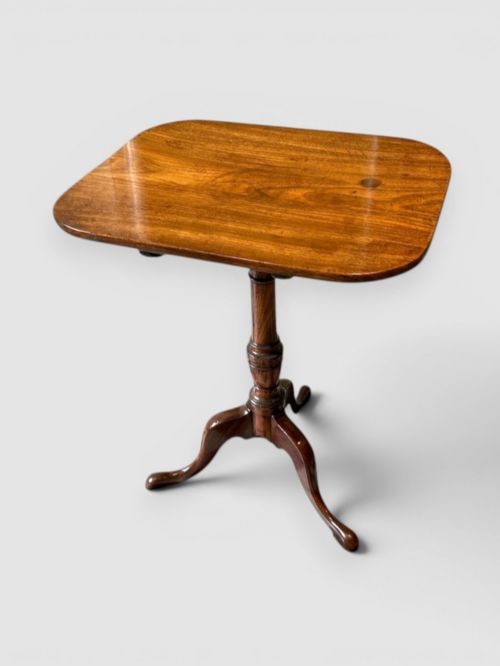
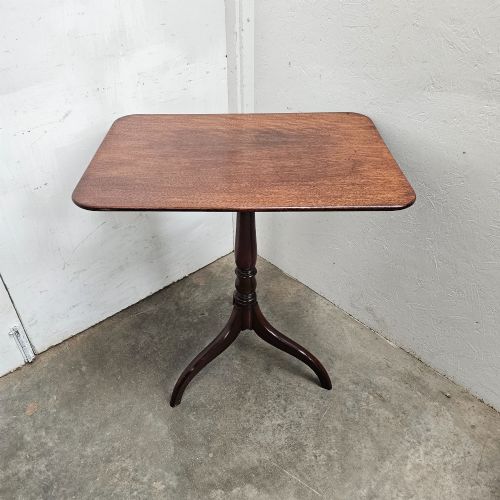
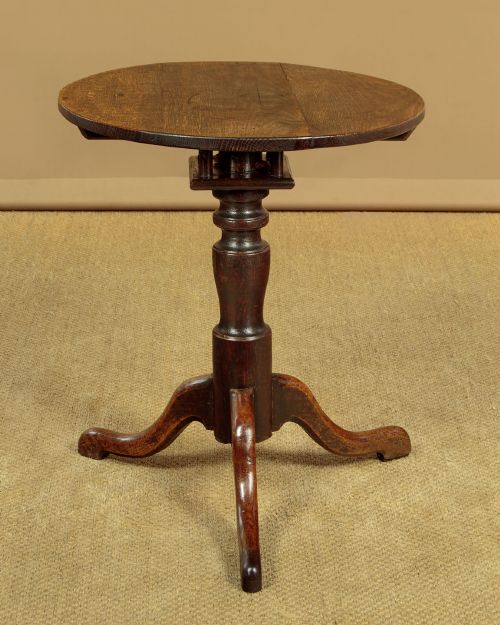
A turned column pedestal table offers a sturdy central pillar supporting a compact surface, serving as a versatile piece for displaying items or holding drinks.
Turned Column Pedestal Table
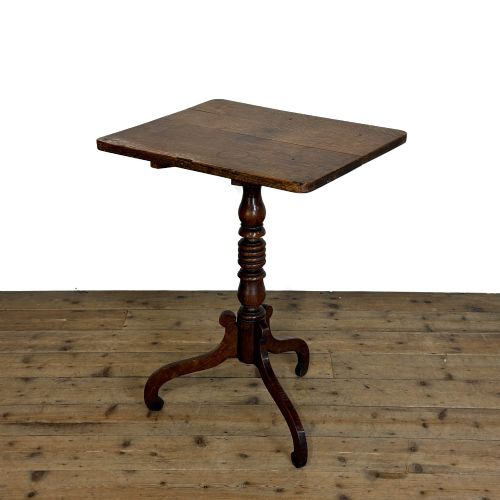
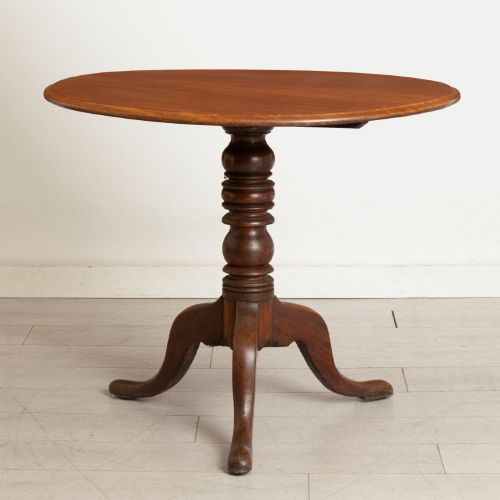
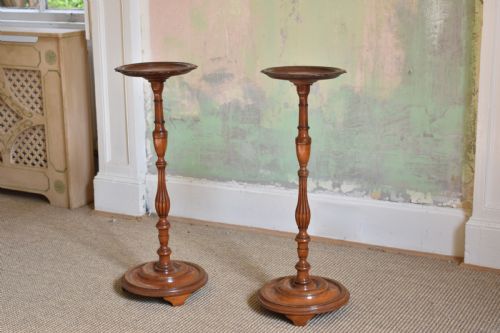
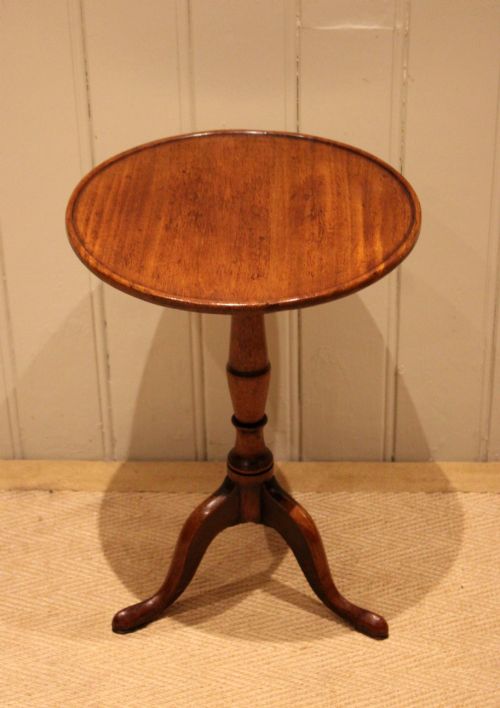
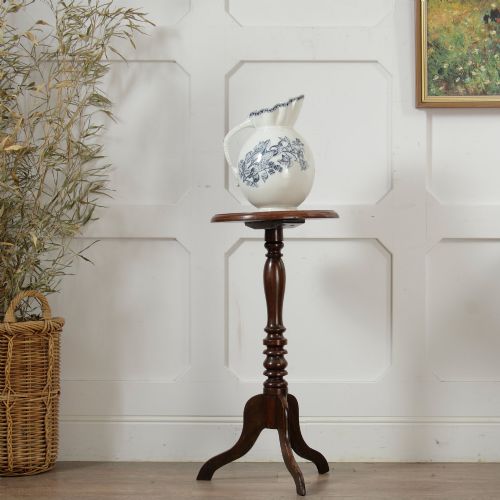
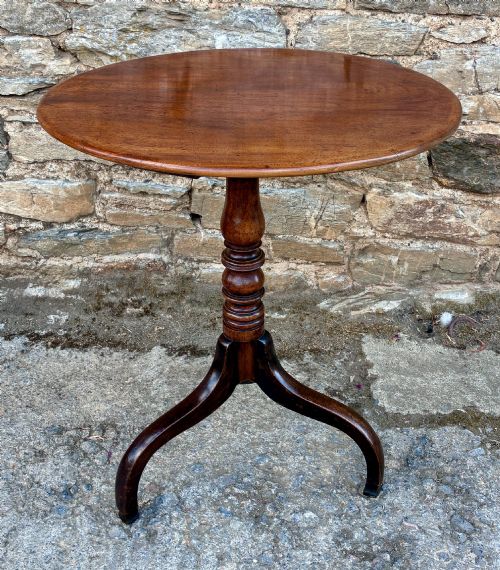
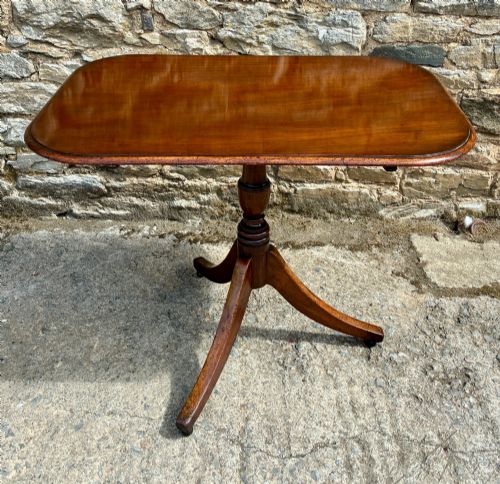
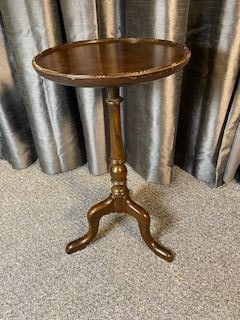
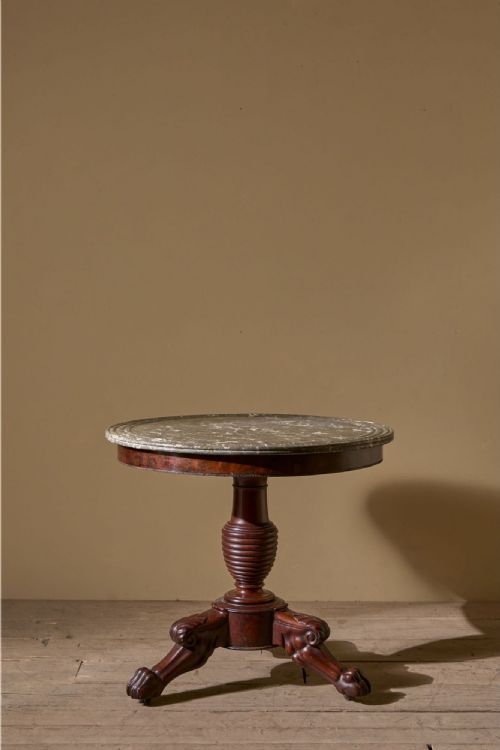
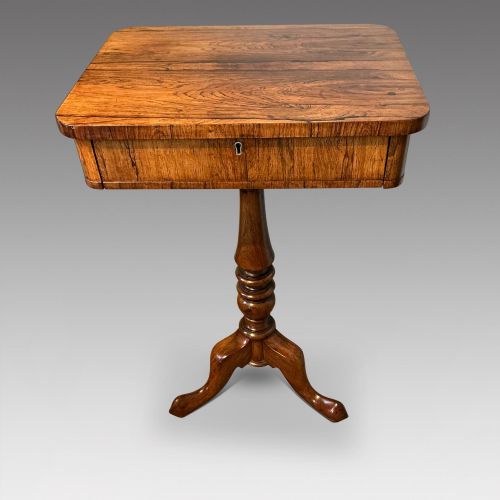
A turned column pedestal table brings a compact footprint and a stable central support to domestic spaces, functioning traditionally as wine tables, lamp tables, and candle stands. These items emerge frequently from the Georgian, Regency, and Victorian eras, often taking the form of tripod tables with tilting tops designed for easy storage against a wall.
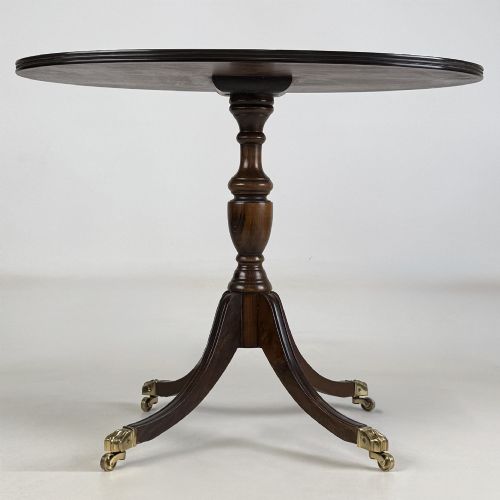
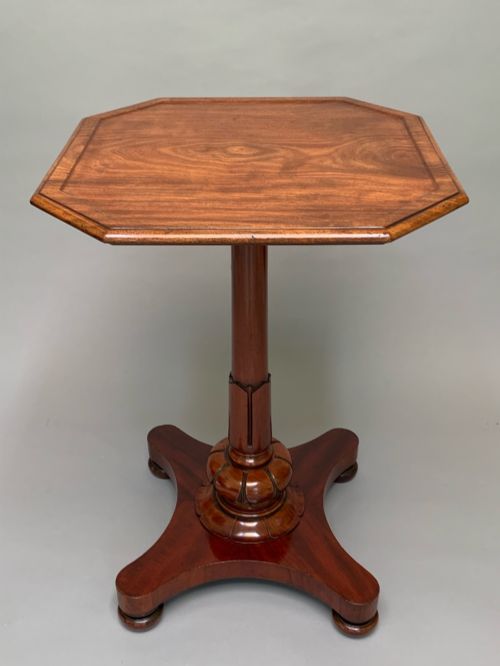
The selection on this page centres heavily on mahogany timbers, alongside oak, walnut, rosewood, and yew wood variants. Buyers encounter circular, rectangular, and occasionally oval tops, supported by turned central columns that transition smoothly into three splayed legs.
Materials and construction
Cabinetmakers constructed these pieces primarily using dense hardwoods such as mahogany and oak, occasionally incorporating walnut, rosewood, yew, and satinwood for decorative grain patterns or stringing. Turning lathes shaped the central columns into uniform cylindrical or vase-like profiles, while brass fixtures sometimes reinforced joints or provided castors.
Joinery methods focused on stability, connecting the turned pillar to the tabletop via tilting mechanisms or fixed blocks, and housing the tripod legs securely into the base of the shaft. Timber selection dictated the weight and balance of the stand, ensuring a sturdy base for the elevated surface.
Many of these small tables spent centuries dodging flying wine glasses and enthusiastic card players.
Assessing craftsmanship
Quality rests in the precision of the timber turning and the stability of the central column joint where the legs meet the shaft. Superior examples display carefully matched wood grains on the top surface and smooth operation in any tilting mechanisms, without looseness in the pillar.
Proportion and wood selection distinguish finer examples from standard utility pieces, particularly where cabinetmakers utilised figured mahogany, burr oak, or delicate boxwood stringing. The weight distribution across the tripod base ensures the table stands firmly without wobble.
Shoolbred
The Turned Column Pedestal Table Glossary
- Pedestal table
- A table supported by a single central pillar or column rather than four corner legs. This design maximises legroom and provides a compact footprint.
- Tilt top
- A tabletop hinged to the top of the pedestal column so it can pivot vertically. This allowed tables to be stored flat against a wall when not in use.
- Tripod base
- A support structure featuring three legs radiating from the base of the central column. It ensures stability on uneven floors.
- Wine table
- A small occasional table designed to hold a bottle and glasses. They became particularly popular during the Georgian and Regency periods.
- Stringing
- A narrow inlay of contrasting wood used to outline the edges of a tabletop. Cabinetmakers employed this technique to add subtle linear decoration.
Turned Column Pedestal Table: Frequently Asked Questions
What is a turned column pedestal table used for?
These pieces function primarily as occasional furniture for holding lamps, drinks, or books in living spaces and hallways. Their compact size allows them to fit easily beside seating.
Historically, specific versions like wine tables and candle stands were designed for portable convenience during evening gatherings and dining.
How do I identify a Georgian pedestal table?
Georgian examples often feature rich mahogany timbers, hand-turned pillars, and tripod bases with pad or spade feet. Construction relies on traditional joinery techniques appropriate to the eighteenth century.
Subtle details such as boxwood stringing or tilting mechanisms help distinguish pieces from later revival periods.
What woods were commonly used?
Mahogany dominates the surviving inventory, prized for its strength and rich colour depth. Cabinetmakers also utilised oak, walnut, yew, and rosewood for distinct grain patterns.
Inlays occasionally feature satinwood and boxwood to create decorative contrasts on the tabletop surfaces.
Why do some tables have tilting tops?
The tilting mechanism allowed domestic spaces to remain flexible by enabling the table to be stored flat against a wall when unoccupied. This practical feature was especially common on tripod wine tables.
Catches and hinges secured the top in a horizontal position during use.