
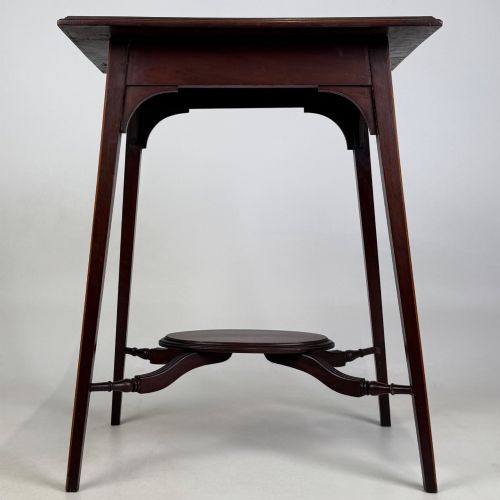
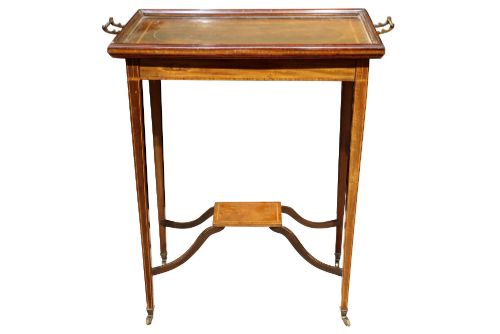
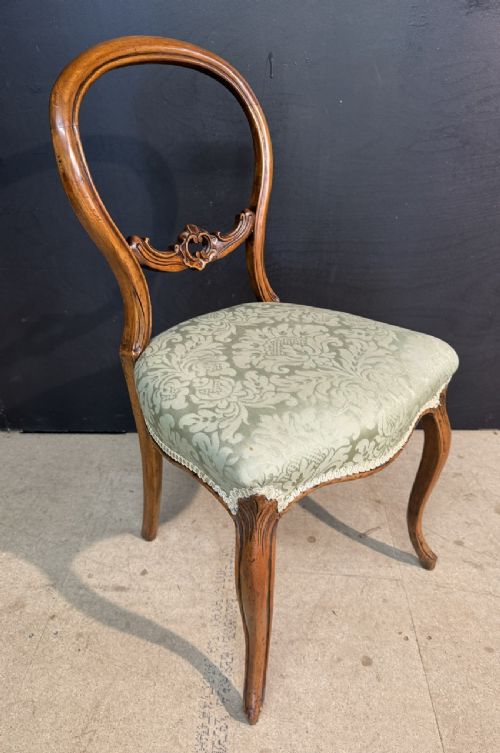
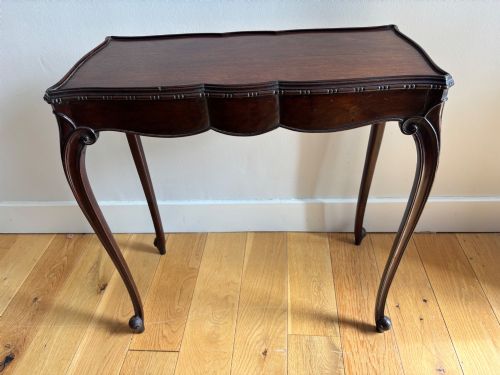


Mahogany Parlour Table
Mahogany parlour tables bring warmth and versatility to a room, offering practical surfaces shaped by Georgian, Victorian, and Edwardian hands.
Mahogany Parlour Table
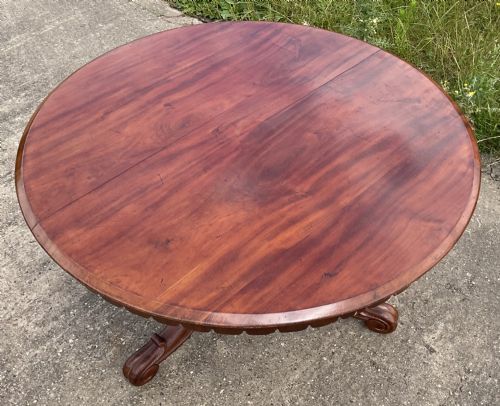
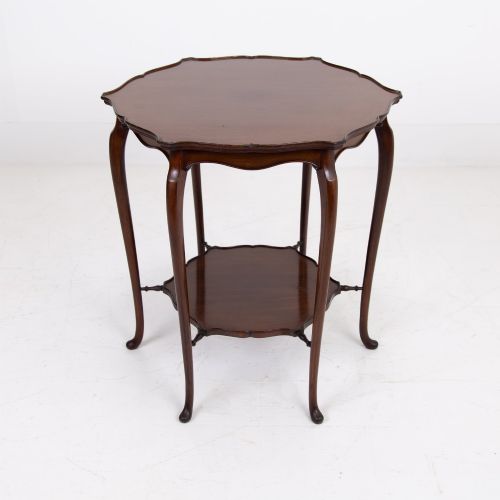
When you search for a mahogany parlour table, you are looking at a diverse group of domestic furnishings designed for entertaining, display, and daily use. The pieces listed here span from the late eighteenth century through the Edwardian era, encompassing diverse forms such as occasional tables, centre tables, card tables, and nests of tables.
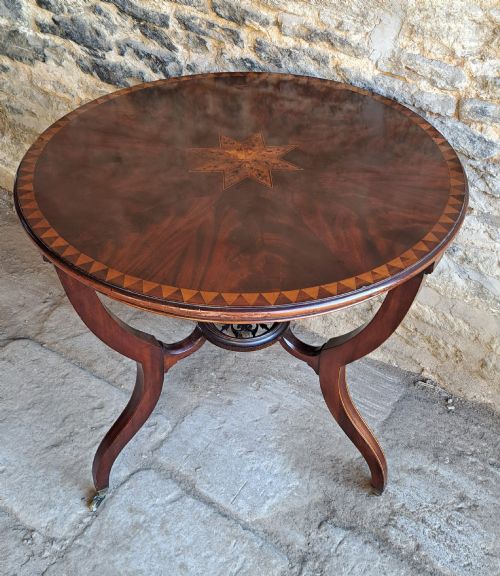
The most common examples you will encounter date from the Edwardian period and the Victorian era. These often manifest as occasional tables with inlaid details, tray tops, or multiple tiers, alongside circular, oval, or octagonal centre tables intended to anchor a room.
Originating largely from English workshops, these tables also show influences from French Empire, Grand Regency, Louis XV Revival, and Chippendale Revival styles. Occasional and side tables dominate the selection, though specialist forms like bagatelle and games tables also appear.
Materials and construction
Cabinet makers relied primarily on solid mahogany and mahogany veneers to build these tables, often selecting figured timber for prominent surfaces to create depth and movement under polish. Secondary woods provided structural stability for frames, legs, and internal framing.
Decoration relied on contrasting timbers and metals rather than heavy carving alone. Craftsmen incorporated boxwood and satinwood stringing or marquetry inlay into tabletops, whilst brass or ormolu mounts and castors completed movable examples.
Construction techniques evolved across the periods represented, moving from the heavier framing of Georgian and early Victorian pieces to lighter, multi-tiered Edwardian designs utilising turned legs, cabriole supports, and bevelled edge glass or wooden tops.
Mahogany Parlour Table Retail Price Guide 2026
Typical asking prices for mahogany parlour table among the pieces listed under this phrase on Sellingantiques today, from the lower quarter to the upper quarter. They describe what is for sale here now, not the wider market.
Among the stately tables wait nineteenth-century parlour golf games and squails boards, proving Victorians loved a competitive tabletop distraction.
Distinctions in quality
The degree of refinement in the timber selection and inlay work separates standard utility pieces from finer examples. Superior tables utilise carefully matched figured mahogany veneers and crisp, precise stringing in boxwood and satinwood rather than simple painted decoration.
Joinery and structural integrity define the craftsmanship of the piece. Better tables exhibit tight joints, stable undertiers, and well-fitted fold-over mechanisms or drawers that operate smoothly without sagging or warping over time.
Carved details and hardware indicate the maker's investment in the piece. Hand-carved foliate borders, robust cabriole legs, and original brass castors or ormolu mounts elevate the status of a parlour table significantly compared to mass-produced factory alternatives.
Henry D Booth·Maple and Co Paris
The Mahogany Parlour Table Glossary
- Occasional table
- A small, movable table designed for light, specific uses around a parlour or drawing room. They frequently feature single or double tiers for books and decorative objects.
- Centre table
- A freestanding table finished on all sides, intended to stand in the middle of a room rather than against a wall. These often feature circular, oval, or octagonal tops supported by a central pillar or multiple legs.
- Inlay
- A decorative technique where pieces of contrasting wood, such as boxwood and satinwood, are inserted into recesses in the mahogany surface to create patterns or borders.
- Bagatelle
- A nineteenth-century cue sport played on a specialised table with holes and wooden pins. Surviving examples reflect the parlour entertainment of the period.
- Tray top
- A tabletop finished with a raised moulded edge or gallery designed to prevent items from sliding off. This feature is common on Edwardian occasional tables.
Mahogany Parlour Table: Frequently Asked Questions
What is a parlour table used for?
These tables served multiple functions in historic homes, ranging from holding tea services and reading material to supporting card games and parlour amusements. They provided adaptable surfaces that could be moved easily where needed.
Today, they function well as decorative display surfaces or functional occasional tables in living spaces, holding lamps, plants, and books while adding period character to a room.
How do I date a mahogany parlour table?
Dating relies on observing structural characteristics, timber choices, and stylistic cues. Georgian and early Victorian pieces often feature heavier timbers and hand-cut joinery, whilst Edwardian tables lean towards lighter frames, satinwood inlay, and multiple tiers.
Secondary woods, finish types, and hardware like castors also offer clues. Comparing the decorative motifs to revival styles of the nineteenth and twentieth centuries helps narrow down the decade of manufacture.
Are these tables sturdy enough for daily use?
Most parlour tables are robustly constructed from solid mahogany and sturdy secondary timbers designed for everyday household service. Occasional and centre tables handle normal loads like lamps and books with ease.
However, delicate items such as fold-over card tables or multi-tiered occasional tables require gentle handling, particularly when moving them across thick carpets or operating older hinges and joints.
How do I care for mahogany furniture?
Mahogany benefits from consistent indoor humidity and protection from direct sunlight, which can fade the rich reddish-brown tones over time. Regular dusting with a soft, dry cloth prevents particulate build-up on polished surfaces.
Occasional applications of appropriate wax maintain the sheen and nourish the wood. Avoid placing wet glasses or hot items directly on the antique finish to prevent water rings and heat damage.