
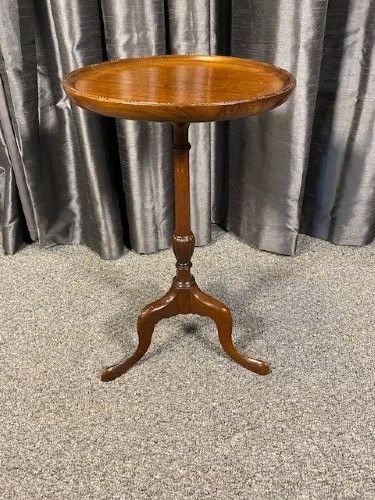
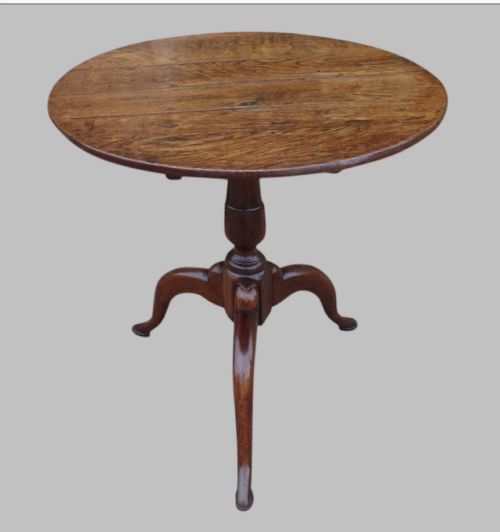
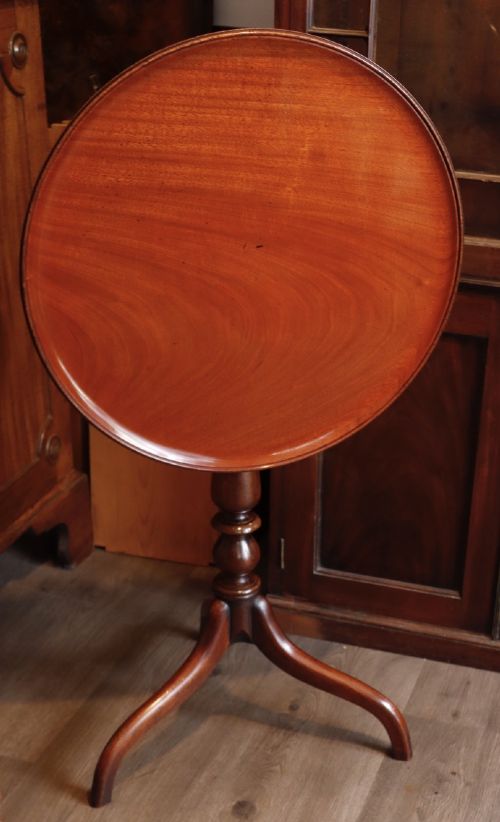
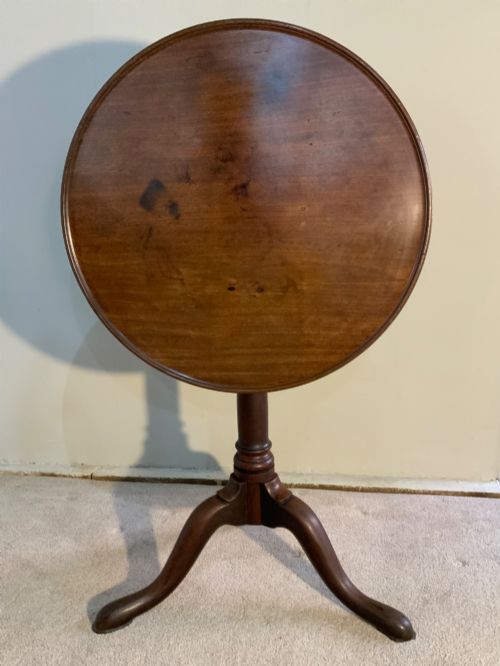
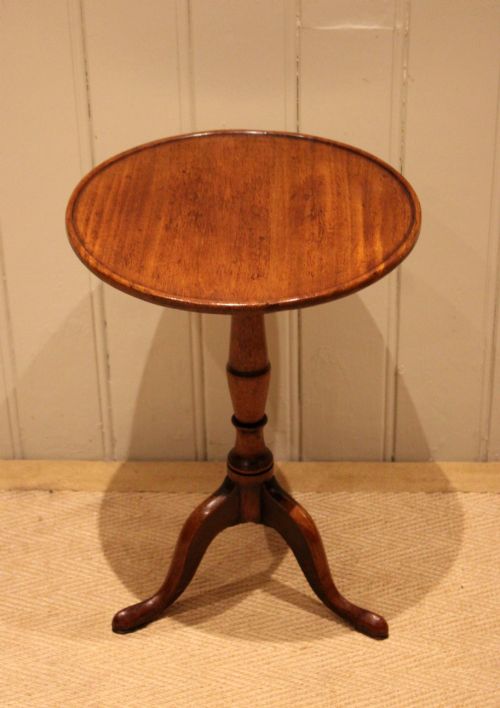
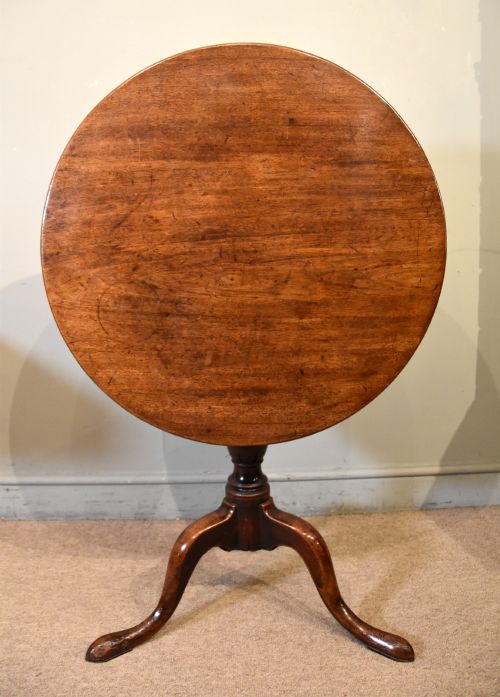
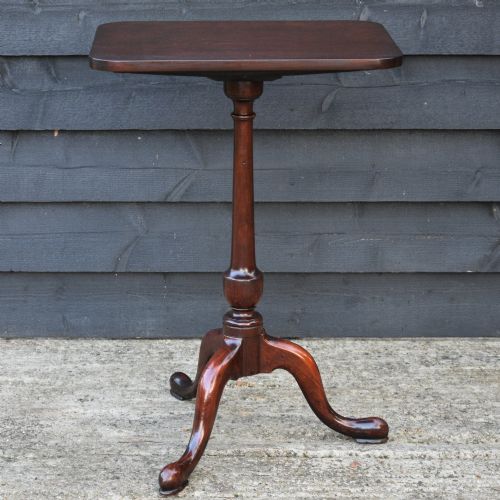
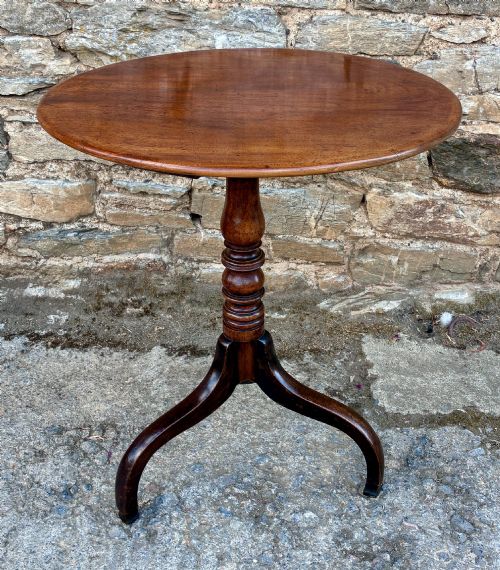
Cabriole Leg Candle Stand
A cabriole leg candle stand provides a stable, elegant surface for illumination, and these antique tripod tables bring period character to any room.
Cabriole Leg Candle Stand
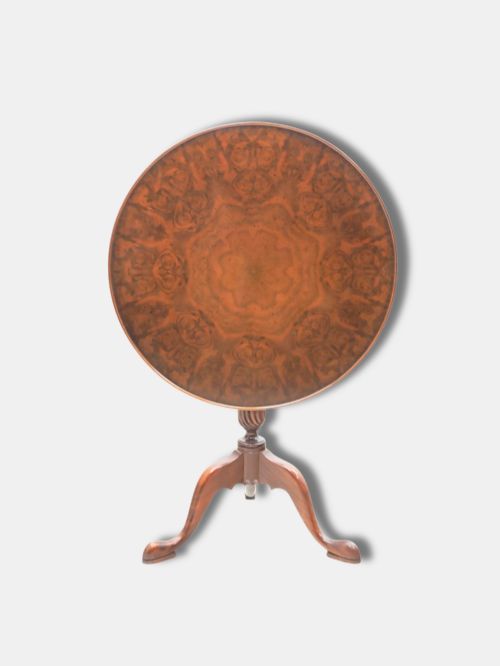
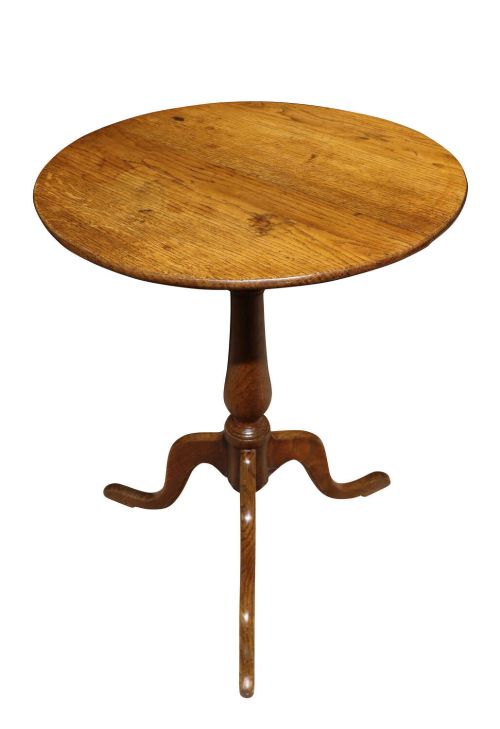
The form frequently overlaps with wine tables, occasional tables, and torcheres. Mahogany and oak dominate the selection, often accompanied by walnut, elm, fruitwood, and occasional brass or iron details.
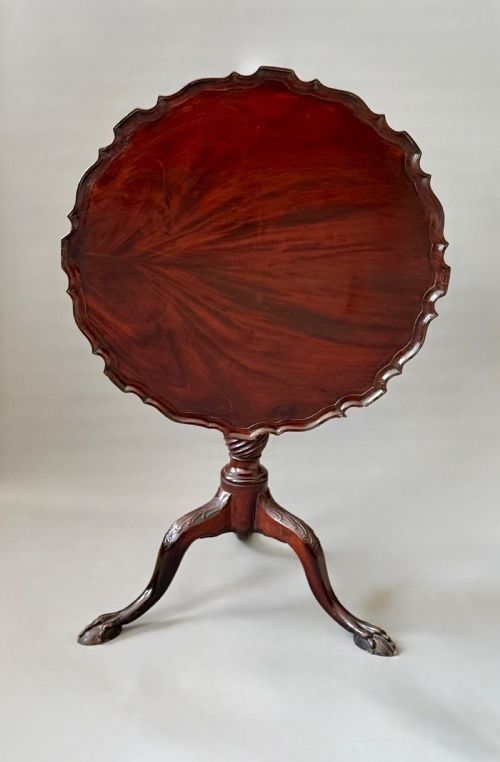
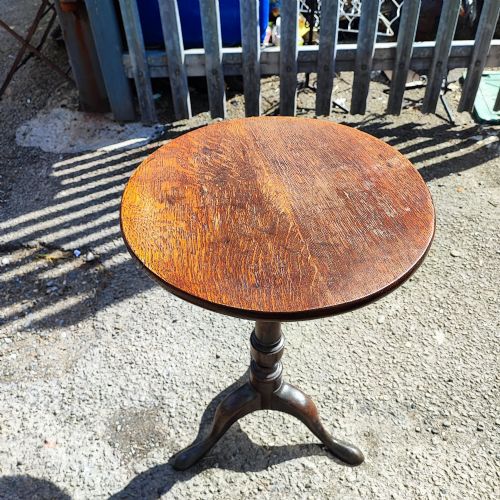
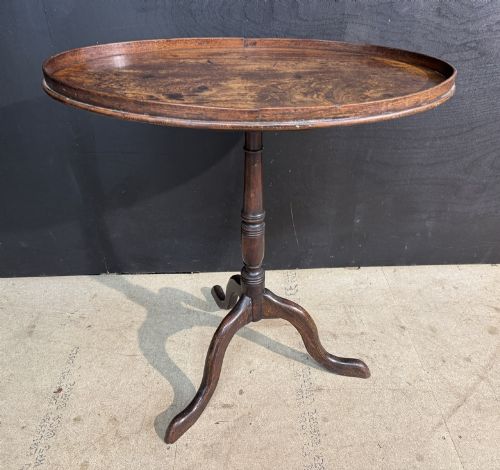
Examples range from mid eighteenth century country pieces in solid oak or elm to refined George III mahogany tripod tables with birdcage mechanisms. Later nineteenth and early twentieth century revivals in the Chippendale or Queen Anne style also appear frequently on the market.
How they were made
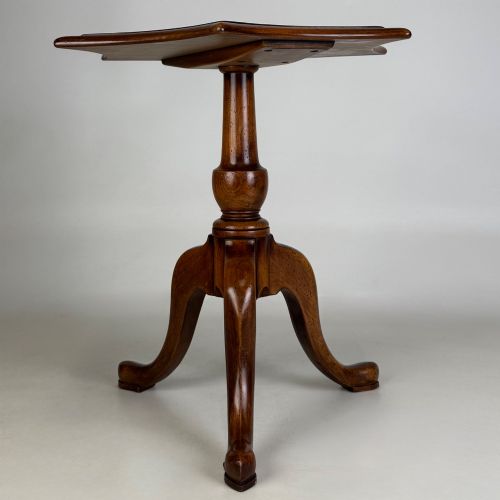
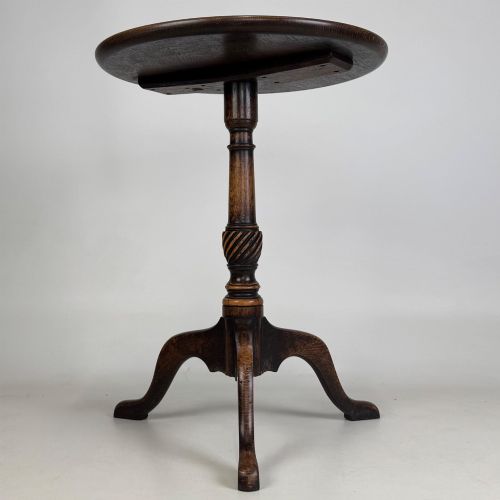
Cabinet makers utilised dense hardwoods such as mahogany, walnut, and oak, turning the central pillars on a lathe and shaping the tripod bases by hand. Joints relied on traditional pegging and mortise techniques to ensure stability on uneven floors.
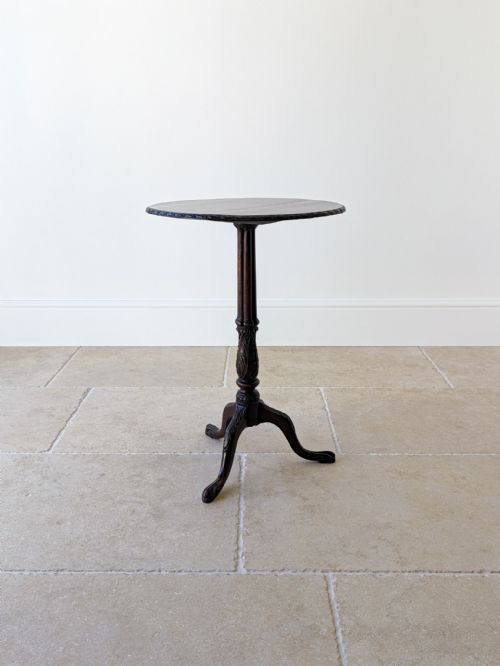
Tops were often constructed with tilt mechanisms or birdcage assemblies allowing the surface to fold away when not in use. Selected pieces featured intricate carved pie crust rims or detailed snap top fittings requiring considerable precision from the joiner.
Listings feature woods spanning mahogany, oak, walnut, burr walnut veneer, elm, fruitwood, brass, and iron across Georgian, Victorian, and Edwardian periods.
What varies in quality
The standard of timber selection largely defines the hierarchy of these stands, ranging from plain domestic fruitwood or elm to highly figured burr walnut veneer and dense, dark mahogany. Crispness of carving on the knees of the cabriole legs and the execution of claw and ball or pad feet further separate standard workshop output from superior commissions.
Mechanism complexity also distinguishes better pieces, particularly the presence of a well-fitted birdcage mechanism that allows smooth rotation and tilting without excessive play in the central column.
The Cabriole Leg Candle Stand Glossary
- Cabriole leg
- A furniture leg that curves out at the knee and tapers inward to a narrower ankle, finishing in a pad or foot. This design imitates animal legs and became a defining feature of eighteenth century styles.
- Tripod base
- A support structure comprising three legs radiating from a central pillar. It provides natural stability on uneven historical flooring without requiring four floor contacts.
- Birdcage
- A wooden box frame beneath the table top that allows the surface to both rotate and tilt. This clever mechanism connects the top to the central column through a series of small vertical turnings.
- Tilt top
- A table construction where the surface pivots on a horizontal axis to store flat against the column. This practical design saved valuable floor space in smaller rooms.
- Pie crust edge
- A raised, scalloped table margin carved from the solid timber of the top. The curving profile resembles the crimped pastry edge of a pie.
Cabriole Leg Candle Stand: Frequently Asked Questions
What was a candle stand used for?
These small tables held portable lighting devices such as wax candles or oil lamps before electric lighting became common. Their compact size allowed servants to move them easily beside seating areas for reading or needlework.
Over time, owners repurposed them to display small decorative items or serve wine, leading to significant overlap with wine tables and occasional tables.
How do I tell an 18th century stand from a revival piece?
Examine the timber shrinkage, construction pegging, and tool marks beneath the top and inside the pillar joints. Eighteenth century pieces display hand-cut joinery and natural oxidation that modern replicas struggle to replicate convincingly.
Revival pieces from the Edwardian period or later often utilise more uniform machine-sawn components and standardised fixings underneath the mechanism.
Where should I place a tripod stand in my home?
Their compact circular tops make them ideal for awkward corners, beside armchairs, or between windows where larger furniture will not fit. The three-legged design tucks neatly into tight spaces.
Keep them away from direct heat sources and strong sunlight to protect historic polished mahogany and walnut surfaces from drying out or fading.
What does a birdcage mechanism do?
The birdcage sits directly beneath the table top and connects the surface to the main column using a small wooden box frame and pivot pins. This lets the top rotate in a full circle and tilt vertically.
It represents a higher tier of cabinet making quality found on finer Georgian tripod tables rather than simpler fixed-top variants.