



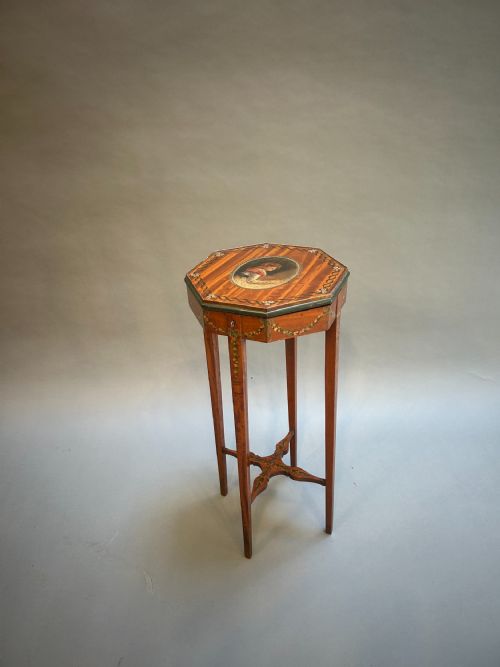
Mahogany Urn Table
When you search for a mahogany urn table, you look for a compact pedestal piece designed to hold a hot water urn or kettle.
Mahogany Urn Table
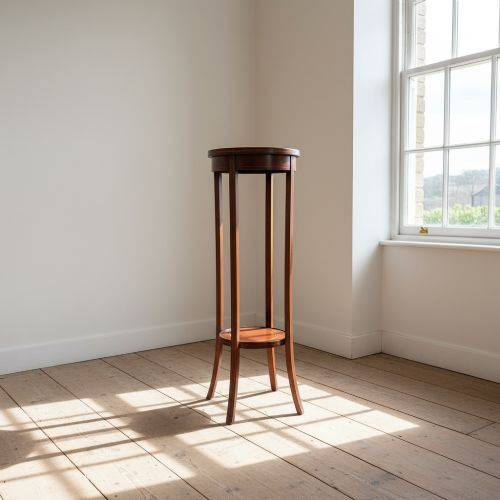
A mahogany urn table is a slender, compact piece designed in the eighteenth or nineteenth century to support a heated water vessel or kettle during tea service. These pieces typically stand on slender legs or a central pedestal, offering a small surface area suited to specialised domestic tasks.
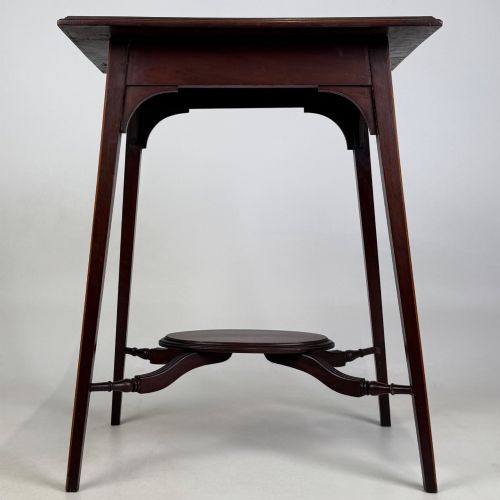
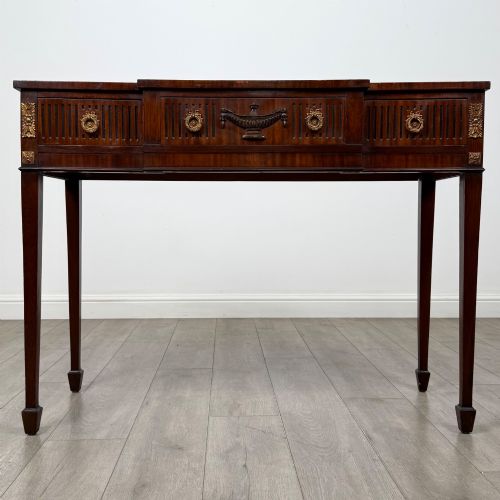
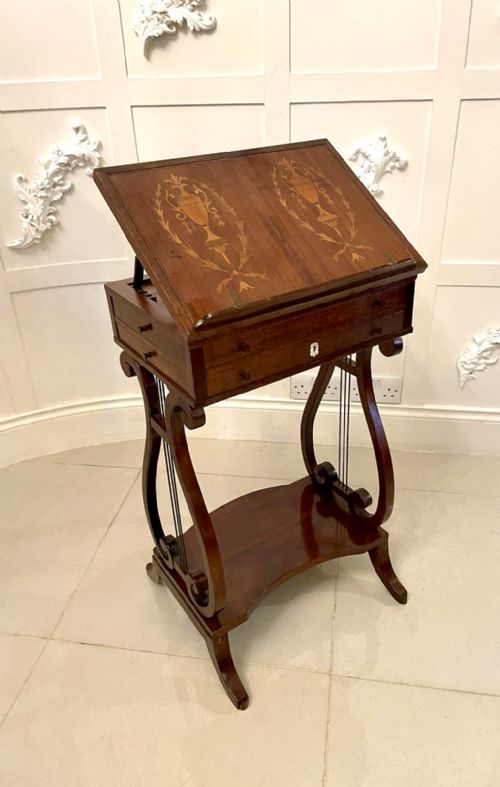
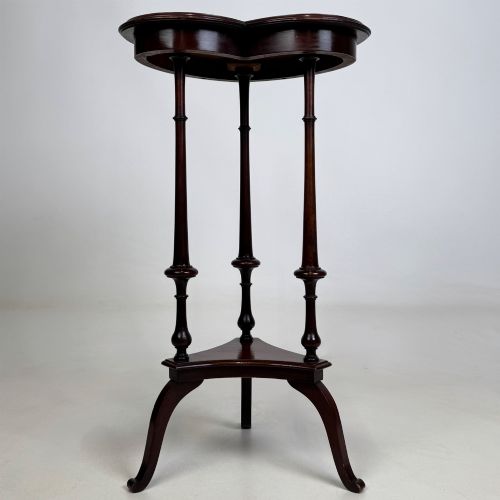
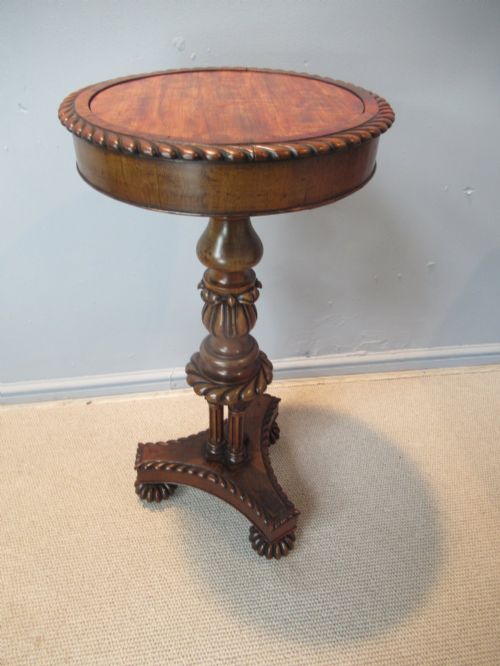
The selections on this page span several stylistic revivals and original periods, ranging from eighteenth-century Georgian and George III examples to Edwardian and later interpretations. Alongside dedicated urn stands, the records show closely related forms such as kettle stands, plant stands, and occasional tables executed in similar dimensions.
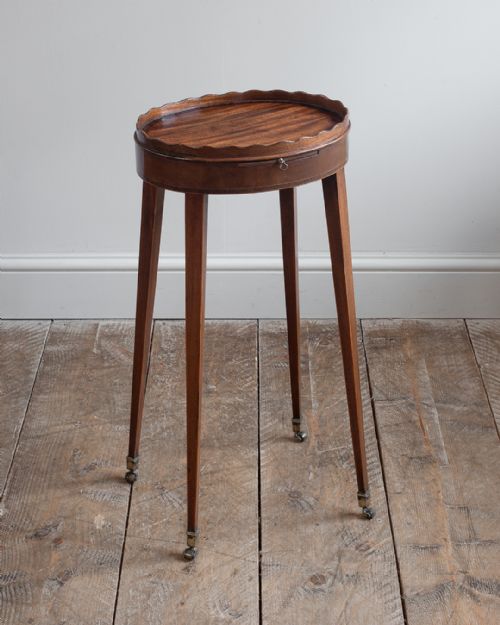
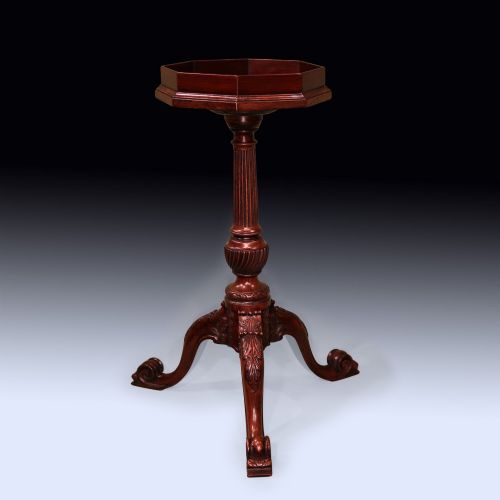
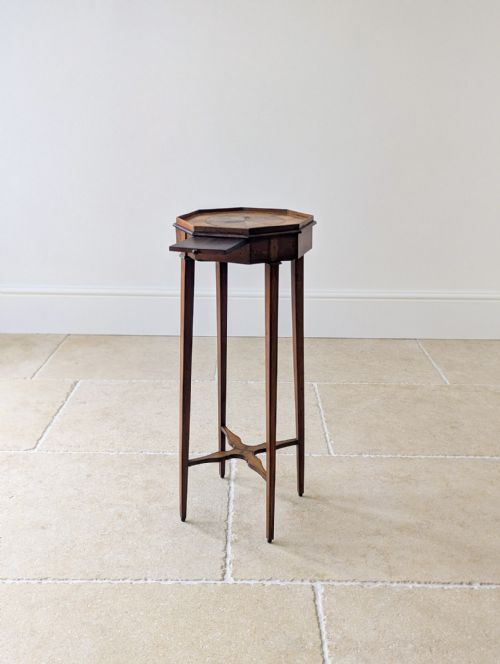
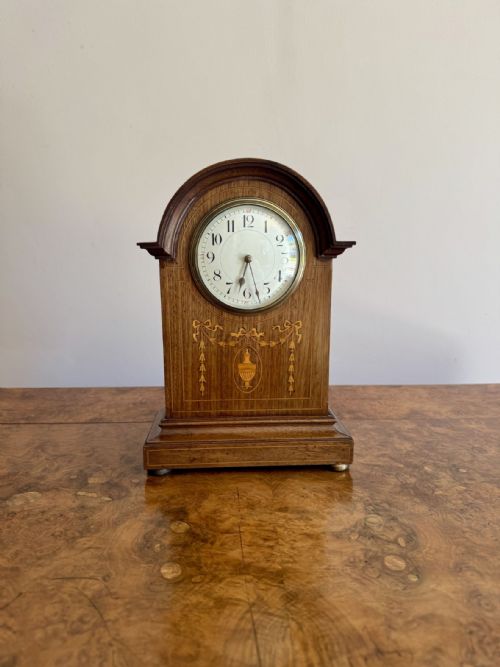
Original Georgian examples often feature shaped oval or octagonal tops, while Edwardian revivals frequently incorporate delicate contrasting stringing and satinwood or boxwood inlay. Buyers encounter both single stands and matched pairs across these stylistic traditions.
How they were made
Cabinetmakers constructed these tables primarily from solid or veneered mahogany, frequently selecting dense hardwoods that allowed for crisp turning and fine edge moulding. Workshops often augmented the rich brown timber with contrasting stringing and inlay executed in satinwood or boxwood.
Structural elements commonly include tapered legs, tripod pedestals, and raised tray or galleried tops designed to secure a vessel safely in place. Master craftsmen employed traditional joinery techniques, such as mortise and tenon joints, to ensure stability within a narrow footprint.
Some urn tables include pull-out candle slides, proving that eighteenth-century hosts took tea preparation after dark very seriously indeed.
What varies in quality
The distinction between standard items and exceptional pieces lies in the crispness of the carving, the selection of figured mahogany timber, and the subtlety of any inlay work. Superior examples display precise joinery and balanced proportions that maintain stability despite narrow dimensions.
Makers of high-status pieces utilised finely grained hardwoods and executed delicate details, such as fluted columns or intricate edge mouldings, with absolute precision. Lesser pieces often display simpler turned supports and plainer timber grains without decorative stringing or marquetry.
Druce And Co London·Paine Furniture Co
The Mahogany Urn Table Glossary
- Urn table
- A small, tall occasional table specifically proportioned to hold a tea urn or hot water vessel. These pieces typically feature galleried edges to prevent sliding.
- Galleried top
- A raised rim surrounding the edge of a tabletop, often pierced or carved from solid wood. This feature kept vessels secure during service.
- Stringing
- Thin inlaid lines of a contrasting wood, such as boxwood or satinwood, set flush into the mahogany surface. This technique defined geometric panels and borders.
- Tripod base
- A supporting structure consisting of three legs radiating from a central pillar. It provided steady support on uneven Georgian floorboards.
- Marquetry
- Elaborate decorative veneer work arranged in pictorial or geometric patterns using various coloured woods. It frequently distinguished revival pieces from earlier plain surfaces.
Mahogany Urn Table: Frequently Asked Questions
What was a mahogany urn table used for?
These tables served as dedicated stands for heavy silver or ceramic urns used during formal tea services in large households. Their elevated surfaces kept heated water vessels within easy reach of the host.
Because tea preparation required boiling water away from the main dining table, these stands provided a stable, heat-resistant station nearby.
How do I spot an eighteenth century piece?
Eighteenth-century examples display dense, patinated mahogany timber with hand-cut joinery and natural wax finishes developed over generations. The construction methods reflect period tool marks rather than modern machinery.
Later revivals often feature brighter synthetic varnishes and standardised internal fixings that differentiate them from genuine Georgian pieces.
Where should I place an urn stand today?
Their compact footprints make these tables ideal as bedside stands, lamp tables, or display surfaces in restricted hallway spaces. Their slender proportions allow them to fit into corners where larger furniture cannot go.
Avoid positioning them in direct sunlight or beside active heating vents to protect the historical mahogany veneer from drying out.
Are Edwardian pieces considered authentic antiques?
Edwardian items dating from the early twentieth century represent a distinct period of revival craftsmanship rather than eighteenth-century production. They are valued for their fine inlay work and decorative aesthetic.
While made later, well-constructed Edwardian pieces possess their own historical value and showcase traditional cabinet-making skills.