
Dished Top Wine Table
A dished top wine table is a compact timber stand designed to hold a single glass or bottle, offering stable elegance beside a chair.
Dished Top Wine Table
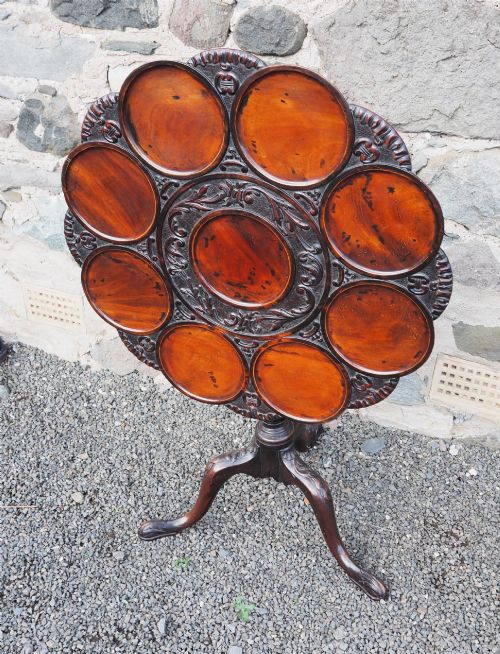
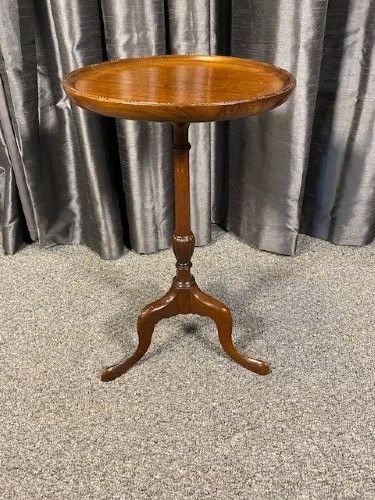
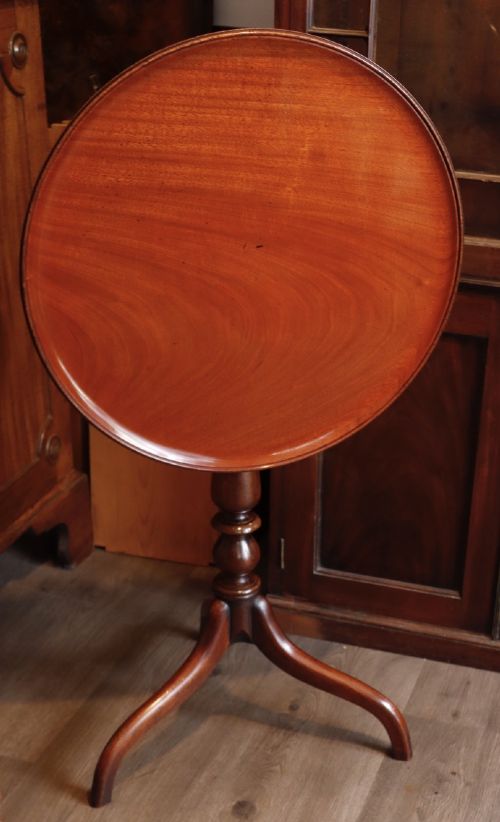
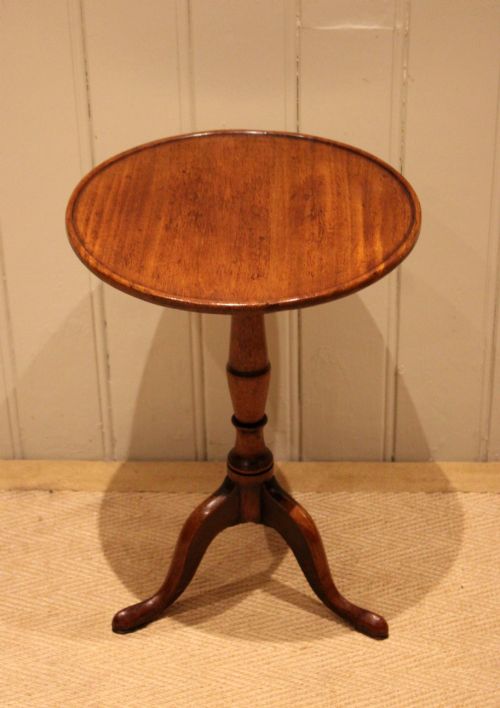
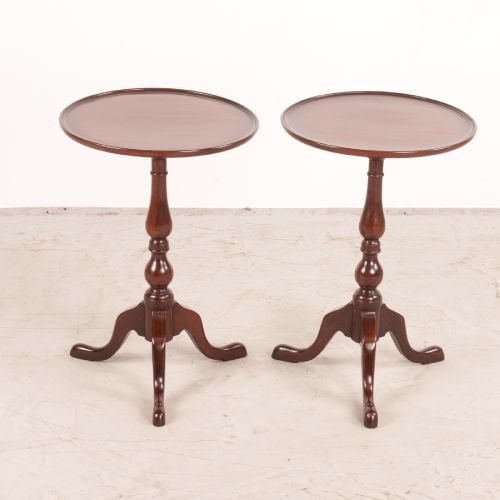
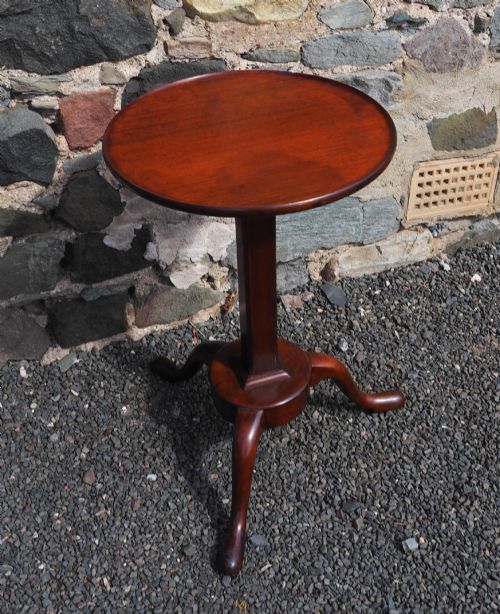
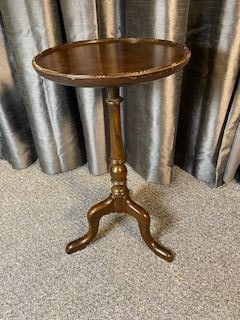
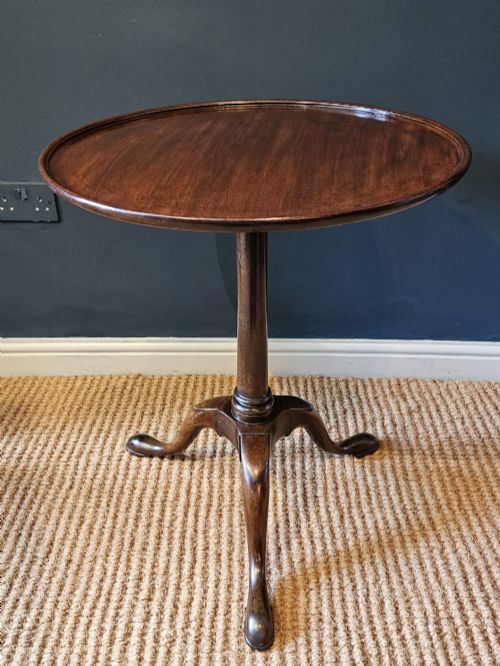
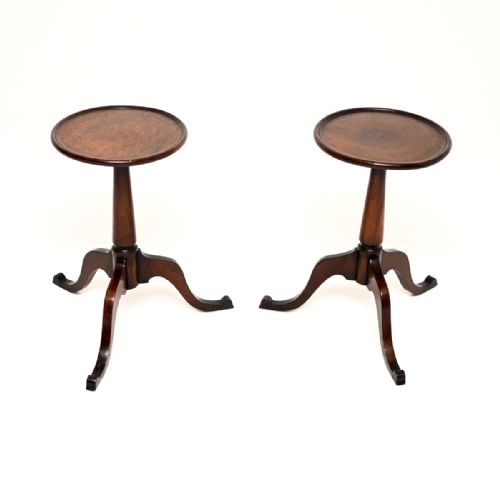
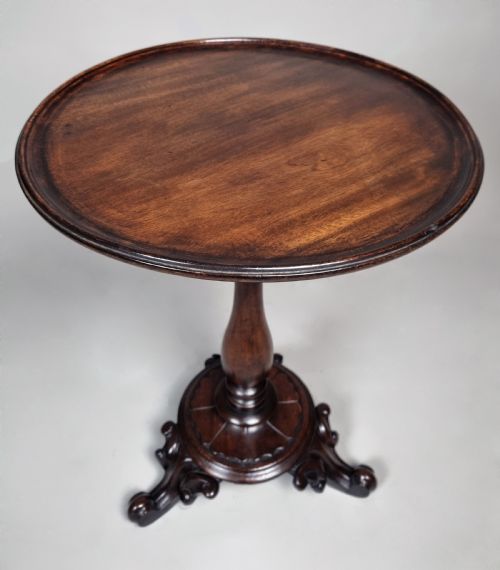
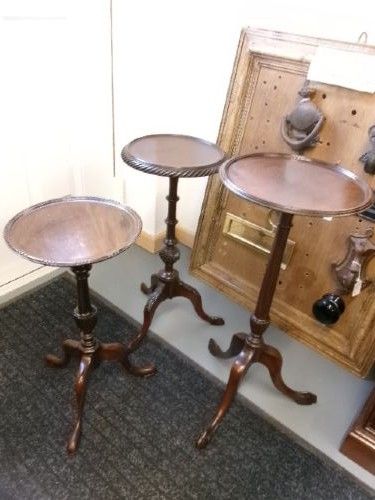
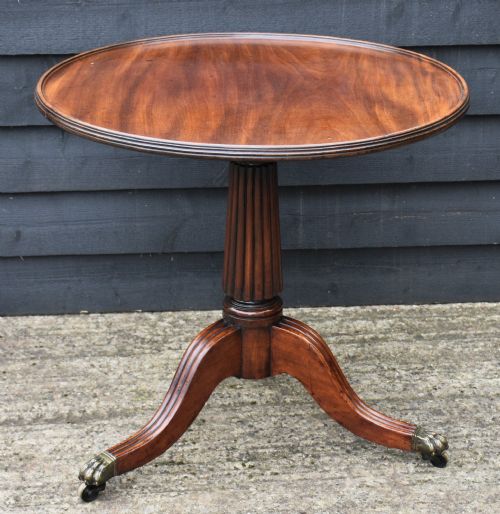
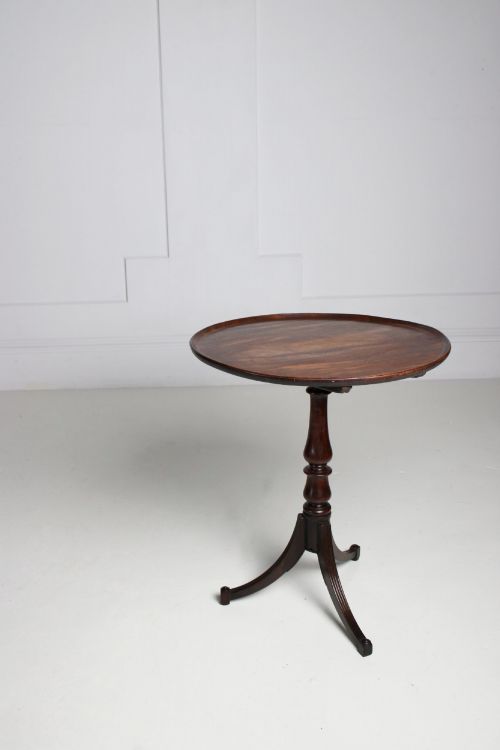
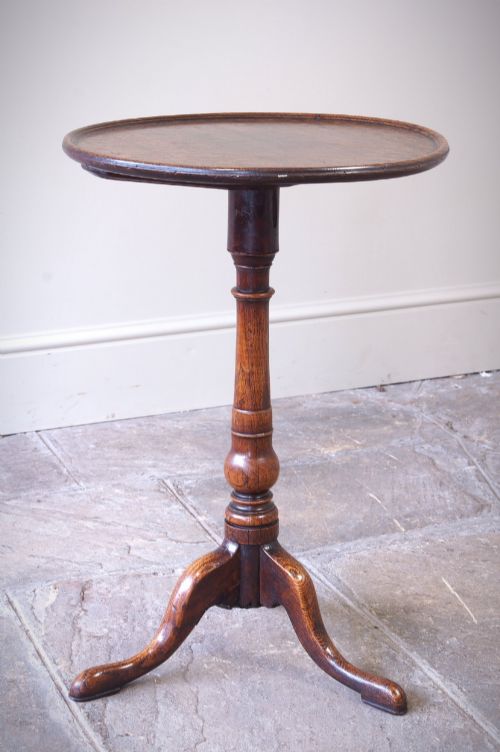
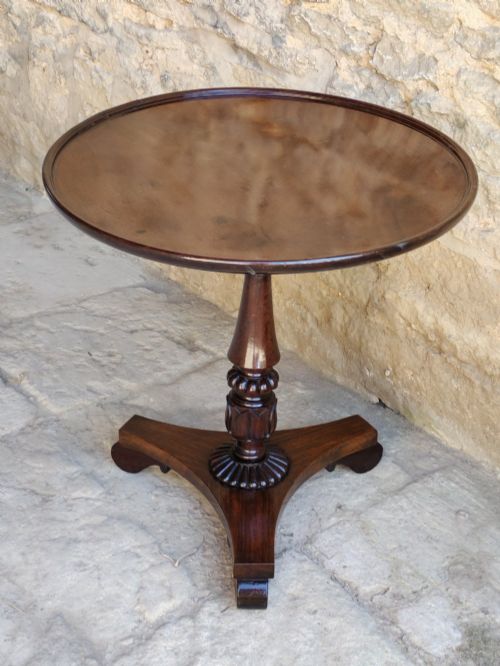
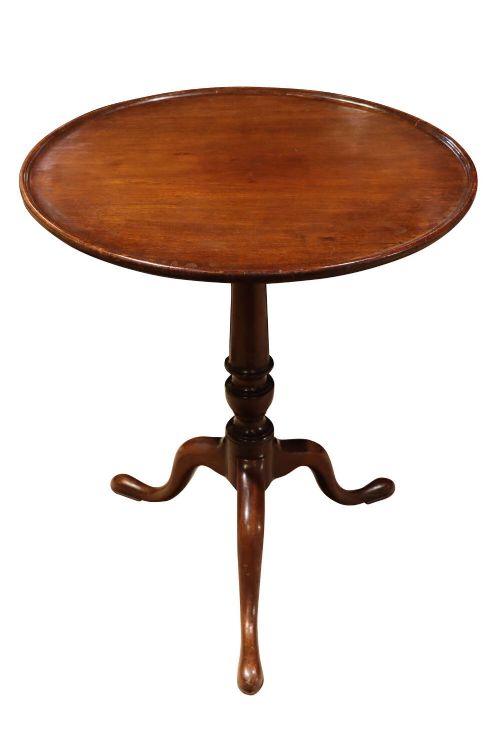
A dished top wine table is fundamentally a portable timber stand featuring a circular top with a raised raised rim turned directly from the solid wood. You will most frequently encounter mahogany examples set upon tripod legs, reflecting the enduring popularity of Georgian and Regency forms in the secondary market.
These pieces often share functional traits with related forms such as candlestands, kettle stands, and small tea tables, frequently utilising tilt-top or snap-top mechanisms. Their compact footprint made them easily movable around a drawing room to serve evening refreshments.
The material palette spans from Early Georgian walnut and red walnut to later nineteenth-century mahogany, rosewood, and oak. Surviving examples range from austere vernacular tripod tables to sophisticated Chippendale and Gillows productions.
How they were made
Makers shaped the distinctive raised rim of a dished top wine table by turning a solid timber board on a lathe, painstakingly carving away the central field while leaving the perimeter intact. This solid construction contrasts with later built-up mouldings and requires considerable skill to prevent warping.
The top typically connects to a central turned pedestal via a birdcage mechanism or a snap-top block secured with wooden catches, allowing the surface to tilt flat for storage. Below, three splayed legs form a stable tripod base, frequently terminating in pad, spade, or ogee feet.
Dished Top Wine Table Retail Price Guide 2026
Typical asking prices for dished top wine table among the pieces listed under this phrase on Sellingantiques today, from the lower quarter to the upper quarter. They describe what is for sale here now, not the wider market.
Listings feature mahogany, walnut, rosewood, and oak examples spanning the Georgian, Regency, and Edwardian eras.
What varies in quality
Quality rests heavily on the choice of timber and the crispness of the turning on both the central pillar and the tripod base. Dense, highly figured mahogany or rich red walnut displays a depth of grain that plain secondary timbers simply lack.
Proportion and engineering dictate the upper tier of pieces, where mechanisms operate smoothly without excessive play in the joints. The junction between the pillar and the tripod legs separates standard utility pieces from workshop-attributed items bearing refined carving.
Gillows
The Dished Top Wine Table Glossary
- Dished top
- A circular tabletop with an integral raised rim carved from the solid wood to prevent items from sliding off. This feature is characteristic of better-quality eighteenth and nineteenth-century serving stands.
- Birdcage
- A timber framework beneath the tabletop that allows the surface to both rotate and tilt. It consists of four small columns sandwiched between two horizontal discs.
- Snap-top
- A hinged table mechanism secured by a wooden latch that locks the top horizontally or releases it to tilt vertically. It enabled tables to be stored flat against a wall when not in use.
- Tripod base
- A three-legged support structure that ensures stability on uneven floorboards without wobbling. These legs are typically dovetailed into the central pillar.
- Candlestand
- A tall, slender timber stand intended to hold a lighting source rather than refreshments. They share identical construction methods with wine tables.
Dished Top Wine Table: Frequently Asked Questions
What was a dished top wine table used for?
These small stands were designed to hold a single wine glass, bottle, or candle close to a seated guest during evening gatherings. Their portable nature allowed servants to reposition them easily around the room as needed.
Over time, they transitioned from purely functional serving furniture into decorative occasional tables used to display ceramics, lamps, or small plants in period interiors.
How do I tell an 18th-century table from a later copy?
Early pieces display the distinct tool marks of hand-turning, patination accumulated over centuries, and timber shrinkage that aligns with age. The construction methods of the birdcage and pivot joints often reveal period joinery techniques.
Later Victorian and Edwardian reproductions frequently employ machine-cut screws, standardised turning patterns, and cleaner, less resonant timber surfaces lacking genuine historical wear.
Can I use a wine table for holding drinks today?
These antique tables function adequately for resting a lightweight glass, though antique timber surfaces remain sensitive to moisture and alcohol spills. Utilising coasters protects the polished polish from potential ring marks.
Their sturdy tripod construction provides reliable everyday support beside a reading chair or sofa, provided guests avoid placing heavy items upon the edges.
Why do some tops tilt and others remain fixed?
Tilt-top mechanisms allowed households to store multiple tables compactly against the perimeter of a formal room when entertaining space was required. Fixed tops generally indicate either an earlier structural tradition or a later nineteenth-century manufacturing preference.
Both variations were produced across different periods, so the presence or absence of a tilt mechanism does not strictly date a piece on its own.