


Regency Circular Table
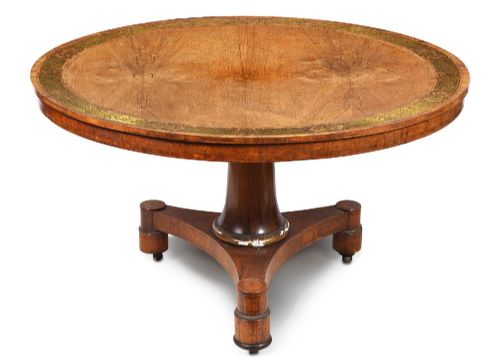
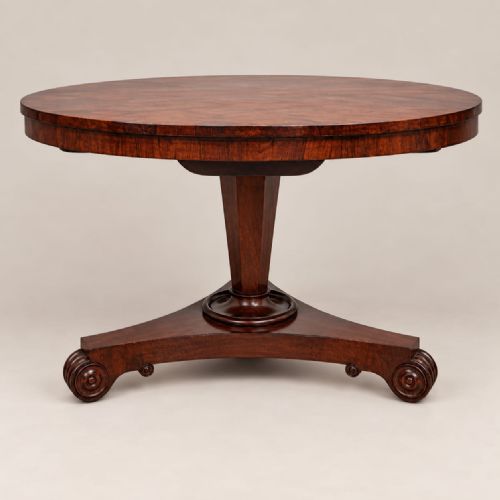
A regency circular table anchors a room with its balanced geometry, offering a sturdy central pedestal and rich timber grain suited to daily dining or display.
Regency Circular Table
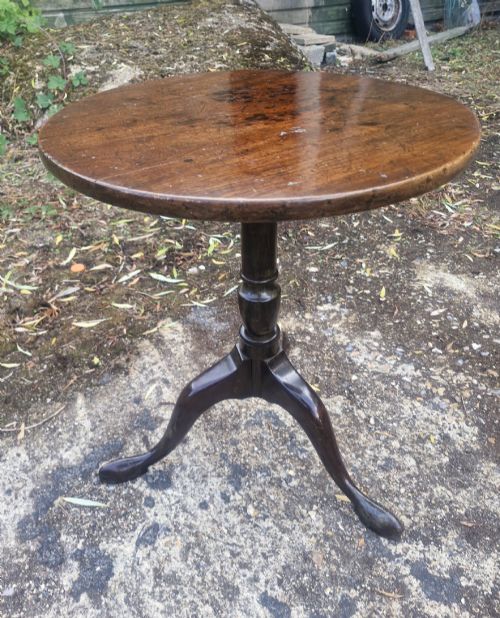
When searching for a regency circular table, buyers encounter pedestal-based designs originating from the early nineteenth century alongside later revivals. These pieces function primarily as breakfast tables, centre tables, or tilt-top dining formats.
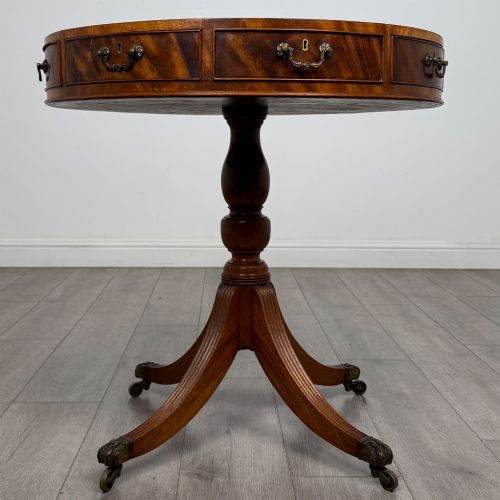
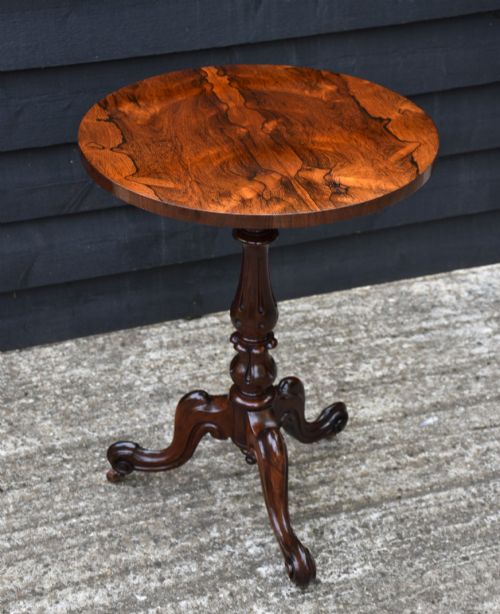
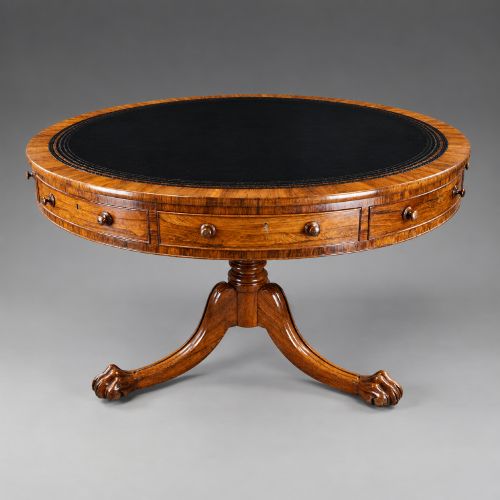
Mahogany and rosewood dominate the surviving forms, frequently supported by a central pillar on a tripod or platform base. Occasional variants include drum tables equipped with drawers and smaller wine or tea tables.
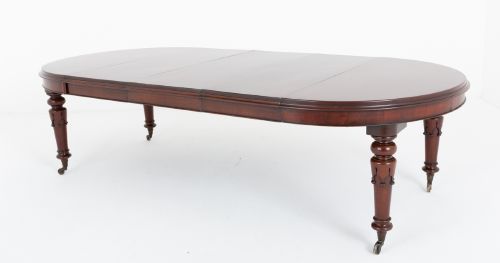
The prevailing aesthetic combines classical proportion with refined timber selection, spanning the Regency, William IV, and Georgian eras. Examples range from compact occasional furniture to six-seater dining pieces.
Materials and construction
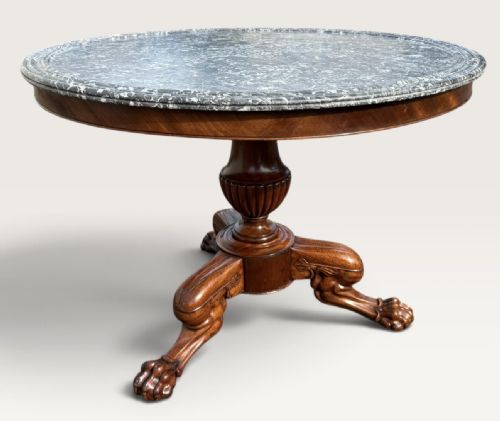
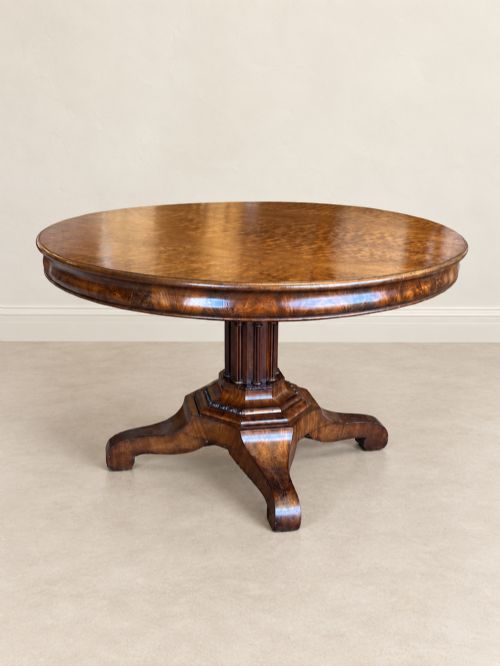
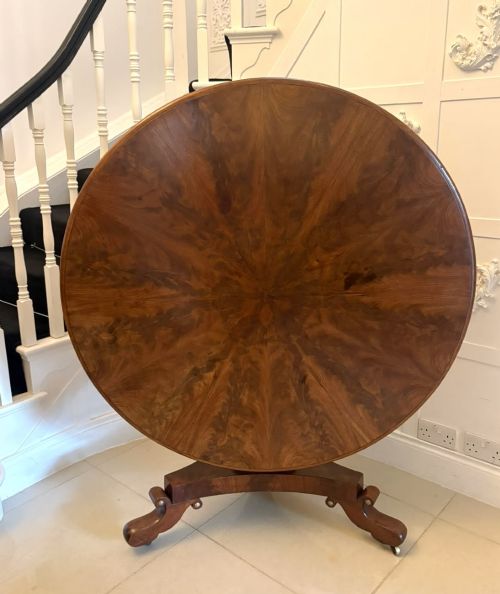
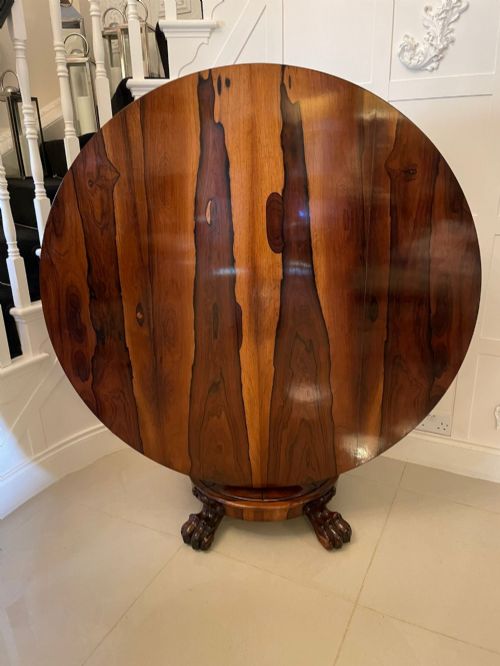
Cabinet makers built these tables using solid timbers paired with figured veneers, applying flame mahogany or rosewood across the circular tops to highlight natural grain patterns. Central pedestals often utilised heavy turning, sometimes incorporating brass inlay, ormolu mounts, or carved paw feet.
Tilt-top mechanisms allowed tops to fold vertically when not in use, requiring precise wooden catches and iron hinges fitted beneath the surface. Drum tables incorporated internal partitioning to form stationery drawers built directly into the frieze.
Some drum tables include secret internal drawers originally intended for hiding banknotes from visiting guests during a game of cards.
Distinctions in quality
Superior examples display continuous grain matching across the circular top and stability within the central pedestal joinery. Lesser pieces may show misalignment in timber movement or replacement hardware on tilt mechanisms.
The sophistication of the base carving and the choice of dense, richly figured rosewood or flame mahogany separate standard utility furniture from pieces produced by premier cabinet workshops.
Gillow
The Regency Circular Table Glossary
- Tilt-top
- A hinged tabletop mechanism allowing the surface to rotate and lock vertically for storage against a wall.
- Drum table
- A circular library or rent table featuring a deep frieze containing multiple drawers around the circumference.
- Triform base
- A heavy pedestal support resting upon three distinct feet, commonly carved with scroll or paw motifs.
- Flame mahogany
- Timber cut from the branch junction where the grain pattern resembles flickering flames.
- Gueridon
- A small decorative circular table supported by a single central column or figural standard.
Regency Circular Table: Frequently Asked Questions
How do I use a tilt top table?
Release the brass catch underneath the tabletop to allow the surface to pivot safely into a vertical position for compact storage against a wall.
When returning the table to use, lower it gently until the wooden block engages firmly with the pedestal latch to prevent wobbling during meals.
Can these tables seat six people comfortably?
Larger breakfast and dining formats measuring around four feet across or more accommodate six chairs adequately around the central pedestal without obstructing legroom.
Tripod and pedestal bases offer a distinct advantage over four-legged tables by eliminating corner posts that might otherwise restrict seating arrangements.
How do I care for rosewood and mahogany surfaces?
Maintain the timber by dusting regularly with a dry cloth and applying natural beeswax sparingly to nourish the grain without building up a sticky residue.
Protect the polish from direct sunlight and heat sources to prevent the rich rosewood and mahogany tones from fading unevenly over time.
How do I distinguish a genuine period piece?
Examine the underside of the top and the construction of the pedestal block for hand-cut joints, timber shrinkage, and appropriate patination matching early nineteenth-century methods.
Look for subtle variations in the grain and hand-turned components that indicate traditional workshop production rather than twentieth-century machine replication.