


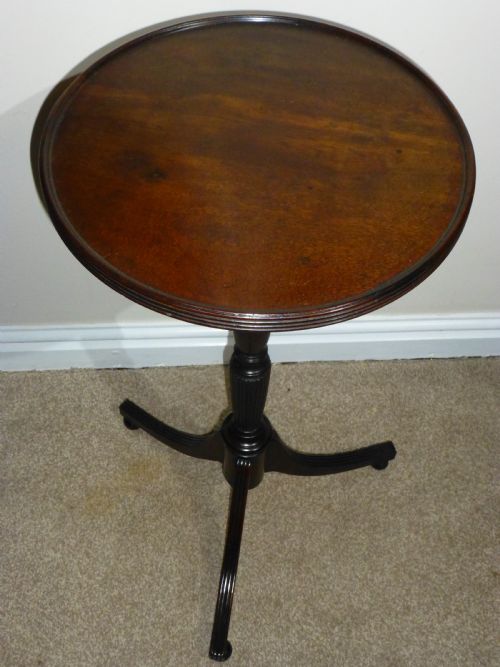


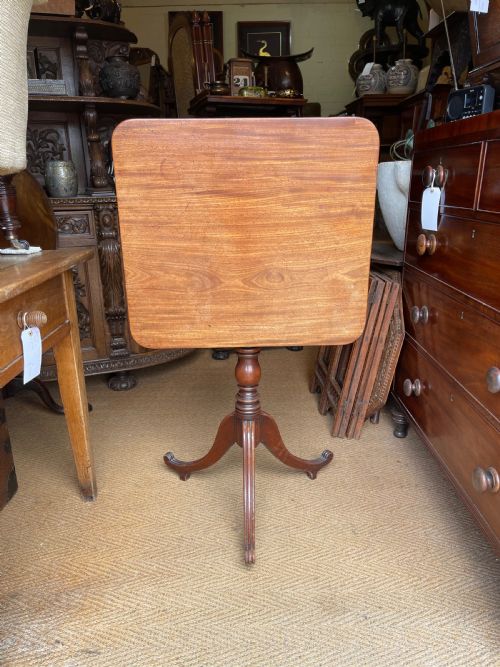
Reeded Tripod Table
A reeded tripod table brings slender elegance and balance to a room, standing on three shaped legs beneath a circular top.
Reeded Tripod Table
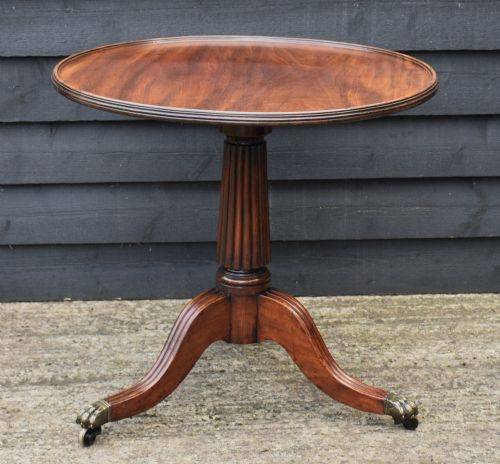
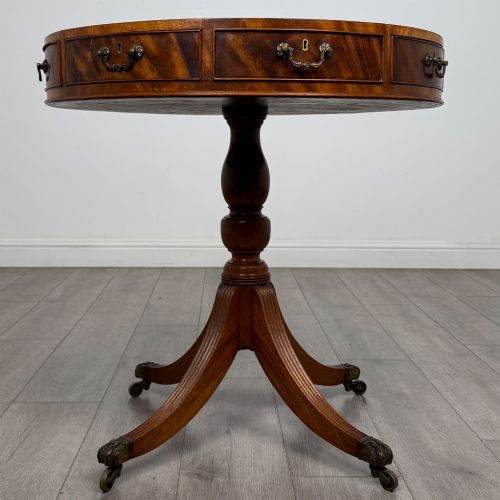
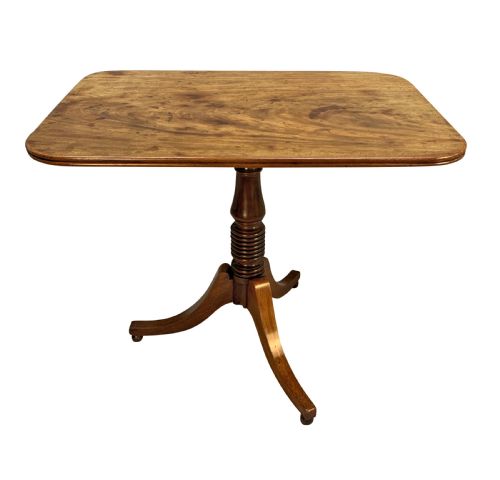
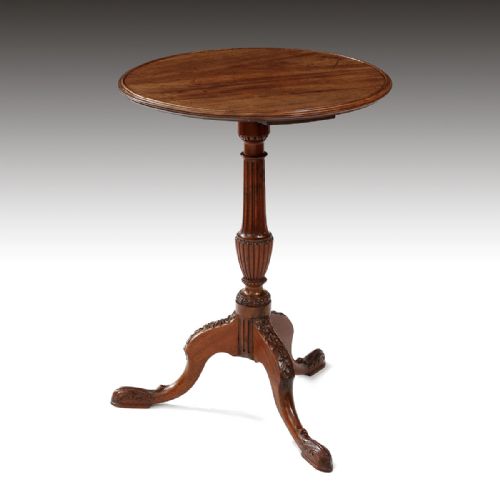
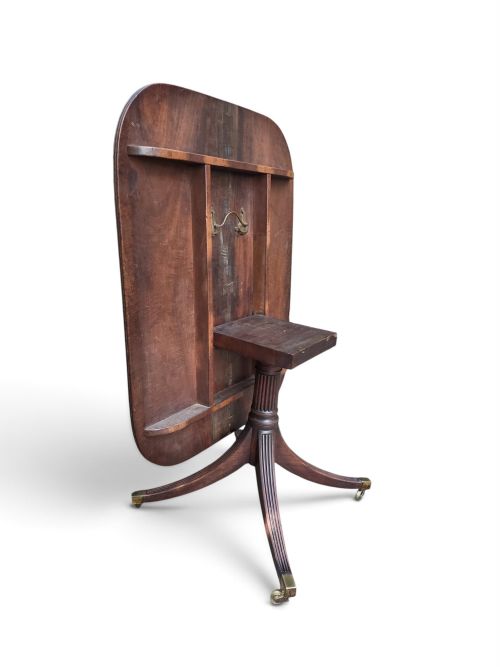
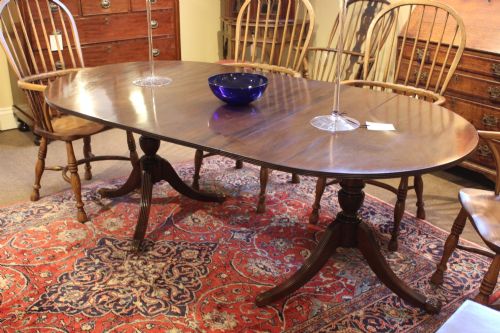
A reeded tripod table is a small portable piece designed for domestic convenience, most frequently appearing in mahogany across Georgian, Regency and nineteenth-century periods. These versatile surfaces function as wine tables, lamp tables, or occasional tables, supported by a central turned column and three splayed legs.
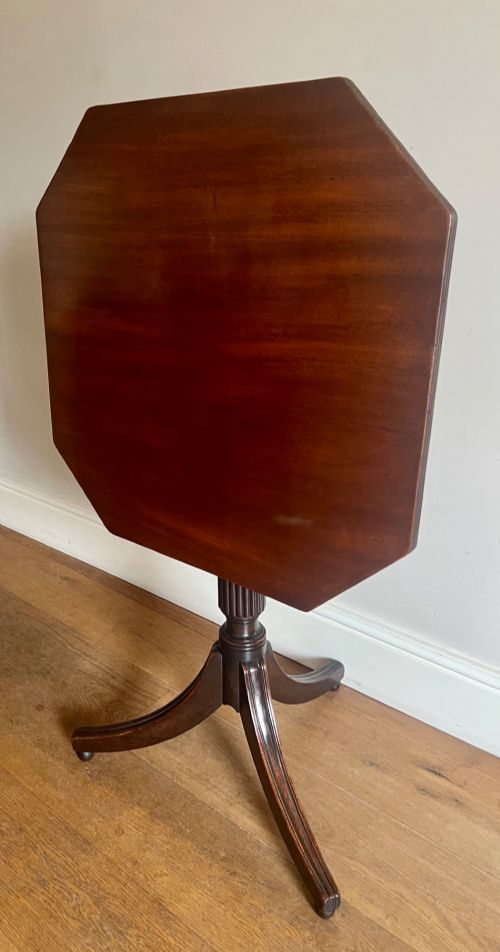
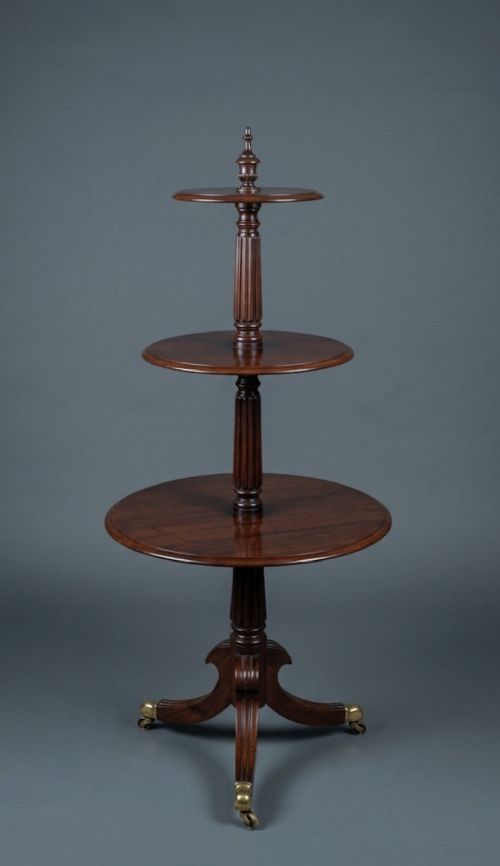
The defining characteristic is the reeded moulding found upon the legs, column, or edge of the top, creating fine parallel convex lines that catch the light. Buyers encounter these pieces in forms ranging from simple tilt-top breakfast tables to multi-tiered dumb waiters and writing tables.
Most examples originate from the Georgian and Regency eras, though later revivals from the Victorian and Edwardian periods also surface. Makers such as Gillows produced notable versions, combining practical utility with refined cabinetmaking.
Materials and construction
Cabinetmakers utilised rich hardwoods, predominantly mahogany and occasionally rosewood, satinwood, or oak, selected for their stability and grain. Solid timbers were shaped on lathes for central columns and carved by hand to form the distinctive parallel grooves of the reeding.
The top frequently connects to the central pillar via a birdcage or tilt mechanism, allowing the surface to fold flat when not in use. Brass castors often cap the sabre legs on finer Regency examples, easing movement across the floor.
Listings feature pieces spanning the Georgian, Regency, Victorian, and Edwardian periods, constructed primarily in mahogany with occasional oak, rosewood, and brass.
What sets the best pieces apart
Quality rests in the crispness of the carving, particularly where the reeding follows the curve of a sabre leg or turns around a central column. Sharp, uniform channels indicate skilled handwork rather than the softer edges of later machine milling.
Proportion and stability dictate overall merit, ensuring the three legs support the top firmly without wobble while maintaining a graceful silhouette. Original brass fittings, unblemished timber grain, and sound tilt mechanisms further distinguish superior examples.
Gillows
The Reeded Tripod Table Glossary
- Reeding
- Parallel convex mouldings carved into wood, resembling a bundle of reeds placed side by side. This decorative technique appears on table legs and column supports.
- Tripod base
- A support structure comprising three spreading legs radiating from a central pillar. It provides stable footing on uneven older floors.
- Tilt-top
- A hinged tabletop mechanism that allows the surface to pivot to a vertical position. This saved valuable floor space in period domestic interiors.
- Sabre leg
- A curving, outward-splaying leg that tapers toward the foot, typical of Regency furniture design. They frequently terminate in brass castors.
- Dumb waiter
- A multi-tiered freestanding table used for serving food or holding tableware without the need for attendants. These often feature rotating or folding circular trays.
Reeded Tripod Table: Frequently Asked Questions
How were reeded tripod tables used?
These versatile pieces served various domestic duties, functioning as wine tables beside seating, lamp stands, or portable surfaces for reading and writing. Tilt-top variants allowed them to be folded and stored against walls when floor space was needed.
Multi-tiered versions, known as dumb waiters, assisted with dining by holding dishes and glasses within arm's reach.
How can I tell a Georgian table from a Regency one?
Georgian examples often display restrained classical proportions with straight or carved pillar supports and simpler tripod bases. They tend to use dense, dark mahogany with minimal metal ornamentation.
Regency pieces introduce bolder architectural details, such as reeded sabre legs capped with brass castors, classical columns, and occasional brass inlay or crossbanding.
Why do some tops tilt?
The tilting mechanism was a practical space-saving device introduced in the eighteenth century. It enabled households to clear rooms quickly by pivoting the tabletop flat against the central pillar.
This feature also made the furniture easier to transport around the house as daily needs shifted.
How do I care for a mahogany table?
Keep the wood away from direct heat sources and strong sunlight to prevent the timber from drying out or fading. Dust regularly with a soft, dry cloth and apply occasional high-quality wax to nourish the finish.
Avoid placing wet glasses or hot items directly onto the polished surface to protect the timber underneath.