


Regency Foyer Table
A regency foyer table brings architectural elegance to an entrance hall, combining classic proportions with rich timber and marble.
Regency Foyer Table
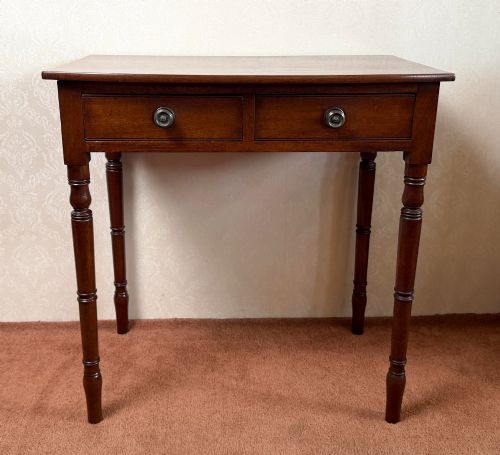
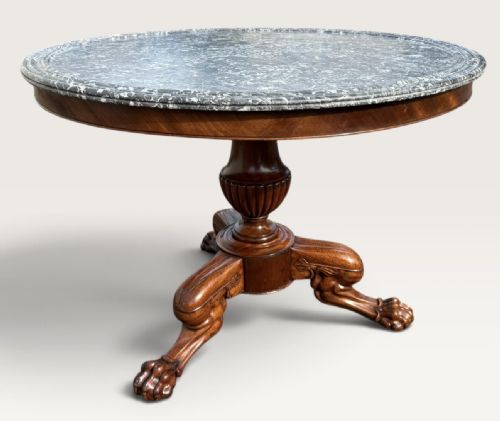
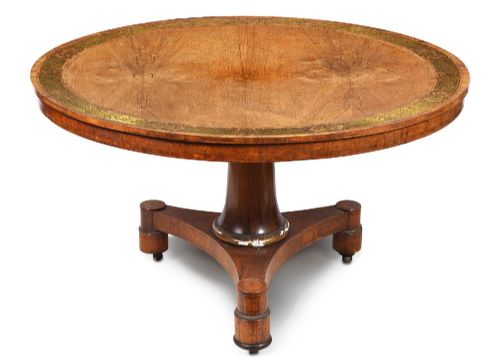
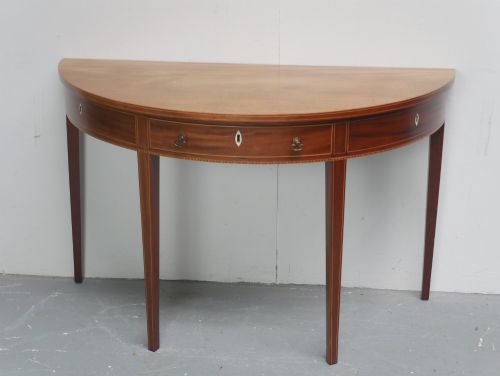
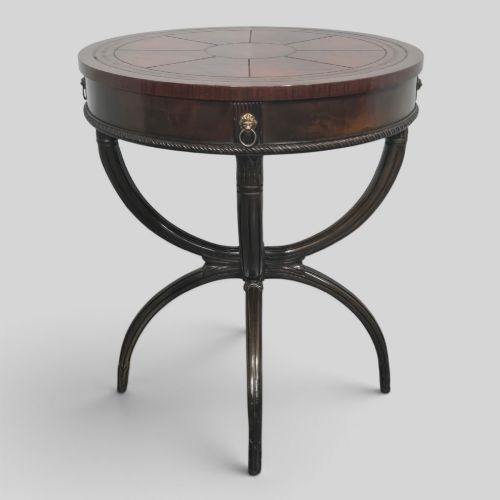
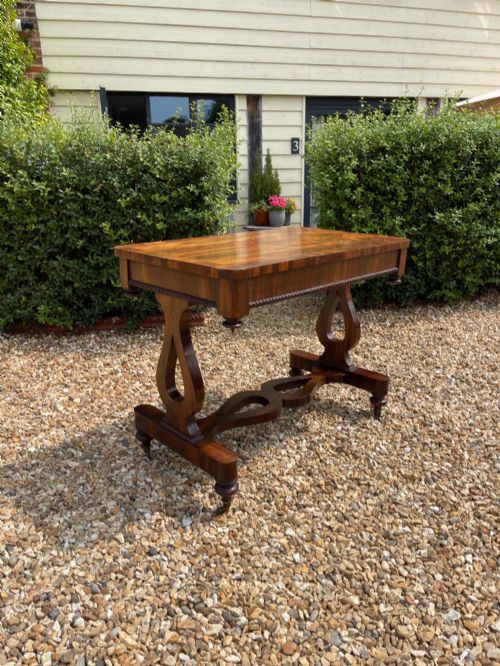
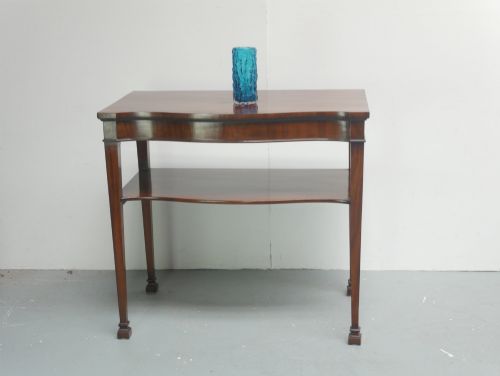
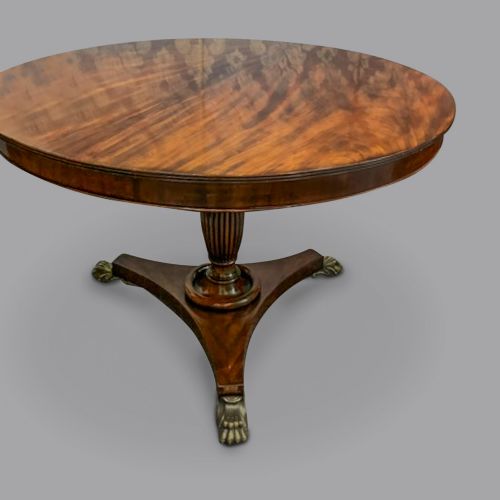
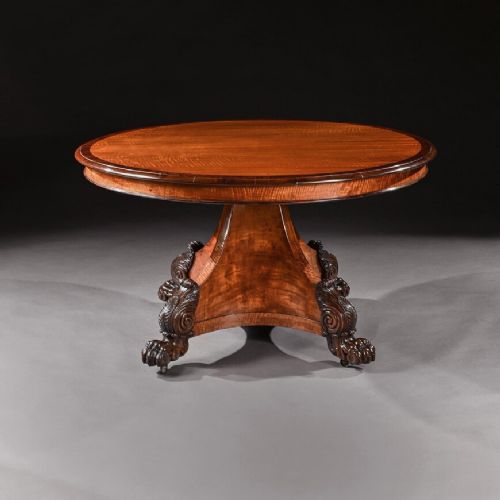
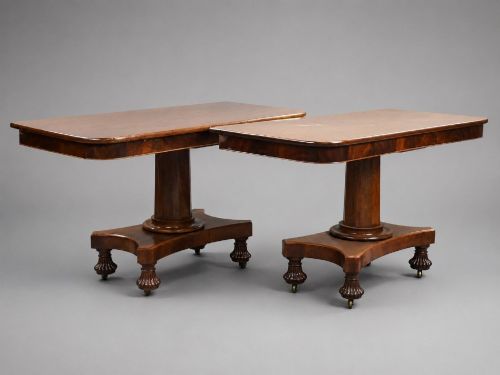
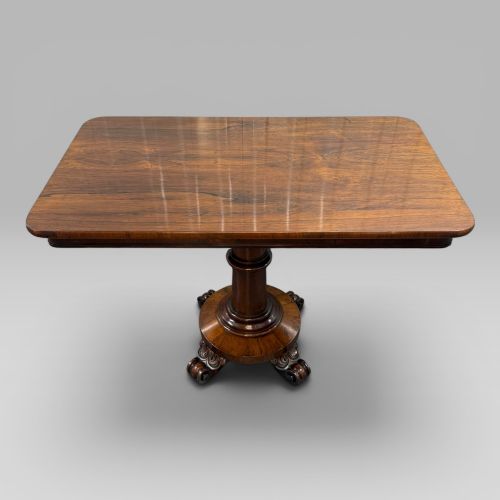
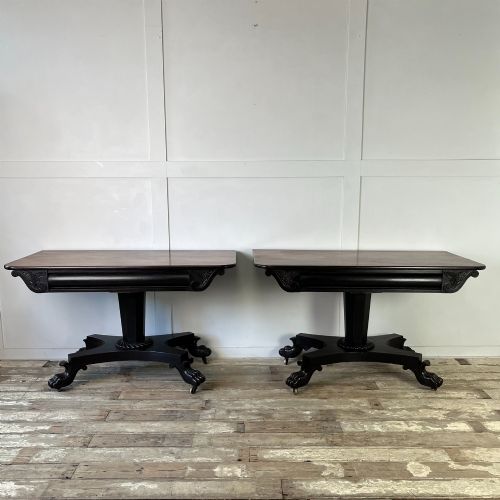
A regency foyer table encompasses freestanding centre tables and wall-mounted console tables designed for prominent display in entrance halls and reception rooms. These pieces date predominantly from the nineteenth century, including the Regency, George IV and William IV periods, alongside later twentieth century revivals. You are most likely to meet mahogany, rosewood or ebonised wood versions configured as round centre tables or demi-lune console tables.
The form serves both decorative and practical purposes, often placed centrally beneath a chandelier or against a hallway wall beneath a mirror. Tables range from compact occasional pieces to large tilt-top and breakfast variants that demonstrate the grand scale of domestic interiors from the period. Makers utilised diverse timber species, incorporating exotic woods like coromandel, gonçalo alves and amboyna alongside traditional mahogany.
Materials and construction
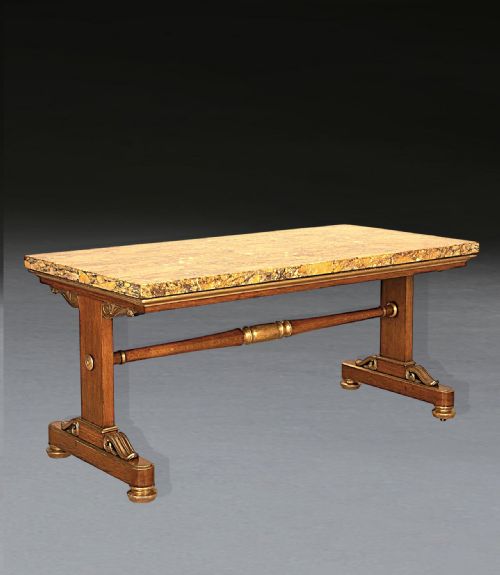
Cabinet makers constructed these tables using solid foundational timbers faced with carefully selected flame mahogany, rosewood or satinwood veneers. Structural elements frequently incorporate brass inlay, parcel giltwood details and carved wooden supports, while top surfaces often feature inset marble, including Siena and specimen varieties.
Joinery techniques from the period relied on solid frame construction, secure mortise and tenon joints, and weighted pedestals to support heavy stone or timber tops. Tables designed as centrepieces utilised robust pillar and tripod bases or carved monopodia, ensuring stability for freestanding placement in large spaces.
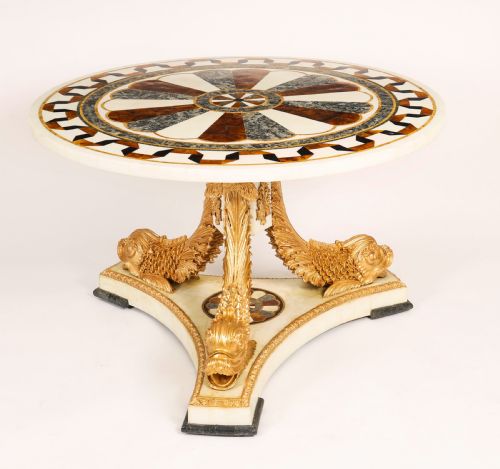
Tables featuring carved neo-classical dolphins demonstrate how nineteenth century designers brought marine motifs directly into domestic hallways.
Assessing quality
Quality in a regency foyer table rests upon the choice of timber and the precision of decorative embellishments such as brass inlay, carving and gilding. Superior examples display highly figured veneers, such as flame mahogany or burr walnut, matched symmetrically across the surface.
Construction integrity distinguishes finer pieces, evident in the weight of the pedestal base, the crispness of hand-carved details, and the quality of inset marble tops. Tables with documented provenance or unusual material combinations, such as amboyna or coromandel, reflect higher standards of original workshop production.
Peters of Genoa
The Regency Foyer Table Glossary
- Demi-lune
- A half-moon shape table designed to stand flat against a wall in a hallway or foyer. This profile saves floor space while providing a useful surface for decorative objects.
- Gueridon
- A small freestanding circular table supported by a central pillar or column. Originating in France, this form became popular in British interiors for central hall placement.
- Tilt-top
- A tabletop hinged to the central pillar so it can be tilted vertically when not in use. This mechanism allowed tables to be stored against walls to clear floor space.
- Parcel gilt
- Partially gilded woodwork where gold leaf highlights specific carved details or mouldings. It provides contrast against dark timbers like rosewood or ebonised wood.
- Gonçalo alves
- A dense exotic hardwood featuring striking dark brown and light brown figuring. Cabinet makers utilised this timber for its distinctive decorative grain.
Regency Foyer Table: Frequently Asked Questions
Where should I place a console table?
A console table works best against a flat wall in an entrance hall, corridor or reception room. Placing a mirror above the table creates a balanced focal point.
Because these tables are shallow, they provide a surface for lamps and decorative items without obstructing household traffic.
Can I use a centre table in a hallway?
A centre table suits large entrance halls with ample clearance around the perimeter. It acts as a primary focal point when positioned directly beneath a ceiling light or chandelier.
Ensure your hallway has sufficient floor space for people to walk freely on all sides of the freestanding base.
How do I identify a William IV table?
William IV tables feature heavy, robust proportions with dark timbers such as rosewood and ebonised mahogany. They often incorporate bold pedestal bases and large scroll feet.
Stylistically, they bridge the gap between Regency elegance and early Victorian mass production, dating roughly from the eighteen-thirties.
What is the difference between a console and a centre table?
A console table is semi-circular or rectangular and stands flush against a wall for support. A centre table is fully finished on all sides and stands freely in the middle of a room.
Console tables suit narrower hallways, while centre tables require open space to be viewed from every angle.