
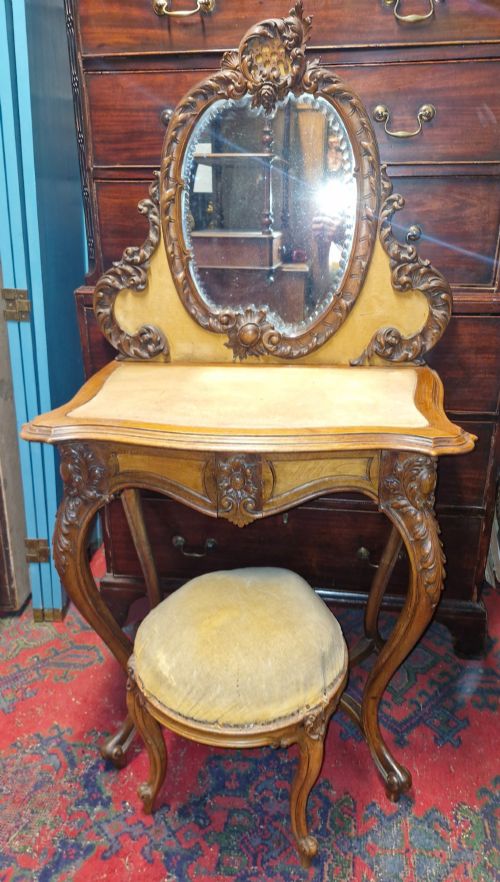
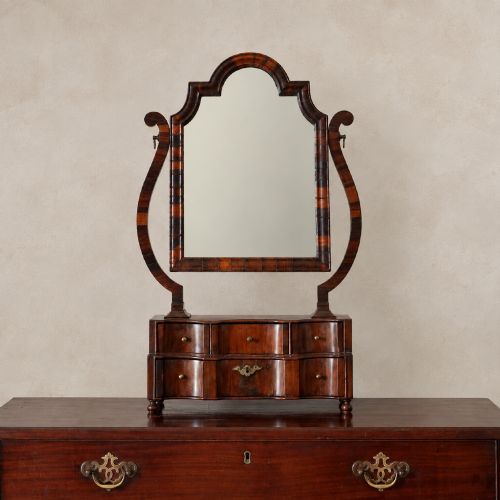
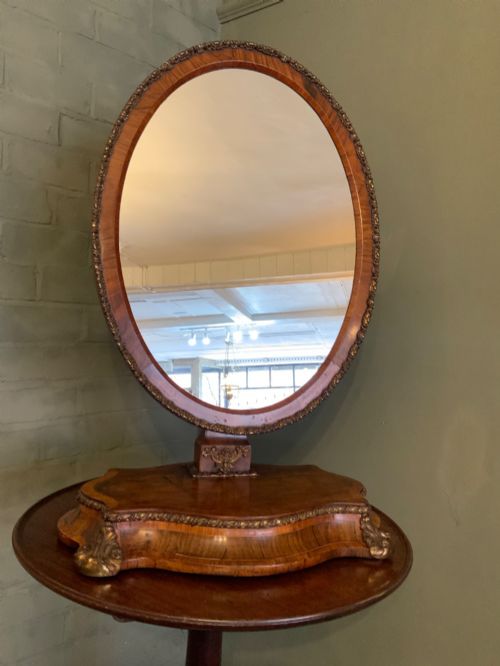


Brown Walnut Toilet Mirror
A brown walnut toilet mirror sits neatly on a chest or table, offering a polished glass and secret drawers for small treasures.
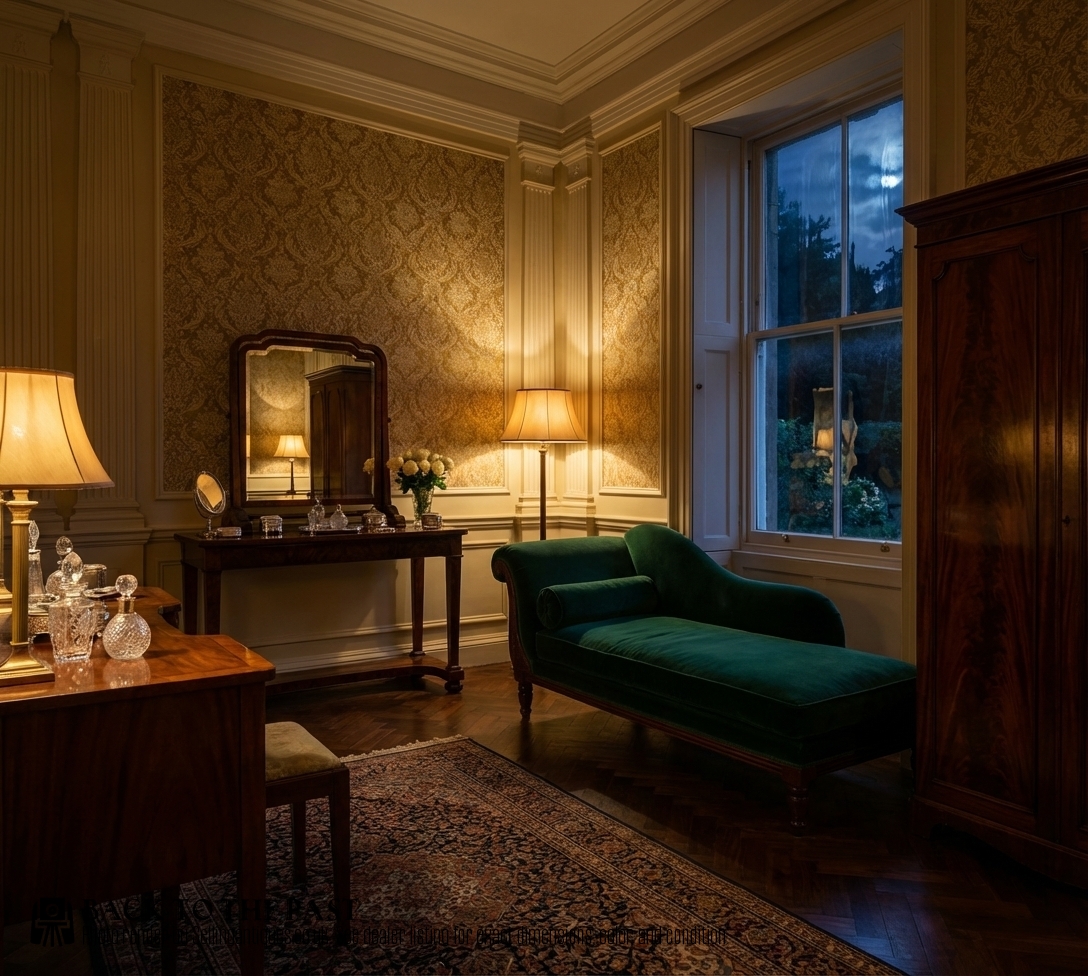
Brown Walnut Toilet Mirror
A brown walnut toilet mirror is a tabletop looking glass designed for grooming and dressing, housed in a wooden frame that often incorporates small drawers or a bureau fitment. These pieces span several centuries, with early examples showing the restrained elegance of the eighteenth century alongside later nineteenth-century revivals and twentieth-century interpretations.
The objects appear in various configurations, from simple swing mirrors on upright standards to elaborate box mirrors and bureau bases. Buyers will encounter forms ranging from strict Georgian designs to Dutch marquetry and Rococo Revival styles, reflecting the shifting tastes of makers across Britain and continental Europe.
Materials and construction
Makers utilised solid walnut and figured veneers, frequently selecting burr walnut to create striking, patterned surfaces on the glass frames and drawer fronts. Secondary woods provided sturdy internal carcases, while contrasting timbers such as laburnum added decorative banding and detail.
Hardware played a functional and ornamental role, with brass candle sconces, hinges, and escutcheons complementing the warm tones of the wood. Original mirror glass, often mercury silvered, was set into bevelled or plain plates held within adjustable swing frames.
Some nineteenth-century toilet mirrors included hidden secret drawers behind the main compartments, perfect for concealing love letters or small trinkets from prying eyes.
Assessing quality and craftsmanship
The standard of a brown walnut toilet mirror depends heavily on the choice of veneer and the crispness of the cabinetwork. Superior examples display carefully matched wood grains across the drawer fronts and frame borders, alongside tight dovetail joints in the drawer construction.
Proportion and the retention of original brass fittings also distinguish finer pieces from simpler workshop productions. The integrity of the mirror glass and the smooth movement of the swing mechanism indicate how well the piece has survived centuries of daily use.
Whytock & Reid
The Brown Walnut Toilet Mirror Glossary
- Toilet mirror
- A small tabletop mirror designed for a dressing table or chest, typically featuring a pivoting glass plate above a base fitted with small drawers. These pieces became essential domestic furnishings in the eighteenth century.
- Burr walnut
- A specialised wood cut from walnut tree growths, prized by cabinetmakers for its swirling, highly figured grain patterns. It was frequently used for veneering the most prominent surfaces of luxury furniture.
- Bureau fitment
- A small desk compartment built into the base of a mirror stand, featuring pigeonholes and miniature drawers for letters and valuables. This hybrid form combined grooming and writing functions.
- Dutch marquetry
- An elaborate wood inlay technique involving floral and pictorial designs created with various tinted woods and bone. This style appears on continental toilet mirrors dating from the eighteenth and nineteenth centuries.
- Swing mirror
- A looking glass hung on pivots between two vertical upright posts, allowing the user to tilt the angle of reflection. This mechanism is central to the design of traditional toilet mirrors.
Brown Walnut Toilet Mirror: Frequently Asked Questions
How do I date a walnut toilet mirror?
Dating relies on examining the construction methods, such as hand-cut dovetails, the thickness of the walnut veneers, and the style of the brass hardware. Secondary timbers and the edge profile of the mirror glass frame also offer clues to the period.
Early eighteenth-century pieces often feature simpler lines and laburnum crossbanding, whereas Victorian and Edwardian examples may show heavier mouldings or revival influences.
Where should I place a toilet mirror?
These mirrors suit placement on top of a low chest of drawers, a sideboard, or a dedicated dressing table. Because they were originally designed for bedroom use, they sit comfortably on bedroom furniture today.
Ensure the surface is stable and level to support the weight of the wooden frame and prevent strain on the pivoting brass pins.
Are the mirror plates original?
Many older mirrors have replacement glass because mercury silvering degrades over long periods. Original glass often displays minor foxing, dark spots, or slight distortions in the reflection.
Replacement glass is common and does not necessarily diminish the decorative appeal of the wooden frame, provided the fitting is sympathetic to the age of the piece.
What is the difference between a toilet mirror and a cheval mirror?
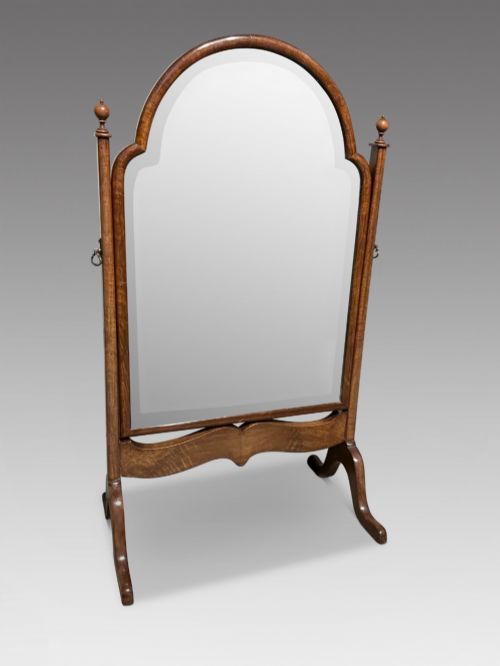
A toilet mirror is a smaller, tabletop object designed to sit on a piece of furniture, usually incorporating small drawers in the base. A cheval mirror is a full-length dressing glass supported by a tall, freestanding floor frame.
Both serve grooming purposes but occupy entirely different scales within a room's layout.