
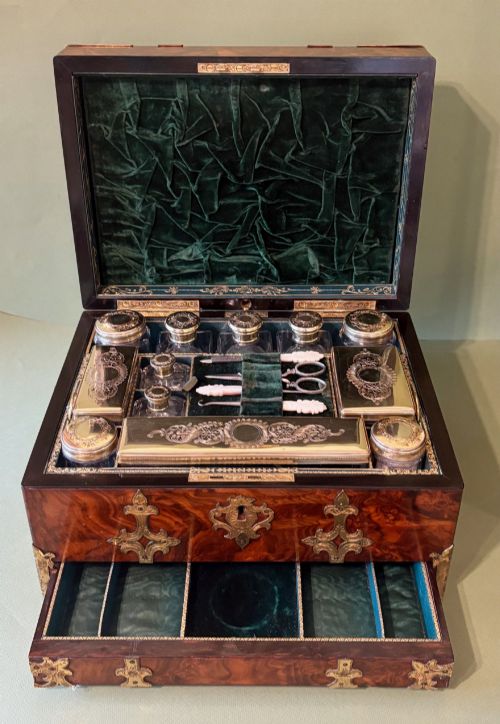
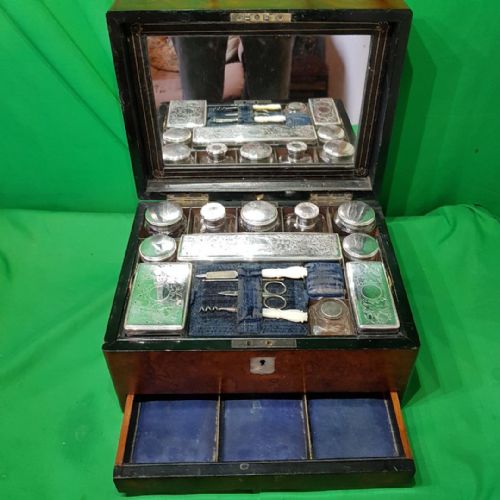



Burr Walnut Dressing Mirror
When you set out to acquire a burr walnut dressing mirror, you are looking at richly figured timber built to catch the morning light.
Burr Walnut Dressing Mirror
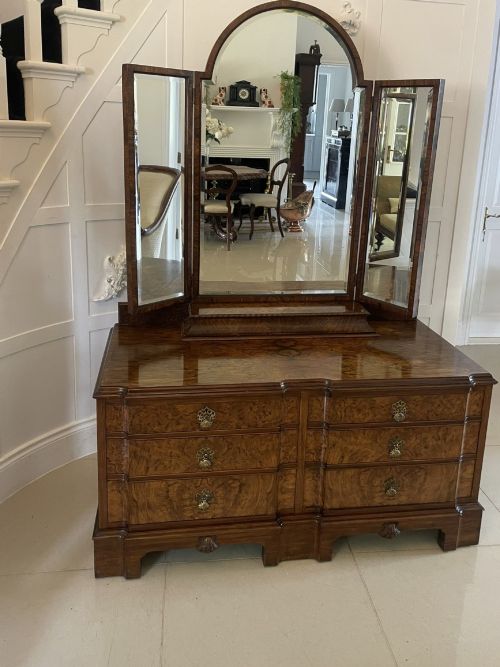
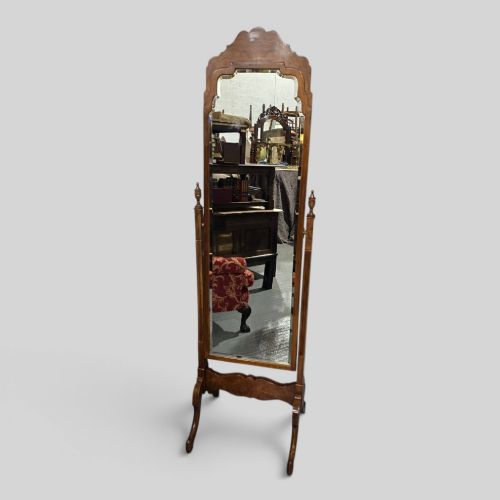
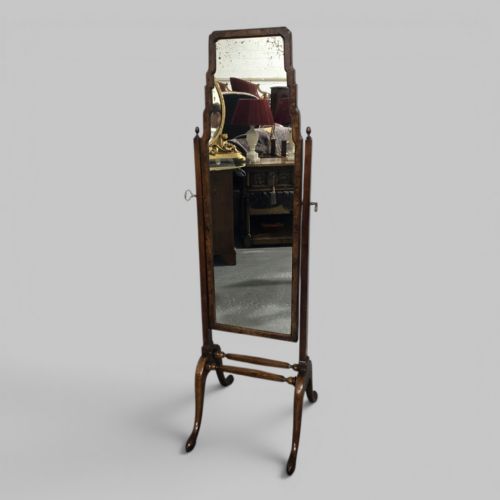
A burr walnut dressing mirror spans several centuries of British cabinet-making, appearing in formats from compact 18th century swing mirrors to full-length cheval frames and large Victorian dressing tables. The form responds to changing domestic routines, shifting from small table-top toilet glasses meant for a chest of drawers to substantial pedestal units incorporating multi-plate mirrors.
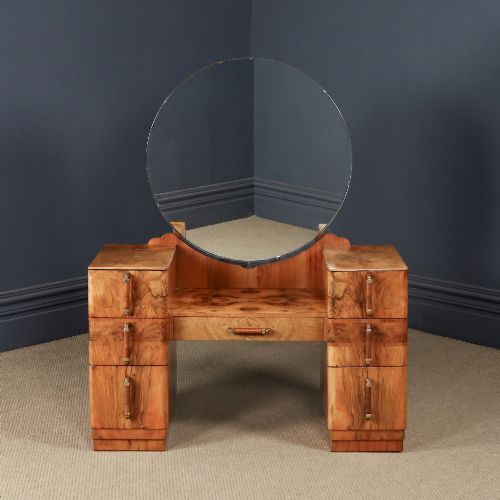
On this page, the most frequent encounters are Victorian table mirrors and Art Deco vanity pieces alongside 18th century examples. These pieces combine functional glass with highly decorative timber burls, serving both as practical dressing furniture and focal points for a bedroom interior.
How they were made
Cabinet-makers constructed these mirrors by applying thin veneers of burr walnut onto solid secondary timbers such as pine or mahogany. The distinctive swirling grain patterns come from tree growths or roots, which artisans sliced and laid down with precision to create symmetrical patterns across the frame or table front.
Glass plates were traditionally silvered and set into mortise and tenon frames, often mounted on brass pivots or swing arms to allow adjustment. Secondary materials like brass fittings, ebonised details and occasionally satinwood stringing completed the construction.
Listings feature burr walnut dressing mirrors spanning the 18th century through to Art Deco pieces from 1930.
What varies in quality
Quality in a burr walnut dressing mirror rests principally on the selection and matching of the veneer. The finest examples display dense, unblemished swirling grain patterns that are carefully balanced across the surface, whilst lesser pieces use plain walnut or mismatched sections.
Construction methods and timber selection for the underlying carcase also separate standard items from superior works. Original mirror glass, intact brass hardware and stable, distortion-free framing indicate higher workshop standards during production.
Maurice Adams·Harry and Lou Epstein·Whytock and Reid
The Burr Walnut Dressing Mirror Glossary
- Burr walnut
- A figured timber harvested from the abnormal growth or root burr of a walnut tree. It yields intricate, swirling grain formations prized for decorative veneer work.
- Cheval mirror
- A full-length swing mirror supported on a vertical frame with four legs or a heavy base. The name derives from the French word for horse.
- Swing mirror
- A glass plate mounted on pivots between two vertical uprights fixed to a base or table. This allows the user to tilt the reflection angle.
- Duchess dressing table
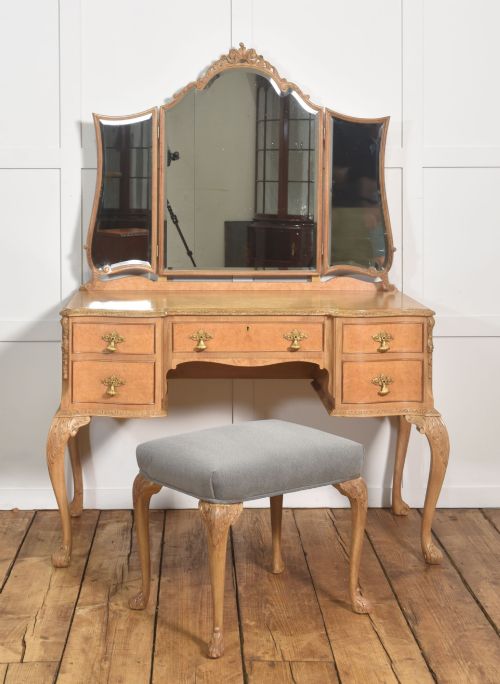
- A large Victorian dressing table featuring a large central mirror, often flanked by smaller trinket drawers and a serpentine front. They formed part of high-status bedroom suites.
- Toilet mirror
- A smaller table-top dressing glass designed to sit upon a chest of drawers or a dedicated stand. They gained popularity during the 18th century.
Burr Walnut Dressing Mirror: Frequently Asked Questions
How do I date a dressing mirror?
Dating relies upon examining the construction techniques, timber choices and hardware style. Earlier 18th century examples often show pegged joints and hand-bevelled glass, while Victorian pieces feature heavier mouldings and applied veneers.
Secondary woods and drawer linings also provide clues. Oak and pine secondary timbers typically indicate earlier periods, whereas later Victorian items incorporate machine-sawn elements and distinct dovetails.
Where should I place my mirror?
These mirrors suit placement on sturdy chests of drawers, dedicated dressing tables or directly on the floor in the case of cheval formats. Ensure the surface is level to prevent strain on the frame joints.
Positioning the piece near natural light enhances the reflective qualities and highlights the figured burr walnut grain without exposing the wood to direct, damaging sunlight.
Are the mirror plates original?
Many antique mirrors retain their original glass, which often exhibits slight foxing, minor silver loss or tiny dark spots. These natural signs of age confirm the glass belongs to the period of the frame.
Replacement glass is common in pieces that have seen heavy domestic use. Clean replacement plates look exceptionally clear and lack the undulating distortion typical of older hand-poured glass.
How do I care for burr walnut?
Maintain burr walnut by dusting gently with a dry, soft cloth and avoiding silicone-based polishes or harsh chemical cleaners. Waxing the surface occasionally helps nourish the wood and preserve the lustre of the veneer.
Keep the piece away from direct heat sources and dramatic humidity fluctuations, which can cause the thin burr walnut veneer to lift or crack over time.