


Figured Walnut Mirror
A figured walnut mirror brings rich, rippled timber grain and warm tones to a room, whether set upon a dressing table or hung as a wall piece.
Figured Walnut Mirror
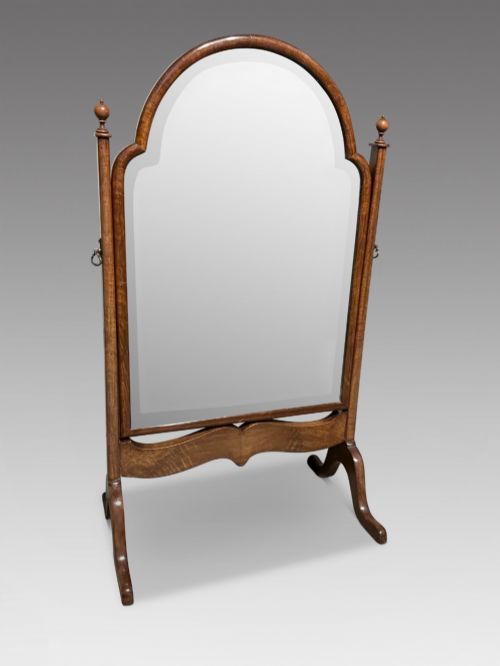
A figured walnut mirror encompasses everything from compact Georgian toilet glasses and Victorian swing mirrors to taller cheval frames and wall-hung pieces. When you search for a figured walnut mirror, you encounter items where the striking patterns of the wood grain form the primary visual focus of the frame.
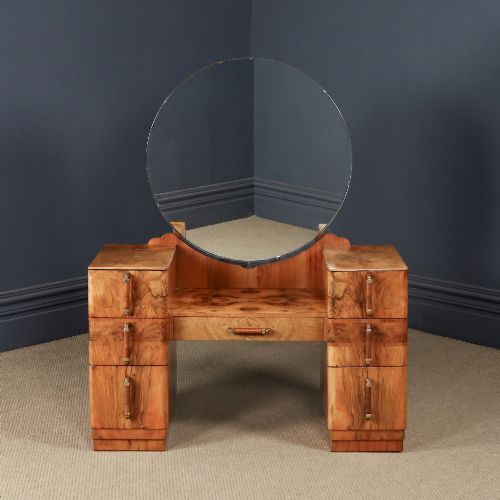
The pieces listed on this page range widely in period, covering 18th-century examples alongside Victorian, Edwardian, and 1930s Art Deco designs. Many items also appear as part of larger furniture pieces, such as dressing tables, bureau bookcases, and credenzas incorporating mirrored glass.
Table mirrors and wall-mounted versions dominate the standalone selections, offering practical reflective surfaces framed in rich timber. The selection moves between restrained period forms and cleaner, geometric lines from the early twentieth century.
What varies in quality
The visual impact of the timber grain marks the primary distinction between standard examples and the finest pieces. Highly figured burr and figured walnut veneers exhibit deep, swirling patterns that demand exceptional skill from the original cabinetmaker to match and apply symmetrically.
Construction methods and timber selection in the underlying carcase wood reveal the standard of workshop execution. Superior pieces maintain crisp moulding profiles, intact crossbanding, and original mirror plates that show harmonious ageing without crude replacements.
The listings span from 18th-century George I pieces to 1930s Art Deco designs, uniting centuries of cabinetmaking skill in figured walnut.
The Figured Walnut Mirror Glossary
- Figured walnut
- Timber sourced from walnut trees that display distinctive, highly decorative grain patterns caused by local irregularities in growth. These patterns provide the main decorative appeal of the mirror frame.
- Burr walnut
- A specialised form of figured walnut taken from the wart-like growths on the trunk, yielding intricate cluster formations across the surface. It was heavily utilised on high-status 18th-century and Art Deco frames.
- Cheval mirror
- A full-length swing mirror supported on a vertical standing frame with four feet or side pivots. This form allows the entire glass to tilt to various angles.
- Toilet mirror
- A smaller swing mirror designed to sit upon a dressing table, chest, or bureau. These typically feature small drawers within the base plinth.
- Crossbanding
- A decorative border technique where thin strips of veneer are laid across the grain direction around the perimeter of the frame. This method frames the central figured walnut panel neatly.
- Parcel gilt
- A traditional finishing method where selective portions of the carved wooden frame are highlighted with gold leaf. It frequently accompanies walnut veneers on Georgian and revival pieces.
Figured Walnut Mirror: Frequently Asked Questions
How do I date a walnut mirror?
Dating relies on examining the construction methods of the wooden frame, the bevel of the glass plate, and the overall style of the mouldings. Earlier 18th-century pieces often feature hand-cut joinery and old mirror glass, whereas 1930s items display streamlined Art Deco geometry.
Secondary woods inside the frame also offer clues, as oak and pine usage shifted across the centuries. Comparing the specific veneer patterns to documented period furniture helps narrow down the decade of manufacture.
Are these mirrors easy to hang?
Most wall-hung and cheval mirrors require sturdy fixings suited to their substantial timber and glass weight. Ensuring the wall anchors match the weight of the specific frame keeps the piece secure.
Tabletop and swing mirrors require stable placement on level surfaces to prevent tipping. Checking the tension of the side pivot screws ensures the glass stays angled correctly without slipping.
What is the difference between burr and figured walnut?
Figured walnut covers any timber grain with dynamic movement, ripples, or waves. Burr walnut is a specific subset derived from tree growths that create dense, swirling patterns of tiny eyes.
Both materials were chosen for high-end furniture, but burr walnut generally offers a busier, more intricate visual texture. Craftsmen often paired burr panels with straight-grained walnut borders to frame the design.
How should I clean a vintage mirror frame?
Cleaning requires a soft, dry cloth to remove dust from the carved wooden details and veneer surfaces. Avoiding harsh chemical polishes protects the historic finish and prevents moisture damage to the wood.
Glass cleaner applied directly to a cloth rather than the mirror prevents liquid from seeping behind the plate edge. This protects the original silvering from dark spots and corrosion over time.