

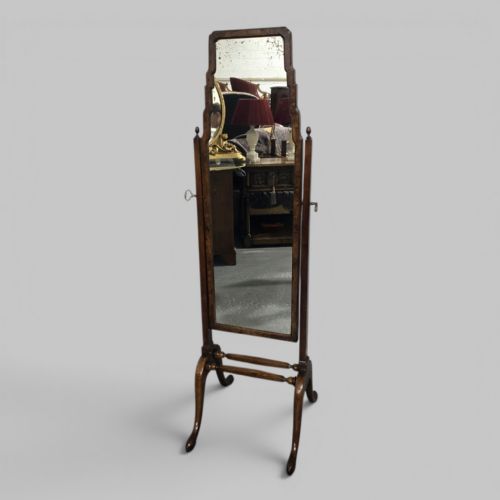

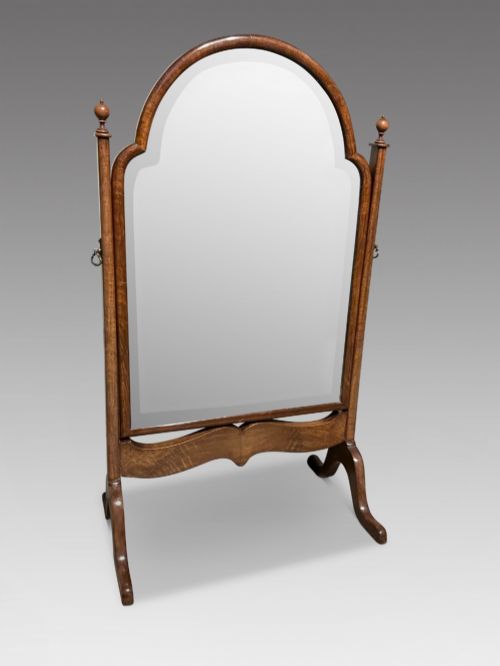


Brown Walnut Cheval Mirror
A brown walnut cheval mirror brings adjustable reflection and rich timber warmth to a room, moving easily from Edwardian bedrooms to Art Deco dressing spaces.
Brown Walnut Cheval Mirror
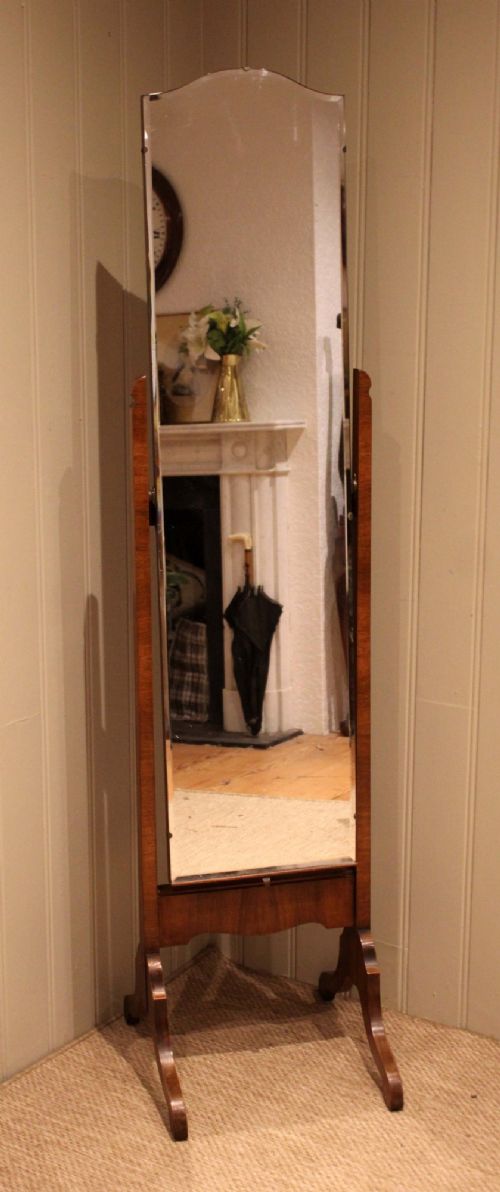
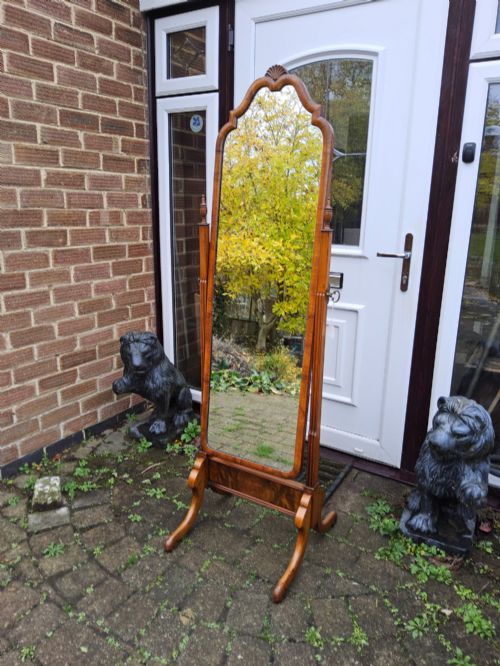
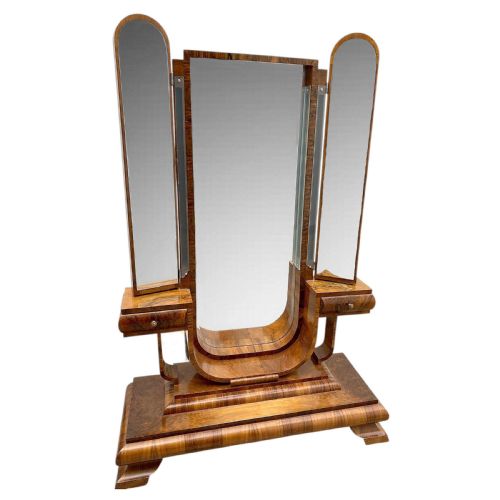
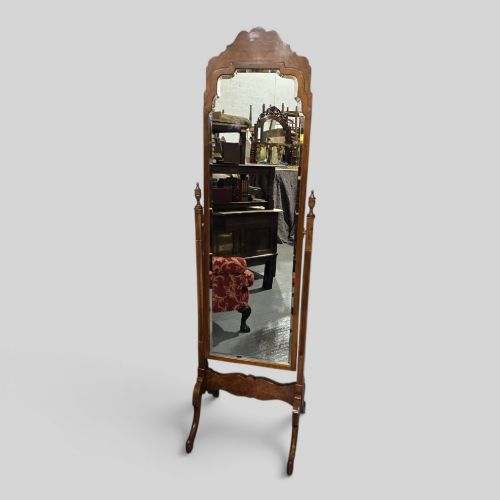
When searching for a brown walnut cheval mirror, buyers encounter tall, freestanding dressing glasses alongside smaller table mirrors designed for chests and dressing tables. These pieces span periods from Regency and Victorian eras through to Edwardian and Art Deco designs, reflecting shifting tastes in interior furnishings.
The most common formats on this page are full-length cheval mirrors supported on floor stands and smaller dressing table mirrors, some incorporating bureau fitments or barley twist supports. Surviving examples demonstrate the enduring appeal of walnut timber across the nineteenth and twentieth centuries.
How they were made
Cabinet makers utilised solid walnut and decorative burr walnut veneers applied to secondary timbers, creating rich grain patterns across the frames and stands. Brass fittings often secure the pivoting mirror plates, allowing the glass to tilt to the desired angle.
Glass mirror plates were set into rebated frames, sometimes accompanied by turned wooden supports or barley twist uprights that demonstrate nineteenth and early twentieth-century joinery techniques.
Brown Walnut Cheval Mirror Retail Price Guide 2026
Typical asking prices for brown walnut cheval mirror among the pieces listed under this phrase on Sellingantiques today, from the lower quarter to the upper quarter. They describe what is for sale here now, not the wider market.
Some dressing mirrors arrived with hidden bureau compartments, offering an unexpected spot for secret correspondence.
What varies in quality
The distinction between standard production pieces and finer examples rests on the selection of figured or burr walnut veneers and the crispness of carved details in styles such as the Queen Anne revival. Superior pieces display harmonious timber matching across the frame and substantial brass pivot hardware that holds the glass firmly without sagging.
Proportion and stability define the upper tier of these mirrors, where balanced framing and solid floor stands ensure the tall glass operates smoothly and stands securely.
Whytock and Reid
The Brown Walnut Cheval Mirror Glossary
- Cheval mirror
- A freestanding, full-length mirror mounted on a frame with side pivots that allow the glass to swing. This form became popular for dressing rooms during the Regency period.
- Burr walnut
- Timber taken from a tree growth where the grain has swirled into intricate patterns, highly prized for decorative veneer work on cabinet furniture.
- Barley twist
- A turned wooden column resembling a twisted rope, frequently utilised as a structural and decorative support on Victorian furniture frames.
- Bureau fitment
- A sloping desk section incorporated into the base of a mirror stand, providing a writing surface and small storage compartments.
Brown Walnut Cheval Mirror: Frequently Asked Questions
How do I secure a loose cheval mirror?
Most pivoting mirrors rely on tension nuts or screw fittings located where the frame meets the upright stands. Adjusting these brass or wooden fixings restores the friction needed to hold the glass at the chosen angle.
Over-tightening can strain the timber frame, so adjustments should be made gradually until the mirror remains stable during use.
Where should I place a freestanding mirror?
Cheval mirrors function best in bedrooms or dressing rooms where floor space allows the frame to stand clear of surrounding furniture. Positioning the glass opposite a window maximises the natural light reflected into the room.
Ensure the floor beneath the stand is level to prevent uneven strain on the upright supports and pivot joints.
What is the difference between a cheval and a table mirror?
A cheval mirror stands independently on the floor, offering a full-length reflection suitable for checking entire outfits. Table mirrors are smaller versions designed to sit on top of a dressing chest, sideboard, or bureau.
While both utilise pivoting frames, their scale determines whether they serve as floor-standing furnishings or tabletop accessories.
How can I identify Queen Anne style walnut?
Queen Anne revival pieces often feature shaped walnut frames, warm timber tones, and subtle curves reflecting eighteenth-century design principles. Makers working in this taste during the Edwardian period and earlier decades focused on graceful outlines rather than heavy carving.
The use of figured walnut veneer further enhances the decorative character typical of this aesthetic.