

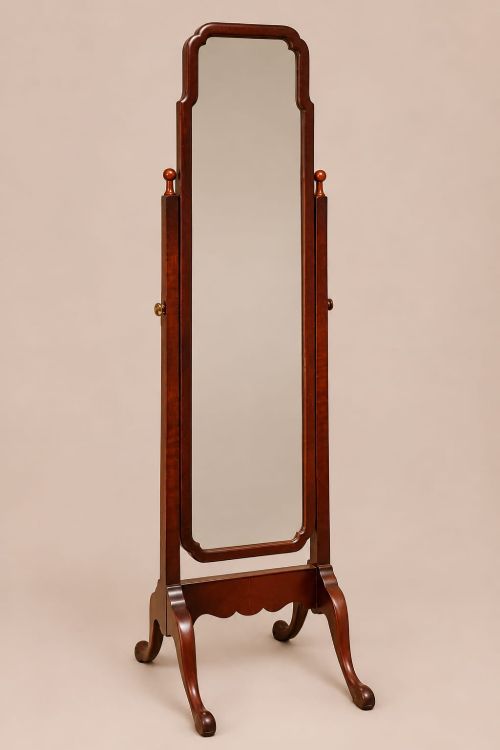
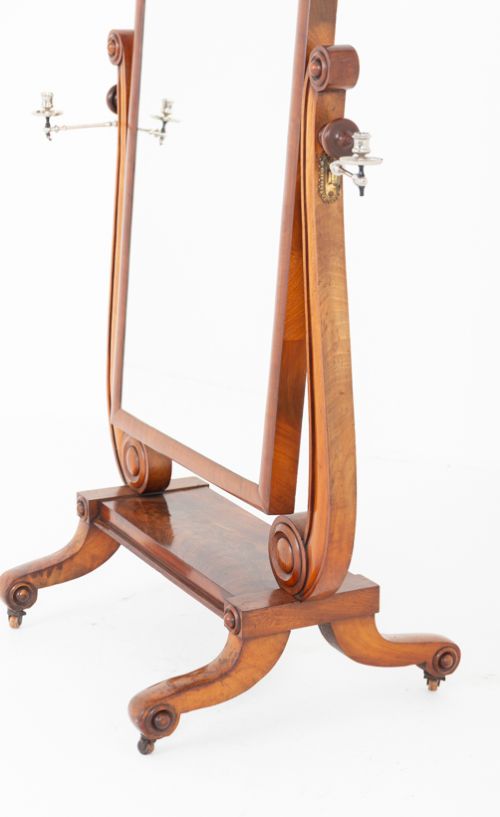
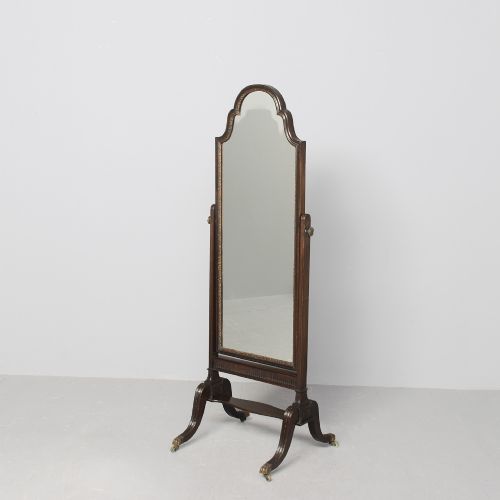
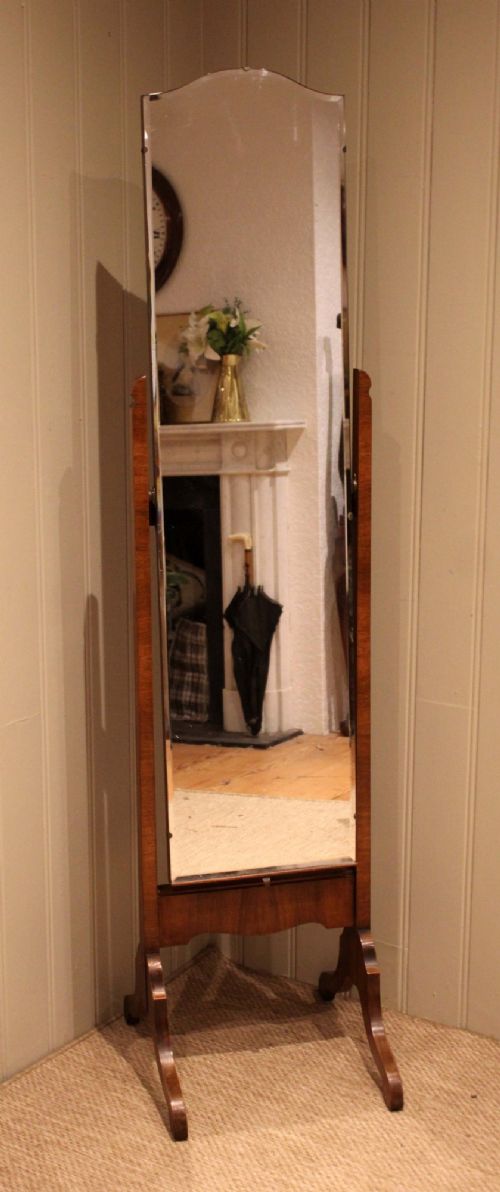
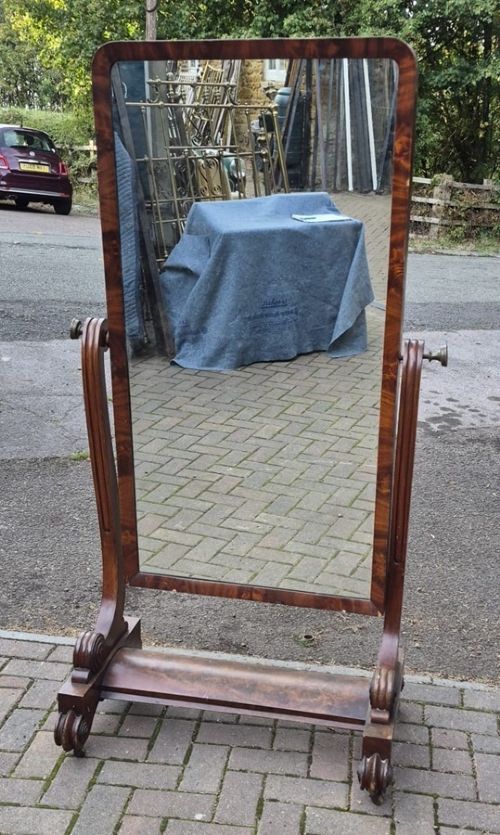
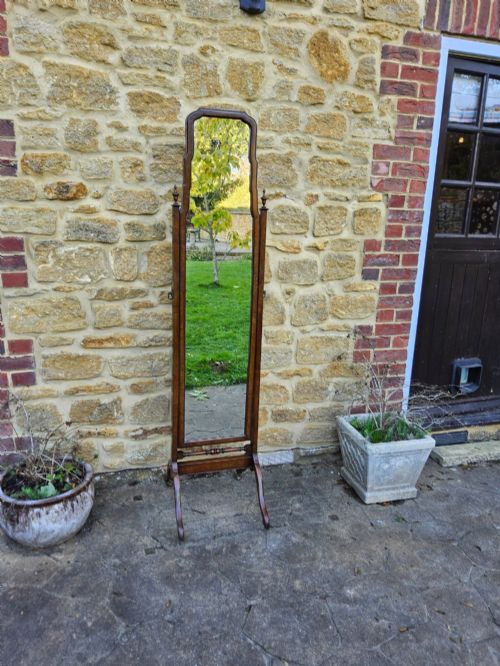
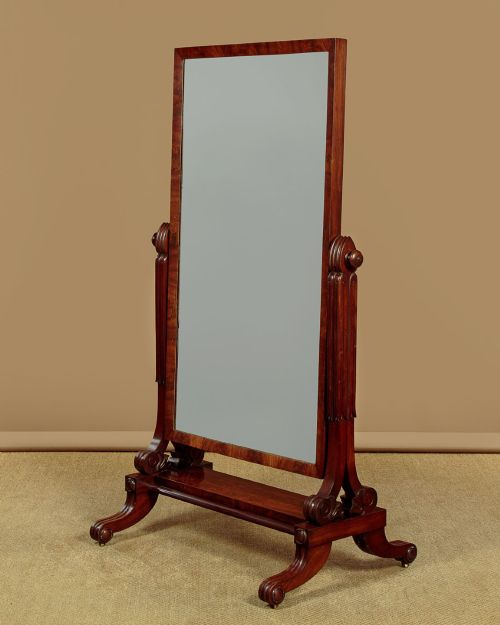
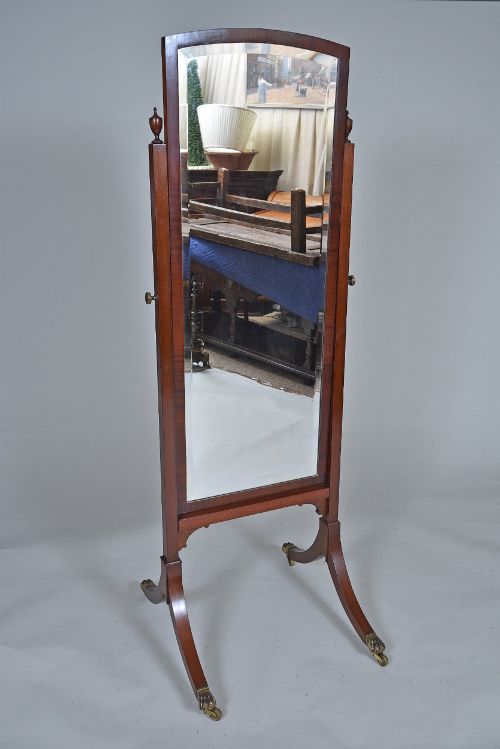
Vintage Full Length Cheval Mirror
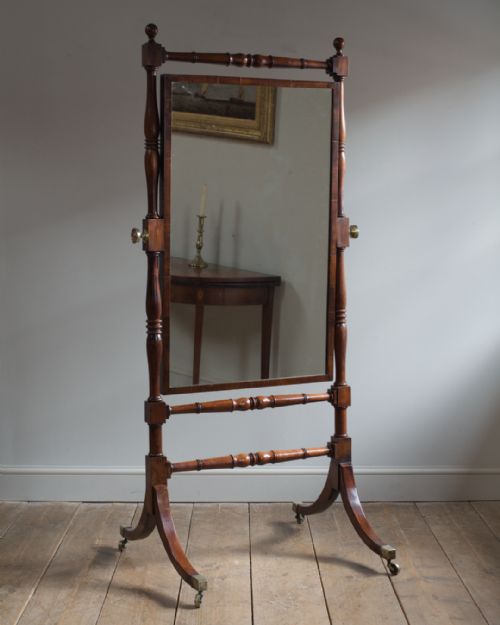
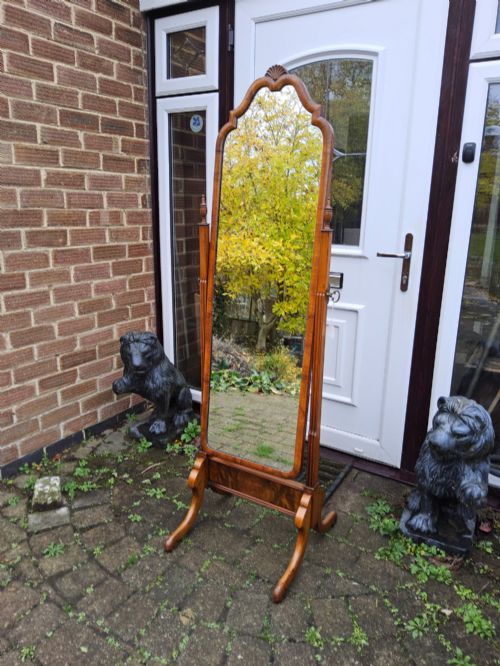
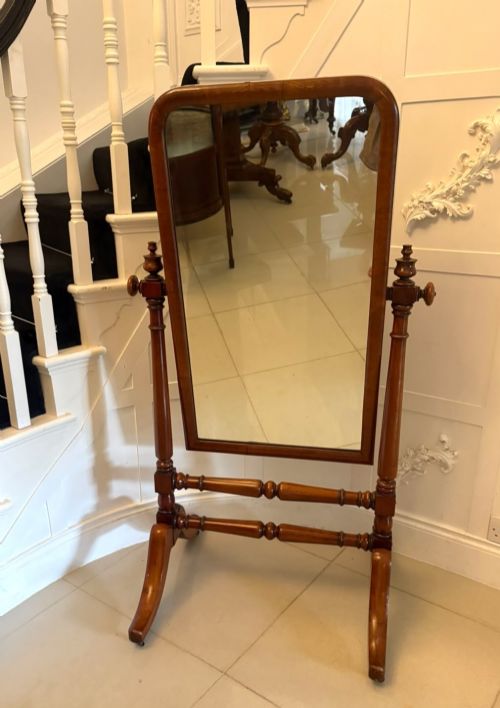
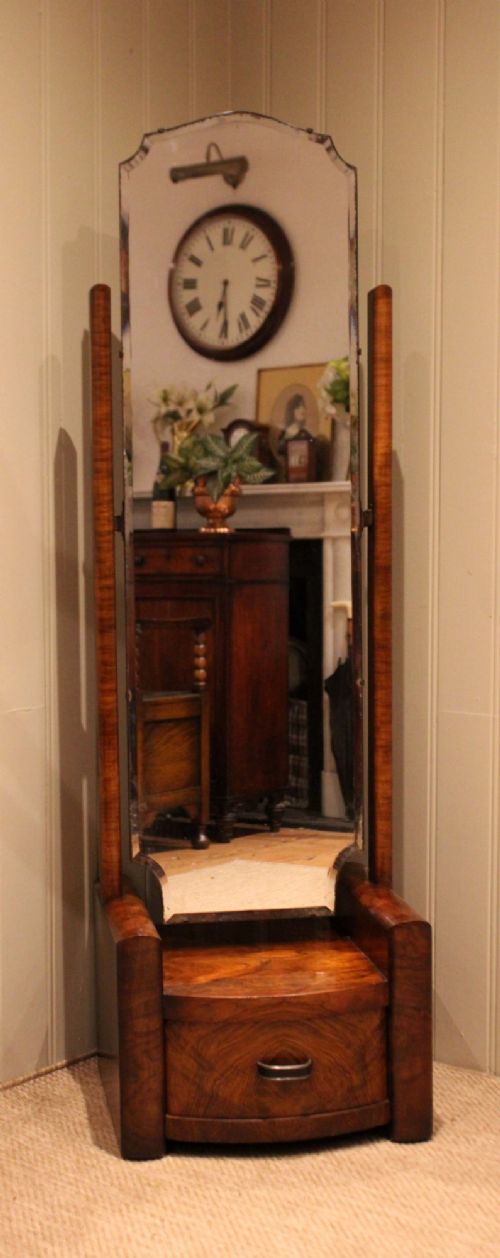
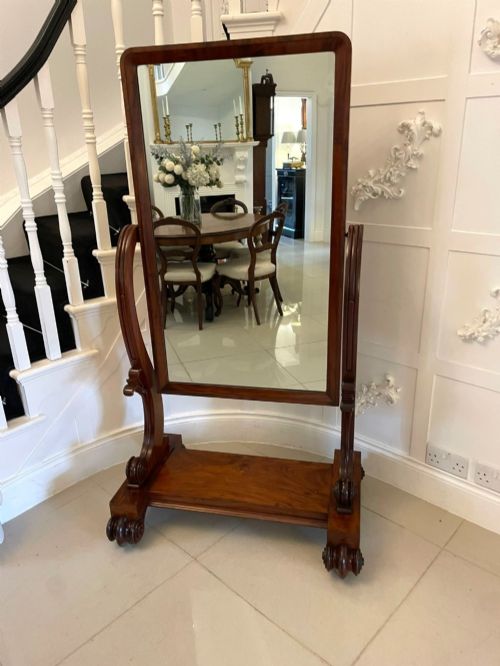
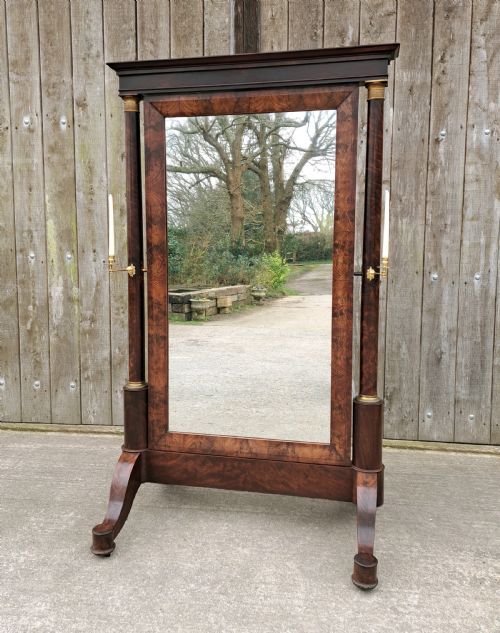
A vintage full length cheval mirror brings height and a clear full reflection to a room, pivoting gracefully between upright floor supports.
Vintage Full Length Cheval Mirror
A vintage full length cheval mirror stands independently on a floor frame, designed to tilt so a person can check their attire from head to toe. The pieces appearing most often on this page date from the nineteenth century through the Edwardian era and into the nineteen-twenties.
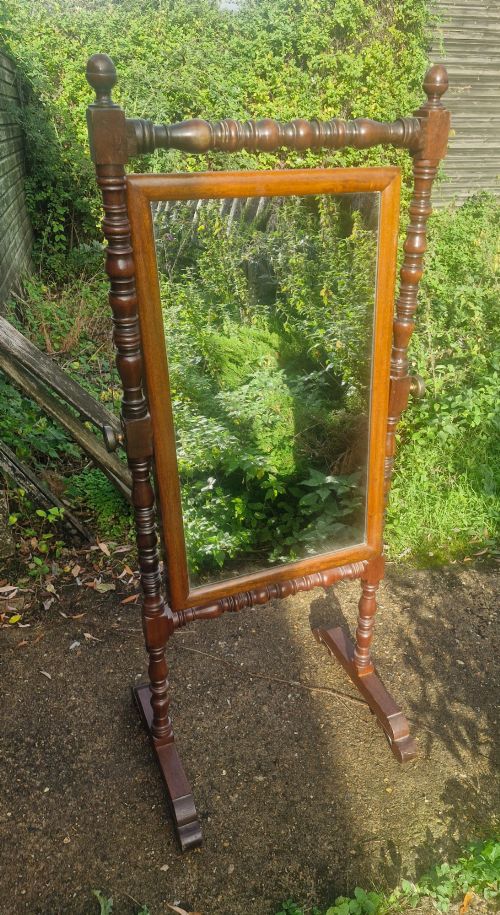
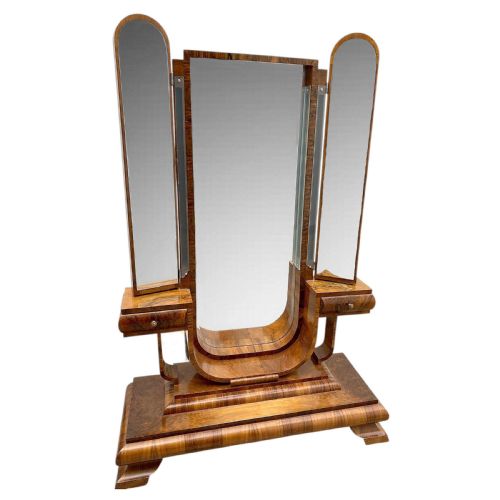
Most examples found here utilise mahogany, walnut, or burr walnut, standing on sturdy feet or brass castors. Forms range from simple Victorian floor standing frames to elaborate Edwardian and Art Deco designs with inlaid details or barley twist supports.
Makers drew upon historical revivals, producing Georgian, Regency, Queen Anne, and Louis Philippe styles alongside clean nineteen-twenties silhouettes. These objects function simultaneously as practical dressing aids and substantial pieces of furniture.
Materials and construction
Cabinet makers constructed the frames primarily using solid mahogany, walnut, or satin birch, often applying figured veneers such as burr walnut or flame mahogany to the main uprights and base. Brass fittings, including pivoting pins, sabots, and castors, allow the mirror glass to tilt smoothly.
The heavy glass plate is held securely within an inner wooden frame, supported by two vertical pillars connected by a stable floor base. Joinery techniques from the nineteenth and early twentieth centuries ensure the tall structure remains rigid while bearing the weight of the pivoting glass.
Vintage Full Length Cheval Mirror Retail Price Guide 2026
Typical asking prices for vintage full length cheval mirror among the pieces listed under this phrase on Sellingantiques today, from the lower quarter to the upper quarter. They describe what is for sale here now, not the wider market.
Current listings feature pieces spanning the nineteenth century, Victorian era, Edwardian period, and nineteen-twenties, constructed in mahogany, walnut, and giltwood.
Distinguishing quality
Quality rests on the depth of the timber figuring and the proportion of the frame, where substantial mahogany or burr walnut displays rich natural grain rather than plain surfaces. Superior examples demonstrate balanced weight distribution, ensuring the pivoting mechanism holds the mirror firmly at any chosen angle without slipping.
Refinement in carving, inlay, and original brass castors separates standard utility mirrors from bespoke pieces commissioned for grander rooms. The integrity of the original mirror glass and the crispness of the joinery further indicate the original maker's standard of work.
The Vintage Full Length Cheval Mirror Glossary
- Cheval mirror
- A freestanding full length mirror mounted on a pivoted frame that allows it to tilt. The word derives from the French for horse, referring to the four-legged frame.
- Sabots
- Metal caps fitted to the feet of furniture legs, usually made of brass to protect the wood from wear and scuffs. They appear frequently on Regency and nineteenth-century floor pieces.
- Barley twist
- A type of turning carved to resemble a spiral rope or column. This decorative motif appears on the upright supports of Victorian dressing mirrors.
- Burr walnut
- Wood taken from a growth or burl on a walnut tree, yielding complex, swirling grain patterns. Cabinet makers prized this material for veneering the main panels of mirrors.
- Castors
- Small wheels attached to the base of the frame to allow easy movement across the floor. They are often made of brass and mounted on ceramic or wooden rollers.
Vintage Full Length Cheval Mirror: Frequently Asked Questions
How do I place a cheval mirror in a bedroom?
Position the mirror near natural light from a window so the glass reflects brightness across the room. Ensure there is enough clear floor space in front of the frame to tilt the glass and step back for a full view.
Keep the piece away from direct, harsh sunlight to protect wood finishes and veneers over time. The sturdy base allows it to stand safely on wooden floors or carpets without wall mounting.
How do I date a vintage mirror?
Examine the timber species, construction joints, and hardware style to determine the era. Nineteenth-century pieces frequently utilise solid mahogany with hand-cut joints, while nineteen-twenties examples often feature figured walnut veneers and distinct art deco lines.
Castors, screws, and the backing boards also provide clues to age. Machine-made components usually point towards Edwardian or later twentieth-century production.
How do these mirrors tilt?
The inner mirror frame connects to the vertical floor uprights via central metal pivot pins or screws on each side. Tightening or loosening these fixings adjusts the tension so the glass stays at the desired angle.
Older mechanisms rely on brass thumb screws or balanced weight distribution within the frame. Regular checking of these pivot points ensures smooth movement without straining the wood.
Are these mirrors heavy to move?
The substantial timber frames and thick glass plates make these pieces quite heavy and solid. Most historical examples feature original brass castors on the feet to help roll the weight across a floor.
When relocating the mirror to another room, it is best to lift the base rather than pull the uprights. Two people should handle the move to protect the pivoting glass and frame joints.