




Walnut Cheval Glass
A walnut cheval glass is a freestanding mirror designed for full-length viewing that brings warmth and classic grain to a dressing room or bedroom.
Walnut Cheval Glass
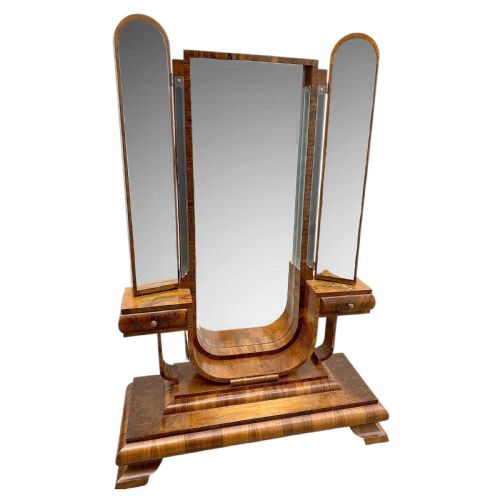
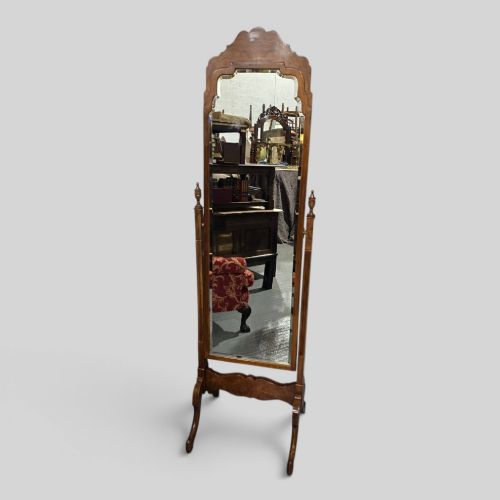
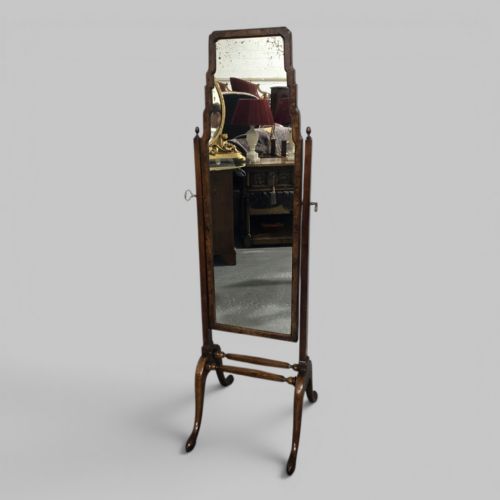
A walnut cheval glass is a tall, adjustable dressing mirror mounted in a frame that pivots between two upright posts on a stable base. When you search for this phrase, you encounter freestanding mirrors ranging from nineteenth-century Victorian and Regency designs to later revivals and Art Deco pieces.
The versions most commonly met on this page include nineteenth-century examples and nineteen-twenties revivals finished in figured or burr walnut. These pieces function as both practical dressing aids and architectural focal points within a room, often drawing on Queen Anne, Louis XV, or Georgian styles.
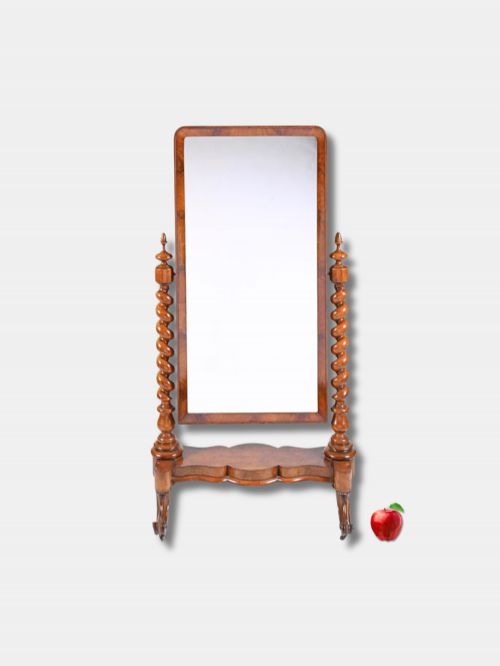
Makers utilised various supporting structures, from barley twist uprights to console mounts and broad floor stands. The glass itself swings within its frame, allowing the user to alter the angle of reflection as needed for full-length attire.
How they were made
Makers constructed the primary frames of these mirrors using solid walnut, burr walnut, and figured walnut veneer over secondary timbers. Surface enrichment often included ebonised wood details, brass hardware, and gilt bronze mounts to accentuate the timber grain.
The rotating mechanism typically relied on brass pivots or screw pins set into the upright supports, allowing the mirror plate to tilt smoothly. Mirror glass was housed securely within rebated wooden mouldings, sometimes accompanied by bureau fitments or console supports.
Walnut Cheval Glass Retail Price Guide 2026
Typical asking prices for walnut cheval glass among the pieces listed under this phrase on Sellingantiques today, from the lower quarter to the upper quarter. They describe what is for sale here now, not the wider market.
One unexpected survivor on this page began its service inside a gentlemen's outfitters shop.
What varies in quality
The distinction between standard examples and top-tier pieces lies in the selection of the timber and the refinement of the carving. Finely figured burr walnut displays complex, swirling grain patterns that demand expert veneering skill, whereas ordinary pieces utilise plain, uniform cuts of wood.
Structural harmony also separates the grades, visible in the balance of the upright supports and the crispness of details like barley twist turnings or revival ornamentation. Superior examples maintain a rigid frame that supports the weight of the glass without sagging at the pivot points.
The Walnut Cheval Glass Glossary
- Cheval glass
- A tall freestanding mirror designed to pivot vertically within a matching frame. This arrangement allows the viewer to see their entire outfit at once.
- Burr walnut
- A specialised timber cut from the abnormal growth knots of a walnut tree. It yields highly decorative, swirling grain patterns prized in high-end cabinetry.
- Barley twist
- A type of turning shaped like a spiral rope, popular on the upright supports of nineteenth-century furniture. This decorative technique adds vertical texture to the frame.
- Ebonised wood
- Timber treated with a dark chemical stain or finish to imitate ebony. Makers utilised this method to provide sharp contrast against lighter walnut veneers.
- Louis XV Style
- A decorative design movement characterised by flowing lines and asymmetry. Pieces in this style often incorporate ornate mounts and curved wooden profiles.
Walnut Cheval Glass: Frequently Asked Questions
What is a cheval mirror?
A cheval mirror is a full-length glass mounted in a freestanding frame that pivots on vertical pins. This design allows the user to tilt the glass to various angles.
Historically placed in bedrooms and dressing rooms, these pieces served as essential furnishings for checking attire before stepping out.
How do I date a walnut mirror?
Dating a mirror involves examining the construction methods, timber choice, and decorative style alongside the fixings. Victorian and Regency pieces display specific turning details and jointing techniques characteristic of their era.
Later revival pieces from the nineteen-twenties often blend earlier stylistic motifs with twentieth-century manufacturing standards.
Where should I place a cheval glass?
These mirrors suit bedrooms, dressing rooms, and large hallways where adequate floor space permits free movement around the frame. Positioning them near a light source enhances their reflective utility.
Because they are freestanding, they require a stable, level surface to prevent the pivoting frame from swinging unevenly.
What is burr walnut?
Burr walnut is a veneer harvested from the distorted growth knots found on walnut trees. It produces intricate, swirling grain patterns that catch the light.
Cabinet makers reserved this striking timber for the most prominent surfaces of high-status furniture.