



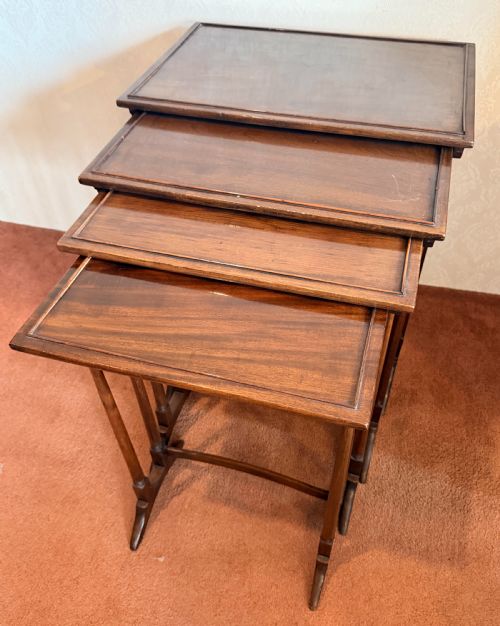
Brown Nesting Tables
Brown nesting tables offer a practical set of multi-tiered surfaces in rich timbers like mahogany, walnut and rosewood.
Brown Nesting Tables
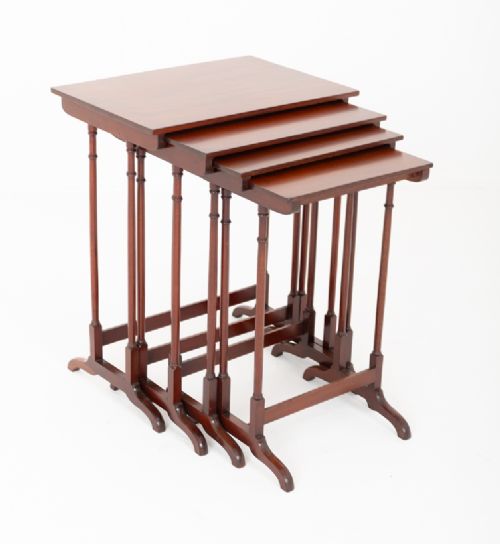
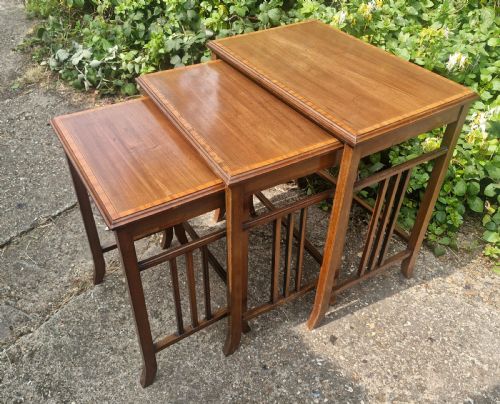
Brown nesting tables consist of graded sets of matching tables designed to slide neatly beneath one another when not in use. These space-saving pieces appear predominantly in Edwardian and nineteenth-century forms, alongside later Art Deco and 1920s interpretations.
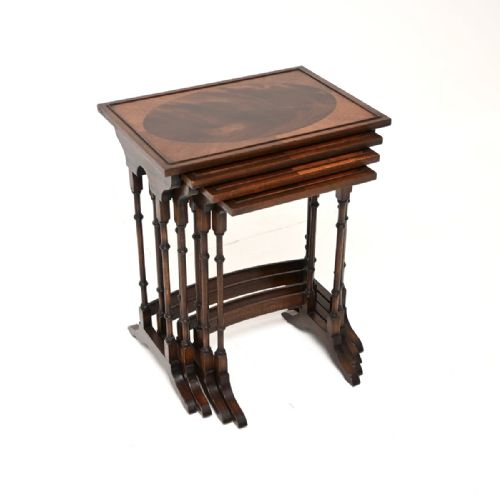
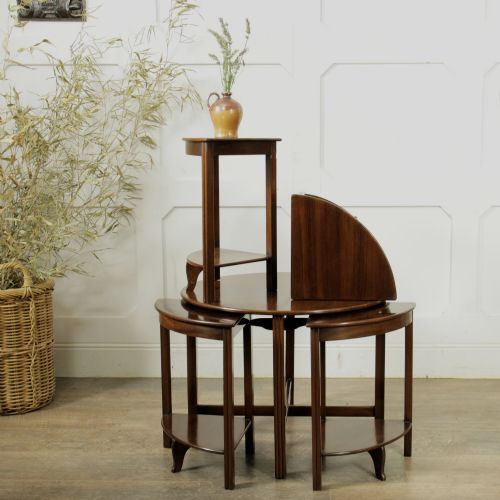
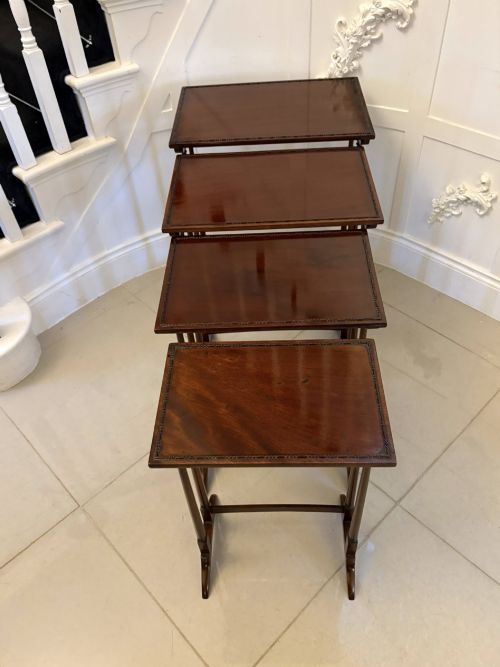
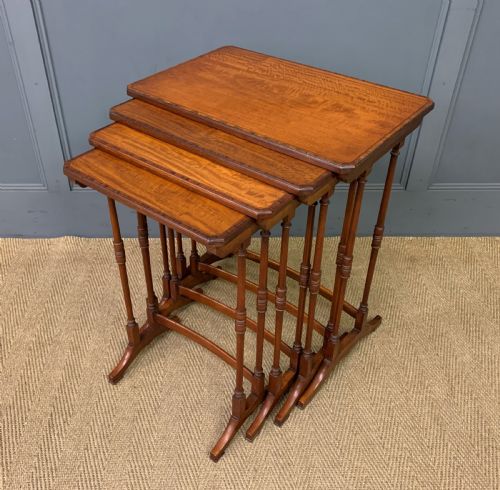
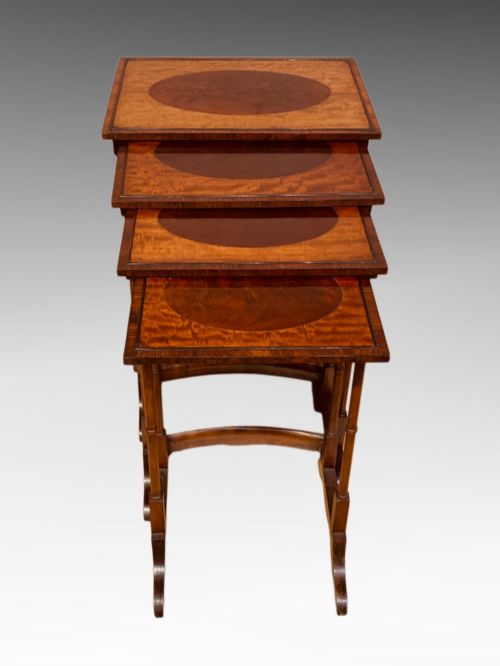
The most common versions met on this page are Edwardian mahogany quartetto sets, often featuring four tables with delicate inlay. Buyers also encounter circular variants, walnut trios, and larger sets rising to five pieces.
Originating as practical occasional furniture for drawing rooms and parlours, these sets function equally well beside modern seating. Their compact footprint provides extra surface area instantly without cluttering a room.
How brown nesting tables were made
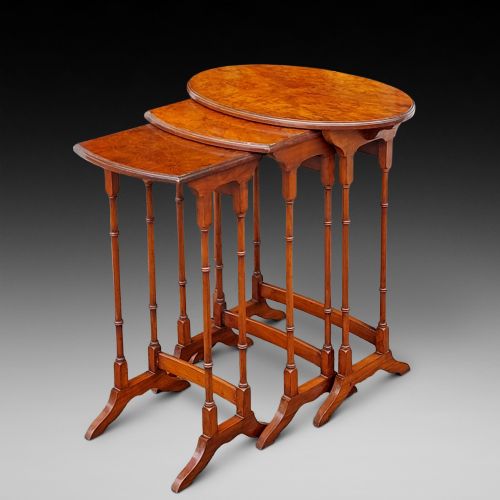
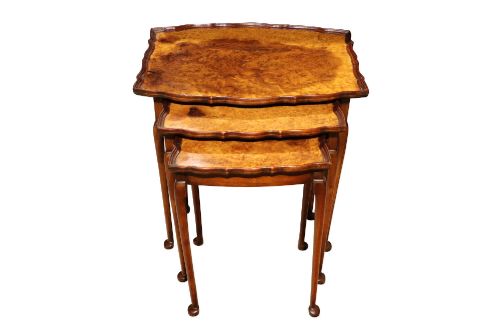
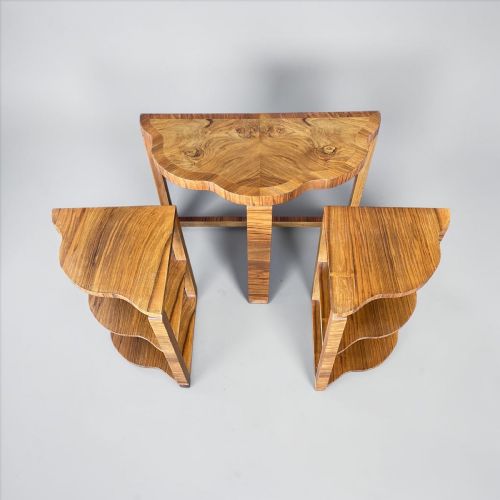
Cabinetmakers utilised dense timbers including mahogany, walnut, rosewood and satinwood, often pairing solid frames with fine veneers. Burr walnut and yew veneers frequently provide decorative tops with striking grain patterns.
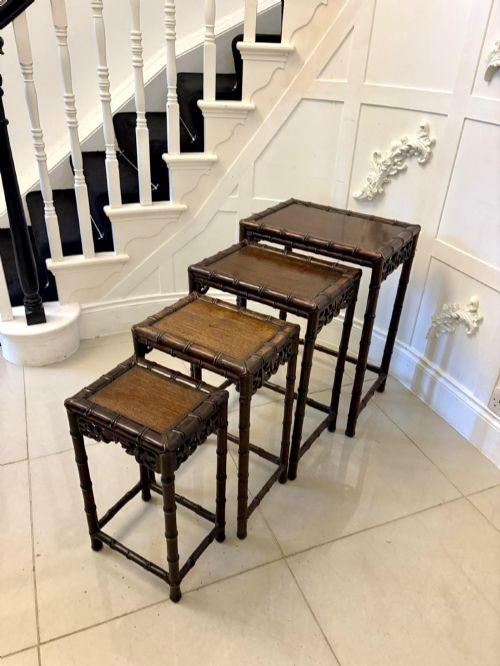
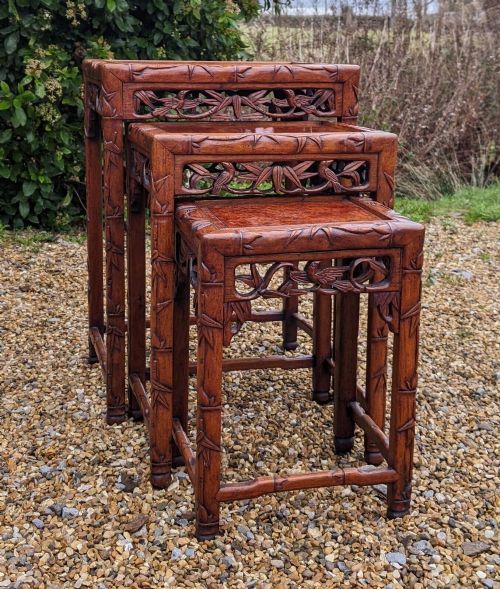
Inlaid decoration employs contrasting woods like boxwood, creating geometric or botanical motifs on table surfaces. Construction techniques range from traditional joinery to carved details such as faux bamboo or elephant reliefs.
Some 1920s teak tables feature hand-carved elephants marching around the rims, proving that occasional furniture once possessed a distinct sense of adventure.
What varies in quality
Quality rests in the precision of the graduated sizing, ensuring each smaller table slides smoothly into the frame above without binding or excess clearance. Superior sets maintain structural rigidity across all pieces despite their slender legs and minimal framework.
Material selection and decorative execution separate standard examples from finer works. The depth of grain in burr walnut or satinwood tops, coupled with crispness in boxwood stringing and inlay, distinguishes workshop execution.
Émile Gallé·Harry and Lou Epstein·Heal's
The Brown Nesting Tables Glossary
- Quartetto
- A set of four nesting tables. This term appears frequently in Edwardian and nineteenth-century cataloguing.
- Veneer
- A thin layer of decorative wood applied to a secondary timber base. Burr walnut and yew variations provide rich visual grain.
- Inlay
- Contrasting pieces of wood set into the surface to form patterns. Boxwood and satinwood commonly create these decorative borders.
- Faux bamboo
- Wood carved and painted to resemble natural bamboo stalks. This technique appears on nineteenth-century Orientalist pieces.
Brown Nesting Tables: Frequently Asked Questions
How were brown nesting tables used?
These tables served as versatile occasional furniture in nineteenth-century and Edwardian homes, pulled apart to hold tea cups, books or sewing materials. When guests departed, the smaller tables stacked beneath the largest one to save floor space.
Their modular design made them popular for entertaining in compact drawing rooms. Today, they function as flexible side tables beside armchairs or sofas.
What is a quartetto table set?
A quartetto set specifically comprises four tables designed to nest together in graduating sizes. This term was widely used by Edwardian and Victorian cabinetmakers.
These sets often feature inlaid mahogany or satinwood tops and slender legs built to clear the frame of the table below.
How do I date a set of nesting tables?
Dating relies on timber choices, construction methods and stylistic markers like inlay patterns or leg profiles. Edwardian and late Victorian pieces frequently feature mahogany with boxwood stringing, while 1920s and Art Deco examples show bolder walnut veneers or teak.
Earlier nineteenth-century versions often display heavier proportions or hand-carved details such as faux bamboo.
Are these tables sturdy enough for daily use?
Quality nesting tables are built with traditional joinery that provides remarkable stability despite their slender frames. The smaller tables are inherently light, but well-constructed sets handle regular daily placement without loosening.
Care should be taken with veneered surfaces by using coasters to prevent moisture marks.