
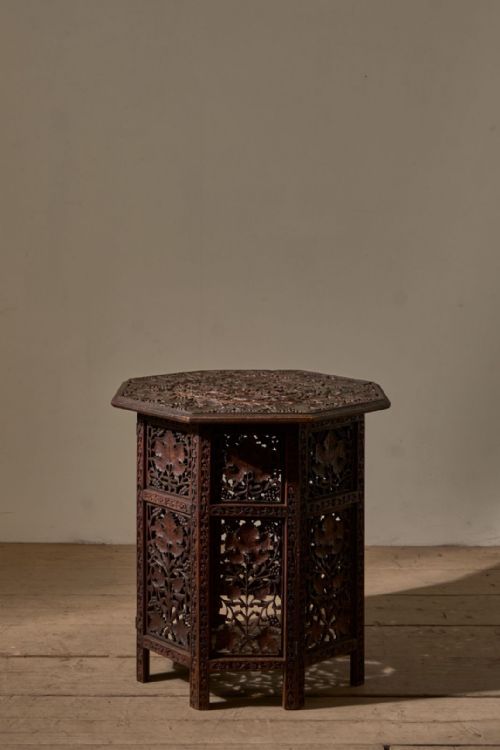


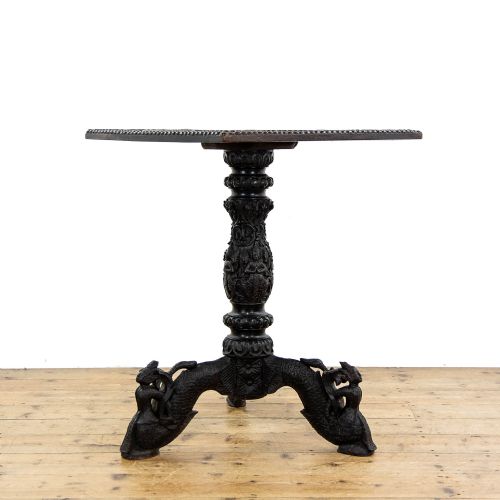


Exotic Wood Side Table
An exotic wood side table brings dense grain and global craftsmanship into a room.
Exotic Wood Side Table
An exotic wood side table encompasses a range of occasional furniture shaped from timbers sourced far from British shores, including padauk, rosewood, ebony, and palm wood. When exploring an exotic wood side table, collectors encounter forms from the eighteenth, nineteenth, and early twentieth centuries, spanning periods such as the Georgian era, the Victorian period, and the 1930s.
The styles found in this category reflect distant influences and colonial trade routes, taking shape as Anglo-Indian, Moorish Revival, Regency, and Art Deco designs. Common functional forms include square and oval occasional tables, work tables, bedside cupboards, console tables, and nests of three tables.
Makers and regions represented range from Hoshiarpur and Ceylon to Jamaica, Burma, and New Zealand, alongside specific workshops like Ralph Turnbull. These pieces utilise rich parquetry, marquetry, brass inlay, and heavy carving to display the natural diversity of foreign timbers.
How they were made
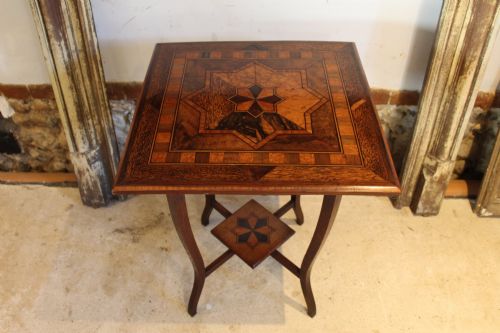
Cabinetmakers constructed these tables using dense tropical hardwoods such as padauk, rosewood, and ebony, often combining them with native secondary timbers. Surface decoration relied heavily on marquetry, parquetry, and specimen wood inlay to display contrasting grains and natural colours.
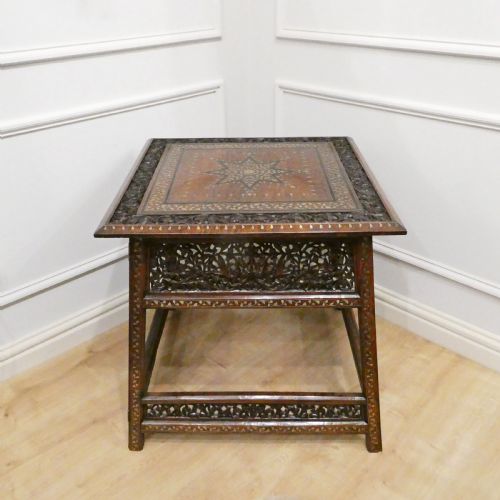
Many examples incorporate intricate hand-carved leaf and floral designs, alongside specialised techniques like brass wire inlay seen in Hoshiarpur work. Structural joinery varied from traditional British framing in Regency and George III pieces to specialised regional joinery found in Anglo-Indian and Colonial workshops.
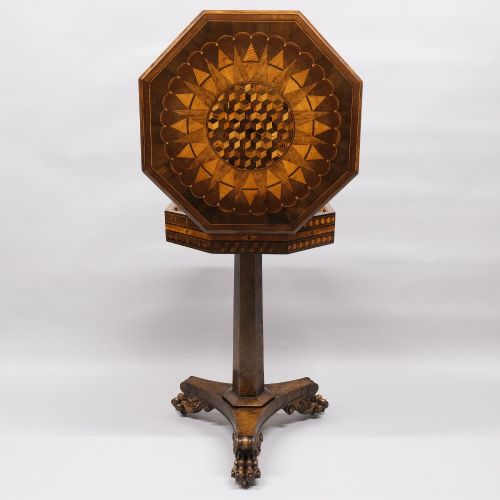
Elephant forms and twelve-sided specimen tops prove that nineteenth-century artisans occasionally let their imaginations run completely wild with foreign timber.
What varies in quality
The standard of an exotic wood side table depends upon the ambition of the timber selection and the precision of the inlay work. Tables that integrate multiple specimen woods or complex parquetry demonstrate greater technical skill than plain veneered surfaces.
Carving depth and sharpness separate standard regional pieces from exceptional examples, particularly in heavily decorated Burmese or Anglo-Indian furniture. The integrity of the structure and the retention of the original surface finish dictate the enduring character of the piece.
Ralph Turnbull
The Exotic Wood Side Table Glossary
- Parquetry
- A geometric mosaic of wood pieces used for floors and furniture tops. It creates repeating patterns using contrasting timbers.
- Marquetry
- Decorative veneer applied to a wooden structure to form pictures or decorative designs. Craftsmen use various coloured woods and shell to build the pattern.
- Padauk
- A heavy, durable tropical hardwood with a reddish-orange hue that darkens with age. It is frequently found in nineteenth-century Anglo-Indian furniture.
- Specimen wood
- Pieces of furniture constructed from or inlaid with numerous different timber species, often collected from various global regions. The top usually displays the distinct natural colours and grain patterns of each wood.
- Work table
- A small table designed for needlework or sewing, typically fitted with compartments, drawers, or a fabric bag underneath. These tables gained popularity during the Georgian and Victorian periods.
Exotic Wood Side Table: Frequently Asked Questions
Where were exotic wood side tables made?
These tables originated in diverse regions connected through trade and colonial history, including India, Ceylon, Jamaica, Burma, and New Zealand, as well as domestic British workshops utilising imported timber.
Craftsmen in specific centres like Hoshiarpur developed distinct traditions of brass inlay and carving that separate their output from European-made Regency or Victorian pieces.
How do I care for an exotic wood table?
Protect the timber by keeping the table away from direct heat sources and strong sunlight, which can fade rich grains and dry out older finishes.
Dust gently with a soft, dry cloth and avoid modern silicone polishes that build up a film over the historic surface.
What is specimen wood inlay?
Specimen wood inlay involves arranging numerous distinct varieties of timber to form decorative patterns, tabletop mosaics, or geometric borders.
This technique allows makers to showcase the natural contrasts in colour and grain found across different global tree species.
How do I identify an Anglo-Indian table?
Anglo-Indian tables typically feature heavy carving, dense tropical hardwoods like padauk or ebony, and intricate floral or leaf motifs.
They combine British furniture forms with local carving techniques and imported materials characteristic of nineteenth-century production.