




1930s Rosewood Tables
These 1930s rosewood tables bring rich grain and striking geometric forms into a room, offering both practical surfaces and strong period character.
1930s Rosewood Tables
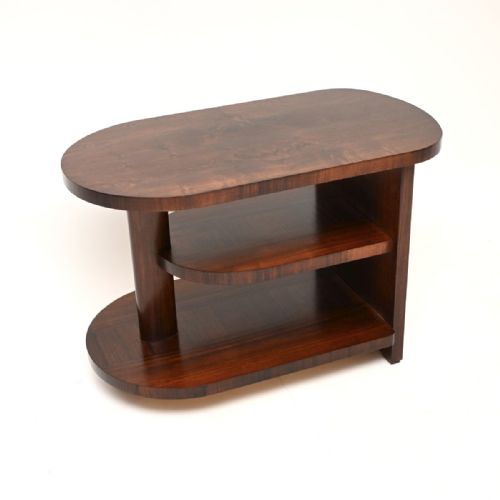
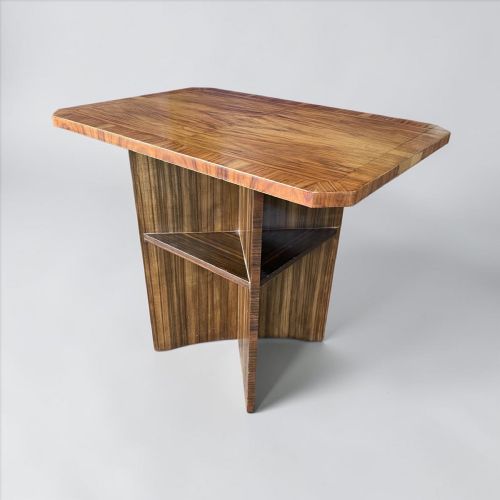
When searching for 1930s rosewood tables, you encounter pieces defined primarily by the distinctive aesthetic of the interwar period, notably Art Deco and French Art Deco designs. These items serve as functional furniture such as side tables, coffee tables, nests of tables, desks, and extending dining tables.
What varies in quality
Quality in these tables rests largely on the choice and handling of veneer, particularly how symmetrical and visually engaging the rosewood grain appears across the tabletop. Superior examples display thoughtful timber matching and seamless integration of secondary woods like birds eye maple or metal trims.
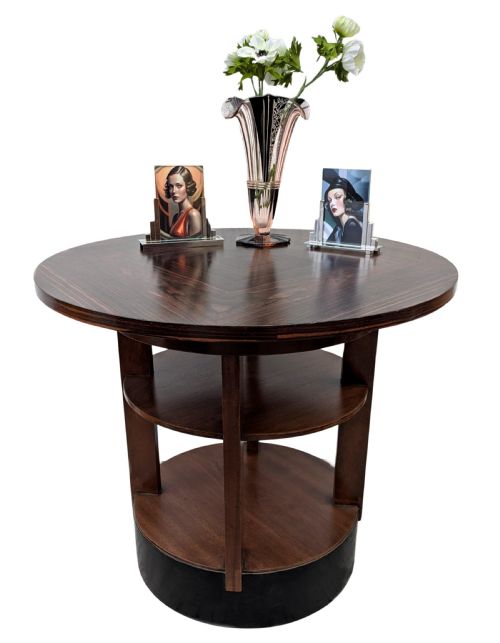
Structural integrity also separates standard items from exceptional ones, especially in complex forms like nests of tables, extending mechanisms, or multi-tiered centre tables. The precision of the joinery and the preservation of original contrasting materials dictate the overall standing of each piece.
The furniture forms shown span several practical types, including coffee tables, nests, desks, and extending dining tables.
Maurice Dufrene
The 1930s Rosewood Tables Glossary
- Art Deco
- A design style characterised by sleek geometric shapes, stylised motifs, and modern materials that dominated the interwar period. It influences the clean lines and striking silhouettes seen in furniture from this era.
- Veneer
- A thin slice of superior wood applied over a base of cheaper hardwood or oak to create decorative surfaces. This technique allowed cabinet makers to display rich rosewood grain patterns affordably.
- Nesting tables
- A set of graduated tables designed to fit neatly beneath one another when not in use. They provide space-saving functionality without sacrificing surface area.
- Birds eye maple
- A figured timber showing small, swirling circles resembling tiny eyes across the grain. It often contrasts sharply against darker rosewood in Art Deco designs.
- Tiered centre table
- A freestanding piece featuring multiple levels supported by columns or panels. It offers layered display space while anchoring the middle of a room.
1930s Rosewood Tables: Frequently Asked Questions
How do I use a nest of tables?
These sets tuck compactly together against a wall or beside a chair until guests arrive, at which point you separate them to hold drinks or books.
Their modular design makes them particularly useful in smaller sitting rooms where permanent surface space is limited.
Are these tables suitable for daily use?
Most examples function well for everyday tasks such as holding lamps, cups, or writing materials, provided you treat the veneered surfaces with care.
Using coasters and placemats helps protect the polished rosewood and contrasting maple or oak finishes from moisture and heat.
How do I identify Art Deco furniture?
Look for symmetrical geometries, stepped outlines, and clean architectural forms that avoid excessive carving in favour of smooth, polished surfaces.
The juxtaposition of dark rosewood with pale woods like birds eye maple or metallic accents is also a strong indicator of the style.
Where should I place an occasional table?
Occasional tables fit naturally beside armchairs, in hallways, or as landing spots for lighting and decorative objects within a living space.
Their compact scale allows them to move easily between rooms depending on your daily seating arrangements.