


Rosewood Stackable Tables
Rosewood stackable tables are compact nests of occasional tables designed to fit together, offering versatile surfaces that stow away neatly when floor space matters.
Rosewood Stackable Tables
When you search for rosewood stackable tables, you are looking at nests of tables configured to slide beneath one another in a graduated series. These pieces combine utility with space-saving cleverness, serving as tea tables, lamp stands, or auxiliary surfaces in a principal room.
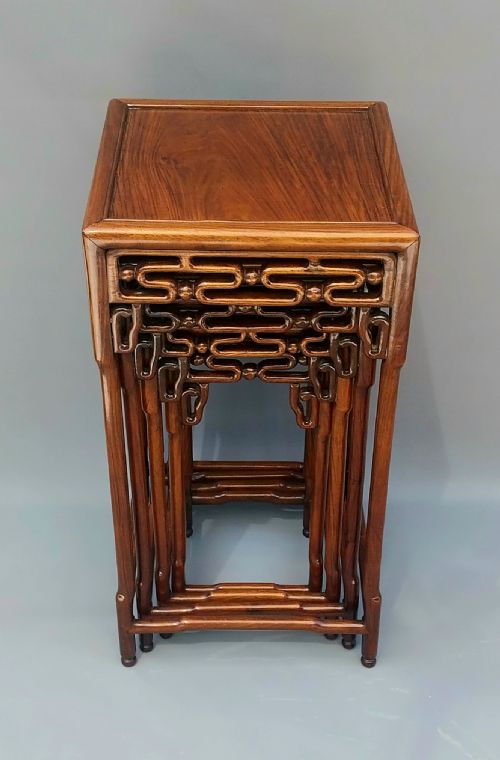
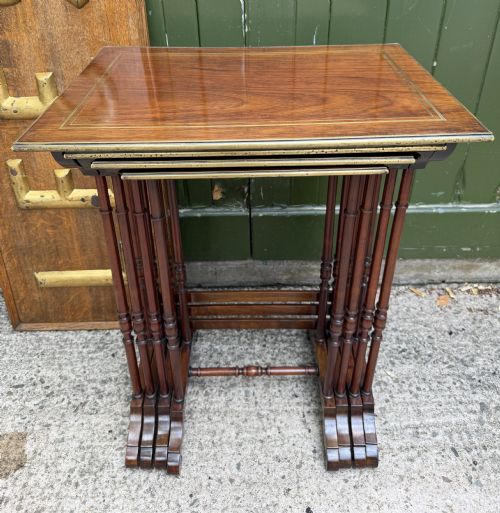
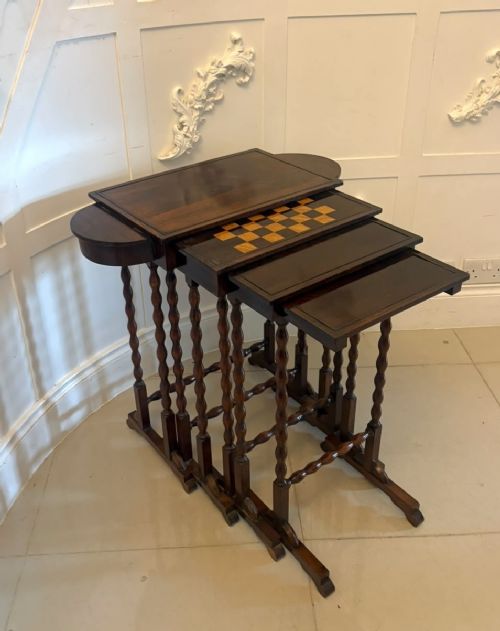
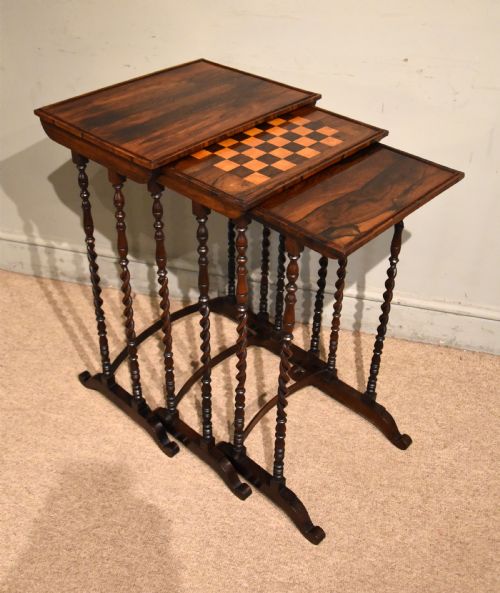
You will most commonly meet Regency period examples in British styles with brass inlay or simulated grain, alongside Chinese export hardwood pieces from the nineteenth century. Sets range from three to four graduated tables, often featuring carved details or integrated chess boards.
How they were made
Cabinetmakers utilised dense timbers like rosewood, hardwood, and hongmu, selecting materials that could withstand the structural demands of slender legs and thin tops. In some Regency pieces, satinwood and boxwood provide contrasting stringing or inlay work.
Joinery techniques focused on creating rigid frames for the largest table while maintaining precise clearance tolerances so smaller tables could slide smoothly into position. Carved decoration on Chinese export pieces and brass inlay on Regency examples display high levels of manual dexterity.
Listings feature nineteenth-century Regency pieces alongside Chinese Qing style hardwood tables and Art Deco Indian rosewood sets.
What varies in quality
Quality separates pieces through the precision of the nesting mechanism and the stability of the frame joints across all tables in the set. Finer examples maintain structural integrity without sagging or binding as each table slides into its designated space.
The selection and grain pattern of the rosewood timber, together with the crispness of brass inlay or hand-carved motifs, dictate the standing of an individual set. Tables retaining their original surface finish and proportioned balance sit firmly at the top of the range.
The Rosewood Stackable Tables Glossary
- Quartetto
- A set of four nesting tables. This term was frequently used during the Regency period to describe graduated tables designed to slide one beneath another.
- Hongmu
- A traditional Chinese term for dense hardwoods, often translated as red wood. It encompasses several heavy timber species including types of rosewood utilised in export furniture.
- Faux rosewood
- Simulated rosewood grain painted or stained onto a less costly timber base. Cabinetmakers employed this technique during the nineteenth century to achieve an expensive look economically.
- Stringing
- Thin inlay of contrasting wood or metal set flush into the surface of a table top. It creates delicate linear borders characteristic of Regency design.
Rosewood Stackable Tables: Frequently Asked Questions
What is a quartetto nest?
A quartetto nest consists of four tables that graduate in size to fit neatly beneath the largest one. This format gained popularity during the Regency period for serving tea or holding small objects.
Cabinetmakers designed these sets to occupy minimal floor space while providing multiple surfaces when entertaining guests.
How do I identify Regency tables?
Regency tables often feature distinctive elements such as brass inlay, slender turned legs, and rich rosewood veneers. British examples from this era balance classical proportions with practical nesting capabilities.
Look for fine stringing details and the characteristic graduated sizing that allows the set to stack compactly.
Were these tables used for chess?
Certain specialised nests incorporate a chess board integrated directly into the top of the largest table. This dual-purpose design allowed owners to enjoy a game before sliding the remaining tables away.
Such pieces combine standard occasional table utility with gaming functions suited to nineteenth-century parlours.
What is Chinese export rosewood?
Chinese export rosewood and hongmu pieces were manufactured in China specifically for Western markets during the nineteenth century. These tables frequently feature intricate carved decoration and robust hardwood construction.
They represent a distinct aesthetic tradition compared to contemporary British Regency designs while serving the same practical nesting function.