




Wooden Stacking Side Tables
These wooden stacking side tables offer a practical surface when pulled out and tuck away neatly together when floor space matters.
Wooden Stacking Side Tables
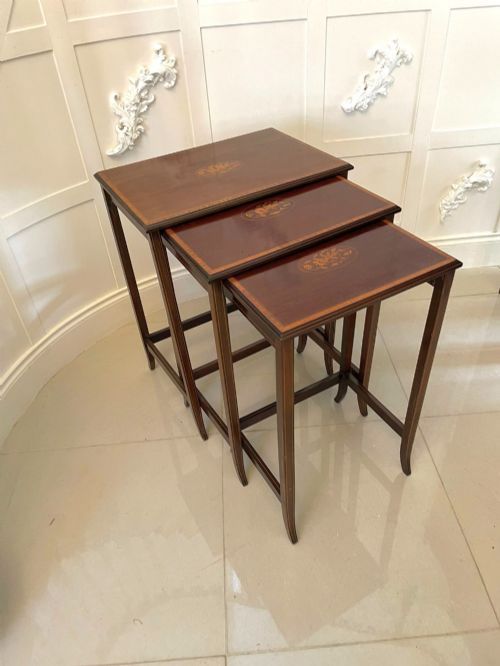
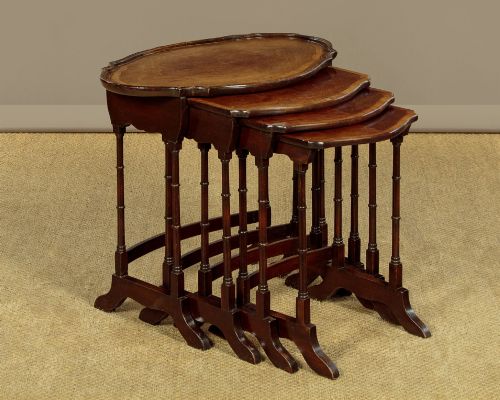
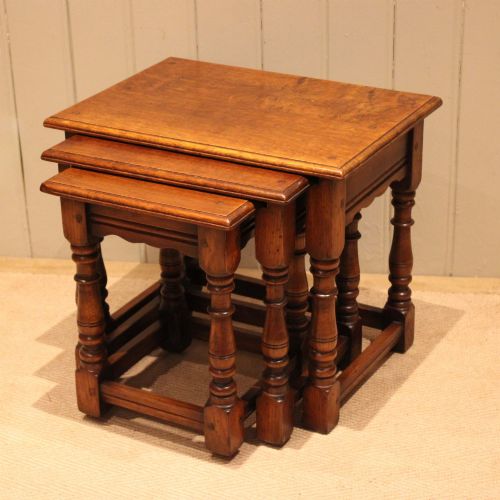
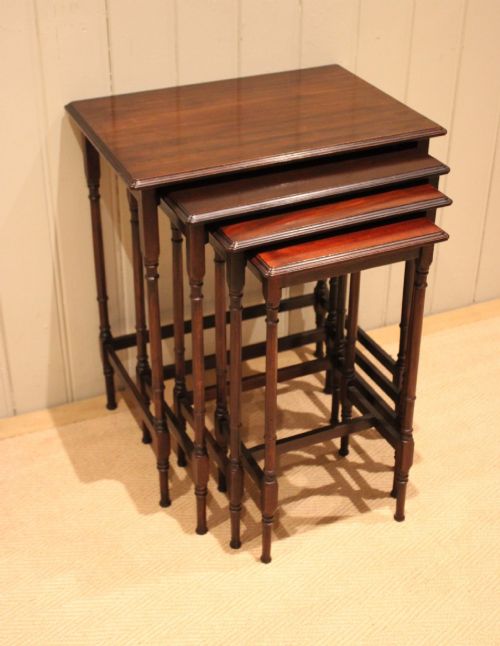
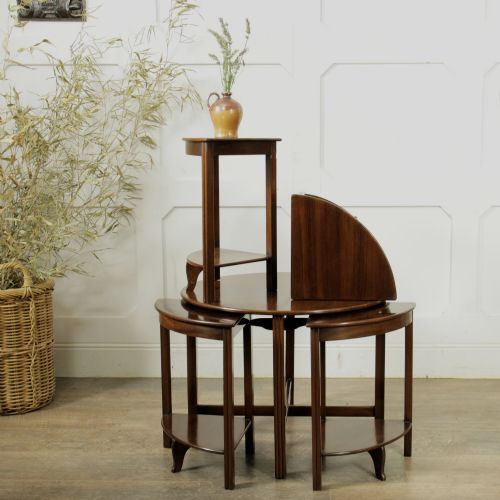
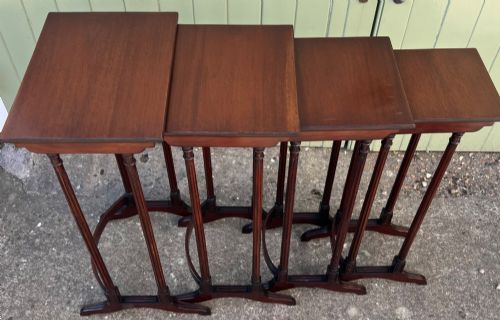
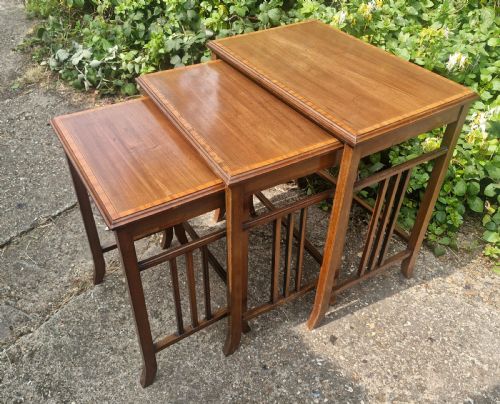
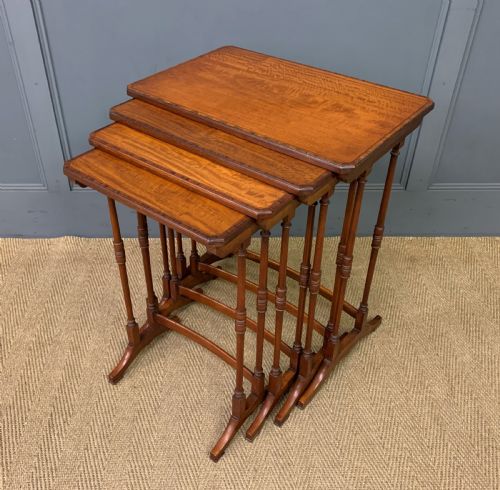
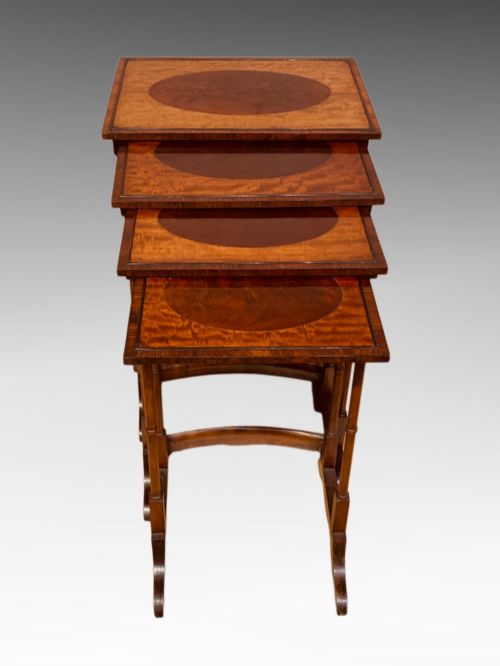
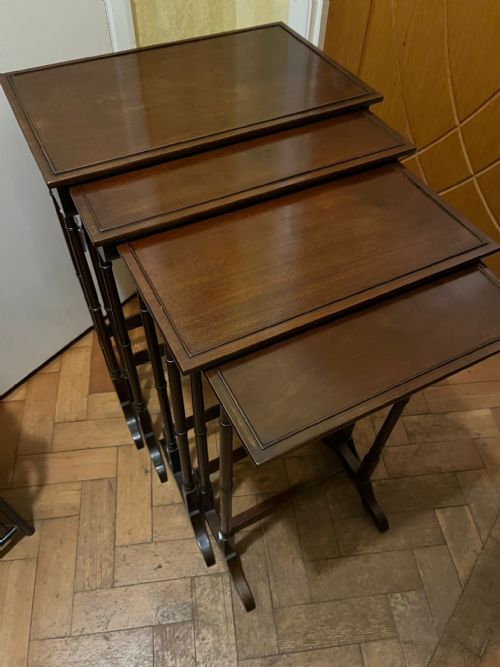
When you search for wooden stacking side tables, you encounter sets of graduating surfaces designed to slide beneath one another for compact storage. These pieces appear in forms such as nests of tables and quartetto sets, featuring three, four, or five tables of descending sizes.
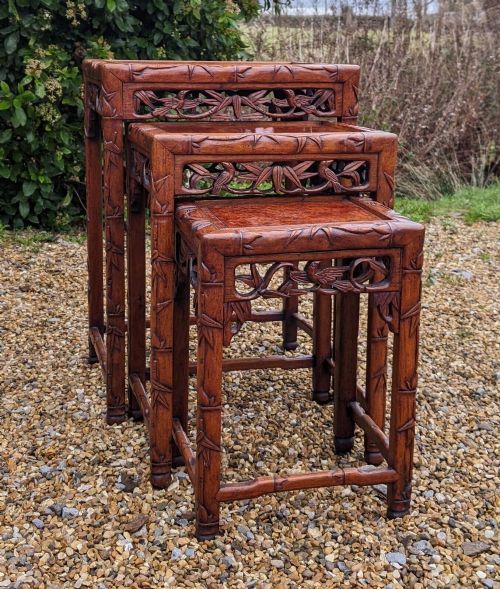
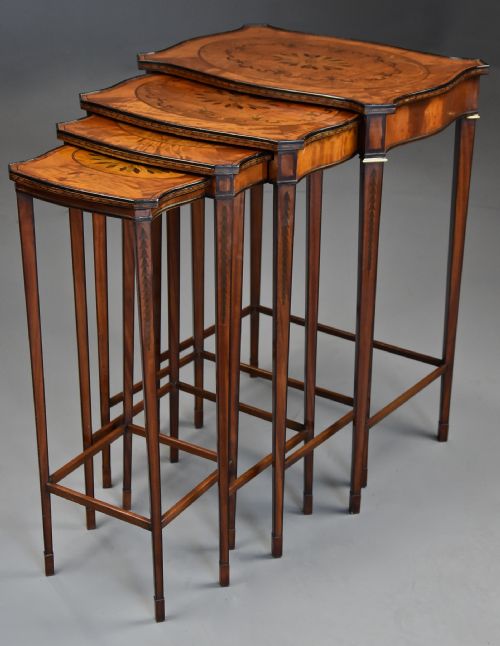
The selections span periods from the Victorian era and the Edwardian years through to the 1920s and 1930s. Styles range from plain English country and Jacobean revival to Sheraton style, Chinese Qing Dynasty style, and Art Deco designs.
Mahogany forms the most common timber, often accompanied by satinwood, walnut, oak, rosewood, and other oriental hardwoods. You find circular tops, serpentine forms, shaped tops, and variations fitted with yew veneer, satinwood inlay, or embossed leather.
Materials and construction
Cabinetmakers constructed these tables primarily using solid timbers and decorative veneers such as mahogany, walnut, oak, and satinwood. Workshops applied intricate techniques including satinwood inlay, brass inlay, and carved chinoiserie details to enrich the surfaces.
The smaller tables in a set were engineered with precise dimensions so each piece slides smoothly into the frame of the next. Craftsmen shaped tops into circular, square, or serpentine profiles while maintaining structural stability across the graduating sizes.
Some sets tuck away up to five tables into a footprint scarcely larger than a single occasional stool.
Judgments of quality
Quality rests on the crispness of the joinery and the selection of figured timber for the tops. Sets featuring finely matched grain patterns, precise inlay work, and robust leg framing stand apart from utilitarian examples.
The integrity of the nesting mechanism dictates how smoothly the tables glide into position without binding. Finer examples display meticulous attention to proportion, ensuring the smallest table maintains the same grace as the largest.
Heal's
The Wooden Stacking Side Tables Glossary
- Quartetto
- A matched set of four stacking tables designed to fit together. Cabinetmakers frequently utilised this term in the Edwardian period.
- Nest of tables
- A group of graduating occasional tables that stack inside one another. This form saves space in sitting rooms and parlours.
- Satinwood inlay
- Contrasting blonde timber inserted into a darker primary wood to create decorative borders. This technique frequently defines Edwardian and Sheraton style pieces.
- Chinoiserie
- European decorative motifs inspired by Chinese artistic traditions. These carved or painted designs appear on selected 20th century pieces.
Wooden Stacking Side Tables: Frequently Asked Questions
How were stacking tables used?
These tables served as versatile occasional surfaces for tea, books, or lamps in Victorian and Edwardian sitting rooms. Owners kept them stacked against a wall and pulled them out individually when visitors arrived.
Their modular nature meant servants or family members could quickly rearrange a room to suit different social gatherings. Once the occasion ended, the smaller tables slid back into the main frame to clear the floor.
How do I care for wooden nesting tables?
Keep these tables away from direct sunlight and heat sources to prevent the timber veneers from drying and cracking. Regular dusting with a soft, dry cloth preserves the polished finish of the mahogany or walnut.
Lift each table rather than sliding one across another to protect the polished surfaces and inlay work from unnecessary friction. Use coasters to shield the wood from moisture.
How can I tell an Edwardian set from a Victorian one?
Victorian sets tend to feature heavier proportions, dense figured mahogany, and robust turnings reflecting mid to late 19th-century tastes. Edwardian examples often display lighter frames, satinwood stringing, and delicate Sheraton style influences.
Many Edwardian pieces incorporate serpentine tops and refined inlay work, whereas earlier Victorian iterations prioritise solid timber substance. Examining the interior framework and secondary woods helps confirm the period of manufacture.
What is a quartetto set?
A quartetto set specifically consists of four graduating tables engineered to stack tightly together. This term appears frequently in Edwardian trade descriptions and late 19th-century cabinetmaking.
The set decreases incrementally in height and width so each piece disappears beneath the one preceding it. This arrangement provides maximum surface area while occupying the footprint of a single small table.