
Antique Wood Display Table
An antique wood display table brings together domestic utility and the quiet pleasure of showing treasured small items.
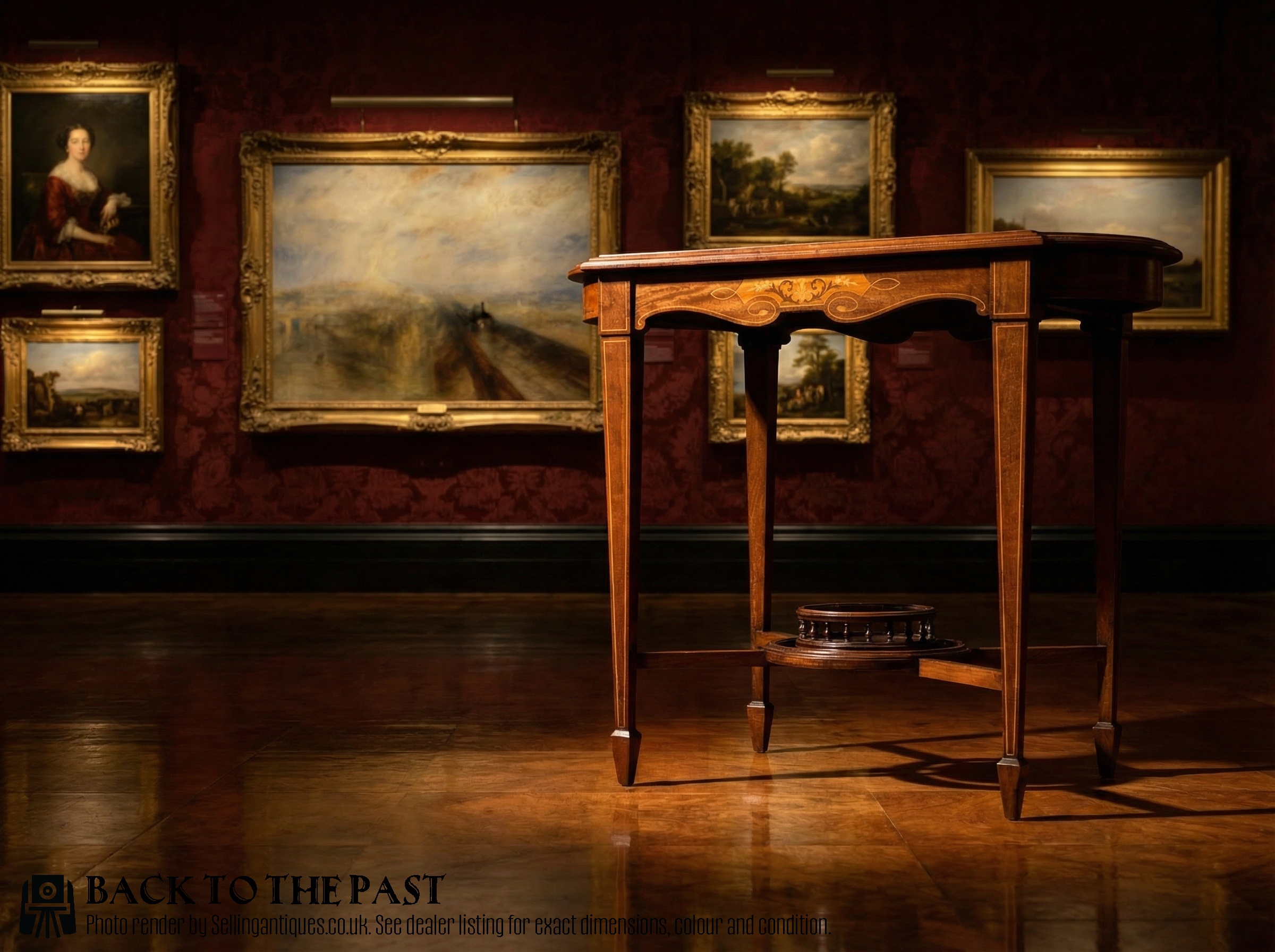
Antique Wood Display Table
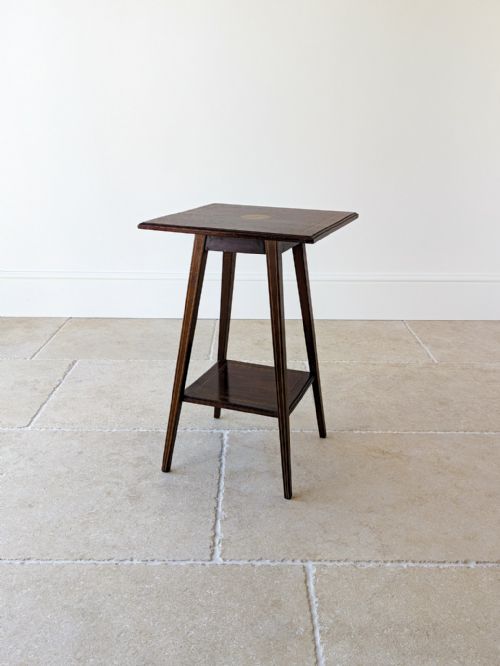
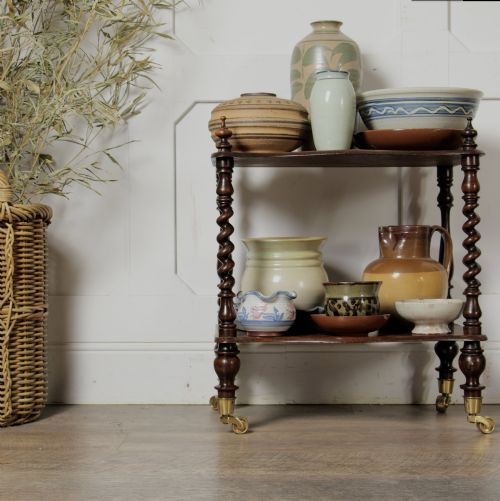
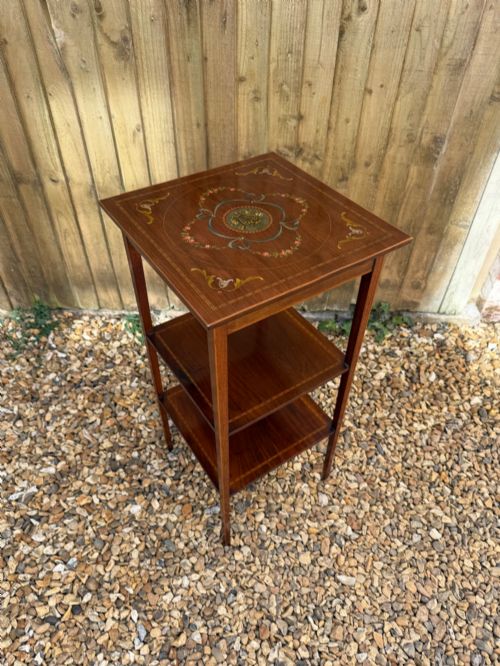
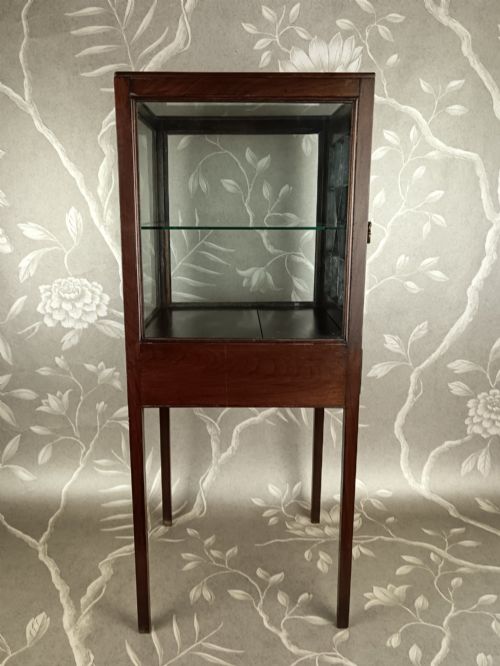
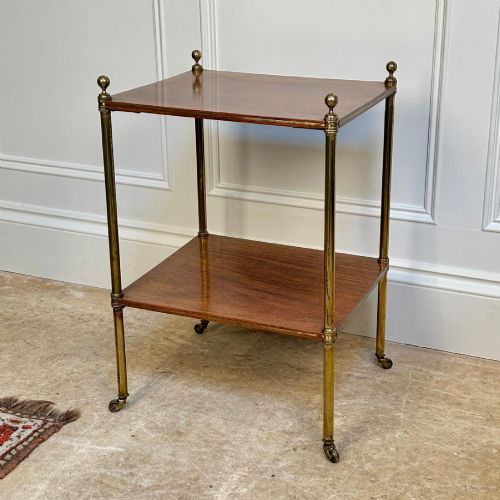
When you search for an antique wood display table, you encounter forms designed specifically to raise and protect precious objects, from jewellery and curiosities to botanical specimens and silk embroidery. These pieces range from dedicated bijouterie tables with glazed tops to tiered etageres, plant stands, and occasional tables adapted for exhibition.
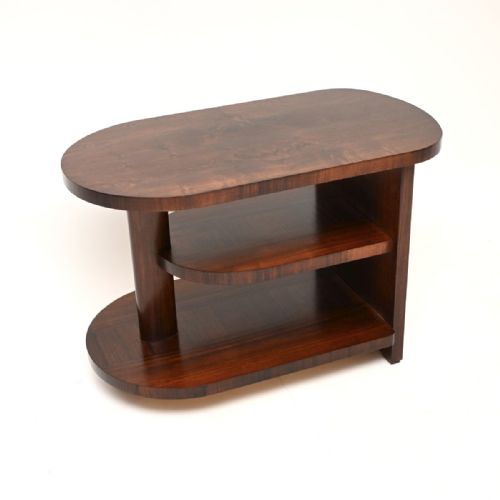
The Edwardian and Victorian eras dominate the selection, alongside pieces reaching back into the Georgian and Regency periods. Mahogany, rosewood, and satinwood provide the primary timber foundations, often elevated on slender legs or pedestals suited to compact domestic spaces.
Materials and construction methods
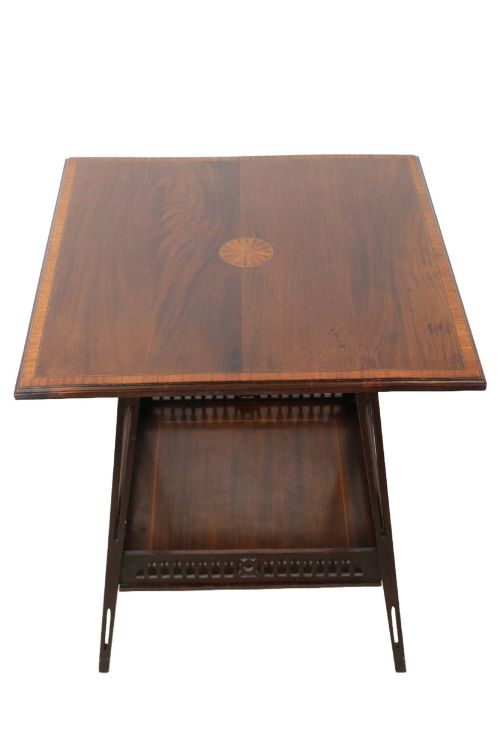
Cabinet makers relied heavily on dense tropical hardwoods like mahogany and rosewood, frequently incorporating contrasting lighter timbers such as satinwood for intricate marquetry and inlay work. Glass panels, fitted into hinged or lift-off frames, protect the contents while brass mounts, gilt metal, and occasionally marble tops add structural weight and visual contrast.
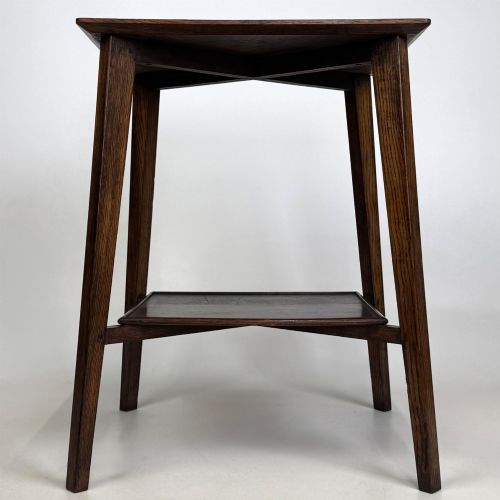
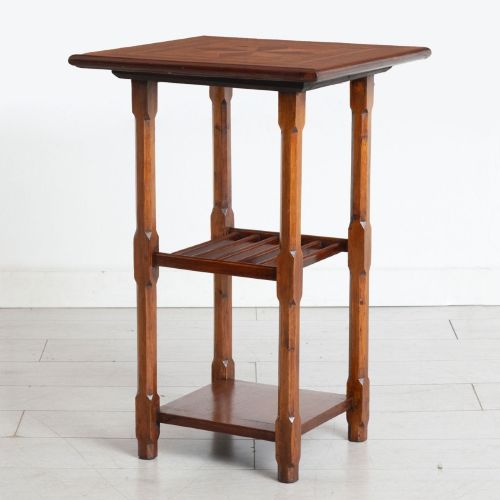
Joinery methods reflect the period of origin, utilising precise dovetailing for drawers and mortise-and-tenon joints for frames and stands. Turning, carving, and ebonising appear across various styles, from French Rococo Revival curves to clean-lined Arts and Crafts frameworks.
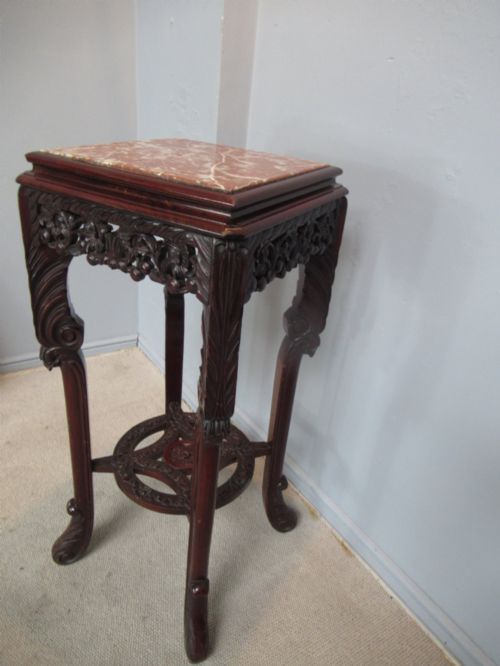
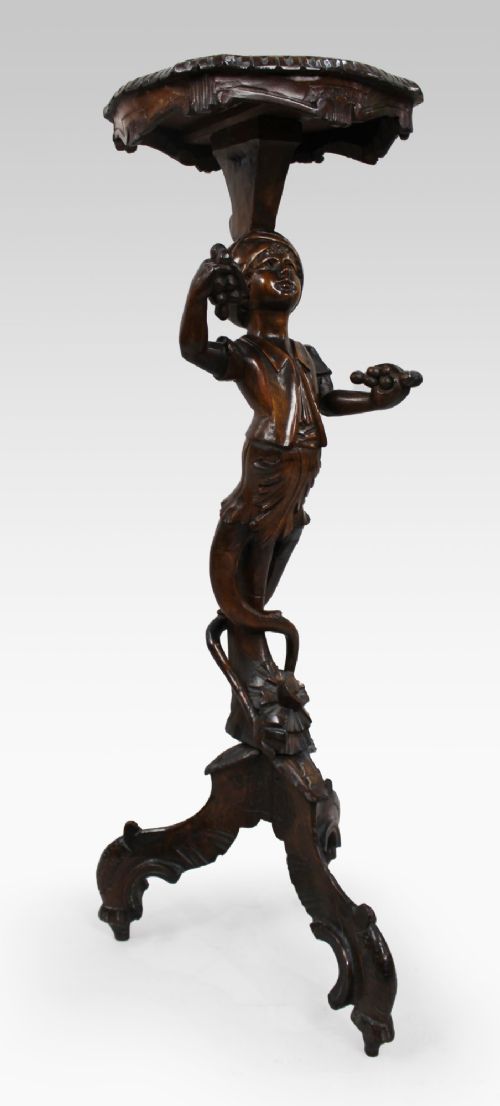
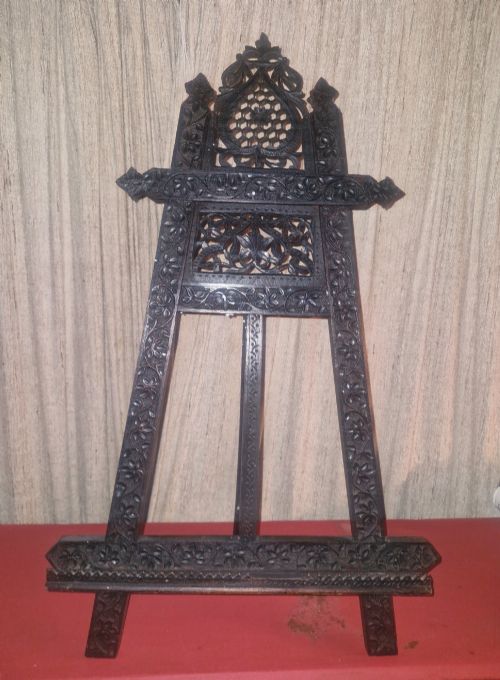
Materials range from traditional mahogany and walnut to exotic kingwood, marble, brass, and hand-carved oriental hardwoods.
Judging the quality of construction
Quality reveals itself in the crispness of the inlay and the precision with which decorative brass mounts or gilt metal fittings integrate into the wooden frame. Finer examples display meticulous grain matching, particularly on serpentine or kidney-shaped tops where timber movement demands exceptional skill from the maker.
The integrity of the glass framing and the smooth operation of hinged display compartments indicate the original standard of workshop production. Heavier architectural elements, such as marble inserts or multi-tiered structures, rely on sound internal framing to maintain stability without appearing cumbersome.
Trevor Page & Co·Liberty of London·Edwards & Roberts
The Antique Wood Display Table Glossary
- Bijouterie table
- A glass-topped table specifically designed for displaying small valuables, medals, or jewellery within a shallow, lined compartment. These pieces often feature hinged lids.
- Etagere
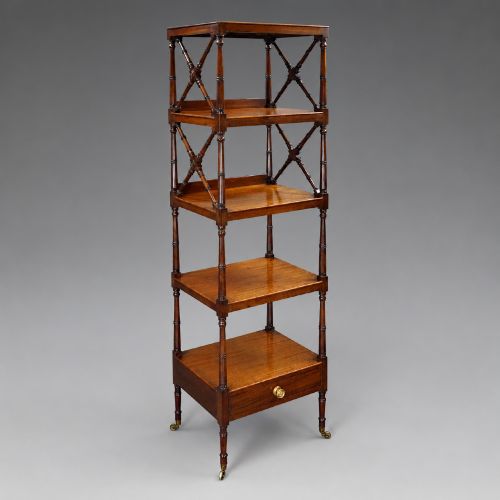
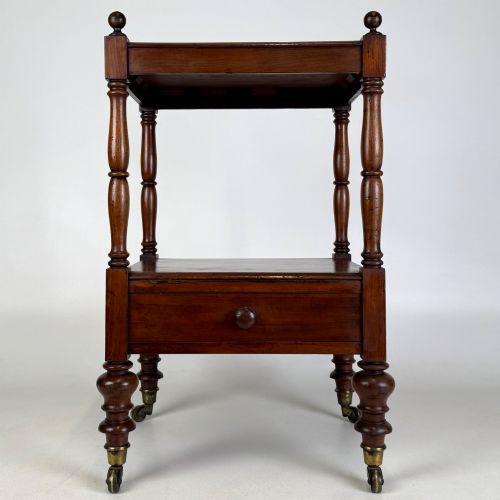
- A set of open shelves or tiers supported by slender pillars, used for displaying ornaments and small decorative objects. They appear in corner, freestanding, and wall-mounted formats.
- Marquetry
- Decorative veneer work created by fitting together thin pieces of wood, shell, or ivory to form pictorial or geometric patterns on a wooden surface.
- Whatnot
- A multi-shelved piece of freestanding furniture used for the storage and display of ornaments, books, or curiosities. First appearing in the Georgian period, they gained immense popularity through the Victorian era.
- Vitrine
- A glass-fronted cabinet or display case designed to protect delicate porcelain, glassware, or curiosities from dust while offering maximum visibility.
Antique Wood Display Table: Frequently Asked Questions
What is a bijouterie table?
A bijouterie table is a specialised display piece featuring a glazed top and a shallow, velvet-lined interior compartment. It allows collectors to exhibit rings, coins, and small curiosities while keeping them secure under glass.
These tables became particularly fashionable during the Victorian and Edwardian periods, serving both as functional furniture and as intimate conversation pieces in drawing rooms.
How do I tell a Georgian table from a Victorian one?
Georgian pieces generally show restrained classical proportions, solid construction in timbers like mahogany, and subtle carving or simpler inlay work. Victorian and later revival pieces often embrace heavier ornamentation, exotic veneers, and more complex multi-tiered or serpentine silhouettes.
Examining the secondary woods used for drawer linings and interior framing also helps determine the exact period of manufacture.
Where should I place an etagere?
An etagere works best against a freestanding wall or in a corner where light can strike its multiple shelves from several angles. Because these tiered stands are open on all sides, they suit spaces where you want to add vertical height without blocking the field of vision.
Ensure the floor is level, as taller etageres and plant stands benefit from stable placement away from heavy foot traffic.
Can I use a display table for daily use?
Display tables function well for everyday items if you choose robust hardwood forms like occasional tables or sturdy side stands. Glazed bijouterie tables and delicate satinwood pieces require a gentler touch, making them better suited for static display rather than heavy handling.
Keeping these tables away from direct sunlight and drastic temperature changes protects both the wood veneers and the historic glass.