


Marquetry Undertier Side Table
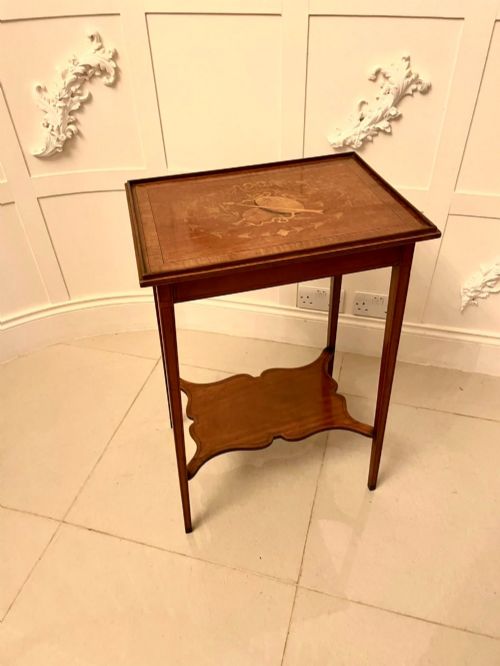
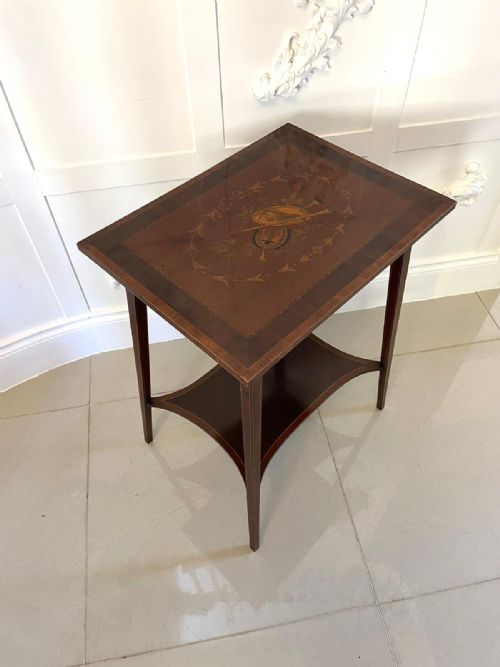
These marquetry undertier side table pieces combine refined timber surfaces with a lower shelf, offering both display space and decorative floral inlay.
Marquetry Undertier Side Table
A marquetry undertier side table is a compact surface designed for lamps, games, or general occasional use, distinguished by a lower shelf or undertier beneath the main top. The pieces found here span the Victorian, Edwardian, and early twentieth-century periods, showing forms such as occasional tables, lamp tables, centre tables, and console tables.
Buyers frequently encounter Edwardian examples alongside Victorian pieces, with shapes ranging from rectangular and oval to kidney-shaped and shaped centre tables. Styles stretch from Sheraton Revival and Louis XVI Revival to Rococo Revival and Art Nouveau, reflecting the decorative tastes of the nineteenth and early twentieth centuries.
How They Were Made
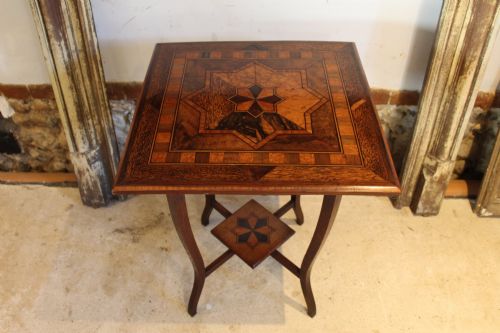
Cabinet makers utilised a foundation of mahogany, rosewood, or satinwood, applying finely sliced veneers and contrasting timbers to form intricate marquetry and inlay work. Boxwood lines and specimen woods provide detail and border definition across the tops and undertiers.
Details such as brass fittings and painted decoration appear on select examples, while structural elements like shaped legs support the lower shelf and main surface.
Tables occasionally hide games beneath their decorative surfaces, ready for unexpected evening entertainment.
What Varies in Quality
The sophistication of the marquetry and the choice of primary timbers set examples apart, ranging from simple mahogany surfaces to elaborate West Indian specimen wood designs. The precision of the inlay, the complexity of the table shape such as kidney or shaped centre formats, and the integration of the undertier determine the distinction of each piece.
Cabinet work finesse and the presence of maker details or revival styling influence the overall character, distinguishing standard production from exceptional examples.
Howard & Son's·Haentgos Freres, Paris
The Marquetry Undertier Side Table Glossary
- Undertier
- A lower shelf positioned beneath the main top of a table, providing additional surface space. This tier is often supported by the lower stretchers or legs.
- Marquetry
- Decorative veneer work arranged in pictorial or geometric patterns using various coloured woods. Craftsmen assemble these thin wood pieces to create detailed surface designs.
- Satinwood
- A durable, lustrous timber with a yellowish sheen, frequently utilised for fine furniture surfaces and inlay. It provides a bright contrast against darker woods like mahogany and rosewood.
- Sheraton Revival
- A late nineteenth and early twentieth-century design style inspired by eighteenth-century neoclassical furniture. It incorporates graceful proportions, satinwood, and delicate inlay.
- Occasional table
- A small, versatile table intended for flexible placement and use around a room. These pieces serve functions ranging from lamp placement to games.
Marquetry Undertier Side Table: Frequently Asked Questions
What is an undertier side table?
An undertier side table is a compact surface featuring a secondary shelf positioned below the main top. This lower tier provides extra room for display or storage.
These pieces function well as lamp tables or occasional surfaces in living spaces.
How do I date an inlaid table?
Dating relies on timber choices, revival styles, and construction techniques recorded across Victorian and Edwardian periods. Stylistic cues like Sheraton Revival or Art Nouveau motifs help narrow the timeline.
Examining the underlying woods and veneer methods also clarifies the era of production.
Where should I place a marquetry table?
These tables suit placement beside seating areas as lamp or occasional surfaces where the decorated top remains visible. The compact footprint allows them to fit easily into smaller rooms.
Keep them away from direct heat sources to protect the delicate wood veneers and marquetry.
What woods are used in these tables?
Cabinet makers utilised mahogany, rosewood, and satinwood as primary timbers, enhanced with boxwood and specimen wood inlay. Marquetry panels combine multiple contrasting woods to form decorative patterns.
Brass elements and painted decoration sometimes complement the primary timber surfaces.