





Victorian Marquetry End Table
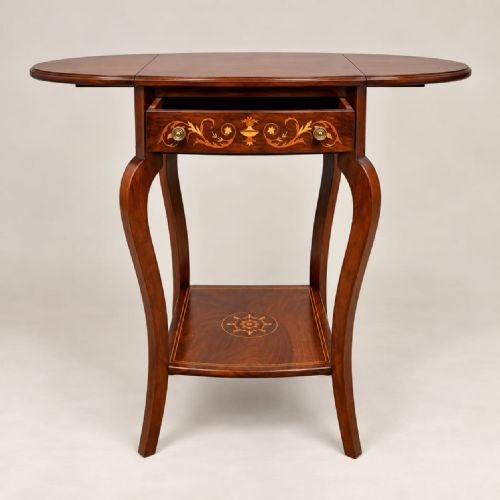
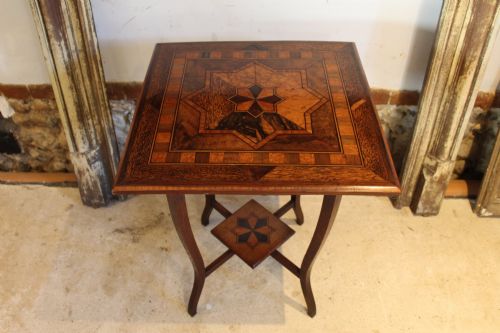
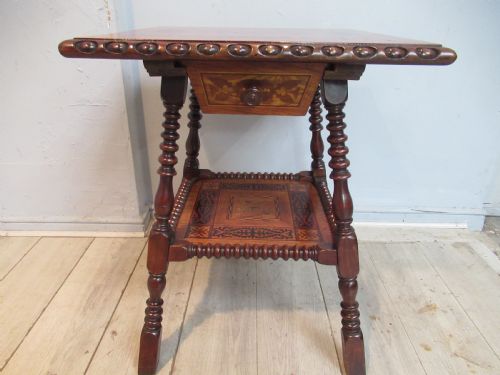
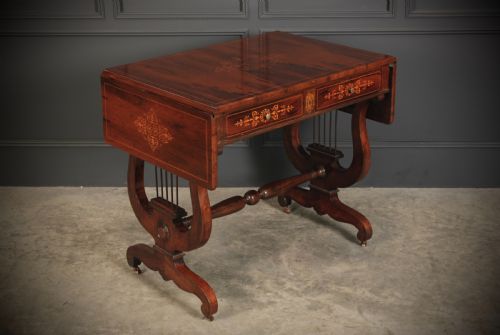
These Victorian marquetry end tables bring intricate wood inlay and rich timbers into a room, offering both a surface for display and a piece of historical craftsmanship.
Victorian Marquetry End Table
A Victorian marquetry end table combines the practical needs of nineteenth-century sitting rooms with decorative surface work. Buyers searching for a victorian marquetry end table encounter forms such as side tables, occasional tables, sofa tables, and games tables.
The pieces on this page span the nineteenth century, including specific dates like eighteen-fifty, eighteen-seventy, eighteen-eighty, and eighteen-ninety. They originate from British workshops as well as continental sources including Italian and French traditions.
Most examples rely on dense timbers such as rosewood, mahogany, walnut, and satinwood. These woods provide a dark or warm ground against which lighter inlaid details stand out clearly.
How they were made
Cabinet makers utilised solid woods and veneers, building structural frames in rosewood, mahogany, walnut, or satinwood. Tops were prepared to receive detailed surface decoration using contrasting timbers and specimen woods.
Wood inlay and marquetry techniques involved cutting precise patterns from thin sheets of veneer and fitting them into a prepared ground. Brass details and drop-leaf mechanisms added functional complexity to specific side and occasional table forms.
Some tables double as game boards with inlaid chess squares, proving nineteenth-century furniture could handle both tea and a tactical battle.
What varies in quality
The precision and complexity of the marquetry inlay set individual pieces apart. Finer examples display intricate pictorial or geometric arrangements using a wide variety of specimen woods, whilst simpler pieces rely on basic border banding.
The choice of primary timber also dictates the tier of the piece. Dense woods like burr walnut, satinwood, and figured rosewood demand greater skill in selection and preparation than standard mahogany or general hardwoods.
The Victorian Marquetry End Table Glossary
- Marquetry Inlay
- The art of applying pieces of veneer to a structure to form decorative patterns and pictures. It differs from simple inlay by covering the entire surface of the top rather than just set-in channels.
- Occasional Table
- A small, movable table designed for light, specific uses around a sitting room. These versatile pieces include games tops, lamp tables, and small side surfaces.
- Satinwood
- A durable, lustrous timber with a pale yellowish colour often used for fine nineteenth-century furniture. It provides a bright background that contrasts strongly with darker woods like rosewood and walnut.
- Specimen Wood
- Furniture decorated with a collection of different native and exotic timbers showing natural grain variations. Makers arranged these pieces to highlight the distinct colours and textures of each wood.
- Drop Leaf
- A table design featuring hinged flaps on the sides that can be raised to extend the surface or lowered when space is required. This mechanism appears frequently on nineteenth-century occasional and sofa tables.
Victorian Marquetry End Table: Frequently Asked Questions
How do I use an end table?
These nineteenth-century tables function well beside seating to hold lamps, books, or decorative objects. Their compact sizes allow them to fit easily into various room layouts.
Certain forms, such as chess top tables or drop leaf versions, offer convertible surfaces for specific activities.
How are different periods identified?
Periods are determined through timber choices, construction methods, and stylistic revival influences. Nineteenth-century pieces often incorporate specific regional traits from French, Italian, or British workshops.
Design elements like kidney shapes or rococo curves help connect pieces to decades such as eighteen-seventy or eighteen-eighty.
What woods were commonly used?
Makers relied on rich hardwoods including rosewood, mahogany, walnut, and burr walnut for the primary structure and tabletops. Lighter timbers like satinwood and various specimen woods provided contrast for the inlay work.
These materials were selected for both their structural stability and their rich natural grain patterns.